Understanding Crypto in Simple Terms
This guide breaks down understanding crypto in simple terms, helping beginners grasp how digital currencies work, why they matter, and what to consider before investing—all in a clear, practical way.

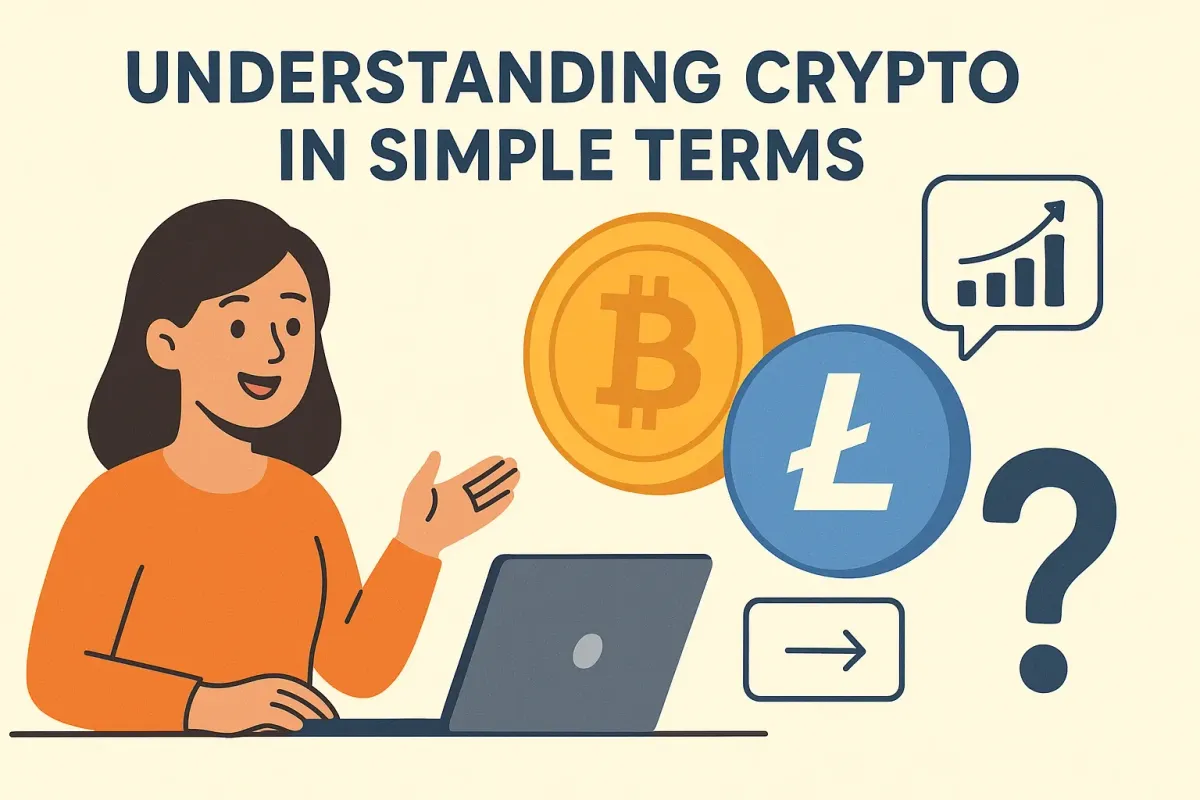
Introduction: A New Kind of Money
Crypto, or cryptocurrency, is a new kind of digital money that’s changing how people pay, save, and invest. From Mumbai to New York, it’s gaining popularity fast. But what exactly is crypto, and why should you care? This guide explains understanding crypto in simple terms, focusing on how it works and why it matters in India and beyond.
Crypto isn’t just a buzzword; it’s a revolution in how we handle money, invest, and even trust each other in business.
By the end of this article, you’ll know what cryptocurrency is, how it works, and why it’s worth paying attention to—without getting lost in tech jargon
What Is Cryptocurrency? The Basics Explained
Cryptocurrency is digital money that lives on the internet. Unlike rupees or dollars, it’s not controlled by any government or bank. Instead, it uses something called blockchain technology—a secure, transparent system that keeps track of every transaction. Think of blockchain as a digital ledger, like a notebook that everyone can see but no one can tamper with.
Here’s a quick breakdown:
- No middleman: When you pay with crypto, you don’t need a bank to process it. It’s direct, like handing cash to a friend.
- Global reach: You can send crypto to anyone, anywhere, in minutes—whether they’re in Chennai or Chicago.
- Secure: Transactions are protected by complex math, making it nearly impossible to hack.
Popular cryptocurrencies include Bitcoin (the first and most famous), Ethereum (known for its smart features), and Tether (a stable coin tied to the dollar). In India, crypto is gaining traction, with over 100 million users by 2025, according to industry reports.
Why Crypto Matters in India and Around the World
Crypto is more than just a tech trend—it’s changing lives. In India, where digital payments like UPI are already huge, crypto offers new ways to save, invest, and do business.
Here’s why it’s a big deal:
Financial Freedom
Many Indians don’t have access to traditional banks, especially in rural areas. Crypto lets people store and send money using just a smartphone, no bank account needed. For example, a farmer in Rajasthan can sell crops to a buyer in Dubai and get paid in Bitcoin instantly.
Investment Opportunities
Young Indians are jumping into crypto as a way to grow their money. Bitcoin’s price has soared over the years, turning small investments into big gains for some. But it’s not just about profits—crypto offers a hedge against inflation, which can erode savings in rupees.
Global Trade
For freelancers in Hyderabad or startups in Pune, crypto makes it easier to work with international clients. Payments in crypto are fast and cheap compared to bank transfers, which can take days and cost hefty fees.
How Does Cryptocurrency Work?
Let’s dive a bit deeper without getting too technical. Crypto runs on blockchain, a system that records every transaction in “blocks” linked together like a chain. Here’s how it works in simple steps:
- You make a transaction: Say you send 0.01 Bitcoin to a friend in Delhi.
- It’s verified: Computers around the world (called nodes) check that the transaction is legit.
- It’s recorded: Once verified, the transaction is added to the blockchain, visible to everyone but anonymous.
- It’s secure: The blockchain is locked with cryptography, so no one can change or delete the record.
This process is called mining for some token economy like Bitcoin, where powerful computers solve math puzzles to keep the system running. Miners earn rewards in Virtual money, which encourages them to keep the network secure.
Types of Cryptocurrencies: More Than Just Bitcoin
Bitcoin might be the rockstar, but there are thousands of cryptocurrencies, each with its own purpose. Here’s a look at a few:
Bitcoin (BTC)
The original Virtual money, created in 2009 by someone (or a group) called Satoshi Nakamoto. It’s like digital gold—valuable because people trust it and there’s a limited supply (only 21 million Bitcoins will ever exist).
Ethereum (ETH)
More than just money, Ethereum lets developers build apps on its blockchain. Think of it as a digital platform for everything from games to loans.
Stablecoins (USDT, USDC)
These are tied to real-world assets like the US dollar, so their value doesn’t swing wildly. They’re great for everyday transactions or saving.
Altcoins
This is the catch-all term for any Token economy that’s not Bitcoin. Some, like Cardano or Solana, focus on speed or eco-friendly tech. Others, like Dogecoin, started as jokes but gained real popularity.
In India, platforms like WazirX and CoinDCX let you trade dozens of these coins, making it easy to explore.
How to Get Started with Crypto in India
Ready to dip your toes into crypto? Here’s a beginner-friendly guide to get started:
- Choose a Platform: Sign up for a trusted Virtual money exchange like WazirX, CoinSwitch, or ZebPay. These are regulated in India and user-friendly.
- Verify Your Identity: You’ll need to submit ID proof (like Aadhaar or PAN) to comply with KYC (Know Your Customer) rules.
- Add Funds: Link your bank account or UPI to deposit rupees.
- Buy Crypto: Start small—maybe ₹500 worth of Bitcoin or Ethereum. Most platforms let you buy fractions of a coin.
- Store Safely: Keep your Token economy in a wallet. A hot wallet (online, like an app) is convenient for small amounts, while a cold wallet (offline, like a USB device) is safer for big investments.
Pro Tip: Never share your wallet’s private key (a secret code) with anyone—it’s like giving away your bank PIN.
The Risks of Crypto: What You Need to Know
Digital finance isn’t all sunshine and rainbows. Like any investment, it comes with risks. Here’s what to watch out for:
Price Swings
Digital finance prices can be a rollercoaster. Bitcoin once dropped 50% in a month, scaring off new investors. Only invest what you can afford to lose.
Scams
Fake apps, phishing emails, and “guaranteed profit” schemes are common. Stick to trusted platforms and double-check URLs before entering your details.
Regulation
India’s government has been hot and cold on crypto. While it’s legal to trade, new rules could change things. Stay updated on news from the RBI or Finance Ministry.
Tech Troubles
If you lose your wallet’s private key or get hacked, your digital finance could be gone forever. Back up your keys and use strong passwords.
Real-Life Stories: Crypto in Action
To make Digital finance feel real, let’s look at a few examples from India and beyond:
- Ravi, a Freelancer in Bengaluru: Ravi designs websites for clients in the US. They pay him in Ethereum, which he converts to rupees via CoinDCX. No bank fees, no delays—just quick cash.
- Priya, a Student in Mumbai: Priya invested ₹2,000 in Dogecoin as a fun experiment. When its price spiked, she made ₹10,000, enough to buy a new laptop.
- A Village Co-op in Kerala: A group of farmers used a blockchain-based platform to sell organic spices directly to buyers in Europe, cutting out middlemen and earning more.
These stories show crypto’s power to change how we work, save, and grow.
Crypto vs. Traditional Money: A Comparison
How does Digital finance stack up against the rupees in your wallet? Let’s compare:
| Feature | Cryptocurrency | Traditional Money |
|---|---|---|
| Control | Decentralized (no bank or gov’t) | Controlled by banks and governments |
| Speed | Instant global transfers | Can take days for international payments |
| Fees | Usually low | High for cross-border transactions |
| Security | Depends on your wallet’s safety | Backed by banks, but can be stolen |
| Value Stability | Can be volatile | More stable, but loses value to inflation |
Bitcoin and altcoins shines for speed and freedom, but traditional money wins for stability and trust. Many Indians use both, depending on their needs.
The Future of Crypto in India
What’s next for digital finance? In India, the future looks bright but uncertain. Here’s what experts predict:
- More Adoption: As internet access grows, more Indians will try crypto, especially in Tier-2 and Tier-3 cities.
- Clearer Rules: The government is working on a digital finance policy, which could make trading safer and more mainstream.
- New Uses: From paying for chai at a local stall to buying land on a blockchain, Digital finance could become part of daily life.
Globally, countries like the US and Singapore are embracing Digital finance, and India doesn’t want to fall behind. But it’s a balancing act—promoting innovation while protecting investors.
Understanding Crypto in Simple Terms – Frequently Asked Questions
What is cryptocurrency in simple words?
Digital finance is digital money that uses blockchain technology to make secure, direct transactions without banks. Think of it as cash for the internet. Learn more about the basics.
Is crypto legal in India?
Yes,Bitcoin and altcoins is legal to buy, sell, and trade in India as of 2025, but it’s not regulated like stocks. Always check the latest rules from the RBI. See risks here.
How can I buy crypto in India?
Sign up on a trusted exchange like WazirX, verify your ID, deposit rupees, and buy coins like Bitcoin or Ethereum. Get started here.
Is crypto a good investment?
Blockchain-based assets can offer high returns but is risky due to price swings. Only invest what you can afford to lose and research thoroughly. Read about risks.
What’s the difference between Bitcoin and Ethereum?
Bitcoin is like digital gold, used mainly as money. Ethereum is a platform for building apps and has its own coin, ETH. Explore types.
Conclusion: Your Crypto Journey Starts Here
Blockchain-based assets might seem like a mystery, but it’s really just a new way to think about money. From sending cash across borders to investing for the future, it’s opening doors for millions, especially in India. Whether you’re curious about Bitcoin or dreaming of building a blockchain app, understanding Bitcoin and altcoins is the first step. Start small, stay safe, and explore trusted platforms to see what works for you.
Want to dive deeper? Check out resources on WazirX or CoinDCX, or join online communities to hear from other Indians in the Bitcoin and altcoins space. Have a Bitcoin and altcoins story or question? Share it in the comments—we’d love to hear from you!
You May Also Like
- Bonds and Fixed-Income Investing
- Credit vs. Debit Cards
- Long-Term Wealth Building
- The Benefits of Automating Your Finances: A Complete Guide
- Manage a Side Hustle Income
- Smart Money Moves for Entrepreneurs
- Plan to Become Financially Independent
- Diversifying Your Investment Portfolio
- Avoid 15 Common Credit Card Mistakes
- How to Pay Off Debt Faster: Proven Strategies
- Passive Income
- Credit Score Basics
- Stock Market
- Building an Emergency Fund
- Personal Budget and Stick
- Delhi Crime Season 3 Release Date Shocks Fans

- BB19 Shehbaz Girlfriend Reaction Goes Viral

- Why BB19 Gaurav Khanna Is Hinting at ‘Unfair Evictions’ Now

- 17 Best Cities for Street Food Every Traveler Should Visit to Avoid Missing Out on Incredible Eats

- 17 Unbeatable Factors That Explain Why Spider-Man Remains the Most Loved Superhero Worldwide

- Why the Delhi Red Fort Blast Probe Now Hinges on a Missing Third Car

- 15 World’s Most Peaceful Places to Disconnect & Recharge — And 5 Overrated Destinations to Skip in 2026

- 17 Essential Travel Safety Tips for Solo Travelers to Avoid Dangerous Mistakes and Travel Confidently