
What Is a Digital Nomad Budget? Explained
This guide breaks down the digital nomad budget in simple, practical terms—helping readers understand real costs, smart planning, and how to travel sustainably without overspending.

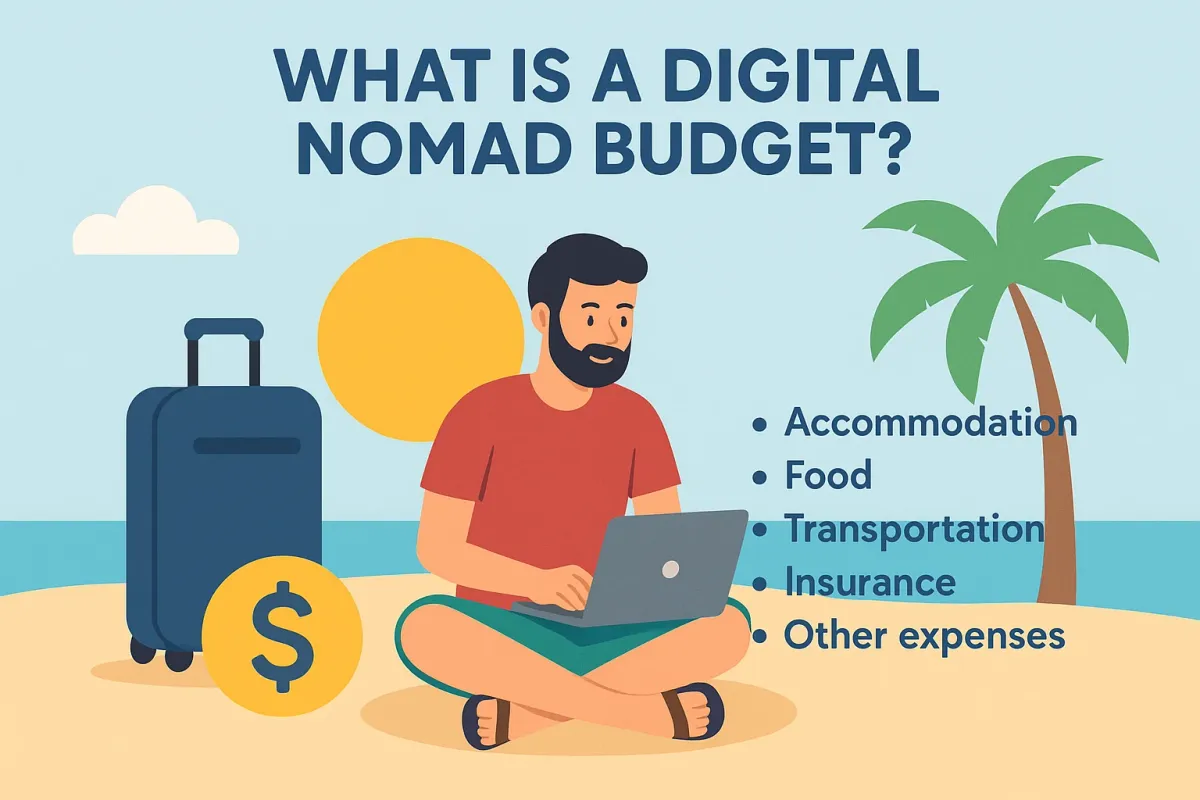
Imagine waking up to the sound of waves in Bali, working from a café in Lisbon, or exploring the vibrant streets of Chiang Mai—all while earning a living.
This is the dream of the digital nomad lifestyle. But here’s the catch: freedom comes with a price tag. How do you fund this dream without breaking the bank?
That’s where a digital nomad budget comes in. Whether you’re in the USA dreaming of far-off places or already living the nomadic life, understanding how to manage your money is the key to making it sustainable.
In this article, we’ll explain what a digital nomad budget is, why it matters, and share practical tips to help you live your dream life—anywhere in the world.
What Is a Digital Nomad Budget?
A digital nomad budget is a financial plan tailored to the unique lifestyle of someone who works remotely while traveling or living in different locations. Unlike a traditional budget, it accounts for variable costs like international travel, visas, coworking spaces, and fluctuating living expenses across countries. It’s about balancing income, savings, and spending to maintain financial stability while embracing the freedom of location independence.
Why is this important? For Americans, who make up a significant portion of the 35 million digital nomads worldwide (according to a 2023 MBO Partners report), a well-planned budget ensures you can explore new destinations without the stress of overspending. Globally, the principles apply whether you’re in Europe, Asia, or Latin America—adaptability is key.
Why Budgeting Matters for Digital Nomads
Without a budget, the digital nomad lifestyle can quickly turn into a financial nightmare. A digital nomad budget helps you:
- Avoid debt: Prevent overspending in expensive destinations like London or Dubai.
- Plan for emergencies: Cover unexpected costs like medical bills or flight changes.
- Sustain long-term travel: Ensure your savings last for months or years on the road.
- Enjoy the lifestyle: Spend on experiences like local cuisine or cultural tours without guilt.
The Core Components of a Digital Nomad Budget
A digital nomad budget isn’t just about tracking expenses—it’s about aligning your finances with your lifestyle goals. Here’s a breakdown of the key components.
1. Income: Your Financial Foundation
Your income is the backbone of your budget. Most digital nomads rely on remote work, freelancing, or online businesses. Common income sources include:
- Freelancing: Writing, graphic design, or coding (e.g., platforms like Upwork or Fiverr).
- Remote jobs: Full-time roles with companies offering location flexibility.
- Passive income: E-books, online courses, or affiliate marketing.
- For example, a U.S. web developer might charge $50/hour and also make $500/month from a blog. Diversifying income is key to a healthy digital nomad budget.
Tip: Diversify your income streams to protect against dry spells. For example, a freelancer in the USA might charge $50/hour for web development but also earn $500/month from a blog.
2. Fixed Expenses: The Non-Negotiables
Even nomads have recurring costs. These include:
- Insurance: Health and travel insurance are critical. In the USA, a basic travel insurance plan might cost $50–$100/month, while international plans vary by country.
- Subscriptions: Tools like VPNs, cloud storage, or project management software (e.g., $10–$30/month).
- Debt payments: Student loans or credit card payments, common for many Americans.
3. Variable Expenses: The Nomad’s Challenge
Variable costs fluctuate depending on your location. These include:
- Accommodation: Airbnb in Bali might cost $400/month, while a studio in New York could be $2,000.
- Food: Street food in Thailand is $2–$5/meal, but dining in Western Europe can hit $15–$20.
- Transportation: Budget flights, local buses, or rideshares vary widely. A flight from the USA to Southeast Asia might cost $600–$1,200 round-trip.
- Coworking spaces: Popular in cities like Lisbon or Medellín, costing $100–$300/month.
- A good digital nomad budget adjusts for these shifts.
4. Savings and Emergency Fund
Always keep 3–6 months of expenses saved. For a $2,000 monthly digital nomad budget, aim for $6,000–$12,000 in reserve.
Asafety net is non-negotiable. Aim to save 10–20% of your income and maintain an emergency fund (3–6 months of expenses). For example, if your monthly budget is $2,000, keep $6,000–$12,000 in reserve.
How to Create Your Digital Nomad Budget
Ready to build your budget? Follow these steps to create a plan that works for you, whether you’re in the USA or halfway across the globe.
Step 1: Assess Your Income
Calculate your average monthly income. If it varies (common for freelancers), use a conservative estimate based on the past 6–12 months. For example, a graphic designer in the USA might average $3,000/month after taxes.
Step 2: Research Destination Costs
Living costs vary dramatically. Use tools like Nomad List or Numbeo to compare expenses. For instance:
- Chiang Mai, Thailand: $700–$1,200/month (affordable housing, cheap food).
- Lisbon, Portugal: $1,500–$2,500/month (moderate rent, higher dining costs).
- New York, USA: $3,000–$5,000/month (high rent, urban expenses).
Step 3: Categorize Expenses
Break your budget into categories:
- Housing: 30–40% of your budget.
- Food: 15–25%.
- Travel/Transport: 10–20%.
- Work-related: 5–10% (e.g., internet, coworking).
- Savings/Insurance: 15–20%.
Step 4: Track and Adjust
Use apps like YNAB or PocketGuard to monitor spending. Adjust your budget monthly based on your location. For example, you might splurge on a cooking class in Vietnam but cut back on dining out in Paris.
Real-Life Examples of Digital Nomad Budgets
Let’s look at three nomads with different budgets to see how they make it work.
Example 1: Sarah, the Frugal Nomad (USA to Southeast Asia)
- Income: $2,500/month (freelance writer).
- Budget: $1,200/month in Chiang Mai.
- Housing: $400 (Airbnb).
- Food: $200 (street food and groceries).
- Transport: $100 (scooter rental).
- Insurance: $80.
- Coworking: $100.
- Savings: $320.
- Why it works: Low-cost destinations stretch her income, leaving room for savings.
Example 2: Alex, the Mid-Range Nomad (USA to Europe)
- Income: $4,000/month (remote software developer).
- Budget: $2,500/month in Lisbon.
- Housing: $1,000 (shared apartment).
- Food: $400 (mix of dining out and cooking).
- Transport: $150 (public transit and occasional flights).
- Insurance: $100.
- Coworking: $200.
- Savings: $650.
- Why it works: Higher income allows for pricier destinations while maintaining savings.
Example 3: Maria, the Luxury Nomad (Global)
- Income: $7,000/month (online business owner).
- Budget: $4,500/month in cities like Dubai or Sydney.
- Housing: $2,000 (private apartment).
- Food: $800 (frequent dining out).
- Transport: $500 (flights and taxis).
- Insurance: $150.
- Coworking: $300.
- Savings: $750.
- Why it works: High income supports a premium lifestyle with room for investments.
Common Budgeting Mistakes to Avoid
Even seasoned nomads slip up. Here are pitfalls to watch for:
- Underestimating costs: Always add a 10–15% buffer for unexpected expenses.
- Ignoring visas: Some countries charge hefty fees (e.g., $50–$500 for tourist or digital nomad visas).
- Over-relying on one income source: A client dropping you can derail your plans.
- Neglecting taxes: Americans must file taxes regardless of location. Consult a tax professional to avoid surprises.
Tools and Apps for Budgeting Success
Technology makes budgeting easier. Try these:
- Nomad List: Compare living costs across cities.
- YNAB (You Need a Budget): Track expenses and set goals.
- Revolut/Wise: Manage multi-currency accounts to avoid exchange fees.
- Numbeo: Check cost-of-living data for any destination.
Cultural Perspectives on Digital Nomad Budgeting
Budgeting varies by culture and destination. In the USA, nomads prioritize health insurance due to high medical costs. In Southeast Asia, nomads focus on affordable housing and food. In Europe, transport and coworking spaces take precedence. Understanding local norms helps you stretch your dollar.
For example, in Bali, bartering for rentals is common, saving you 10–20%. In Japan, nomads plan for high transport costs (e.g., $100/month for trains). Researching cultural differences ensures your budget aligns with local realities.
Adapting Your Budget to High-Cost vs. Low-Cost Destinations
Low-Cost Destinations (e.g., Vietnam, Thailand)
- Pros: Cheap food ($1–$5/meal), affordable rentals ($300–$600/month).
- Cons: Unreliable internet or infrastructure in some areas.
- Tip: Stay longer (3–6 months) to negotiate better rental rates.
High-Cost Destinations (e.g., USA, Australia)
- Pros: Better infrastructure, reliable internet.
- Cons: High rent ($1,500+/month), expensive dining.
- Tip: House-sit or share accommodations to cut costs.
The Emotional Side of Budgeting
Budgeting isn’t just numbers—it’s emotional. The thrill of booking a flight to a new country can tempt you to overspend. On the flip side, sticking to a budget brings peace of mind, letting you focus on experiences like hiking Machu Picchu or sipping coffee in Rome. A good budget feels like a partner, not a restriction.
Digital Nomad Budget – Frequently Asked Questions
What is a digital nomad budget?
A digital nomad budget is a financial plan for remote workers who travel or live in different locations, covering costs like housing, food, travel, and insurance. Learn more about its components.
How much money do you need to be a digital nomad?
It depends on your destination. In low-cost areas like Thailand, $1,000–$1,500/month is enough. In high-cost cities like New York, plan for $3,000–$5,000. See examples.
What are the best budgeting tools for digital nomads?
Apps like YNAB, Nomad List, and Wise help track expenses and compare costs. Check recommended tools.
How do digital nomads save money while traveling?
They choose low-cost destinations, negotiate rentals, and use multi-currency accounts to avoid fees. Explore budgeting tips
Do digital nomads need health insurance?
Yes, it’s essential. Plans cost $50–$150/month depending on coverage. See fixed expenses.
How do I budget for visas as a digital nomad?
Research visa costs for each country (e.g., $50–$500) and include them in your budget. Avoid common mistakes.
Conclusion
A digital nomad budget is your ticket to freedom, letting you explore the world without financial stress. By understanding your income, categorizing expenses, and adapting to each destination, you can live sustainably—whether you’re sipping smoothies in Bali or working from a skyscraper in Dubai. Start small, track diligently, and adjust as you go. Want to dive deeper? Check out resources like Nomad List or connect with other nomads to share tips. What’s your next destination? Let us know in the comments!
You May Also Like
- Bonds and Fixed-Income Investing
- Credit vs. Debit Cards
- Long-Term Wealth Building
- The Benefits of Automating Your Finances: A Complete Guide
- Manage a Side Hustle Income
- Smart Money Moves for Entrepreneurs
- Plan to Become Financially Independent
- Diversifying Your Investment Portfolio
- Avoid 15 Common Credit Card Mistakes
- How to Pay Off Debt Faster: Proven Strategies
- Passive Income
- Credit Score Basics
- Stock Market
- Building an Emergency Fund
- Personal Budget and Stick
- Delhi Crime Season 3 Release Date Shocks Fans

- BB19 Shehbaz Girlfriend Reaction Goes Viral

- Why BB19 Gaurav Khanna Is Hinting at ‘Unfair Evictions’ Now

- 17 Best Cities for Street Food Every Traveler Should Visit to Avoid Missing Out on Incredible Eats

- 17 Unbeatable Factors That Explain Why Spider-Man Remains the Most Loved Superhero Worldwide

- Why the Delhi Red Fort Blast Probe Now Hinges on a Missing Third Car

- 15 World’s Most Peaceful Places to Disconnect & Recharge — And 5 Overrated Destinations to Skip in 2026

- 17 Essential Travel Safety Tips for Solo Travelers to Avoid Dangerous Mistakes and Travel Confidently