AI Traffic System Live on Dwarka Expressway – Detects 14 Violations in Real Time
Explore how the AI traffic system on Dwarka Expressway is now detecting 14 violations in real time, transforming road enforcement. This brief overview highlights its technology, impact, and what commuters need to know.

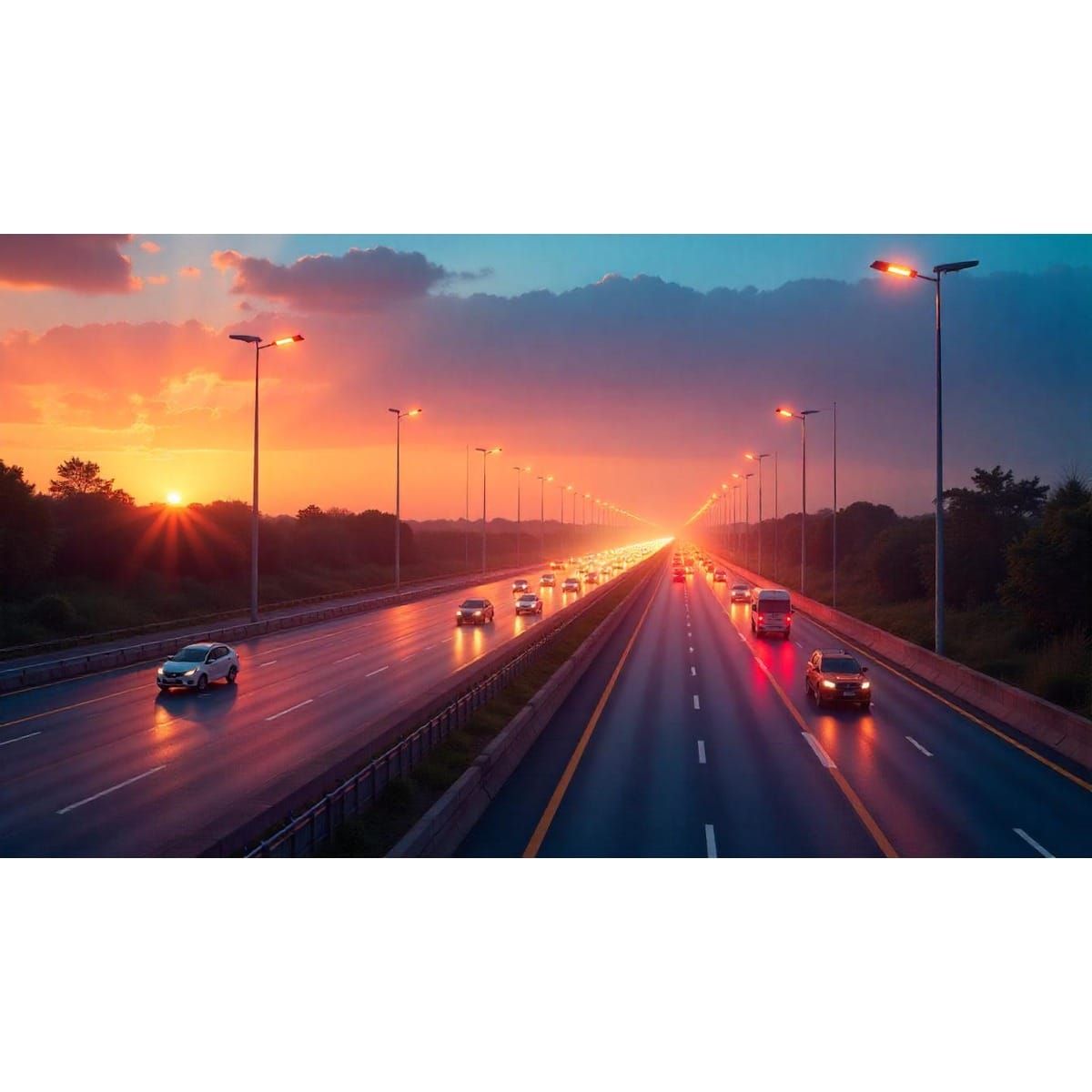
India’s first AI-powered traffic system is live on Dwarka Expressway, detecting 14 violations in real time to boost road safety. Developed by IHMCL under NHAI, this AI-traffic system sets a new standard for smart highways.
Introduction: A New Era of Road Safety on Dwarka Expressway
Imagine driving down a highway where every move is watched—not by humans, but by an intelligent system that catches violations in the blink of an eye. On June 25, 2025, this became reality with the launch of India’s first AI traffic system live on Dwarka Expressway – detects 14 violations in real time. This groundbreaking technology, spearheaded by the NHAI (National Highways Authority of India) and developed by the Indian Highways Management Company Ltd (IHMCL), is transforming how we manage traffic and ensure safety on one of Delhi’s busiest corridors. But why does this matter? With over 35% of India’s road fatalities occurring on national highways, this AI-traffic innovation could save countless lives by enforcing rules and reducing accidents.
This article dives deep into how this AI-traffic system works, its impact on commuters, and why it’s a game-changer for India’s highways. From real-time violation detection to seamless emergency responses, let’s explore how NHAI is paving the way for smarter, safer roads.
What Is the AI Traffic System on Dwarka Expressway?
The AI traffic system live on Dwarka Expressway – detects 14 violations in real time is a state-of-the-art Advanced Traffic Management System (ATMS). Launched in June 2025, it spans 56.46 kilometers, covering the entire 28.46 km of Dwarka Expressway and a 28 km stretch of NH-48 from Shiv Murti to Kherki Daula. Developed by IHMCL under NHAI’s supervision, this system uses artificial intelligence, high-resolution cameras, and sensors to monitor traffic 24/7.
Unlike traditional traffic systems, this AI-traffic setup doesn’t just record violations—it acts on them instantly. Violations are flagged, audited, and sent to enforcement agencies via the NIC e-Challan portal, ensuring swift action. According to Amrit Singha, Chief Product Officer at IHMCL, “The system can detect up to 14 types of traffic violations, all actionable under the Motor Vehicle Act.”

$500 PayPal Gift Card
A $500 PayPal Gift card may be available to select users. Checking eligibility is quick. You can check if you’re one of them.
Why Was the AI Traffic System Introduced?
India’s national highways account for just 2% of total road length but contribute to over 35% of road fatalities. The Dwarka Expressway, a high-speed corridor connecting Delhi and Gurgaon, sees heavy traffic daily, making it a hotspot for violations like speeding and illegal vehicle entries. The NHAI introduced this AI-traffic system to:
- Enhance Road Safety: Real-time detection reduces accidents caused by reckless driving.
- Improve Enforcement: Automated e-challans ensure violators face consequences.
- Streamline Emergency Response: The system alerts authorities to accidents or roadblocks instantly.
- Set a National Benchmark: This pilot project aligns with NHAI’s 2023 guidelines for smart highways.
By addressing these challenges, the AI-traffic system aims to make Dwarka Expressway a model for future digital highways across India.
How Does the AI Traffic System Work?
The AI traffic system live on Dwarka Expressway – detects 14 violations in real time is a technological marvel. Here’s how it operates:
- High-Resolution Cameras: Over 190 cameras, including 110 pan-tilt-zoom models, are installed every kilometer for real-time monitoring. These cameras use AI to detect accidents and breakdowns.
- Video Incident Detection and Enforcement System (VIDES): Fifteen VIDES gantries, placed every 10 km, identify 14 types of violations with high accuracy. These are integrated with the NIC e-Challan platform for seamless enforcement.
- Radar-Based Speed Displays: Six Vehicle Actuated Speed Display Systems (VASD) are installed every 20 km to promote speed awareness.
- Command Centre: Located at Bijwasan Toll Plaza, this “digital brain” processes data and coordinates with police and emergency units.
For example, if a driver speeds past the limit, the AI-traffic system captures the violation, sends it to the command center, and issues an e-challan within minutes. This real-time response is a game-changer for traffic management.
What Violations Can the AI Traffic System Detect?
The AI traffic system live on Dwarka Expressway – detects 14 violations in real time, covering a wide range of traffic infractions. These include:
- Overspeeding
- Not wearing seatbelts
- Triple riding on two-wheelers
- Helmet violations
- Wrong-lane driving
- Illegal parking
- Stopping on the carriageway
- Two-wheeler movement on expressways (prohibited)
- Presence of animals on the highway
- Pedestrian crossings
- Wrong-direction driving
- Slow-moving vehicles in fast lanes
- Overloading
- Lane indiscipline
Between June 21 and June 23, 2025, the system recorded over 1.73 lakh violations, with 63% linked to illegal two- and three-wheeler entries. This data highlights the scale of the challenge and the system’s effectiveness in catching violators.
How Does the System Improve Road Safety?
Road safety is the heart of the AI-traffic system on Dwarka Expressway. By detecting violations in real time, it discourages reckless behavior and reduces accidents. For instance, the system’s ability to spot seatbelt non-compliance or triple riding ensures drivers and riders follow safety rules. The integration with the NIC e-Challan portal means violators face immediate consequences, fostering accountability.
Moreover, the command center can deploy emergency units during accidents, fog, or road obstructions, minimizing response times. “The Command Centre acts as the digital brain of the corridor, enabling quick deployment of emergency units,” says an NHAI official.
How Is NHAI Leading the Way with AI Traffic Systems?
The NHAI has positioned itself as a pioneer in smart highway technology. The Dwarka Expressway project, launched under its 2023 guidelines, is the first to implement an AI-traffic system at this scale. By partnering with IHMCL, NHAI ensures the system is robust, scalable, and adaptable for other highways.
The authority is also exploring additional features, such as the Rajmargyatra app’s new tool to help motorists find routes with the lowest toll charges. This shows NHAI’s commitment to blending technology with user convenience.
What Makes Dwarka Expressway a Digital Highway?
The Dwarka Expressway isn’t just a road—it’s India’s first digital highway. The AI traffic system live on Dwarka Expressway – detects 14 violations in real time transforms it into a smart corridor with:
- Real-Time Data Collection: VIDES systems gather traffic data for analysis, helping planners optimize road usage.
- Seamless Integration: The system connects with local and national authorities for coordinated enforcement.
- Public Awareness: Radar-based LED boards display speed limits, encouraging compliance.
This digital infrastructure sets a precedent for modern highways, making travel safer and more efficient.
Challenges and Limitations of the AI Traffic System
While the AI-traffic system is revolutionary, it’s not without challenges. For example:
- Technical Glitches: Ensuring 190 cameras and 15 VIDES gantries work flawlessly is a complex task.
- Public Awareness: Some commuters may not know about the new system, leading to unintentional violations.
- Enforcement Delays: Although the system flags violations instantly, issuing challans depends on police coordination.
Despite these hurdles, the system’s 90% accuracy rate, as noted by IHMCL’s Amrit Singha, proves its reliability.
How Does This System Compare to Global Standards?
Globally, AI-based traffic systems are common in countries like Singapore and the UK, where smart highways use similar technologies for real-time monitoring. However, India’s system stands out for its scale and affordability. Covering 56.46 km with 190 cameras and 15 VIDES gantries, the Dwarka Expressway project rivals international standards while being tailored to India’s unique traffic challenges, like two-wheeler violations.
What’s Next for AI Traffic Systems in India?
The success of the AI traffic system live on Dwarka Expressway – detects 14 violations in real time has sparked plans for expansion. NHAI aims to replicate this model on other highways, such as the Mysuru-Bangalore Expressway. Future upgrades may include:
- Enhanced AI algorithms for even faster detection.
- Integration with vehicle GPS for real-time traffic updates.
- Expanded coverage to rural highways.
This initiative marks a bold step toward a safer, smarter India.

$500 Walmart Gift Card
A $500 Walmart gift card may be available to select users. Checking eligibility is quick. You can check if you’re one of them.
AI Traffic System on Dwarka Expressway – Frequently Asked Questions
.What is the AI traffic system on Dwarka Expressway?
The AI traffic system live on Dwarka Expressway – detects 14 violations in real time is an Advanced Traffic Management System (ATMS) developed by IHMCL and overseen by NHAI. It uses AI, cameras, and sensors to monitor traffic and enforce rules across 56.46 km.
What violations can the system detect?
It identifies 14 violations, including overspeeding, triple riding, and not wearing seatbelts.
How does the system improve road safety?
By detecting violations in real time and enabling quick emergency responses, the AI-traffic system reduces accidents and promotes compliance.
Where is the command center located?
The command center, or “digital brain,” is at Bijwasan Toll Plaza, monitoring the entire system.
Will this system be implemented on other highways?
Yes, NHAI plans to expand the AI-traffic model to other highways, like the Mysuru-Bangalore Expressway.
How accurate is the AI traffic system?
The system has a 90% accuracy rate in detecting violations, ensuring reliable enforcement.
How can commuters avoid fines?
Follow traffic rules, such as wearing seatbelts and avoiding expressways with two-wheelers.
Conclusion
The AI traffic system live on Dwarka Expressway – detects 14 violations in real time is a monumental step toward safer, smarter highways in India. By leveraging AI-traffic technology, NHAI has set a national benchmark for traffic management, reducing violations and saving lives. Whether you’re a daily commuter or a long-distance traveler, this system ensures a safer journey. Share your thoughts on this innovation or check out our guides on smart highway technologies and road safety tips.
- Delhi Crime Season 3 Release Date Shocks Fans

- BB19 Shehbaz Girlfriend Reaction Goes Viral

- Why BB19 Gaurav Khanna Is Hinting at ‘Unfair Evictions’ Now

- 17 Best Cities for Street Food Every Traveler Should Visit to Avoid Missing Out on Incredible Eats

- 17 Unbeatable Factors That Explain Why Spider-Man Remains the Most Loved Superhero Worldwide

- Why the Delhi Red Fort Blast Probe Now Hinges on a Missing Third Car

- 15 World’s Most Peaceful Places to Disconnect & Recharge — And 5 Overrated Destinations to Skip in 2026

- 17 Essential Travel Safety Tips for Solo Travelers to Avoid Dangerous Mistakes and Travel Confidently

- Shehnaaz Gill Breaks Silence on Shubman Gill Rumors

- Abhishek Bajaj Responds to Ageism Over Bond With Ashnoor Kaur

- Dharmendra Discharged from Hospital, Set to Recover at Home: Official Statement

- Pakistan Warns Afghanistan After Deadly Attacks: ‘Will Pay Back in the Same Coin’