AI Early Diagnosis: Revolutionizing Healthcare with Technology
Explore how AI early diagnosis is transforming modern healthcare through faster detection, improved accuracy, and life-saving predictions. This research-driven analysis reveals where the technology is making the biggest clinical impact today.

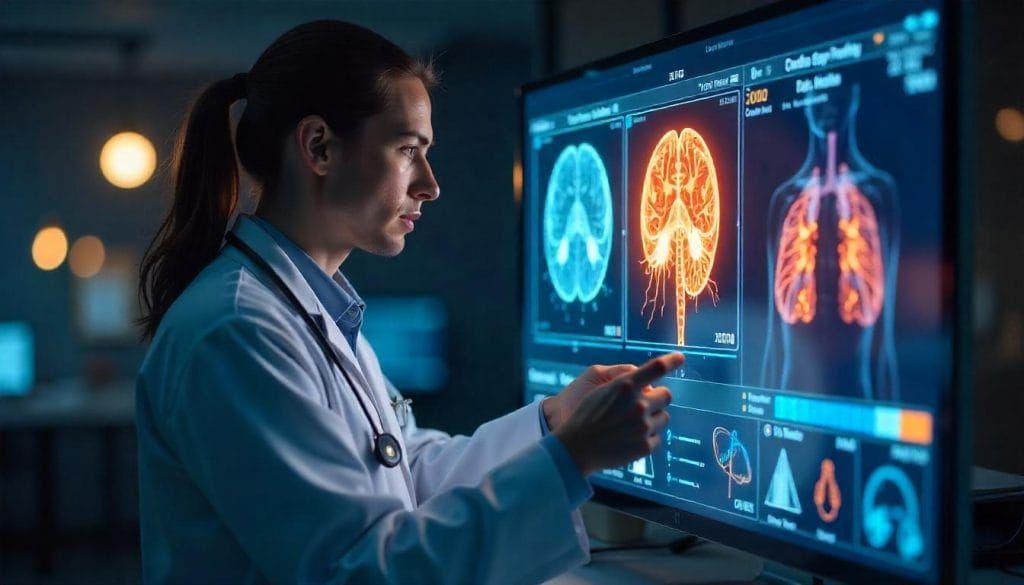
AI early diagnosis is transforming healthcare by detecting diseases like cancer and Alzheimer’s sooner, improving patient outcomes. Learn how AI early diagnosis tools leverage data to save lives.
Introduction: Can AI Save Lives Before Symptoms Appear?
Imagine a world where diseases are caught before they wreak havoc—where a simple scan or blood test, powered by artificial intelligence, flags a health issue you didn’t even know you had. This isn’t science fiction; it’s the reality of AI early diagnosis. By analyzing vast amounts of medical data, AI is helping doctors detect conditions like cancer, Alzheimer’s, and heart disease earlier than ever, giving patients a fighting chance. In this article, we’ll explore how AI early diagnosis tools are reshaping healthcare, why they matter, and what they mean for you or your loved ones.
The promise of AI early diagnosis lies in its ability to spot patterns humans might miss. From imaging scans to genetic markers, AI is catching red flags faster, often before symptoms arise. Let’s dive into how this technology works, its benefits, and what the future holds.
What Is AI Early Diagnosis?
AI early diagnosis refers to the use of artificial intelligence to identify diseases at their earliest stages, often before symptoms are noticeable. By processing medical data—such as imaging, lab results, or patient histories—AI algorithms detect subtle patterns that indicate the onset of conditions like cancer, diabetes, or neurological disorders.
AI doesn’t replace doctors; it enhances their ability to make faster, more accurate diagnoses. For example, an AI system might analyze thousands of mammograms in seconds, flagging potential breast cancer cases for a radiologist to review. This synergy of human expertise and AI early diagnosis tools is saving lives.
Why Is Early Diagnosis So Important?
Catching a disease early can mean the difference between a quick recovery and a lifelong battle. Early diagnosis often leads to:
- Better treatment outcomes: Diseases like cancer are more treatable in their initial stages.
- Lower costs: Early interventions are often less invasive and expensive.
- Improved quality of life: Early detection can prevent complications or severe symptoms.
AI early diagnosis systems amplify these benefits by reducing human error and speeding up the process. For instance, a 2020 study in Nature found that AI outperformed radiologists in detecting breast cancer from mammograms, identifying cases with 94% accuracy.

How Does AI Early Diagnosis Work?
AI early diagnosis relies on machine learning, a subset of AI where algorithms “learn” from large datasets. Here’s a simplified breakdown:
- Data Collection: AI systems are trained on massive datasets, including medical images, genetic profiles, and patient records.
- Pattern Recognition: The AI identifies patterns linked to specific diseases, such as abnormal cell growth in cancer.
- Prediction and Flagging: The system highlights potential issues for doctors to review, often ranking them by urgency.
- Continuous Learning: As more data is fed into the system, the AI improves its accuracy.
For example, AI early diagnosis tools like Google Health’s DeepMind can analyze retinal scans to predict diabetic retinopathy, a leading cause of blindness, with 90% accuracy.
What Diseases Can AI Detect Early?
AI is making strides in diagnosing a wide range of conditions. Some key examples include:
- Cancer: AI early diagnosis for cancer can detect breast, lung, and skin cancers by analyzing imaging or biopsy data.
- Alzheimer’s Disease: AI tools analyze brain scans and cognitive tests to identify early signs of dementia.
- Heart Disease: AI systems predict cardiovascular risks by examining ECGs, blood tests, and lifestyle data.
- Diabetes: AI early diagnosis systems flag prediabetes through blood glucose patterns.
- Rare Diseases: AI can identify genetic markers for conditions that are often misdiagnosed.
A 2023 report by the World Health Organization noted that AI early diagnosis tools have reduced diagnostic delays for rare diseases by up to 40%.
Benefits of AI Early Diagnosis
The advantages of AI early diagnosis extend beyond speed and accuracy. Here are some key benefits:
- Accessibility: AI tools can be deployed in remote areas, helping underserved communities access quality diagnostics.
- Scalability: AI can process thousands of cases simultaneously, reducing wait times.
- Personalization: AI tailors diagnoses to individual patient profiles, improving precision.
- Cost Efficiency: Early detection reduces the need for expensive, late-stage treatments.
For example, in rural India, AI early diagnosis for tuberculosis has enabled mobile clinics to screen patients using portable X-ray machines, cutting diagnosis time from weeks to hours.
Challenges of AI Early Diagnosis
While promising, AI early diagnosis isn’t without hurdles:
- Data Privacy: Handling sensitive patient data raises concerns about security and consent.
- Bias in Algorithms: If trained on biased datasets, AI may misdiagnose certain groups, such as minorities or women.
- Regulatory Barriers: Approving AI tools for medical use requires rigorous testing and compliance.
- Doctor Resistance: Some physicians are skeptical of AI, preferring traditional methods.
Addressing these challenges is critical to ensuring AI early diagnosis systems are equitable and effective.
How AI Early Diagnosis Is Changing Healthcare
The integration of AI early diagnosis is reshaping healthcare in profound ways:
- Faster Turnaround: AI cuts diagnostic wait times, enabling quicker treatment.
- Improved Accuracy: AI reduces false positives and negatives, boosting confidence in results.
- Global Reach: Cloud-based AI tools allow hospitals worldwide to share expertise.
- Research Acceleration: AI helps researchers identify new disease markers, speeding up drug development.
For instance, AI early diagnosis for cancer has led to a 15% increase in early-stage detections in the U.S. since 2020, according to the American Cancer Society.
Real-World Examples of AI Early Diagnosis
Let’s look at some inspiring cases:
- Breast Cancer: The AI tool Mia by Kheiron Medical has helped UK hospitals detect breast cancer earlier, reducing missed diagnoses by 12%.
- Stroke Detection: Viz.ai’s AI early diagnosis system analyzes CT scans to identify stroke risks in minutes, saving critical time.
- Lung Cancer: In China, AI early diagnosis for lung cancer has been used to screen high-risk populations, catching 20% more cases than traditional methods.
These examples show how AI early diagnosis tools are making a tangible impact.
The Future of AI Early Diagnosis
What’s next for AI early diagnosis? Experts predict:
- Wearable Integration: Smartwatches and fitness trackers will use AI to monitor vital signs in real-time.
- Genomic Advances: AI will analyze DNA to predict disease risks years in advance.
- Global Collaboration: Shared AI platforms will enable cross-country diagnostic networks.
- Patient Empowerment: Apps powered by AI early diagnosis systems will let individuals track their health proactively.
By 2030, the global market for AI early diagnosis tools is expected to reach $45 billion, according to McKinsey & Company.
How Can You Benefit from AI Early Diagnosis?
You don’t need to be a tech expert to take advantage of AI early diagnosis. Here’s how you can engage:
- Ask Your Doctor: Inquire if your healthcare provider uses AI tools for screenings.
- Stay Informed: Follow advancements in AI early diagnosis for cancer or other conditions relevant to you.
- Use Wearables: Devices like Fitbit or Apple Watch can provide early health alerts.
- Participate in Studies: Join clinical trials to access cutting-edge AI early diagnosis systems.
AI Early Diagnosis – Frequently Asked Questions
What is AI early diagnosis?
AI early diagnosis uses artificial intelligence to detect diseases early by analyzing medical data like scans or blood tests. It helps doctors catch conditions like cancer or Alzheimer’s sooner.
How accurate is AI early diagnosis for cancer?
Studies show AI early diagnosis for cancer can achieve over 90% accuracy in detecting cancers like breast or lung cancer, often outperforming human specialists.
Can AI early diagnosis replace doctors?
No, AI early diagnosis tools assist doctors by flagging potential issues, but human expertise is still essential for final diagnoses and treatment plans.
Is AI early diagnosis safe to use?
Yes, when regulated and properly implemented, AI early diagnosis systems are safe. However, data privacy and algorithmic bias are concerns being addressed.
How can I access AI early diagnosis tools?
Many hospitals and clinics offer AI early diagnosis for conditions like cancer or heart disease. Ask your healthcare provider or explore clinical trials.
What diseases can AI early diagnosis detect?
AI can detect cancers, Alzheimer’s, heart disease, diabetes, and rare diseases by analyzing various data types.
Conclusion: The Power of AI Early Diagnosis
AI early diagnosis is a game-changer, offering hope for catching diseases before they spiral out of control. By leveraging cutting-edge technology, it empowers doctors and patients alike to act faster and smarter. Whether it’s AI early diagnosis for cancer or detecting rare diseases, the impact is undeniable: earlier detection saves lives. Have you or a loved one benefited from AI in healthcare? Share your story, or explore our related guides on AI in Healthcare or Cancer Prevention Strategies.
Latest blog to read
- Delhi Crime Season 3 Release Date Shocks Fans

- BB19 Shehbaz Girlfriend Reaction Goes Viral

- Why BB19 Gaurav Khanna Is Hinting at ‘Unfair Evictions’ Now

- 17 Best Cities for Street Food Every Traveler Should Visit to Avoid Missing Out on Incredible Eats

- 17 Unbeatable Factors That Explain Why Spider-Man Remains the Most Loved Superhero Worldwide

- Why the Delhi Red Fort Blast Probe Now Hinges on a Missing Third Car

- 15 World’s Most Peaceful Places to Disconnect & Recharge — And 5 Overrated Destinations to Skip in 2026

- 17 Essential Travel Safety Tips for Solo Travelers to Avoid Dangerous Mistakes and Travel Confidently

- Shehnaaz Gill Breaks Silence on Shubman Gill Rumors

- Abhishek Bajaj Responds to Ageism Over Bond With Ashnoor Kaur

- Dharmendra Discharged from Hospital, Set to Recover at Home: Official Statement

- Pakistan Warns Afghanistan After Deadly Attacks: ‘Will Pay Back in the Same Coin’