What Is Happening Inside India’s BPO Sector: Productivity, Rules, and Employee Well-Being
India’s BPO industry continues to grow, but daily work realities are becoming more complex. This article explores how productivity expectations, workplace rules, and employee well-being interact inside modern BPO environments—without accusation, hype, or oversimplification.

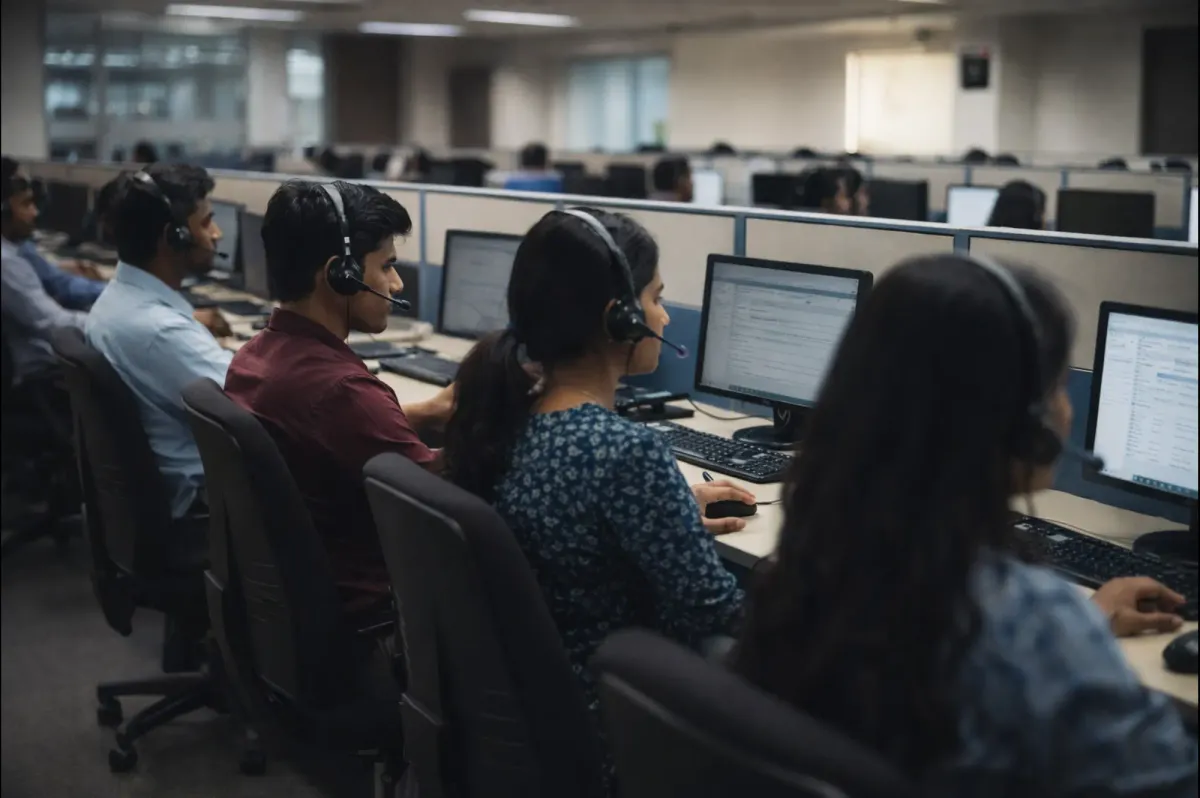
India’s BPO sector has long represented opportunity—mass employment, global integration, and digital growth. Millions of young professionals enter call centers, KPOs, and service hubs each year, drawn by stable income and career entry points.
Yet alongside this growth, everyday workplace conversations reveal a quieter question:
How are modern BPO rules affecting the people who work inside these systems every day?
This article does not target any specific company. Instead, it reflects widely shared experiences across the industry to understand how productivity expectations, workplace discipline, and human well-being intersect in real life.

$500 PayPal Gift Card
A $500 PayPal Gift card may be available to select users. Checking eligibility is quick. You can check if you’re one of them.
How BPO Work Has Quietly Changed
Today’s BPO roles demand far more than scripted calls or basic data handling. Employees are expected to maintain:
Long, uninterrupted system login hours
Strict adherence to schedules
High accuracy and output metrics
Constant screen and voice engagement
From an operational standpoint, this structure exists for valid reasons—client trust, service continuity, and data protection depend on it.
The challenge arises when efficiency systems grow faster than the support systems around them.
 Shifali Singh
The Mobile Phone Question: Policy vs Reality
In modern India, a mobile phone is no longer optional. It functions as:
A safety tool, especially during late shifts
An emergency lifeline for families
A basic communication necessity
Most BPO organizations restrict phone usage to protect sensitive client data. This concern is legitimate. However, complete isolation from personal devices, even during emergencies, can create anxiety—particularly for women and employees working night shifts.
A balanced approach usually recognizes:
Security requirements
Emergency access protocols
Controlled usage during breaks
Discipline works best when it protects people as well as data.
Screen Time, Breaks, and the Cost of Continuous Focus
Corporate health research consistently highlights the importance of short visual and physical breaks. The widely accepted 20-20-20 rule exists for a reason—it reduces eye strain and mental fatigue.
In BPO environments, employees often remain seated for hours while handling calls, dashboards, CRM tools, and performance trackers. When even brief pauses are discouraged, the effects accumulate silently.
Over time, employees report:
Eye irritation and headaches
Neck and back discomfort
Reduced concentration
Emotional exhaustion
Ironically, micro-breaks often increase accuracy and output, while constant pressure does the opposite.
Login Hours and Invisible Pressure
A typical requirement in many BPO roles includes:
8 hours of active login
1 hour of scheduled breaks
9+ hours of total presence
While this mirrors many corporate setups, stress increases when:
Minor delays are penalized
Flexibility is minimal
Personal or health-related factors are ignored
For employees managing long commutes, safety concerns, or family responsibilities, the pressure extends beyond the workplace.
Productivity improves in predictable, humane environments—not under constant fear of deduction or reprimand.
Health Is Part of the Job—Whether Acknowledged or Not
BPO employees work with their voice, vision, emotional regulation, and mental focus. These are not unlimited resources.
Extended exposure to screens and targets affects:
Sleep cycles
Stress levels
Emotional resilience
Long-term health
When health declines, performance eventually follows. No amount of rule enforcement can prevent that outcome.
Employee well-being is not a soft benefit—it is a performance factor.

Discipline and Rigidity Are Not the Same Thing
Discipline involves clarity, fairness, and accountability.
Rigidity ignores context, health, and human limits.
Strong organizations understand this distinction. They maintain structure while allowing:
Emergency exceptions
Short wellness pauses
Clear communication
Respectful enforcement
Rules are most effective when employees understand their purpose and feel protected by them—not trapped within them.
 Shyamli Singh
What Balanced Corporate Policies Usually Aim For
Across healthier workplace models, policies attempt to balance:
Security with safety
Tracking with trust
Uniform rules with situational judgment
This balance leads to higher retention, stronger morale, and long-term efficiency.
A Snapshot Understanding (For Quick Readers)
India’s BPO sector continues to grow, but its internal work structure has become more demanding. Strict productivity rules, prolonged screen exposure, and limited flexibility affect employee health and focus over time. Sustainable performance depends not only on discipline, but on policies that recognize human limits alongside operational goals.

$500 Walmart Gift Card
A $500 Walmart gift card may be available to select users. Checking eligibility is quick. You can check if you’re one of them.
Common Questions People Ask About BPO Work Culture
Is the BPO sector becoming more stressful?
Stress has increased mainly due to tighter monitoring and reduced flexibility, not necessarily because of the work itself.
Why are mobile phones restricted in most offices?
Restrictions exist to protect client data, though emergency access remains an ongoing concern.
Do short breaks reduce productivity?
Evidence suggests the opposite—brief breaks often improve focus and accuracy.
Are long login hours unique to BPO jobs?
No, but continuous screen and voice engagement makes their impact more visible in BPO roles.
Does employee well-being really affect output?
Yes. Mental and physical health directly influence performance consistency.
What This All Points To
What’s happening inside India’s BPO sector is not a crisis—it’s a transition.
As employees become more aware of health, safety, and sustainability, workplace systems are slowly being questioned and refined. Discipline will always matter. Output will always matter. But long-term success comes from systems built on reason, not pressure alone.
Strong organizations are shaped not just by rules—but by how thoughtfully those rules are applied.
Editorial Transparency
This article reflects general industry observations, not specific companies or incidents.
Its purpose is understanding, not accusation—context, not confrontation.
The content may be expanded over time with deeper analysis and internal references as workplace practices continue to evolve.