7 Easy Ways to Make a Stunning Rangoli Using Household Items This Diwali
Discover how the easy way make a rangoli using household items can transform your Diwali décor with simple materials and creative shortcuts. This concise teaser highlights seven techniques that create stunning designs without extra cost or effort.

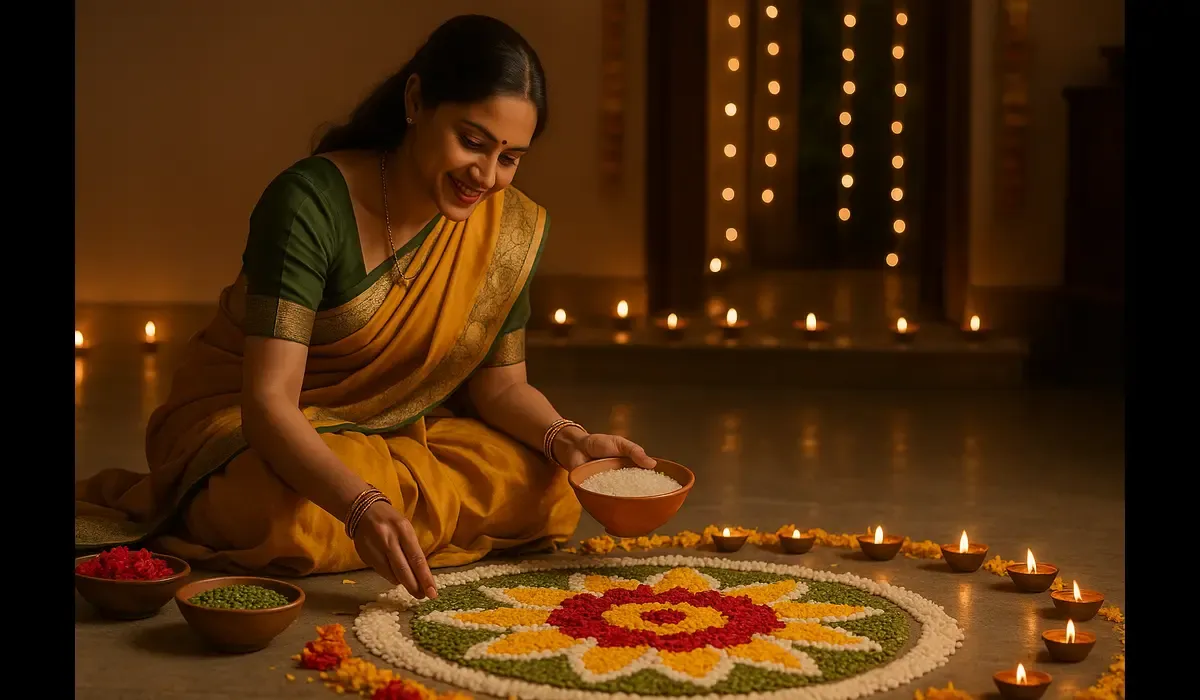
How to make a rangoli using household items for Diwali is a question that blends creativity, tradition, and sustainability. Rangoli — India’s cherished floor art — is more than decoration; it’s a symbol of prosperity and divine welcome. Each Diwali, households across India create colorful rangolis at entrances and courtyards to invite Goddess Lakshmi.
The good news is you don’t need expensive powders or kits. You can learn how to make a rangoli using household items for Diwali with materials already in your kitchen — rice, pulses, flour, salt, turmeric, and flowers. These common items, when used imaginatively, transform simple spaces into vibrant art forms.
- Learn how to make a rangoli using household items for Diwali using rice, pulses, or flowers.
- Natural materials make rangolis eco-friendly and budget-friendly.
- Focus on symmetry, simplicity, and color harmony for elegant results.
What Is Rangoli and Its Meaning in Diwali
Rangoli is a traditional Indian decorative art created on floors using natural or colored materials. The word “rangoli” comes from Sanskrit rangavalli, meaning “rows of colors.” The art originated thousands of years ago to symbolize joy, prosperity, and the welcome of divine energy.
During Diwali, making a rangoli is considered auspicious. It’s said that a bright rangoli guides Goddess Lakshmi into the home. The practice varies across India — Kolam in Tamil Nadu, Alpana in Bengal, and Sathiya in Gujarat — yet the purpose is the same: celebration through color and creativity.
Understanding how to make a rangoli using household items for Diwali brings the ancient art back to its roots — simplicity, purity, and hands-on joy.
Why Making Rangoli from Household Items Matters
Learning how to make a rangoli using household items for Diwali aligns with modern eco-friendly living. Here’s why it matters:
1. Sustainable and Zero-Waste
Household materials like rice, turmeric, coffee, and flowers are biodegradable. Unlike synthetic powders, they leave no toxic residue.
2. Budget-Friendly
Diwali often stretches household budgets. Reusing kitchen items for rangoli is economical and creative.
3. Authentic and Cultural
Traditional households once relied only on natural ingredients. Bringing back those practices strengthens cultural connection.
4. Family Bonding
Creating a rangoli together teaches children art, patience, and cultural values — all at once.
How to Make a Rangoli Using Household Items for Diwali
Step 1: Prepare the Surface
Clean the floor thoroughly. Apply a thin layer of rice flour or chalk to make it smooth and receptive to design.
Step 2: Draw the Outline
Use chalk, flour, or a pencil to trace your rangoli outline. Circles, flowers, diyas, and geometric motifs work best for beginners.
Step 3: Gather Materials
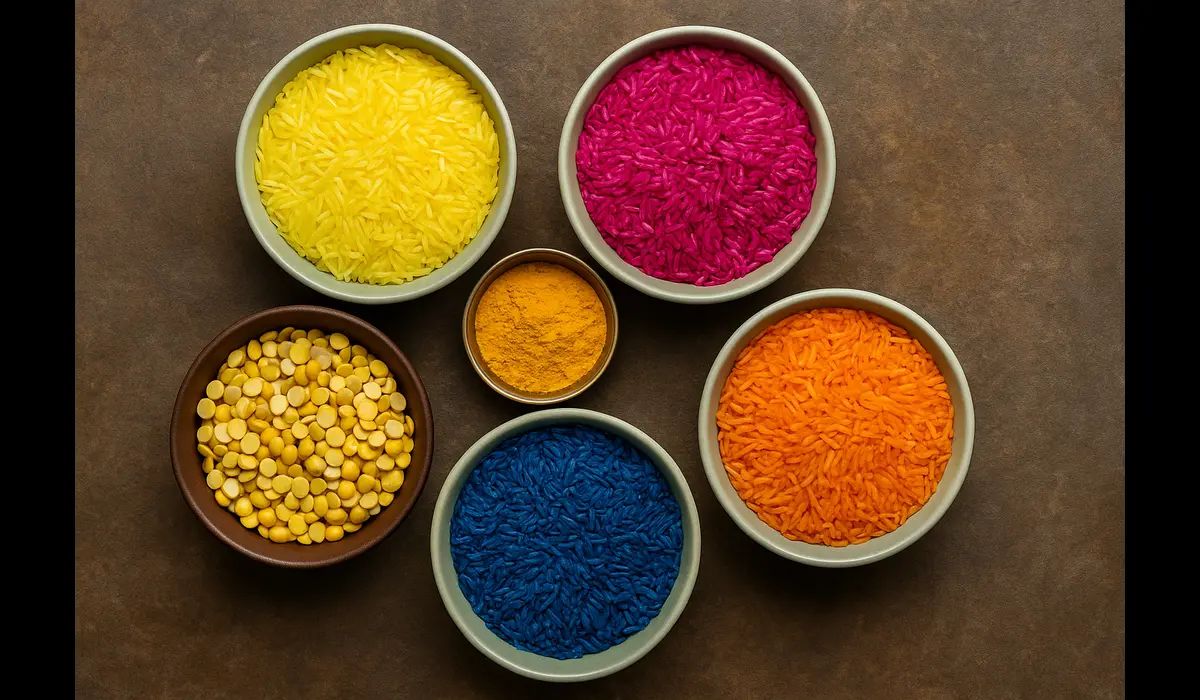
Common items for how to make a rangoli using household items for Diwali include:
| Material | Color | Best Use |
|---|---|---|
| Rice / Colored Rice | White or dyed | Base filler |
| Haldi (Turmeric) | Yellow | Borders and contrast |
| Sindoor / Kumkum | Red | Diya motifs |
| Flour or Salt | White | Outlines |
| Pulses / Lentils | Green, orange, brown | Texture and tone |
| Coffee Powder | Dark brown | Shading |
| Flower Petals | Multi-color | Focal accents |
| Spices (Mustard, Chili) | Yellow / Orange | Fine detailing |
Step 4: Fill the Design
Start filling from the center outward. Use a small spoon or cone for precision. Combine colors like red-yellow or green-white for clarity.
Step 5: Add Finishing Touches
Place diyas, candles, or mirrors along edges. For fragrance, sprinkle rose petals or apply sandalwood water.
Step 6: Preserve the Design
Mist lightly with water to settle the grains. For longer life, mix rice with a few drops of oil before coloring.
Each of these steps demonstrates practical ways to master how to make a rangoli using household items for Diwali safely and beautifully.
7 Easy Rangoli Ideas Using Household Items
1. Flower Petal Rangoli
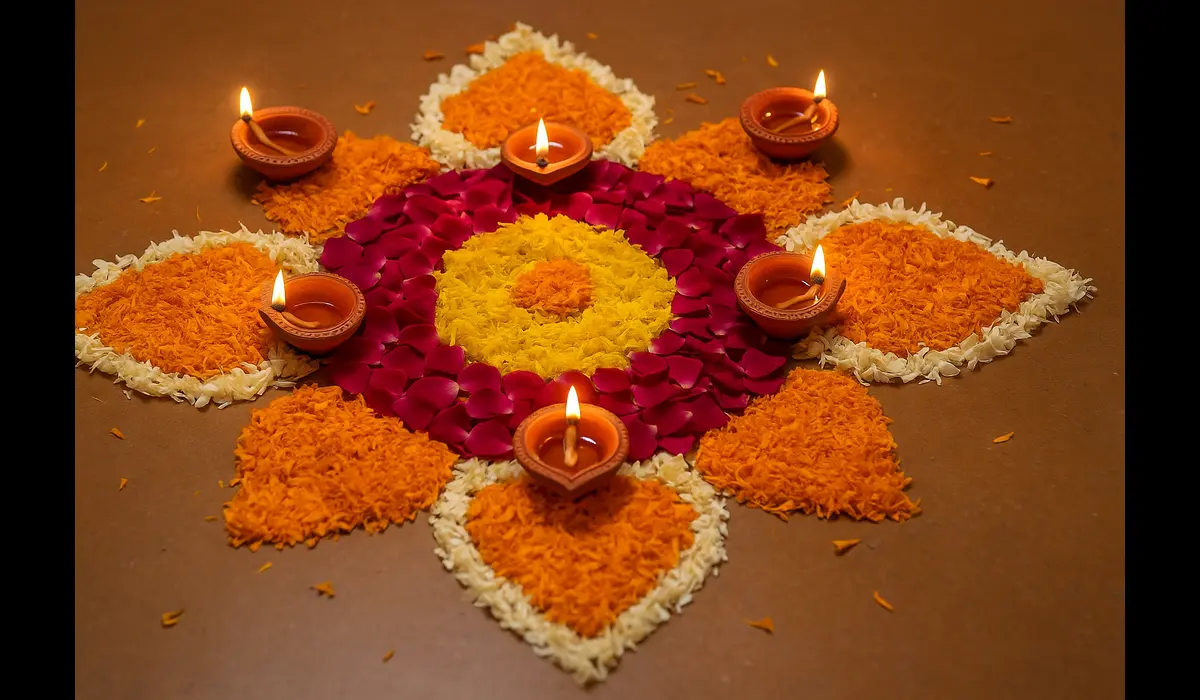
Use marigold, rose, and jasmine petals. Surround with diyas for a glowing, fragrant welcome.
2. Rice and Haldi Rangoli
Color rice using turmeric or food dye. Fill traditional motifs like diyas or lotus flowers for a classic look.
3. Pulses and Grain Rangoli
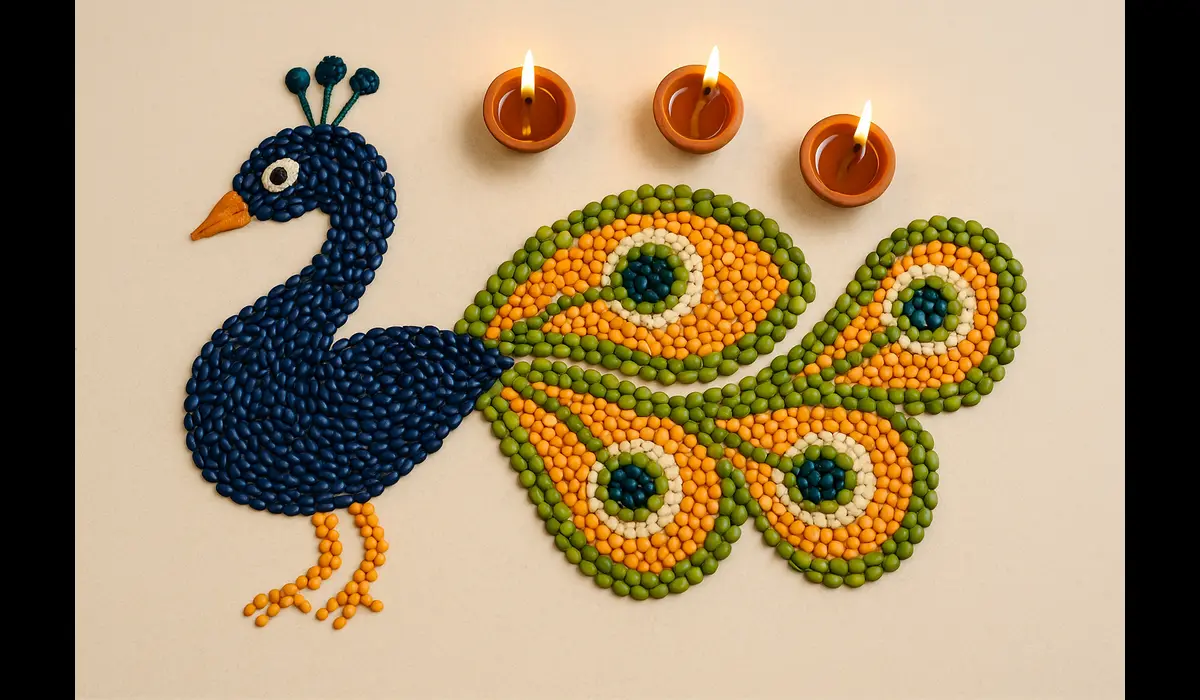
Mix lentils of varying colors to form peacock or circular patterns. This approach defines how to make a rangoli using household items for Diwali with texture and depth.
4. Salt Powder Rangoli
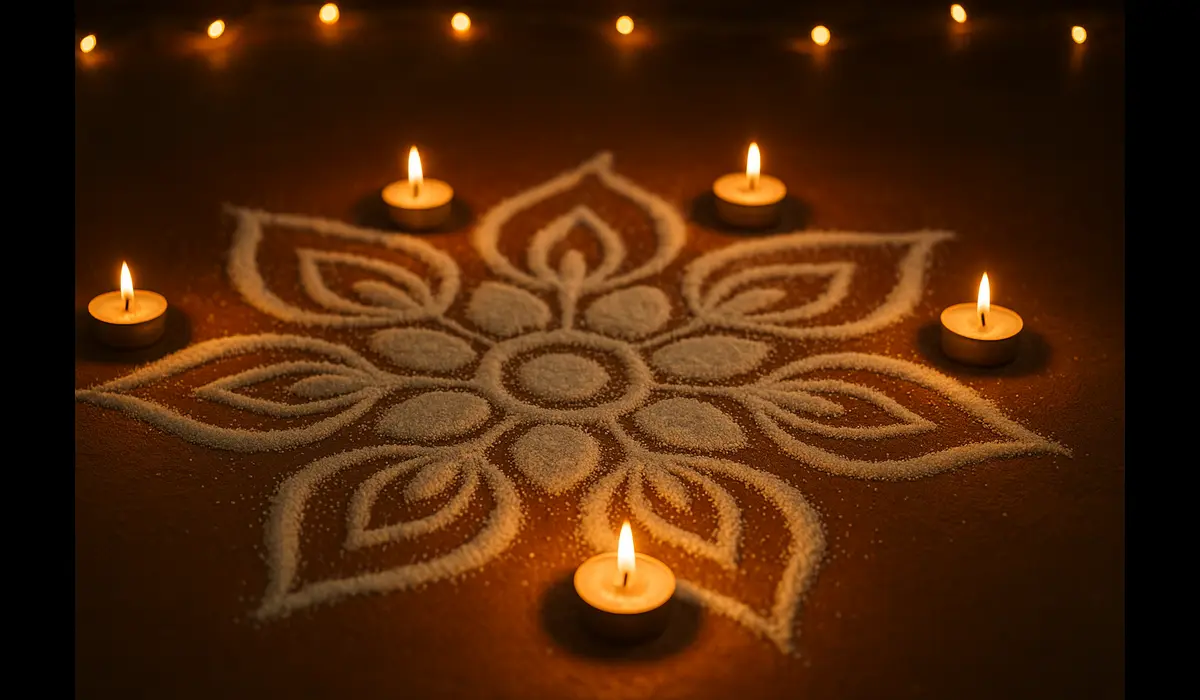
Mix salt with poster paint. The fine texture yields a professional, smooth finish.
5. Kitchen Spices Rangoli
Use turmeric, coffee, chili, and mustard for earthy tones. The aroma enhances festive ambiance.
6. Rangoli with Diyas and Mirrors
Instead of color, place diyas and small mirrors in your drawn outline. Elegant and minimal.
7. Leaf and Flower Rangoli
Outline with mango or betel leaves, fill with flowers — 100 % eco-friendly and vibrant.
Common Mistakes to Avoid
- Skipping Surface Prep: Dust causes uneven edges.
- Overcrowding Colors: Balance bright and neutral tones.
- Using Wet Items: Moisture clumps powders.
- Wrong Location: Avoid high-traffic areas.
- Neglecting Proportion: Maintain symmetry — a core rule of how to make a rangoli using household items for Diwali effectively.
Cultural Examples and Case Studies
Every Indian region has mastered unique methods of how to make a rangoli using household items for Diwali:
- Tamil Nadu: Kolam patterns drawn daily using rice flour.
- Maharashtra: Turmeric-kumkum designs reflecting divine duality.
- Gujarat: Lentil-based peacock motifs.
- Punjab: Bright chalk outlines with natural pigments.
Expert Insight
Art scholar Dr. Meena Patel notes:
“Using household materials in rangoli revives domestic artistry — it connects sustainability with devotion.”
Step-by-Step DIY Inspiration
Below is a practical breakdown to help you apply how to make a rangoli using household items for Diwali this year:
- Select a simple circular layout.
- Draw borders using flour.
- Fill alternate sections with colored rice and pulses.
- Add marigold petals between layers.
- Outline with turmeric and coffee powder for contrast.
- Finish by placing four diyas symmetrically.
This structured process guarantees a clean, traditional finish while keeping the materials 100 % natural.
Future Trends in Eco-Friendly Rangoli
- Organic Rangoli Kits: Pre-packed rice, turmeric, petals.
- Digital Templates: Printable stencils for symmetry.
- Office Rangoli Challenges: Promoting green celebration culture.
- Reusable Frames: Wooden boards for mess-free rangolis.
- Hybrid Materials: Recyclable sand-free powders.
The future of how to make a rangoli using household items for Diwali lies in merging heritage with environmental responsibility.
FAQs
1. What are the easiest items for how to make a rangoli using household items for Diwali?
Rice, flour, pulses, coffee powder, and petals are the simplest, safest materials for beginners.
2. How can I color rice at home?
Mix rice with food dye or natural colors like turmeric or beetroot juice. Dry thoroughly before using.
3. How long does a household-item rangoli last?
Indoor rangolis last 2–3 days. Keep them away from moisture and heavy traffic.
4. Is making rangoli with household items eco-friendly?
Yes, every ingredient used in how to make a rangoli using household items for Diwali is biodegradable and safe.
5. Can children participate?
Absolutely. It’s safe, fun, and educational — a perfect festive family activity.
6. Do household rangolis attract insects?
If food grains are used, limit duration to 24–48 hours and clean promptly after Diwali.
7. How do I create symmetry?
Use round stencils or divide your pattern into equal quadrants before filling.
Key Takeaways
- Mastering how to make a rangoli using household items for Diwali helps combine creativity, tradition, and sustainability.
- Always clean and dry the base before starting.
- Mix bright natural tones like turmeric and kumkum for vibrant contrast.
- Choose symmetrical patterns for elegance.
- Engage family members for shared joy.
- Eco-friendly materials ensure a guilt-free celebration.
- Household rangolis prove beauty can come from simplicity.
Conclusion
Learning how to make a rangoli using household items for Diwali is a reminder that art lives in everyday materials. With rice, pulses, spices, and petals, you can design stunning patterns that honor culture while protecting the planet.
This Diwali, transform your home into a canvas of colors and consciousness. Celebrate not with excess, but with imagination.