Which AI Browser Wins? ChatGPT Atlas vs Perplexity Comet
ChatGPT said: ChatGPT Atlas vs Perplexity Comet is the showdown shaping the future of AI browsing. This teaser breaks down performance, accuracy, and usability to reveal which tool truly leads — and why the differences matter more than you think.

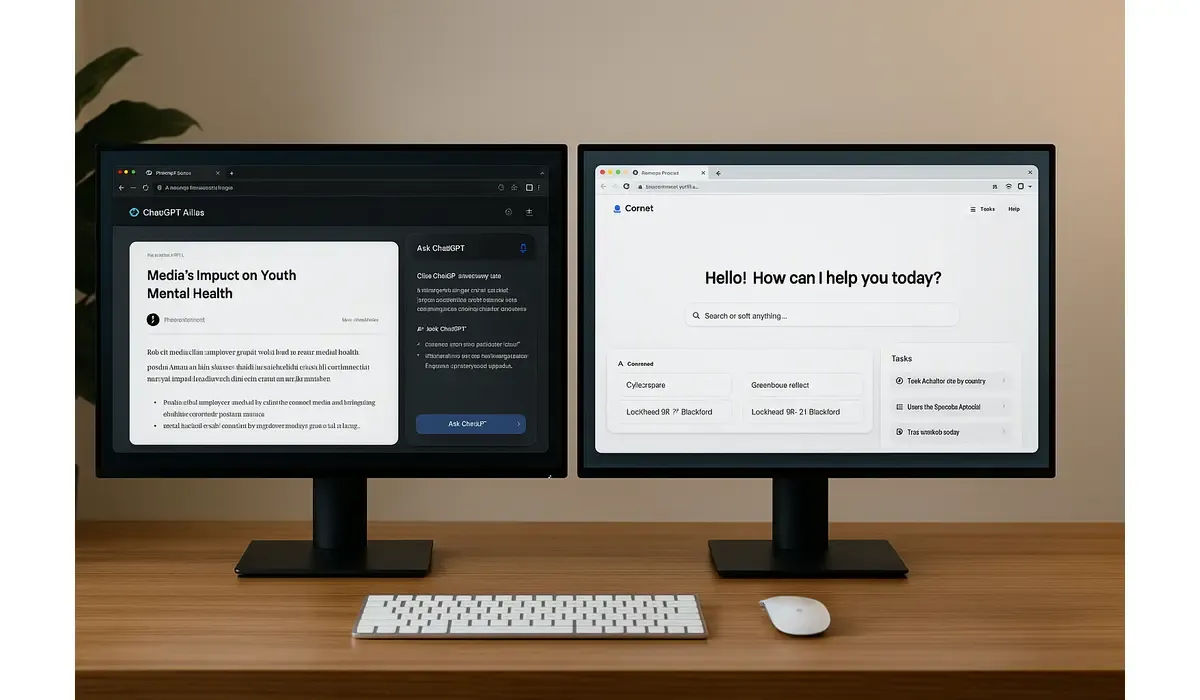
The ChatGPT Atlas vs Perplexity Comet battle has redefined how we think about browsing. Forget tabs, endless searches, or juggling apps — both browsers promise something bolder: an intelligent assistant that thinks while you browse.
But which one actually delivers a smarter, faster, and more intuitive web experience? We put both under the microscope to see who leads this new AI-powered internet era.
What Is ChatGPT Atlas?
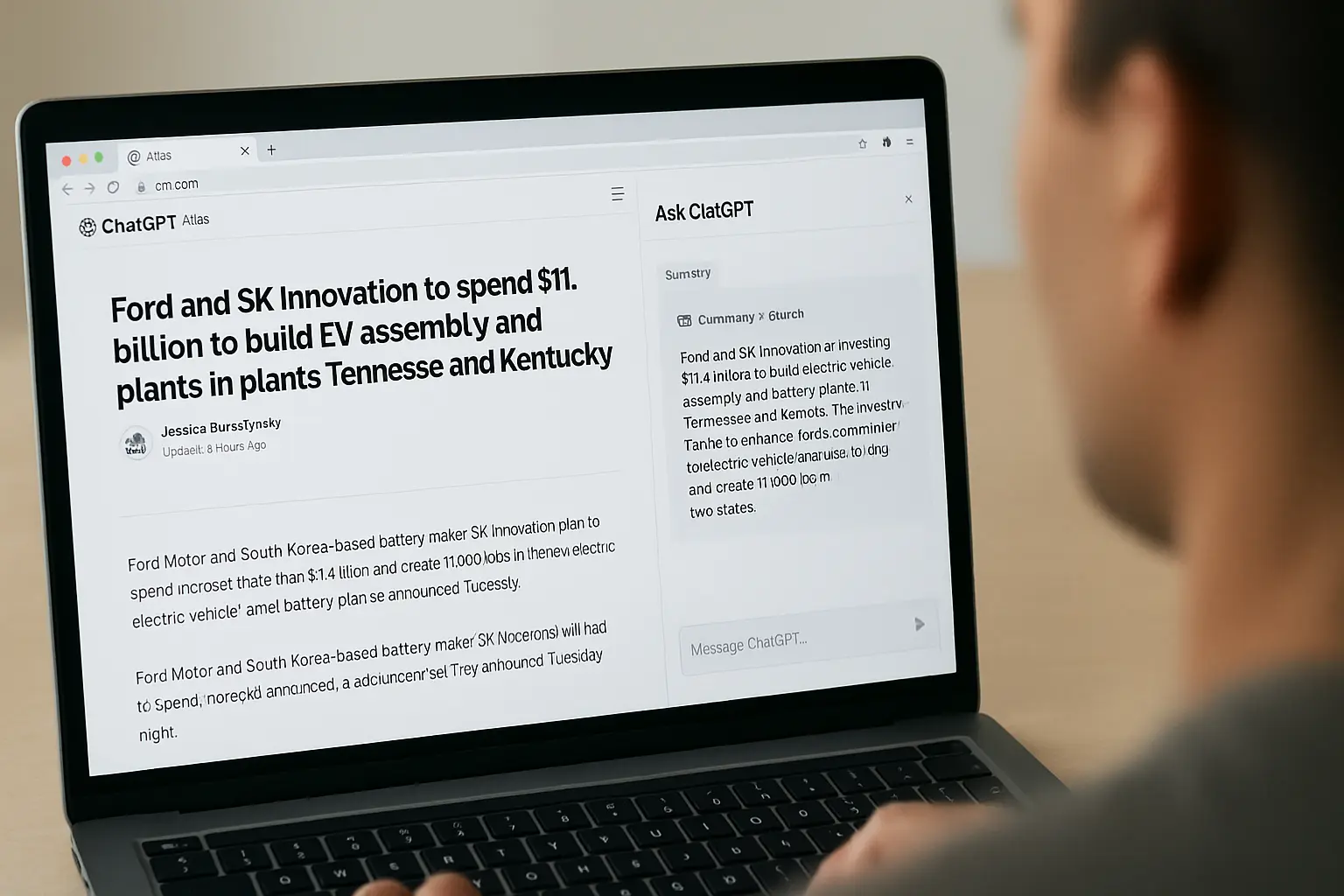
ChatGPT Atlas is OpenAI’s first full-scale AI-native browser, powered by the same intelligence behind ChatGPT. Instead of passively displaying web pages, Atlas interacts with them — summarizing articles, generating insights, writing notes, and even executing tasks across tabs.
In essence, Atlas transforms the browser into a research partner. Its standout feature, the “Ask ChatGPT” sidebar, allows users to query any webpage without switching tabs. You can highlight text, request a summary, or even draft responses instantly.

What Is Perplexity Comet?
Perplexity Comet is Perplexity AI’s bold entry into the browser market. While Atlas integrates ChatGPT, Comet builds its identity around contextual intelligence — an assistant that not only answers your questions but understands your browsing patterns.
It acts like a personalized navigator. You can ask it to find the best reviews, track down citations, or compile lists, all while staying within the same window. Its design leans on Chromium foundations, giving it a familiar feel while adding AI superpowers.
The Core Battle: AI Brainpower and User Control
Both browsers promise “AI-assisted browsing,” but their philosophies differ.
ChatGPT Atlas focuses on deep language intelligence and conversation continuity. It’s a browser that thinks like ChatGPT. The interaction feels human-like — perfect for writing, research, or summarizing long reports.
Perplexity Comet, meanwhile, is more about speed and structured information retrieval. It excels at concise answers, document summaries, and follow-up exploration — ideal for analysts, students, and professionals looking to cut through clutter.
| Feature | ChatGPT Atlas | Perplexity Comet |
|---|---|---|
| Core Engine | GPT-powered natural conversation | Contextual AI with retrieval optimization |
| Interface | Clean, ChatGPT-styled, minimal UI | Chromium-based, familiar layout |
| Key Feature | “Ask ChatGPT” sidebar for instant queries | Comet Assistant for real-time task execution |
| Privacy Mode | Opt-out memory by default | Custom permissions for browsing context |
| Target Audience | Creators, writers, researchers | Power users, multitaskers, productivity seekers |
Performance and Experience
Atlas loads fast, thanks to OpenAI’s new compression layer, but what stands out most is its fluid conversation flow. You can open a research paper, ask for a summary, and immediately request a comparison with another source — all without leaving the tab.
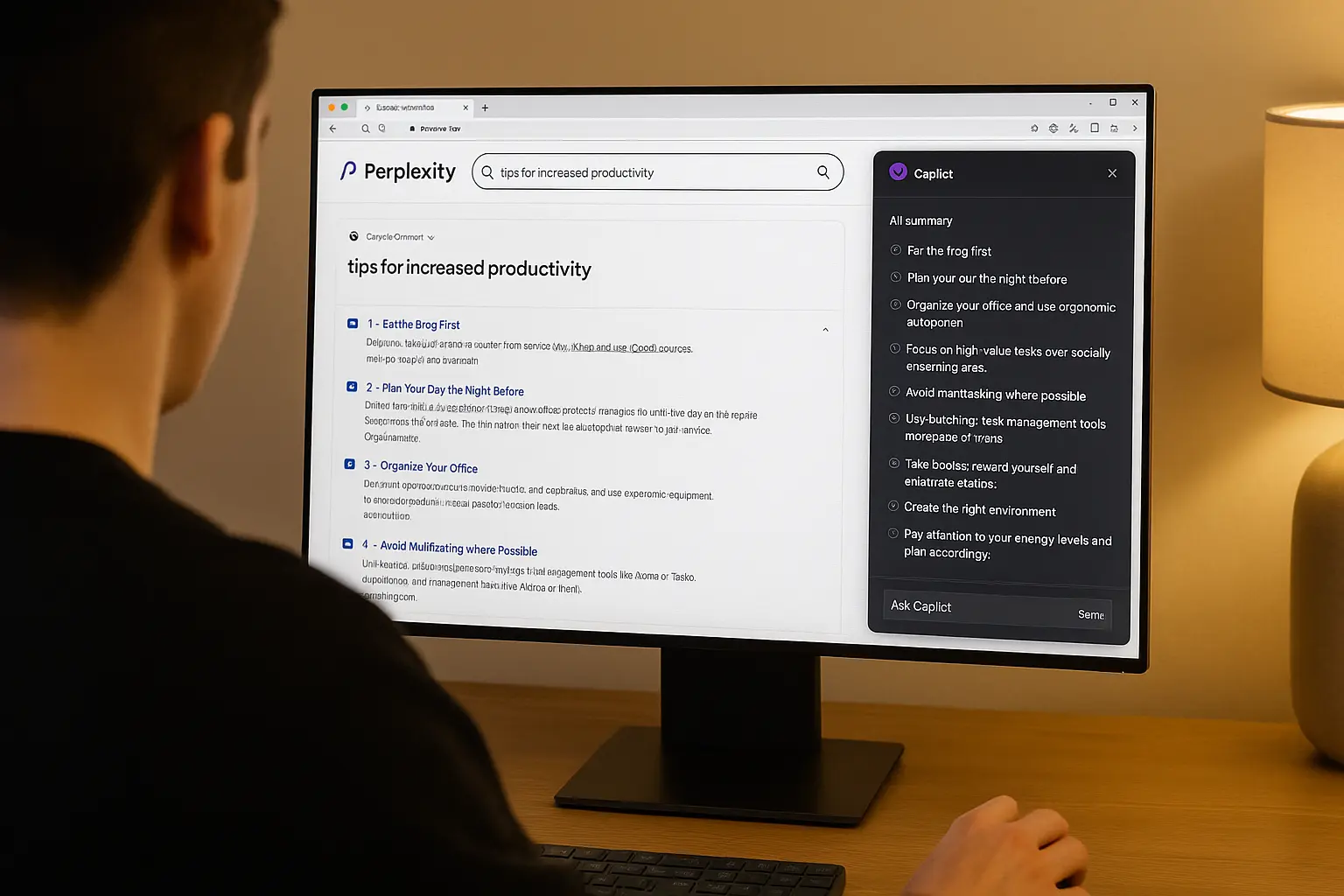
Comet, in contrast, feels more structured. It prefers lists, snapshots, and precise responses. For example, when researching “AI market trends,” Comet displays a summarized dashboard with stats, while Atlas explains trends conversationally.
Verdict:
- Atlas: Ideal for people who want conversational AI guidance.
- Comet: Ideal for users who want organized, quick, fact-style results.
Privacy and Security: Who Keeps You Safer?
Privacy has become the ultimate deal-breaker in AI tools.
ChatGPT Atlas emphasizes privacy by design. It keeps data local where possible and allows users to turn off “memory mode.” This means Atlas won’t retain your browsing habits unless you enable it.
Perplexity Comet also offers privacy controls but leans on contextual learning — it remembers past interactions for better predictions. While helpful for convenience, it may raise flags for privacy-conscious users.
If you value anonymity and data minimalism, Atlas edges ahead. If personalization and adaptive context matter more, Comet delivers.
Ecosystem and Integration
Atlas is still new, but it integrates tightly with OpenAI’s ecosystem — including ChatGPT, DALL-E, and Whisper. Future updates are expected to bring seamless task automation like drafting emails, managing files, or generating visuals directly from web content.
Comet integrates with productivity tools like Notion, Slack, and Google Drive, offering immediate contextual access. You can ask Comet to “summarize this Notion doc” or “find related Drive files,” and it acts instantly.
In short:
- Atlas = Deep AI integration with creativity tools.
- Comet = Practical AI integration with daily workflow apps.
Real-World Usability: The Experience Test
To test real usability, we performed four tasks on both browsers:
- Summarizing a 2,000-word news article.
- Atlas gave a concise, emotionally aware summary.
- Comet offered a fact-driven, list-style digest.
- Generating a quick report from multiple tabs.
- Atlas handled tab context smoothly using “multi-tab conversation.”
- Comet required manual prompts for each tab but merged the data neatly.
- Performing research with citations.
- Atlas retrieved relevant context but cited sources conversationally.
- Comet presented proper reference links and structure.
- Privacy toggle test.
- Atlas memory off = zero retention.
- Comet retained topic patterns even after clearing session.
Result: Atlas wins for conversational intelligence and flow; Comet wins for analytical precision and data organization.
Expert View: Industry Analysts Weigh In
Industry experts believe these two browsers symbolize the future of AI interfaces.
Tech analysts call ChatGPT Atlas “the browser that learns like a person” — designed to evolve with your habits, not just follow commands. Its contextual reasoning mimics human dialogue.
On the other hand, Perplexity Comet earns praise for “structural clarity and transparency.” Its approach feels more utilitarian, less like a chatbot, and more like an assistant quietly working in the background.
In simpler terms: Atlas feels alive; Comet feels efficient.
- Technology analyst Dr. Meera Anan
“ChatGPT Atlas creates a two-way web. Instead of typing and clicking, you now discuss, question, and reason with the internet itself. It’s not about faster answers; it’s about better thinking.”
- Digital strategist Rahul Menon
“Comet is for users who already know what they want. It doesn’t talk much; it just delivers results fast, with zero fluff.”
What Readers Should Do
- Try both for a week. Notice whether you prefer natural conversation (Atlas) or task precision (Comet).
- Evaluate your workflow. Writers, researchers, and students will love Atlas; analysts and executives may prefer Comet.
- Check compatibility. Atlas is Mac-only for now, while Comet runs cross-platform.
- Stay updated. Both browsers are evolving fast — expect weekly improvements.

$500 Walmart Gift Card
A $500 Walmart gift card may be available to select users. Checking eligibility is quick. You can check if you’re one of them.
FAQs
Q1. What is ChatGPT Atlas vs Perplexity Comet?
It’s the comparison of two next-gen AI browsers that redefine how we interact with the internet — OpenAI’s Atlas and Perplexity’s Comet.
Q2. Which AI browser is faster?
Perplexity Comet feels faster in retrieving factual data, while Atlas feels smoother in dialogue-based tasks.
Q3. Which browser is safer?
ChatGPT Atlas offers stronger privacy defaults and more transparent memory control.
Q4. Can they replace Chrome or Safari?
Not yet, but both are early glimpses into what the future of browsing may look like — smart, adaptive, and assistant-driven.
Key Takeaways
- ChatGPT Atlas vs Perplexity Comet isn’t just a feature race — it’s a philosophical divide between creative AI and structured AI.
- Atlas shines in conversation, creativity, and control.
- Comet excels in clarity, task management, and speed.
- The right choice depends on whether you want your browser to talk with you or work silently for you.
Conclusion
The ChatGPT Atlas vs Perplexity Comet debate marks a turning point in web history. For the first time, browsers aren’t just portals — they’re partners. Atlas may feel more human; Comet feels more machine-perfect.
But both are reshaping how we read, learn, and act online. The real winner isn’t the browser — it’s the user who learns to use AI intelligently.