Why the World Health Organization Matters More During Global Health Crises
The World Health Organization plays a central role in shaping global public health, yet its purpose and limits are often misunderstood. This article explains what the WHO actually does, how it works with countries, and why its role continues to matter in a changing world.


Why the World Keeps Turning to the WHO in Health Crises
When a disease crosses borders, governments often react at different speeds, with different priorities and resources. Some have strong healthcare systems; others struggle to provide basic services. In moments like these, a single question quietly shapes global response: who coordinates health action when no country can act alone?
The World Health Organization exists to fill that gap. Yet many people know the name without fully understanding what it actually does, what power it holds, and where its limits begin.

$500 Walmart Gift Card
A $500 Walmart gift card may be available to select users. Checking eligibility is quick. You can check if you’re one of them.
What the World Health Organization Actually Is
The World Health Organization is the United Nations’ specialized agency for public health. It was established in 1948 with a narrow but ambitious mandate: to promote the highest possible level of health for all people.
WHO is not a global government, and it does not control national health systems. Instead, it operates as a coordinating body—bringing together scientific evidence, expert consensus, and international cooperation to address health risks that no single country can manage alone.
Its authority comes not from enforcement power, but from credibility, technical expertise, and global trust.
Why the WHO Still Matters in a Rapidly Changing World
Health threats today move faster and spread wider than in the past. International travel, climate change, urbanization, and misinformation have reshaped how diseases emerge and how societies respond.
In this environment, WHO serves several critical functions that remain stable even as conditions change:
- It establishes shared health standards, so countries are not working from incompatible rulebooks.
- It acts as an early warning system when outbreaks show signs of international spread.
- It provides technical guidance to countries with limited research or medical infrastructure.
At the same time, WHO does not replace national decision-making. It advises, coordinates, and supports—but implementation always depends on governments themselves.
 Shyamli Singh
How the Organization Operates Behind the Scenes
WHO’s work is often misunderstood as purely reactive, focused only on emergencies. In reality, its operations are divided across several interconnected layers.
At the global level, WHO develops guidelines based on scientific review and expert panels. These cover areas such as disease surveillance, vaccination schedules, nutrition standards, and emergency preparedness.
At the regional level, WHO offices adapt global guidance to local realities. Health risks in Southeast Asia differ from those in Europe or Africa, and WHO’s regional structure allows for this variation without fragmenting standards.
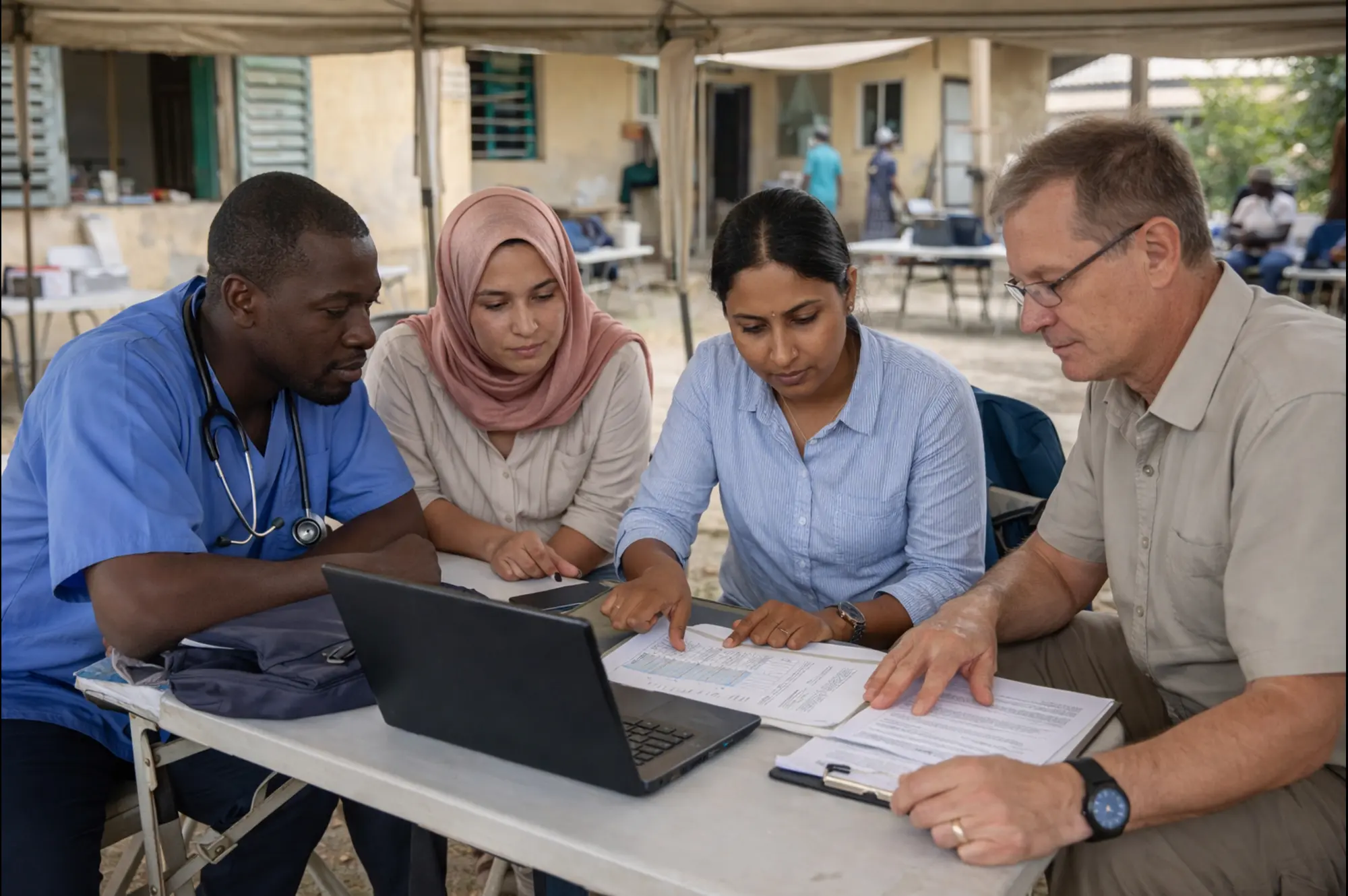
At the country level, WHO works directly with health ministries—helping design policies, train health workers, and improve data collection. This quiet, technical support is often invisible to the public but forms the backbone of long-term health capacity.
What WHO Does During Health Emergencies
When outbreaks escalate, WHO’s role becomes more visible—but also more constrained.
The organization gathers data from multiple countries, assesses risks, and communicates findings to governments and the public. In some cases, it declares international health emergencies to signal the seriousness of a situation and encourage coordinated action.
WHO may deploy experts, support laboratories, and coordinate supply chains for vaccines or medical equipment. However, it cannot force countries to share data, close borders, or adopt specific policies. Cooperation remains voluntary.
This balance—between urgency and sovereignty—is one of the defining tensions in global health governance.
How WHO Decisions Affect Everyday Life
Many WHO recommendations quietly shape daily health practices without drawing attention.
National vaccination programs often align with WHO guidance. Food safety standards, disease classifications, and even air quality thresholds frequently trace back to WHO research. During crises, WHO advisories influence travel policies, public messaging, and hospital protocols.
At the same time, misunderstandings arise when WHO guidance is treated as rigid rules rather than adaptive frameworks. Recommendations evolve as evidence changes, which can appear inconsistent without context.
A Common Misunderstanding About WHO’s Authority
One of the most persistent misconceptions is that WHO “controls” global health responses. In reality, its influence depends on trust and cooperation.
WHO can recommend, coordinate, and warn—but it cannot compel action. When countries ignore guidance or delay reporting outbreaks, WHO’s effectiveness is limited. This is not a design flaw as much as a reflection of how international institutions operate in a world of sovereign states.
Understanding this limitation helps explain both WHO’s successes and its frustrations.
 Shifali Singh
 Shifali Singh
A Short, Clear Way to Understand WHO’s Role
The World Health Organization exists to help countries see health risks clearly, respond collectively, and base decisions on shared evidence rather than isolated judgment. It does not govern nations, but it shapes the global health conversation by setting standards, coordinating responses, and supporting systems where capacity is weakest. Its strength lies in trust, expertise, and cooperation—not enforcement.

$500 PayPal Gift Card
A $500 PayPal Gift card may be available to select users. Checking eligibility is quick. You can check if you’re one of them.
Questions People Often Ask About WHO
Is WHO part of any single country’s government?
No. WHO is an independent UN agency supported by its member states.
Can WHO enforce health rules globally?
No. Its guidance is advisory, not legally binding.
How is WHO funded?
Through a mix of mandatory member contributions and voluntary donations from governments and organizations.
Does WHO focus only on diseases?
No. It also works on nutrition, mental health, environmental health, and health system strengthening.
Why do WHO recommendations sometimes change?
Because guidance evolves as scientific evidence improves and situations develop.
Seeing WHO for What It Really Is
The World Health Organization is neither a global health authority with absolute power nor a symbolic institution without impact. It operates in the space between science and diplomacy—where evidence, politics, and human behavior intersect.
Its effectiveness depends not only on its expertise, but on how willingly the world chooses to listen.