7 Inspiring Lessons from India’s Women-Led Finance Movement That the USA Must Learn Now


The women-led finance movement in India has transformed rural savings, entrepreneurship, and inclusive lending — redefining the role of women in national wealth creation. Today, as the USA continues to pursue gender balance in finance and investment, India’s success stories offer timeless lessons in resilience, empowerment, and community-driven economics.
This article explores how the Indian model of women-led financial inclusion — from self-help groups to digital savings cooperatives — can inspire practical, scalable reforms for gender equality in America’s wealth management and fintech sectors.
- India’s women-led finance model empowers over 80 million women through self-reliance and shared savings.
- The U.S. can adapt cooperative, community-based finance models to close the gender wealth gap.
- Gender-balanced financial systems drive national stability, inclusive growth, and intergenerational wealth.
What Is the Women-Led Finance Movement?
The women-led finance movement in India is a community-driven initiative where women collectively manage savings, credit, and micro-investments to achieve economic independence.
Programs such as the Self-Help Group (SHG) Network, Mahila Bank, and Microcredit Programs have created financial access for millions who were once excluded from mainstream banking.
In this movement, women are not just participants — they are financial leaders, decision-makers, and risk mitigators. Through collective savings and lending circles, they develop financial literacy, entrepreneurship, and credit discipline — pillars that can reshape the financial ecosystem anywhere, including in the USA.
Why It Matters
The women-led finance movement’s relevance extends far beyond India.
Globally, women own only 32% of financial assets, and in the U.S., they manage just 2% of venture capital funds. These figures expose persistent gender gaps that weaken overall economic resilience.
India’s approach has proven that when women control savings and access structured credit, families and communities rise together.
By integrating these cooperative models, the U.S. financial industry can enhance inclusion, ethical lending, and long-term wealth equity.
Core Lessons from India’s Women-Led Finance Movement

1. Building Trust through Collective Finance
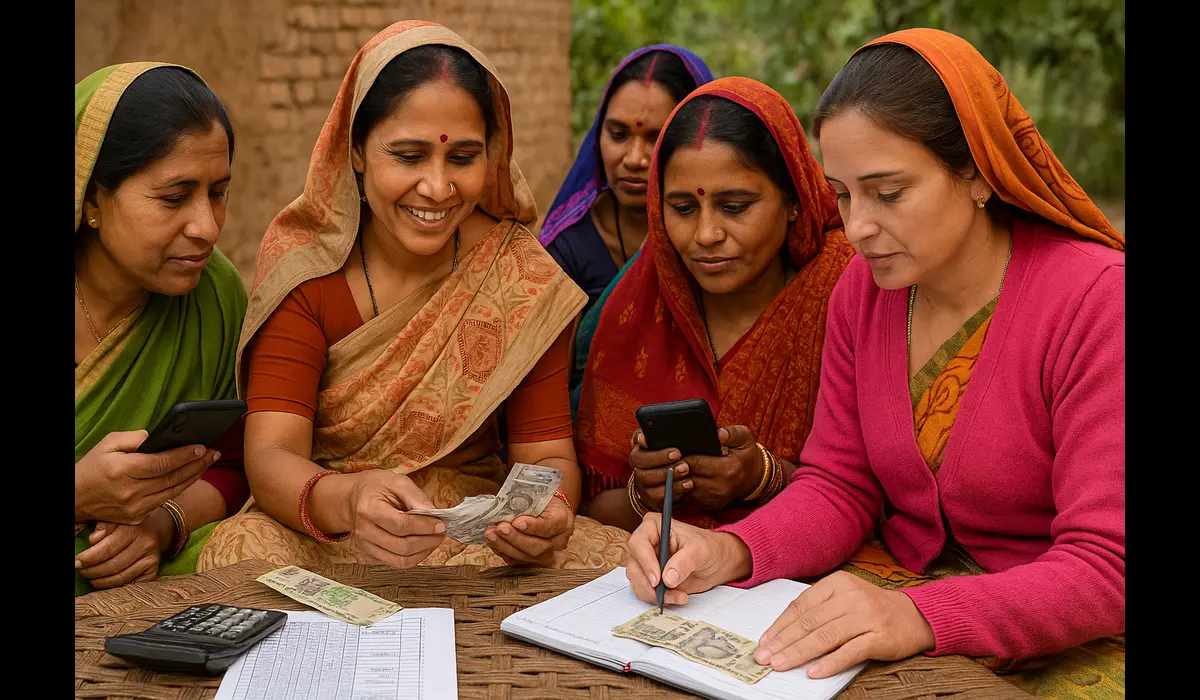
In India, Self-Help Groups (SHGs) unite 10–20 women to pool savings and extend microloans to one another.
This peer-based accountability builds trust and reduces default rates — a concept U.S. credit unions and fintech startups could replicate for women-owned businesses.
2. Financial Literacy as a Lifelong Asset
Women-led programs emphasize training in bookkeeping, budgeting, and digital banking.
The U.S. can adopt these grassroots financial literacy initiatives to help underrepresented women — particularly minorities — navigate credit systems confidently.
3. Technology as an Equalizer
India’s digital payment systems (UPI, Jan Dhan, Aadhaar) have revolutionized access.
Similarly, U.S. fintech firms can use digital identity and blockchain to expand secure, women-centered investment platforms.
4. Family-Centric Financial Models
In India, women’s investments often focus on education, healthcare, and small enterprises.
Such values-driven finance can guide U.S. policies toward family-oriented, ethical investment strategies.
5. Leadership through Micro-Entrepreneurship
From dairy cooperatives to solar enterprises, Indian women’s groups demonstrate how entrepreneurship transforms local economies.
In the U.S., similar cooperative entrepreneurship programs could reshape underbanked regions and immigrant communities.
How Can the USA Adapt These Principles?
Policy Alignment
U.S. policymakers can integrate microfinance principles into small business grants, especially targeting women in rural and minority communities.
Financial Inclusion Programs
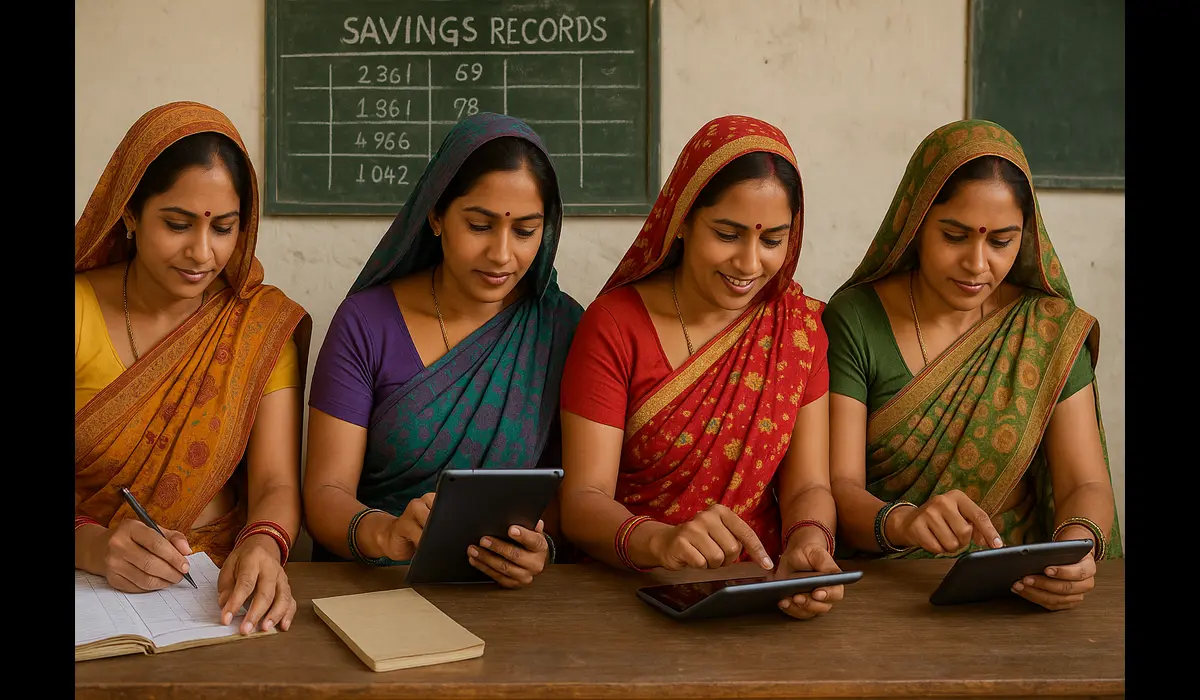
Adopt women-led financial inclusion frameworks in state-level initiatives — bridging fintech with human-centric mentoring programs.
Corporate and ESG Investment
Encouraging corporations to invest in women-led funds enhances both brand equity and social impact metrics.
Educational Reform
Financial education must be integrated early — in schools, universities, and community centers — mirroring India’s model of “learn-by-doing” finance.
Common Misconceptions About Women-Led Finance
- “Women investors are risk-averse.”
Reality: Studies show women investors achieve higher returns through disciplined, long-term investing. - “Microfinance is only for the poor.”
Reality: It’s a scalable wealth-generation model that can work for all income levels when structured correctly. - “Gender equality slows decision-making.”
Reality: Data shows gender-diverse boards improve innovation and profitability.
Expert Views & Case Studies
- Case: Kudumbashree, Kerala (India): A women-led network of 4 million members managing $2.5 billion in collective savings.
- Parallel Opportunity in the USA: Establishing nationwide cooperative lending platforms could support women entrepreneurs and bridge cultural finance models.
- Expert Insight: According to development economists, community-driven savings reduce inequality faster than top-down reforms.
FAQs
1. What is India’s women-led finance movement?
It’s a grassroots initiative where women manage pooled savings, lending, and micro-investments to achieve financial independence.
2. How can this model inspire the USA’s finance system?
By integrating cooperative lending, financial education, and digital inclusion, the U.S. can enhance women’s economic leadership.
3. Are there successful examples of women-led financial systems in India?
Yes — initiatives like SEWA, Kudumbashree, and Mahila Bank have redefined access to capital for millions.
4. How can U.S. women benefit from similar models?
Through community lending circles, peer mentorship, and gender-focused financial literacy programs.
Key Takeaways
- The women-led finance movement empowers wealth equality and inclusive growth.
- U.S. institutions can learn from India’s collective savings and cooperative lending models.
- Financial literacy and digital empowerment are key pillars for sustainable change.
- Investing in women’s leadership in finance benefits entire economies.
Conclusion
India’s women-led finance movement has redefined empowerment, not through charity, but through sustainable economic leadership.
As the United States strives for financial equality, adapting these community-first, education-driven, and technology-enabled models can unlock vast potential in its female workforce.