WHO Alerts India to Toxic Cough Syrup Exports Because of Child Deaths
This report on the WHO alerts India toxic cough syrup incident explains how contaminated exports were linked to child deaths—breaking down the investigation, global warnings, and what India must do to prevent future risks.

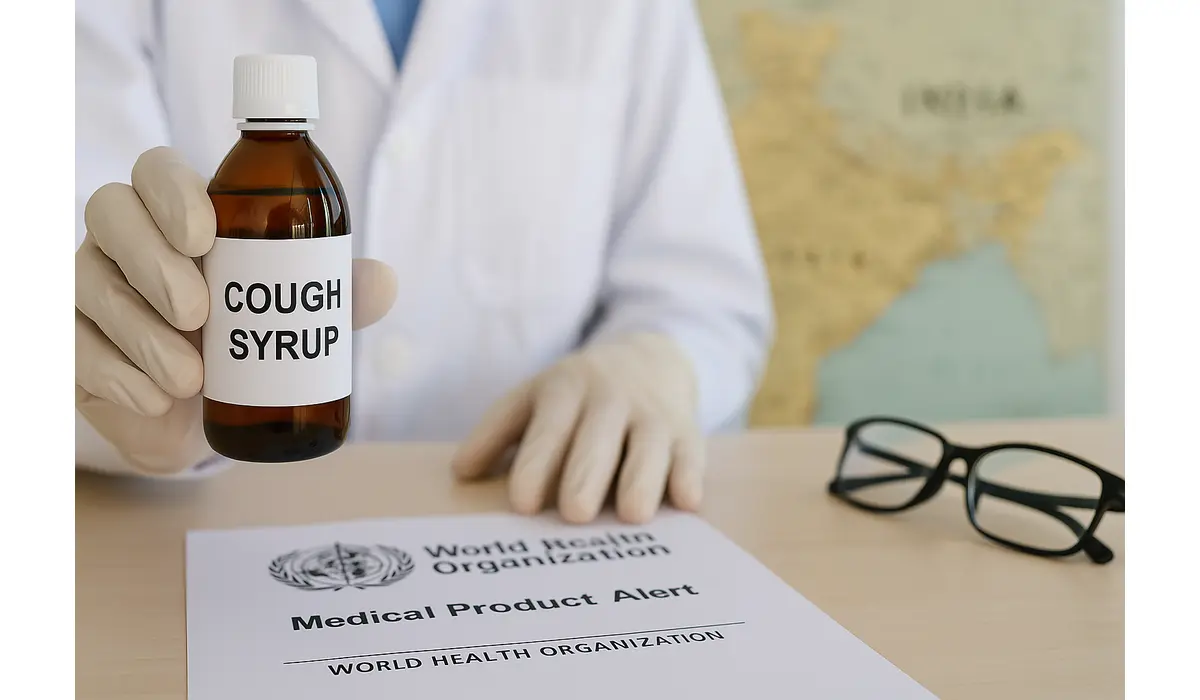
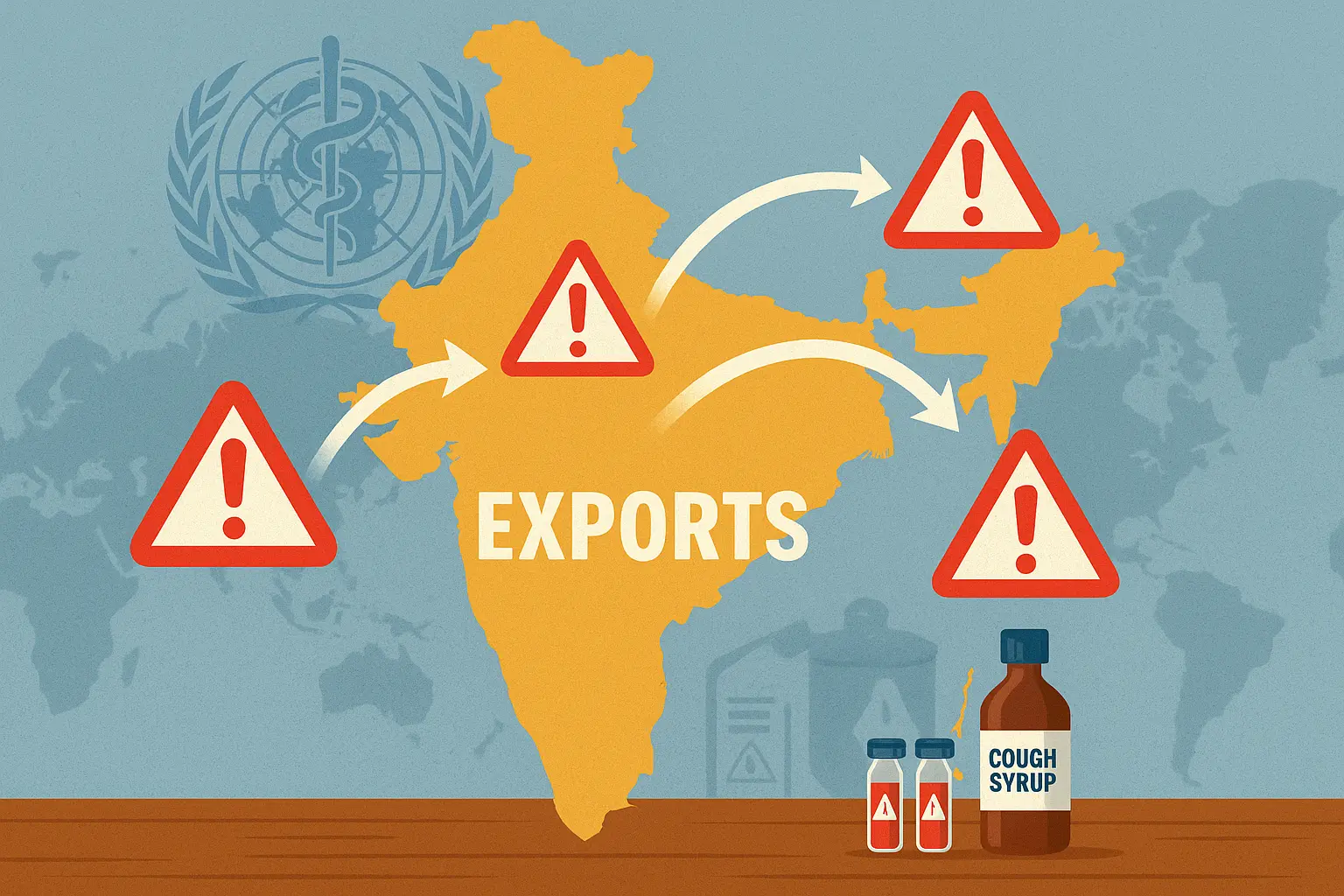
WHO alerts India over toxic cough syrup in light of alarming child deaths reportedly tied to contaminated medicines. This demand raises urgent questions about export safety and regulatory oversight.
- WHO has asked India whether the implicated syrup batches were exported.
- At least 17 children have died in India after consuming the suspected product.
- A global medical product alert may follow if exports are confirmed.
Context: What Is the WHO Alert About?
The WHO alerts India over toxic cough syrup refers to its formal request to India’s authorities seeking clarity on whether any batches of cough syrup suspected in fatalities were shipped abroad. The move underscores concern over medical safety and cross-border pharmaceutical trade.
India has faced multiple recent child deaths after ingestion of a cough syrup found to contain dangerously high levels of diethylene glycol (DEG), an industrial chemical known to cause renal failure. Investigations are ongoing to trace the source and distribution.
Latest Developments & Key Facts
WHO’s Request & Possible Actions
WHO has asked India to confirm whether the contaminated cough syrup was exported. Depending on India’s response, WHO may issue a Global Medical Products Alert to prevent further harm elsewhere.
Reported Child Deaths
Indian authorities confirm at least 17 children under age five have died after consumption of the suspected syrup. Many of the deaths occurred in Madhya Pradesh and Rajasthan, with additional cases in states like Telangana issuing public warnings.

$500 Walmart Gift Card
A $500 Walmart gift card may be available to select users. Checking eligibility is quick. You can check if you’re one of them.
Discovery of Toxic Contamination
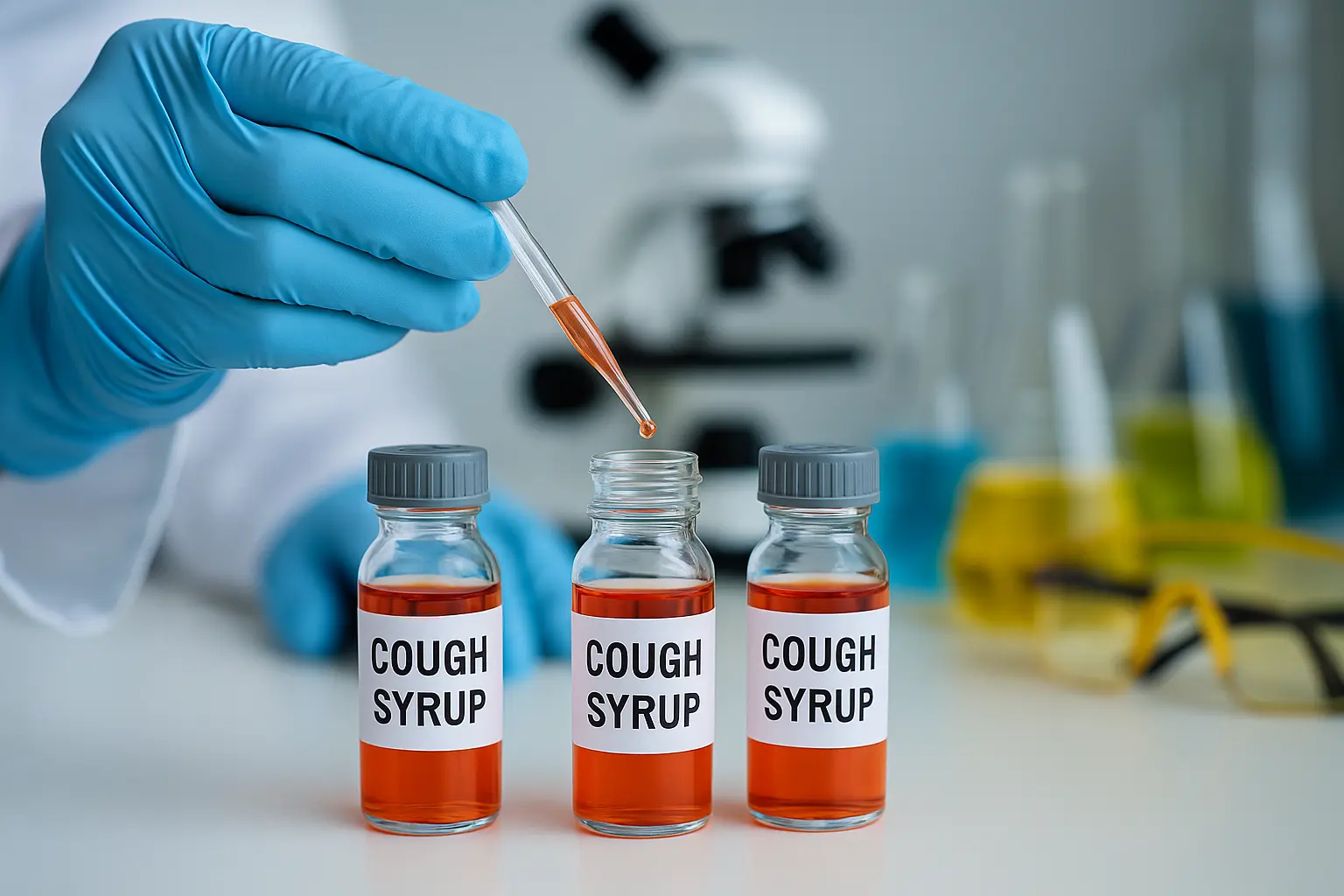
In lab tests, the syrup was found with diethylene glycol at levels nearly 500 times above safe limits. This chemical, used in industrial processes, is not safe for human ingestion and can cause irreversible kidney damage.
Pharmaceutical Lapses & Regulatory Failures
Investigations reveal serious lapses: manufacturers failed to test raw materials, ignored standard operating protocols, and bypassed quality verification steps. Multiple pharmaceutical firms are under scrutiny.
Several states have already banned the sale and distribution of the affected syrup, seized existing stock, and halted production at implicated factories.
Why This Matters (Impact & Implications)
1. Credibility of Indian Pharma Exports
India is a global hub for generic medicines. The alert threatens international trust in Indian pharmaceutical exports, possibly triggering bans or stricter scrutiny in importing countries.
2. Public Health & Cross-Border Risks
If any of these toxic syrups were exported, children in other nations could be at risk. The WHO alert seeks to prevent a repeat of past tragedies abroad.
3. Regulatory & Legal Consequences
This case may lead to major regulatory reform, including stricter manufacturing audits, traceability mandates, and legal accountability for negligent firms.
4. Global Attention & Diplomacy
International health agencies may demand data sharing, joint investigations, and stronger global oversight on pediatric medications.
Historical Comparisons & Pattern of Risk
Past cases echo today’s tragedy. In 2022, Indian-made pediatric cough syrups contaminated with DEG were linked to dozens of child deaths in The Gambia and Uzbekistan. Those incidents led to global outcry and WHO alerts.
The current India case follows a tragic pattern — insufficient oversight, unsafe excipents, and weak regulatory enforcement.
What India & Authorities Must Do
- Publicly clarify whether any batches were exported, with full traceability.
- Immediately issue recalls of suspect stock in domestic and international markets.
- Suspend export licenses for implicated manufacturers until full audits.
- Institute independent and transparent quality audits of all pharmaceutical firms.
- Strengthen regulatory structure, including surprise inspections, random batch testing, and robust post-market surveillance.
- Share data with WHO and global regulators to prevent cross-border repercussions.

$750 Cash App Gift Card
Some users qualify for a $750 Cash App gift card. You can check if you qualify.
FAQs
Q1: What does “WHO alerts India over toxic cough syrup” mean?
It means WHO has formally demanded clarity from India about whether contaminated cough syrups implicated in child deaths were exported, potentially triggering a global alert.
Q2: How many children have died in India?
At least 17 children under age five have died after ingesting the contaminated cough syrup.
Q3: What toxin was found in the syrups?
The contaminant is diethylene glycol (DEG), a dangerous industrial solvent, found at extremely high levels.
Q4: Has something like this happened before?
Yes — Indian-made defective syrups were responsible for child fatalities in The Gambia and Uzbekistan in 2022, prompting WHO warnings.
Conclusion
With WHO alerts India over toxic cough syrup, a local health scandal has become a global signal. The urgency now lies in swift, transparent action, accountability, and restoring trust in India’s medicine exports.