10 Shocking Truths About Life Inside North Korea – Hidden Realities vs. Propaganda Myths
Discover the hidden realities of life inside North Korea that state propaganda never reveals. This expert-driven guide uncovers ten shocking truths about daily culture, control, and survival that outsiders rarely see or understand.

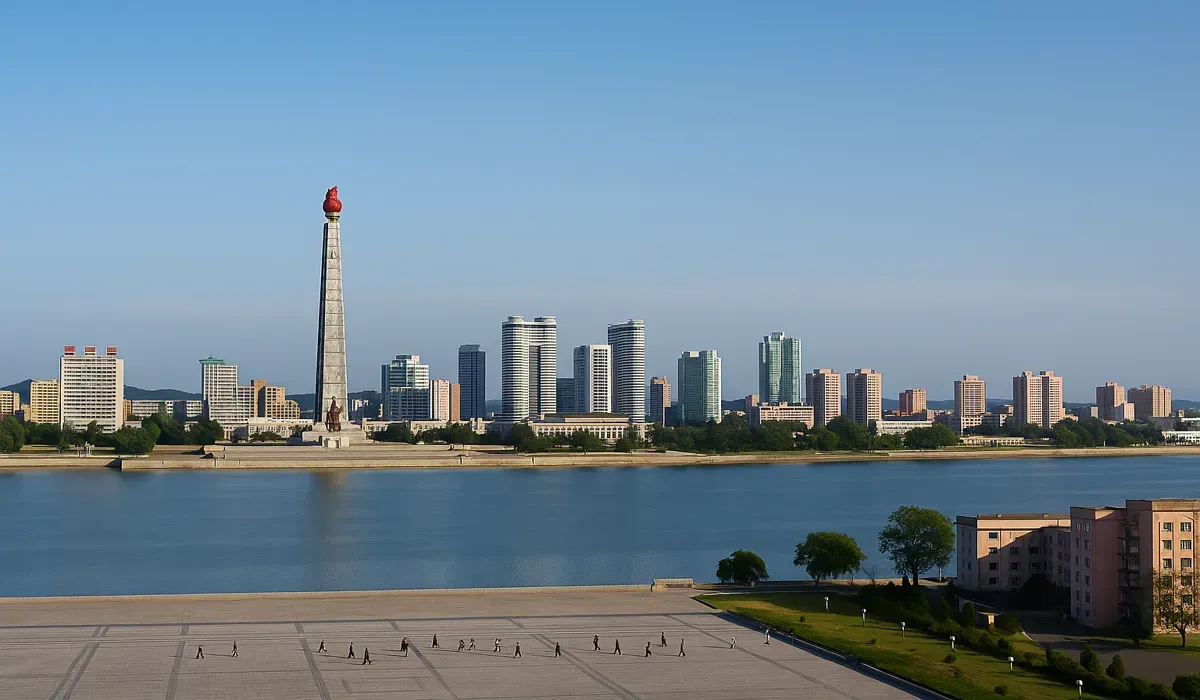
The question of what to expect inside North Korea continues to fascinate outsiders more than perhaps any other nation. Known officially as the Democratic People’s Republic of Korea (DPRK), it remains one of the most isolated countries in the modern world — where life, culture, and information exist within boundaries rarely visible to the outside observer.
Behind the secrecy lies a functioning, complex society with deep traditions, strong nationalism, and a rigid system of social control. Daily life continues according to norms established decades ago, shaped by state ideology, community cooperation, and constant surveillance.
- North Korea operates under a strictly centralized government, controlling economy, communication, and travel.
- Citizens experience a collective lifestyle with limited individual freedom.
- Foreigners see only a curated version of society through guided interactions.

$500 Walmart Gift Card
Some users qualify for a $500 Walmart gift card. You can check if you qualify.
What Is Life Like Inside North Korea?
Understanding life in North Korea requires separating speculation from structured reality. Despite limited external visibility, certain consistent features are known from visitors, defector testimonies, and official state releases.
1. Economic Framework
The economy functions on a state-controlled system. Most industries, agriculture, and services are publicly owned.
Citizens are assigned jobs by the state. Salaries are modest, but housing, healthcare, and basic education are provided under the socialist model.
Private markets (called jangmadang) have emerged informally over the last two decades, offering small-scale trade and goods not distributed by the state.
2. Urban Life
Life in Pyongyang, the capital, is notably different from rural areas. The city hosts high-rise apartments, large monuments, and cultural venues symbolizing national pride.
Only approved citizens can live in Pyongyang, often based on political loyalty and professional achievement.
Public transport consists of trams, trolleys, and buses — largely accessible but dated. Electricity shortages remain frequent outside main urban centers.
3. Rural Life
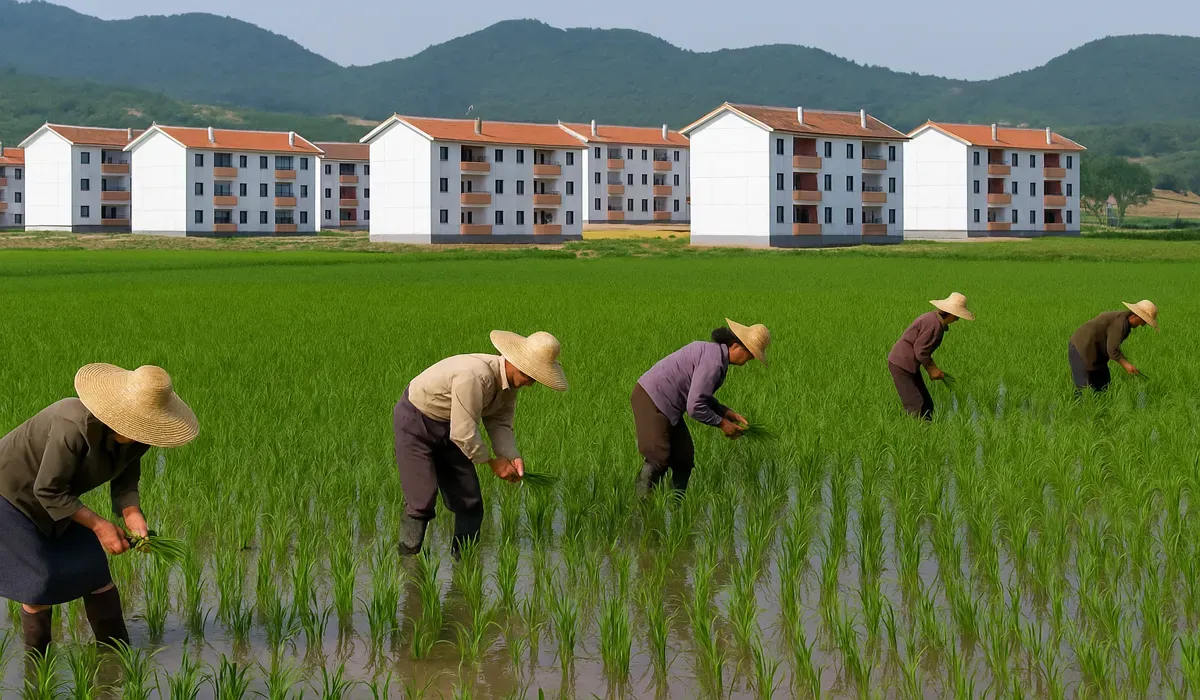
Agricultural cooperatives dominate rural living. Workdays are long, and manual labor remains crucial. Villages often operate under self-sufficiency units, where productivity affects social standing.
Farming communities experience food shortages more severely than urban residents.
Why North Korea’s Structure Matters
Understanding North Korea’s structure helps explain its unique resilience and isolation in a globalized era.
- Cultural Homogeneity: The population is almost entirely ethnically Korean, fostering strong internal unity and cultural pride.
- Ideological Continuity: The guiding philosophy, Juche (self-reliance), influences every sphere — from economic planning to daily conduct.
- Social Order: Loyalty to the state and its leadership forms a fundamental civic value.
- National Identity: Citizens are taught collective identity over individuality from early education.
For external observers, these characteristics make North Korea a model of extreme state cohesion — but also highlight the trade-off between stability and personal freedom.
How Does Daily Life Operate in North Korea?
Work and Employment
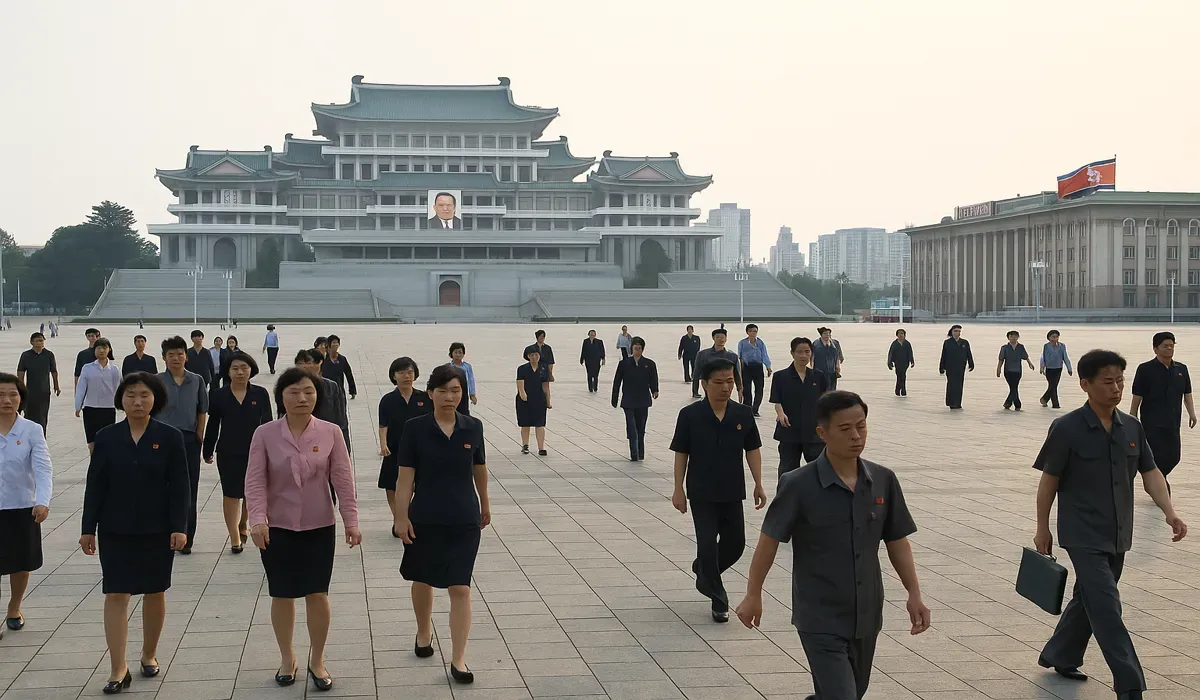
Jobs are assigned by the government. Engineers, teachers, miners, and farmers receive similar state rations and benefits. Work units perform both production and ideological study sessions.
Work hours typically run from early morning to evening, six days a week.
Sundays are official rest days, often devoted to cultural or political gatherings.
Family and Education
Education begins at kindergarten and extends through mandatory secondary schooling. Curricula mix standard academics with ideological subjects focused on history and national loyalty.
Families typically live in state-provided apartments. Extended families remain close-knit, and community structures ensure mutual surveillance and support.
Food and Rations
The Public Distribution System (PDS) allocates rice, corn, oil, and basic goods. Seasonal shortages are common, especially outside major cities.
Meals rely heavily on rice, kimchi, noodles, and vegetables, with meat being occasional.
What Are North Korea’s Cultural Traditions and Social Values?
North Korean culture blends traditional Korean heritage with political symbolism and collectivist values.
1. Traditional Customs
- Respect for elders and authority is deeply ingrained.
- Celebrations such as Chuseok (harvest festival) and Lunar New Year remain important.
- Folk music, dance, and art are officially supported forms of expression.
2. Art and Architecture
Art serves ideological and aesthetic roles. Murals, monuments, and performances celebrate state achievements and unity.
Pyongyang’s architecture features vast plazas, monumental buildings, and structured symmetry symbolizing collective discipline.
3. Music and Film
The state heavily funds cultural production. Revolutionary operas, orchestras, and films focus on moral and patriotic narratives.
Popular music exists, but most songs celebrate social contribution or love for the nation.
4. Gender Roles
Women participate actively in education and work, but traditional roles persist in households. Gender equality is legally recognized but limited by social norms.
How Do Travel and Communication Work in North Korea?
1. Internal Movement
Domestic travel is tightly regulated. Citizens require government permission to move between provinces or cities. Pyongyang residents rarely leave without official authorization.
2. International Travel
Foreign travel is allowed only for select professionals, diplomats, or athletes. Regular citizens seldom leave the country.
3. Communication and Internet
The country operates an internal intranet (Kwangmyong) for domestic use, separate from the global internet.
Foreign websites are inaccessible, and telecommunication is heavily monitored.
Foreign visitors receive restricted internet access under supervision.
How Do Foreigners Experience North Korea?
Foreign tourism is permitted only through state-approved tours. Visitors are always accompanied by government guides and must follow a fixed itinerary.
1. Arrival and Supervision
Tourists enter primarily via China (Beijing to Pyongyang flights or trains). Upon arrival, passports and devices are checked.
Photography is allowed only where permitted, and conversations with locals are usually mediated by interpreters.
2. Controlled Interaction
Tour groups visit monuments, museums, and factories showcasing the country’s achievements. Spontaneous movement is restricted.
Visitors cannot use local currency freely and must exchange designated tour funds.
3. Etiquette for Tourists
- Show respect at national monuments.
- Avoid criticism or political discussion.
- Refrain from photographing military personnel or construction sites.
Failure to comply can lead to penalties, including detention or deportation.
Common Misconceptions About North Korea
Myth 1: The country is entirely impoverished.
Fact: Economic hardship exists, but Pyongyang displays modern infrastructure and selective consumer development.
Myth 2: Citizens are unaware of the outside world.
Fact: Limited but growing exposure occurs via smuggled media and informal trade.
Myth 3: Tourism is impossible.
Fact: Controlled tourism is allowed under strict regulation.
Myth 4: All citizens are oppressed.
Fact: Daily life varies by social status, region, and employment type.
Challenges Faced by Citizens
- Food Security: Dependence on imports and weather-sensitive crops leads to recurring shortages.
- Energy Supply: Frequent blackouts outside Pyongyang.
- Information Control: Access to global media remains restricted.
- Healthcare: Free but uneven in quality and supply.
- Economic Gaps: Urban elites enjoy privileges absent in rural zones.
Despite these, a strong sense of patriotism and resilience defines social morale.
Case Studies and Observations
Case 1: Urban Routine
Visitors to Pyongyang observe punctual workers, clean streets, and civic pride. Public performances and group exercises reinforce social order.
Case 2: Rural Observation
Agricultural zones emphasize communal effort. Seasonal harvest festivals and cooperative meetings maintain cohesion despite resource limitations.
Expert Insight:
Sociologists note that collectivist ideology, reinforced by education and ritual, creates a stable social framework despite material constraints.
Daily discipline ensures continuity even under international isolation.
Future Trends and Global Outlook
Predicting North Korea’s evolution requires caution, yet observable trends suggest gradual adaptation rather than reform.
- Economic Micro-Reforms: Expansion of small local markets.
- Information Flow: Growing access to foreign media through informal networks.
- Tourism Diplomacy: Controlled international engagement to generate revenue.
- Cultural Preservation: Continued emphasis on traditional arts and heritage.
- Technology Integration: State promotion of intranet education and domestic devices.
Future change will likely remain state-managed and incremental.

$750 Amazon Gift Card
A $750 Amazon gift card may be available to select users. Checking eligibility is quick. You can check if you’re one of them.
FAQs
Q1: What should I expect inside North Korea as a visitor?
Expect a tightly controlled environment with guided tours, strict rules, and limited interaction with locals.
Q2: What is daily life like for North Korean citizens?
It’s structured around state employment, collective activities, and strong community networks under government supervision.
Q3: Can foreigners move freely in North Korea?
No. All movements are escorted by official guides; independent travel is prohibited.
Q4: Are there cultural activities or festivals?
Yes. Music, art, and national festivals play vital roles in maintaining social spirit and tradition.
Q5: Do North Koreans have access to the internet?
Only a domestic intranet is available. International internet access is highly restricted.
Q6: What are the main restrictions visitors face?
Photography limits, no unsupervised exploration, and mandatory respect for leadership symbols.
Q7: Is it safe to visit North Korea?
Tours are generally safe if all laws and guidelines are followed.
Key Takeaways
- The focus keyword “what to expect inside North Korea” summarizes a country balancing discipline with tradition.
- Life operates within defined political, cultural, and social frameworks.
- Foreigners experience curated exposure under strict oversight.
- Citizens’ lives revolve around collective identity, education, and work.
- Future change is likely gradual and state-controlled.
- Respect, understanding, and compliance are key for anyone engaging with the DPRK environment.
Conclusion
Understanding what to expect inside North Korea requires looking beyond sensational headlines. It’s a nation defined by discipline, symbolism, and resilience.
Life, while structured and monitored, continues with rhythm, pride, and cultural depth. Visitors witness a carefully managed image — yet even within restriction, humanity and tradition thrive.