What Is Happening in Iran? Violent Protests, Rising Death Toll, and Political Fallout
Iran is facing widespread unrest as economic protests turn violent across more than 100 cities. Rising deaths, internet shutdowns, and political warnings signal a deepening crisis with potential consequences beyond Iran’s borders.

What happened
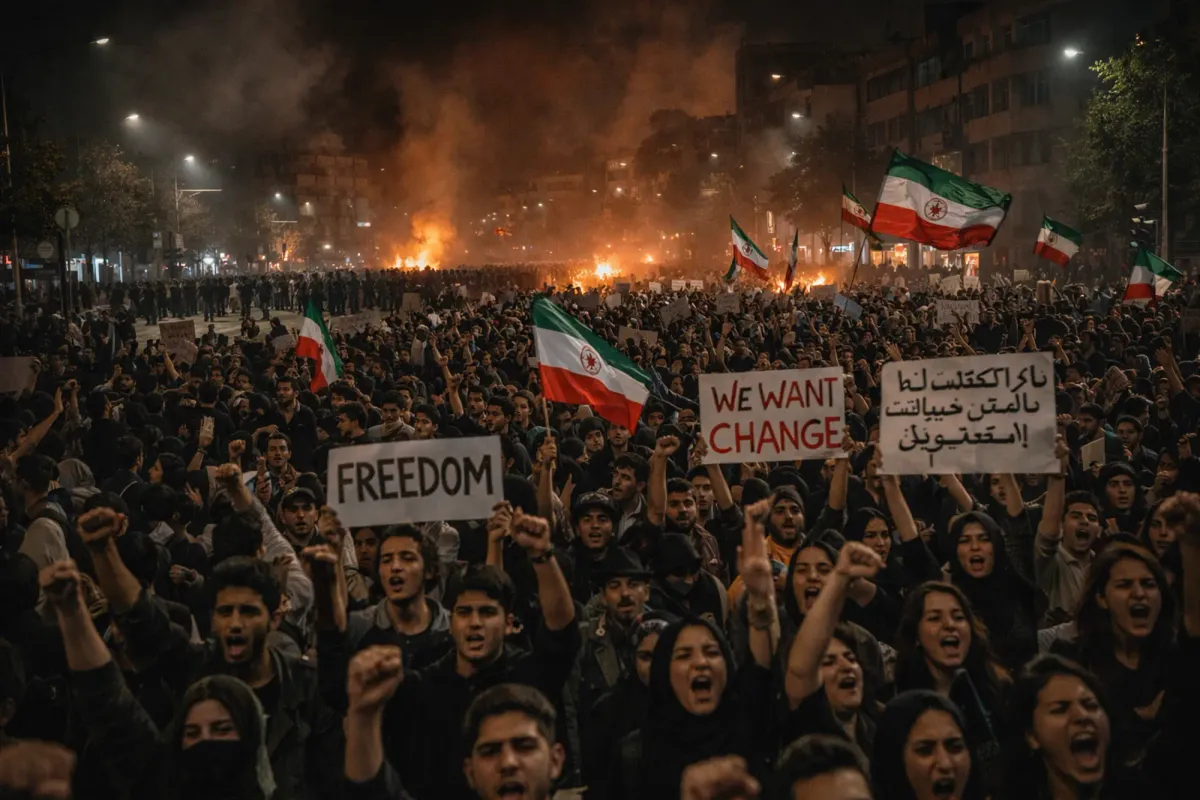
For the past two weeks, protests ongoing in Iran have taken a violent turn. Thousands of people have come out onto the streets, chanting slogans and demanding the removal of the current regime. What began as protests against inflation and a declining economy has now become far more violent. These protests have now transformed into a movement demanding a change in leadership.
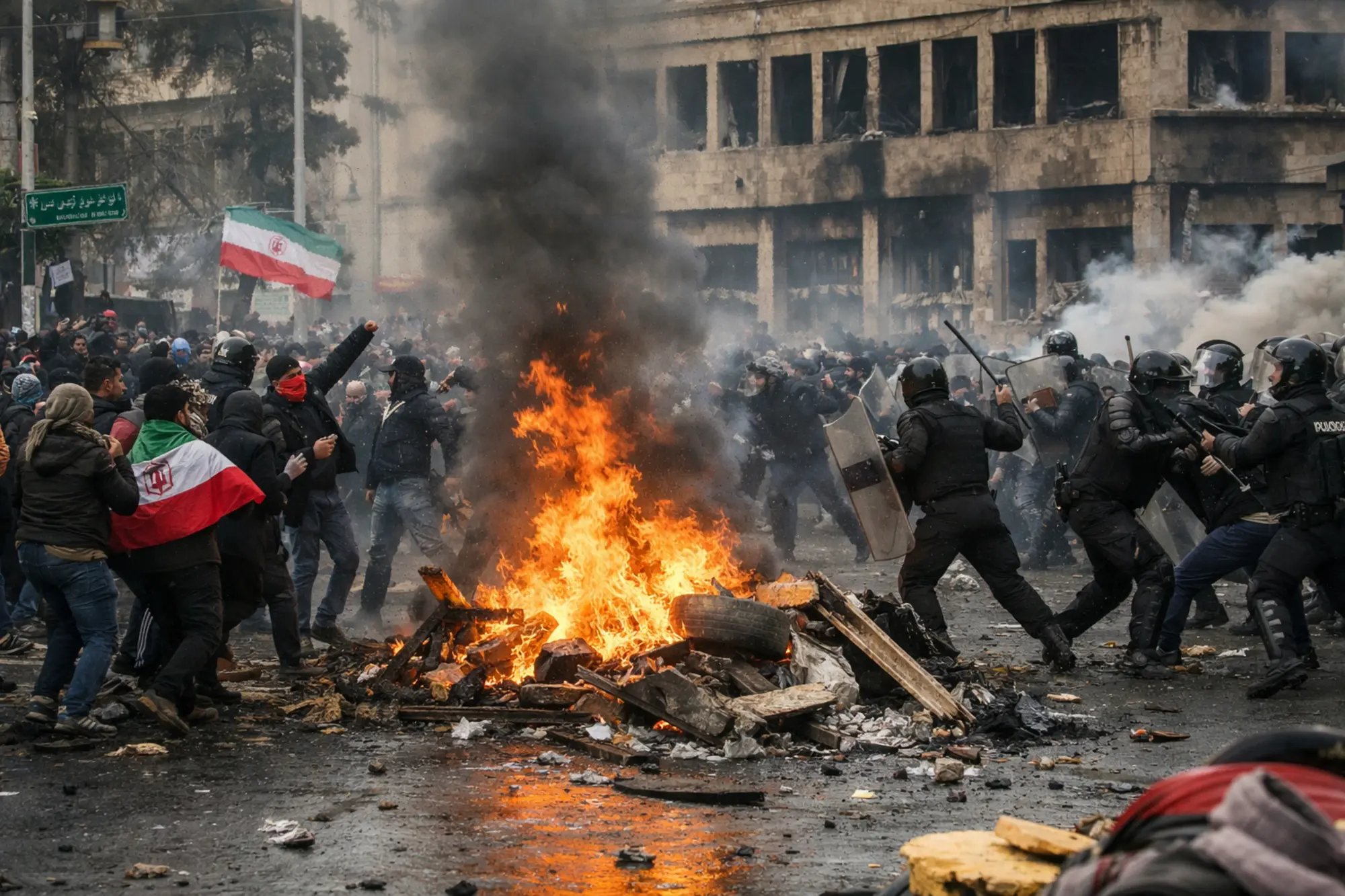
The protests in Iran have spread to more than 100 cities. Protesters are vandalizing streets, setting government buildings on fire, and so far, 62 people have died in the violent demonstrations. Among them are 14 security personnel and 48 protesters.
Considering the intensity of the unrest, the government has shut down Tehran airport, internet services, and phone networks. In some places, protesters have been seen chanting slogans in support of Crown Prince Reza Pahlavi. Given the situation, the military has been put on alert. Government buildings have also been damaged, and protesters have taken control of parts of Iranian cities. Iran is witnessing turmoil, with people occupying the streets.
Massive protest in Tehran, Iran. People had enough. Not much mainstream media coverage. Why? pic.twitter.com/RqIikXbW94
— Lily Tang Williams (@Lily4Liberty) January 8, 2026

$750 Amazon Gift Card
Some users qualify for a $750 Amazon gift card. You can check if you qualify.
Meanwhile, Trump has said
Iran is going through a serious crisis. Protests are taking place across the country, and the United States is closely monitoring the situation in Iran. Trump warned that if Iran kills its people, the US will take action against Iran.
Real Statement
“Big trouble. It looks to me that the people are taking over certain cities—nobody thought it was really possible just a few weeks ago. We are watching the situation carefully. I made the statement strongly—if they do, we will get involved. We will be hitting them hard. It hurts.”
President TRUMP just reiterated that he is watching IRAN very closely, and if necessary, the United States “will get involved and hit them VERY HARD where it hurts”
— Melissa 🇨🇦 (@MelissaLMRogers) January 9, 2026
🇮🇷 FREE IRAN 🙏🏼 pic.twitter.com/ndABn2I9QJ
Meanwhile, Supreme Leader Ayatollah Ali Khamenei has said
Amid growing public anger in Iran, Supreme Leader Ayatollah Ali Khamenei has issued a warning to the United States. In statements released by Iranian state media during a public interaction with supporters, Khamenei accused Washington of creating unrest.
Real Statement
some protesters are acting to please Trump and are harming the country, Islamic values, and innocent people.
Iran's Supreme Leader Ayatollah Ali Khamenei has emerged publicly, warning protesters to stop damaging public property, saying they're trying to please US President Donald Trump. Khamenei told Trump to focus on his own country's issues, adding that tyr-an -ts like Trump are… pic.twitter.com/XXlSyQDbRv
— Ch Asif Hamaiyon (@asif_hamaiyon) January 10, 2026
In Iran, there are increasing demands to hand over power to Crown Prince Reza Pahlavi. Protesters see him as a secular and democratic alternative. Young people and Gen-G believe that Pahlavi’s return could bring economic stability, global acceptance, and personal freedom to Iran.
Now the question arises—who is Reza Pahlavi?
Reza Pahlavi was born on October 31, 1960, in Tehran. He is the eldest son of Iran’s last Shah, Mohammad Reza Pahlavi. He was officially declared Crown Prince in 1967. In 1979, Mohammad Reza Pahlavi was removed from power, marking the end of monarchy in Iran. After going into exile, Reza Pahlavi began living in the United States.
He has long been advocating for Iran to become a secular democratic country. Because of this, he is popular among Gen-G. Iranian youth are calling for Crown Prince Reza Pahlavi to be handed power. After exile, Pahlavi continued living in the US.
Now the question is—when did this chaos in Iran begin?
The unrest and street turmoil in Iran began on December 28, 2025. Traders in the Grand Bazaar went on strike, and this strike marked the beginning of the protests.
- On December 29, 2025, the protests spread to other cities. Gradually, the demonstrations became more aggressive. On the same day, clashes occurred between police and protesters, which turned violent.
- On December 30, 2025, students from more than 10 universities joined the movement. This shows that Gen-G further intensified the protests.
- On December 31, 2025, violence spread across 21 provinces of Iran, and the situation continued to worsen. On January 1, 2026, New Year’s Day, the protests became even more violent, with more youth joining in.
- By January 1, 2026, five protesters had been killed.
- On January 3, 2026, Khamenei referred to the protesters as rioters. After this statement, the demonstrations became even more aggressive. By January 3, a total of 28 protesters had been killed.
- On January 5, 2026, violence spread across 28 provinces. The intensity continued to rise. Violent protests were witnessed in Tehran markets, and images of arson emerged.
- On January 6, 2026, Reza Pahlavi made his first public appeal, calling on people to protest again on January 8. Iranian youth strongly supported this call.
- On January 7, 2026, clashes occurred between security forces and protesters, further escalating the violence. A police commander was killed in Iranian cities. By January 7, the death toll had reached 40.
- On January 8, 2026, protests took place in more than 100 cities. What began in just four cities expanded to 25 cities and then to over 100 cities. On January 8, internet and phone services were shut down to prevent the protests from becoming more violent. By this date, 45 people had died during the unrest.
- On January 9, 2026, Tehran’s airports were closed and the military was placed on alert. On the same day, Trump issued a statement calling the situation in Iran a serious crisis. He also warned that protesters should not be mistreated, otherwise the United States would take action.
So, these were all the important key points.

$500 Walmart Gift Card
Some users qualify for a $500 Walmart gift card. You can check if you qualify.
Frequently Asked Questions (FAQs)
1. Why did protests suddenly erupt across Iran?
They began over economic hardship and inflation but quickly turned into nationwide anger against the political system and leadership.
2. Why did peaceful protests turn violent?
Clashes with security forces, arrests, and communication shutdowns escalated tensions and led to widespread violence.
3. How widespread are the protests in Iran?
Demonstrations have spread to 100+ cities across Iran, making them nationwide.
4. Why is the internet being shut down in Iran?
To prevent protesters from organizing and to control the flow of images and information.
5. Who is Reza Pahlavi, and why is his name being raised?
Reza Pahlavi is Iran’s exiled crown prince, seen by some protesters as a secular alternative to current rule.
6. Could this crisis change Iran’s future leadership?
It’s uncertain, but the scale of unrest suggests long-term political and social consequences.
Leaving the question open
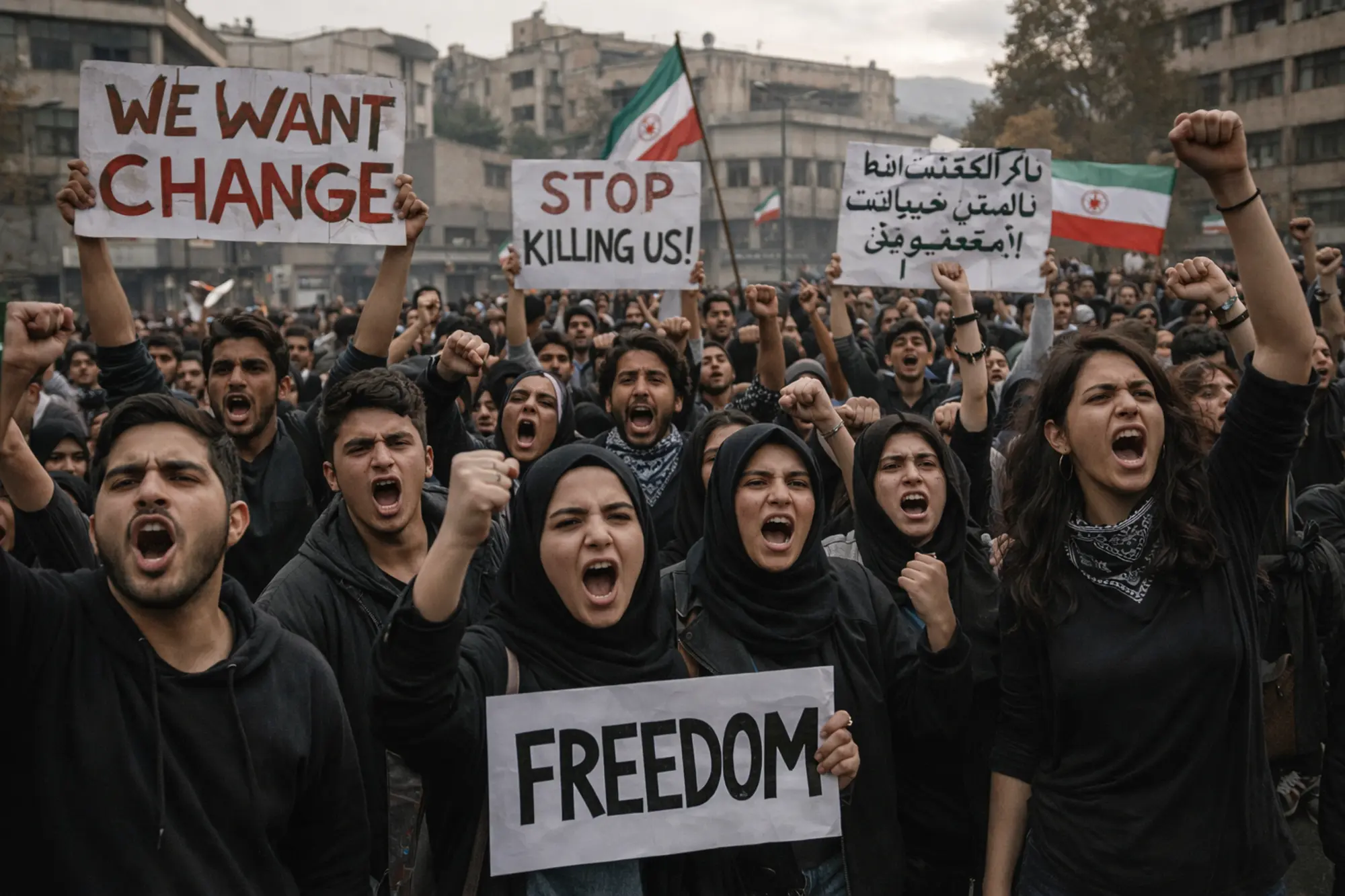
The unrest in Iran highlights a growing generational divide. Young people are becoming the main force shaping the future, driven by economic pressure and the demand for freedom. Even if protests slow down, the underlying anger will remain.
This matters because prolonged instability can affect regional security, global markets, and international relations. What happens next in Iran could influence not just its own future, but the wider world as well.