What Are the 9 Names of Durga? Complete Guide
Discover the nine names of Durga in a clear, structured guide that explains each form’s meaning, symbolism, and significance, helping readers understand their role in devotion and daily worship.

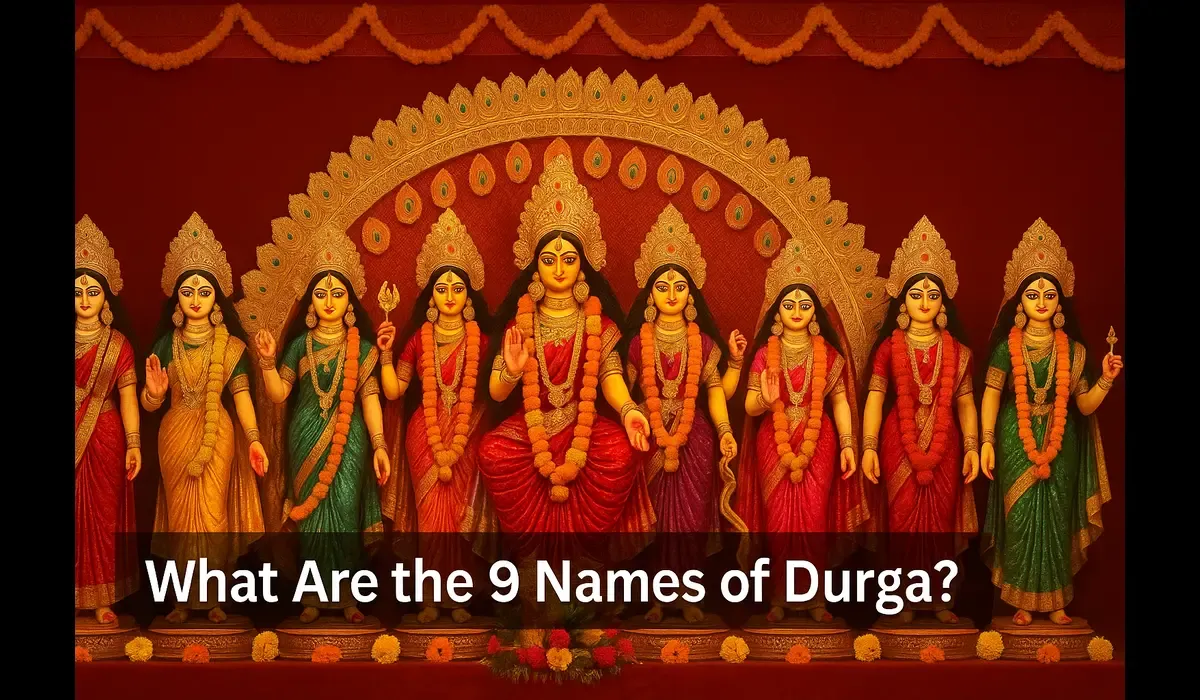
What are the 9 names of Durga? This is a question devotees often ask during Navratri, the festival that celebrates the Divine Mother for nine sacred nights. Each day is dedicated to one form of Goddess Durga, known collectively as the Navadurga. These names represent different qualities of strength, devotion, wisdom, and compassion.
What Are the 9 Names of Durga?
The nine forms of Goddess Durga are called Navadurga, worshipped during the 9 days of Navratri. Each form represents a unique quality and energy of the Divine Mother.
Day 1: Maa Shailputri
- Meaning: Daughter of the Himalayas.
- Symbolism: Strength, purity, new beginnings.
- Colour: Yellow.
- Rituals: Devotees perform Ghatasthapana (kalash sthapana) and light the sacred lamp.
- Blessings: Provides strength and stability.
Day 2: Maa Brahmacharini
- Meaning: One devoted to penance and austerity.
- Symbolism: Wisdom, discipline, devotion.
- Colour: Green.
- Rituals: Offerings of sugar and flowers; chanting mantras for perseverance.
- Blessings: Inspires spiritual knowledge and determination.
Day 3: Maa Chandraghanta
- Meaning: Goddess with a crescent moon on her forehead.
- Symbolism: Courage, serenity, balance.
- Colour: Grey.
- Rituals: Devotees pray to remove fear and obstacles.
- Blessings: Brings peace and valor.
Day 4: Maa Kushmanda
- Meaning: Creator of the universe with her smile.
- Symbolism: Energy, prosperity, creation.
- Colour: Orange.
- Rituals: Pumpkin (kushmanda) offerings; worship for health and vitality.
- Blessings: Grants energy and removes illness.
Day 5: Maa Skandamata
- Meaning: Mother of Lord Skanda (Kartikeya).
- Symbolism: Motherly love, power, compassion.
- Colour: White.
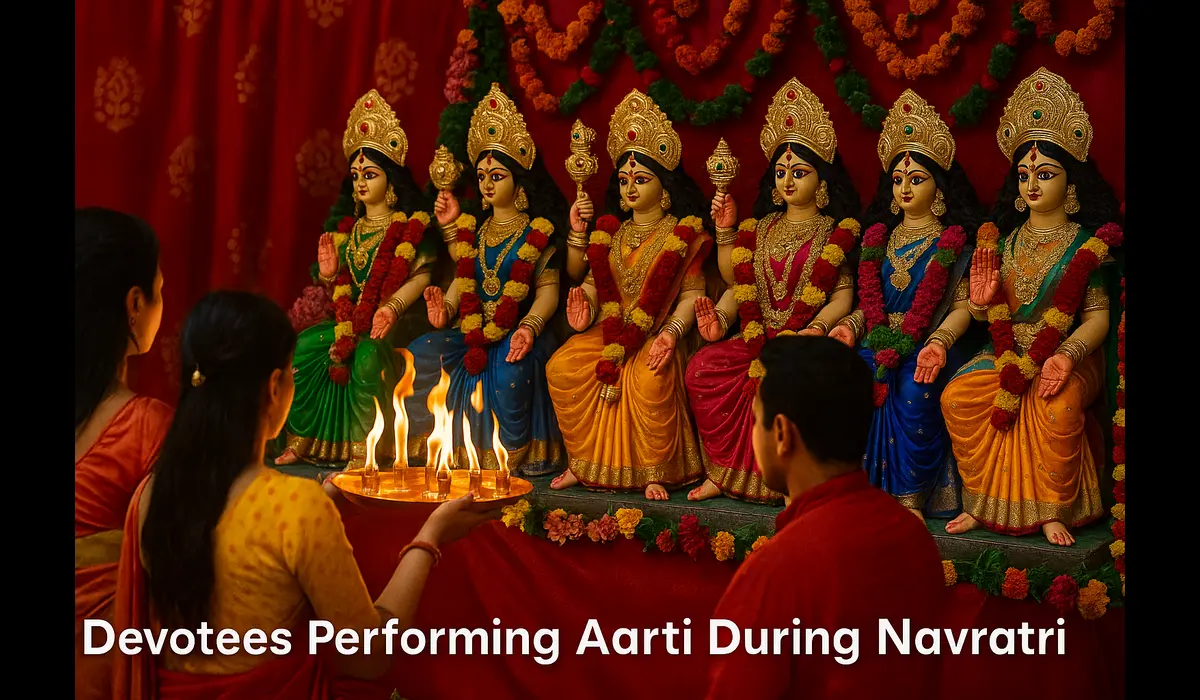
- Rituals: Devotees offer bananas and perform aarti.
- Blessings: Protects children and brings happiness.
Day 6: Maa Katyayani
- Meaning: Born to Sage Katyayan.
- Symbolism: Warrior goddess, destroyer of evil.
- Colour: Red.
- Rituals: Unmarried girls pray for good life partners; married women pray for bliss.
- Blessings: Grants courage and fulfills desires.
Day 7: Maa Kalaratri
- Meaning: Fierce dark form of Durga.
- Symbolism: Protection, destruction of negativity.
- Colour: Royal Blue.
- Rituals: Devotees perform jagrans, chant mantras, and light lamps.
- Blessings: Removes fear, evil forces, and negativity.
Day 8: Maa Mahagauri
- Meaning: Greatly fair and pure.
- Symbolism: Peace, purity, calmness.
- Colour: Pink.
- Rituals: Devotees perform Kanya Pujan, worshipping young girls as divine.
- Blessings: Grants forgiveness, peace, and prosperity.
Day 9: Maa Siddhidatri
- Meaning: Bestower of supernatural powers (siddhis).
- Symbolism: Wisdom, perfection, spiritual fulfillment.
- Colour: Purple.
- Rituals: Devotees perform havan and recite mantras.
- Blessings: Bestows siddhis, wisdom, and success.
Why the 9 Names of Durga Matter
- Spiritual Growth: Each goddess represents a step toward enlightenment.
- Balance of Power & Compassion: From fierce (Kalaratri) to gentle (Mahagauri).
- Cultural Unity: Worship practices vary but unite devotees across India.
Comparisons Across India
| Region | Goddess Worship Style | Highlight |
|---|---|---|
| Gujarat | Garba & Dandiya | Dance celebrations |
| West Bengal | Durga Puja | Majestic idols |
| South India | Golu (doll displays) | Artistic spirituality |
| North India | Ramlila & Aarti | Victory of Rama |
Practical Takeaways
- Follow the daily colours during Navratri.
- Perform rituals dedicated to each goddess.
- Chant the mantras of Navadurga.
- Practice discipline, devotion, and fasting.
FAQs
Q1: What are the 9 names of Durga?
A: The Navadurga are Shailputri, Brahmacharini, Chandraghanta, Kushmanda, Skandamata, Katyayani, Kalaratri, Mahagauri, and Siddhidatri.
Q2: Why are there 9 names of Durga?
A: Each name represents a different divine energy worshipped during the 9 days of Navratri.
Q3: Which goddess is worshipped on the last day?
A: Maa Siddhidatri, the giver of wisdom and siddhis.
Q4: What colours are associated with the 9 goddesses?
A: Yellow, Green, Grey, Orange, White, Red, Royal Blue, Pink, Purple.
Key Takeaways
- The answer to what are the 9 names of Durga lies in the Navadurga tradition.
- Each goddess represents a unique quality, colour, and ritual.
- Worshipping all 9 forms leads to spiritual balance and blessings.
Conclusion
The 9 names of Durga are more than just names; they are pathways to devotion, discipline, and divine blessings. Each goddess, from Shailputri to Siddhidatri, guides devotees toward inner strength, purity, and wisdom.