Understanding the Different Types of Car Engines: A Comprehensive Guide
Learn about the different types of car engines, their strengths, and how to choose the right one. A complete guide to understanding car engines.

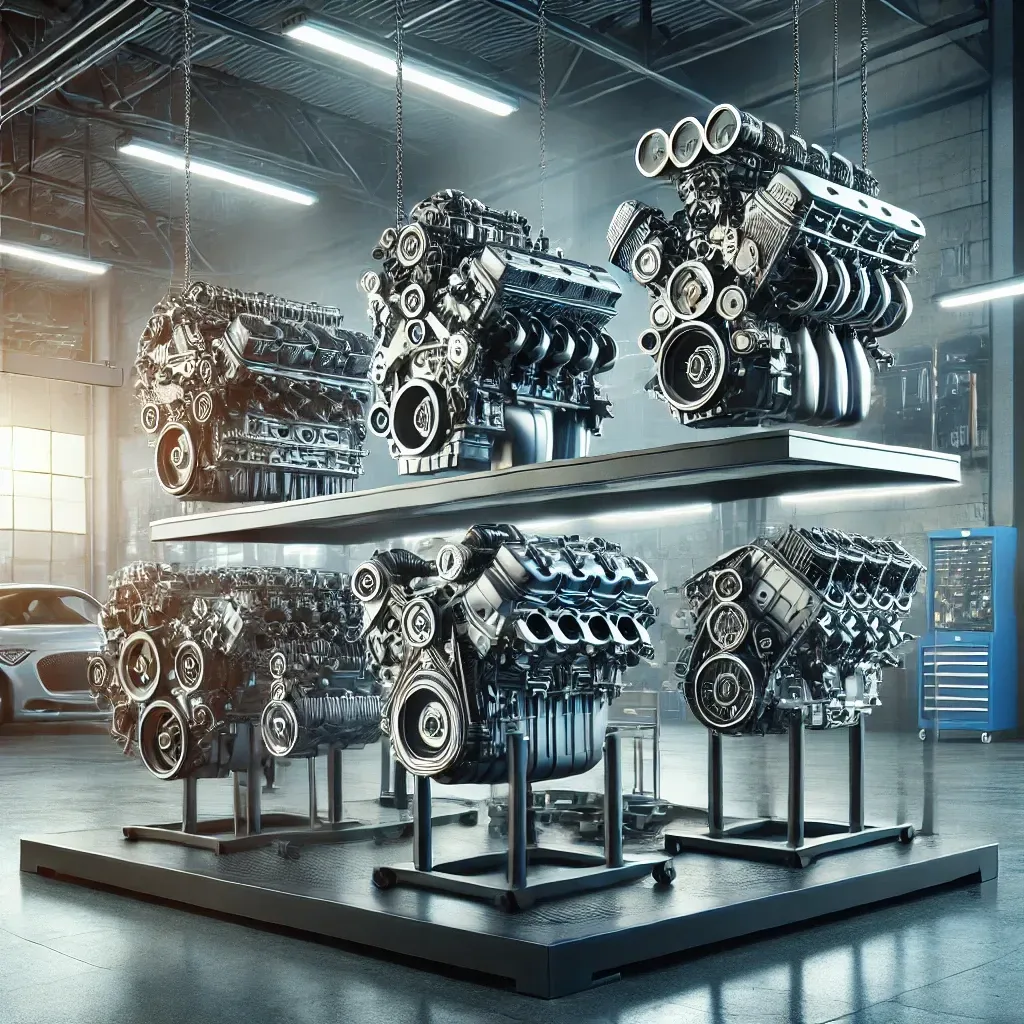
Introduction
On a warm summer evening, Emily and her father—both avid car enthusiasts—strolled through a bustling local car show. Rows of gleaming vehicles stood proudly, each engine revving with its own distinct roar. Curious, Emily asked, “Dad, why do these cars sound and feel so different?” Her father smiled, gently replying, “That’s the magic of the engine—every car’s heart is unique.”
Understanding types of car engines is essential, whether you’re a passionate gearhead or a first-time buyer. From the classic internal combustion engine to the rise of hybrid vs electric engines, each type offers its own performance, efficiency, and environmental impact. Knowing how engines differ—like what makes a turbocharged engine powerful or the pros and cons of diesel vs petrol engines—can transform your driving experience and guide smarter vehicle choices.
In this article, we’ll break down the different types of car engines, explain their core functions, highlight their advantages, and help you choose the best engine type for your lifestyle and driving needs.
What is a Car Engine and Why is it Important?
At its core, a car engine is a machine that converts fuel into motion. It’s the powerhouse that drives your car, allowing it to move, accelerate, and perform various functions. Understanding the different types of car engines is key to understanding how your car performs and what you can expect from it.
How to Understand Engine Types
Engines are classified based on several factors, including their configuration, the number of cylinders, fuel type, and aspiration (how air is drawn into the engine). Here’s a brief overview:
– Configuration: This refers to the arrangement of the engine’s cylinders. Common configurations include inline (straight), V-shaped, and flat (boxer) engines.
– Cylinders: The number of cylinders in an engine influences its power and smoothness. Common types include 4-cylinder, 6-cylinder (V6), and 8-cylinder (V8) engines.
– Fuel Type: Engines can run on gasoline, diesel, or electricity (in the case of hybrid and electric vehicles).
– Aspiration: This refers to how air is introduced into the engine. Engines can be naturally aspirated (air is drawn in by atmospheric pressure) or turbocharged (air is forced in by a turbocharger).
Understanding these basics is the first step in demystifying car engines and their impact on your driving experience.

$500 PayPal Gift Card
Not everyone qualifies for this $500 PayPal gift card. Checking only takes a moment. You can check if you’re eligible.
Exploring the Different Types of Car Engines
Inline-4 (I4) Engines
The inline-4 engine is one of the most common engine types found in cars today. As the name suggests, this engine has four cylinders arranged in a straight line.
Strengths:
– Efficiency: Inline-4 engines are known for their fuel efficiency, making them ideal for daily commuting and long-distance driving.
– Compact Design: The compact nature of I4 engines allows them to fit in smaller vehicles, providing more space for passengers and cargo.
– Cost-Effective: Vehicles with inline-4 engines are generally more affordable and cheaper to maintain.
Weaknesses:
– Less Power: Compared to larger engines, I4 engines may lack the power needed for heavy towing or high-speed performance.
– Vibration: Inline-4 engines can produce more vibration, which may affect ride comfort.
Best For: Daily commuters, budget-conscious buyers, and those who prioritize fuel efficiency.
V6 Engines
A V6 engine features six cylinders arranged in a V-shape, with three cylinders on each side of the engine block. This configuration is a popular choice for mid-size sedans, SUVs, and some sports cars.
Strengths:
– Balanced Performance: V6 engines offer a good balance between power and fuel efficiency, making them versatile for a variety of driving conditions.
– Smooth Operation: The V6 design allows for smoother operation and less vibration compared to an inline-4 engine.
– Power: With more cylinders, V6 engines provide greater power and acceleration, making them suitable for towing and performance driving.
Weaknesses:
– Fuel Consumption: V6 engines typically consume more fuel than their I4 counterparts, which may increase operating costs.
– Complexity: The V6 engine’s complexity can lead to higher maintenance costs.
Best For: Drivers who need a balance of power and efficiency, such as those who drive mid-size SUVs or enjoy spirited driving.
V8 Engines
V8 engines are the epitome of power and performance. With eight cylinders arranged in a V-shape, these engines are commonly found in trucks, muscle cars, and luxury vehicles.
Strengths:
– High Power Output: V8 engines deliver exceptional power, making them ideal for heavy towing, off-roading, and high-performance driving.
– Performance: With a V8 engine, acceleration is quick, and handling is responsive, offering a thrilling driving experience.
– Durability: V8 engines are often built to handle heavy loads and tough driving conditions, contributing to their longevity.
Weaknesses:
– Fuel Efficiency: V8 engines are less fuel-efficient, leading to higher fuel costs.
– Weight: The larger size and weight of V8 engines can affect a vehicle’s handling and fuel economy.
Best For: Enthusiasts who prioritize performance, towing, and off-roading capabilities.
Turbocharged Engines
A turbocharged engine uses a turbocharger to force more air into the engine’s cylinders, increasing power without significantly increasing engine size.
Strengths:
– Increased Power: Turbocharging allows smaller engines to produce power comparable to larger engines, offering a performance boost.
– Better Fuel Efficiency: Turbocharged engines can provide more power while consuming less fuel compared to naturally aspirated engines.
– Reduced Emissions: Turbocharged engines often produce fewer emissions, contributing to environmental sustainability.
Weaknesses:
– Turbo Lag: There can be a delay between pressing the accelerator and the turbocharger kicking in, known as turbo lag.
– Maintenance: Turbocharged engines can be more complex and may require more maintenance over time.
Best For: Drivers who want a combination of performance and fuel efficiency, especially in smaller vehicles.
Diesel Engines
Diesel engines use compression ignition rather than spark ignition, making them more efficient and powerful. These engines are commonly found in trucks, commercial vehicles, and some SUVs.
Strengths:
– Fuel Efficiency: Diesel engines are more fuel-efficient than gasoline engines, particularly for long-distance driving and heavy loads.
– Torque: Diesel engines produce more torque, making them ideal for towing and hauling.
– Longevity: Diesel engines are known for their durability and can often last longer than gasoline engines.
Weaknesses:
– Cost: Diesel engines and fuel are generally more expensive than their gasoline counterparts.
– Emissions: Diesel engines produce more nitrogen oxides and particulates, which can contribute to air pollution.
Best For: Drivers who require towing capabilities, fuel efficiency for long-distance travel, and engine longevity.
Electric and Hybrid Engines
Electric and hybrid engines represent the future of automotive technology. Electric engines use batteries to power the vehicle, while hybrid engines combine a gasoline engine with an electric motor.
Strengths:
– Zero Emissions: Electric engines produce no tailpipe emissions, making them environmentally friendly.
– Fuel Savings: Hybrid engines offer significant fuel savings by using electric power during low-speed driving and gasoline power for higher speeds.
– Quiet Operation: Electric engines are nearly silent, providing a smooth and quiet driving experience.
Weaknesses:
– Range Limitations: Electric vehicles (EVs) have a limited driving range compared to gasoline vehicles, although this is improving with newer models.
– Charging Infrastructure: The availability of charging stations can be limited, especially in rural areas.
– Initial Cost: Electric and hybrid vehicles can have a higher upfront cost, although this is often offset by fuel savings and tax incentives.
Best For: Environmentally conscious drivers, urban commuters, and those looking to reduce their carbon footprint.
Practical Tips for Choosing the Right Engine
When it comes to choosing the right engine for your car, it’s essential to consider your driving habits, needs, and budget. Here are some practical tips to guide you:
Assess Your Driving Needs
– If you primarily drive in the city, a fuel-efficient inline-4 or hybrid engine may be ideal.
– For highway driving and long commutes, consider a diesel or turbocharged engine for better fuel efficiency and power.
– If you need a vehicle for towing or off-roading, a V6 or V8 engine will provide the necessary power and torque.
Consider Fuel Efficiency
– Evaluate how much you’re willing to spend on fuel. Smaller engines, like inline-4 or hybrid engines, typically offer better fuel economy, while larger engines, like V8s, will consume more fuel.
Think About Maintenance Costs
– Smaller, simpler engines, like inline-4, tend to have lower maintenance costs. On the other hand, turbocharged and diesel engines may require more frequent maintenance and can be more expensive to repair.
Plan for the Long Term
– If you plan to keep your vehicle for many years, consider the durability of the engine. Diesel and V8 engines are known for their longevity, making them good choices for long-term ownership.
Factor in Environmental Impact
– If reducing your carbon footprint is a priority, electric or hybrid engines are the best options. They offer zero or reduced emissions and contribute to a cleaner environment.

$500 Walmart Gift Card
Not everyone qualifies for this $500 Walmart gift card. Checking only takes a moment. You can check if you’re eligible.
FAQs 1. How do I find the right engine for my car?
Start by assessing your driving habits, budget, and long-term needs. Consider factors like fuel efficiency, power requirements, and maintenance costs. Research different engine types and consult with a trusted mechanic to find the best fit for your vehicle. 2. Which type of car engine is best?
The best engine depends on your specific needs. Inline-4 engines are great for fuel efficiency and city driving, while V6 and V8 engines are better for performance and towing. Electric and hybrid engines are ideal for those prioritizing environmental sustainability. 3. What's the difference between 4-cylinder and 6-cylinder engines?
A 4-cylinder engine typically offers better fuel efficiency and lower maintenance costs but may lack the power of a 6-cylinder engine. A 6-cylinder engine provides more power and smoother operation but at the cost of higher fuel consumption. 4. What is the longest-lasting car engine?
Diesel engines are generally known for their longevity, often lasting longer than gasoline engines. Proper maintenance is key to ensuring any engine’s longevity. 5. What engine is best for beginners?
For beginners, an inline-4 engine is a great choice due to its balance of efficiency, simplicity, and affordability. It’s easier to maintain and provides sufficient power for most driving situations. 6. Which engine is better, V6 or V8?
A V6 engine offers a balance between power and fuel efficiency, making it suitable for most drivers. A V8 engine provides more power and is better suited for performance driving, towing, and off-roading but at the cost of fuel efficiency. 7. How can I tell what type of engine I have?
You can identify your engine type by checking the engine bay or the owner’s manual. The number of cylinders and their arrangement (inline, V-shaped, etc.) are usually indicated on the engine cover or in the vehicle’s specifications. 8. How do you read engine specs?
Engine specs typically include information about the engine’s displacement (measured in liters or cubic inches), the number of cylinders, horsepower, and torque. These specs help you understand the engine’s performance and capabilities. {"@context":"https:\/\/schema.org","@type":"FAQPage","mainEntity":[{"@type":"Question","name":"1. How do I find the right engine for my car?","acceptedAnswer":{"@type":"Answer","text":"<p class=\"normal\"><span lang=\"EN\">Start by assessing your driving habits, budget, and long-term needs. Consider factors like fuel efficiency, power requirements, and maintenance costs<\/span><span lang=\"EN\">. Research different engine types and consult with a trusted mechanic to find the best fit for your vehicle.<\/span><\/p>"}},{"@type":"Question","name":"2. Which type of car engine is best?","acceptedAnswer":{"@type":"Answer","text":"<p class=\"normal\"><span lang=\"EN\">The best engine depends on your specific needs. Inline-4 engines are great for fuel efficiency and city driving, while V6 and V8 engines are better for performance and towing. Electric and hybrid engines are ideal for those prioritizing environmental sustainability.<\/span><\/p>"}},{"@type":"Question","name":"3. What's the difference between 4-cylinder and 6-cylinder engines?","acceptedAnswer":{"@type":"Answer","text":"<p class=\"normal\"><span lang=\"EN\">A 4-cylinder engine typically offers better fuel efficiency and lower maintenance costs but may lack the power of a 6-cylinder engine. A 6-cylinder engine provides more power and smoother operation but at the cost of higher fuel consumption.<\/span><\/p>"}},{"@type":"Question","name":"4. What is the longest-lasting car engine?","acceptedAnswer":{"@type":"Answer","text":"<p class=\"normal\"><span lang=\"EN\">Diesel engines are generally known for their longevity, often lasting longer than gasoline engines. Proper maintenance is key to ensuring any engine’s longevity.<\/span><\/p>"}},{"@type":"Question","name":"5. What engine is best for beginners?","acceptedAnswer":{"@type":"Answer","text":"<p class=\"normal\"><span lang=\"EN\">For beginners, an inline-4 engine is a great choice due to its balance of efficiency, simplicity, and affordability. It’s easier to maintain and provides sufficient power for most driving situations.<\/span><\/p>"}},{"@type":"Question","name":"6. Which engine is better, V6 or V8?","acceptedAnswer":{"@type":"Answer","text":"<p class=\"normal\"><span lang=\"EN\">A V6 engine offers a balance between power and fuel efficiency, making it suitable for most drivers. A V8 engine provides more power and is better suited for performance driving, towing, and off-roading but at the cost of fuel efficiency.<\/span><\/p>"}},{"@type":"Question","name":"7. How can I tell what type of engine I have?","acceptedAnswer":{"@type":"Answer","text":"<p class=\"normal\"><span lang=\"EN\">You can identify your engine type by checking the engine bay or the owner\u2019s manual. The number of cylinders and their arrangement (inline, V-shaped, etc.) are usually indicated on the engine cover or in the vehicle\u2019s specifications.<\/span><\/p>"}},{"@type":"Question","name":"8. How do you read engine specs?","acceptedAnswer":{"@type":"Answer","text":"<p class=\"normal\"><span lang=\"EN\">Engine specs typically include information about the engine\u2019s displacement (measured in liters or cubic inches), the number of cylinders, horsepower, and torque. These specs help you understand the engine\u2019s performance and capabilities.<\/span><\/p>"}}]}
Conclusion
Gaining a solid understanding of the different types of car engines is more than just car enthusiast trivia—it’s a smart move for any current or future vehicle owner. Whether you’re focused on fuel efficiency, performance, or eco-friendliness, knowing the engine options—from the versatile inline-4 to the robust V8—can help you make more informed decisions on the road.
Recognizing the difference between an internal combustion engine, a turbocharged engine, or comparing diesel vs petrol engines gives you the upper hand when evaluating a vehicle’s long-term value. Likewise, understanding the debate of hybrid vs electric engines empowers you to align your choices with both your driving habits and sustainability goals.
Ultimately, the engine is the heart of your vehicle. By considering your lifestyle and priorities, you can select the engine type that matches your performance needs and environmental values. So whether you’re buying your next car or just intrigued by what powers your ride, take pride in knowing you now understand the complex, fascinating world beneath the hood.