Taliban Message to India: 5 Powerful Lessons from the Deoband Visit That Could Redefine Diplomacy
Discover five powerful lessons from the Taliban message to India during the Deoband visit that could reshape future diplomacy. This concise, research-driven teaser highlights the signals, implications, and strategic shifts experts are watching.

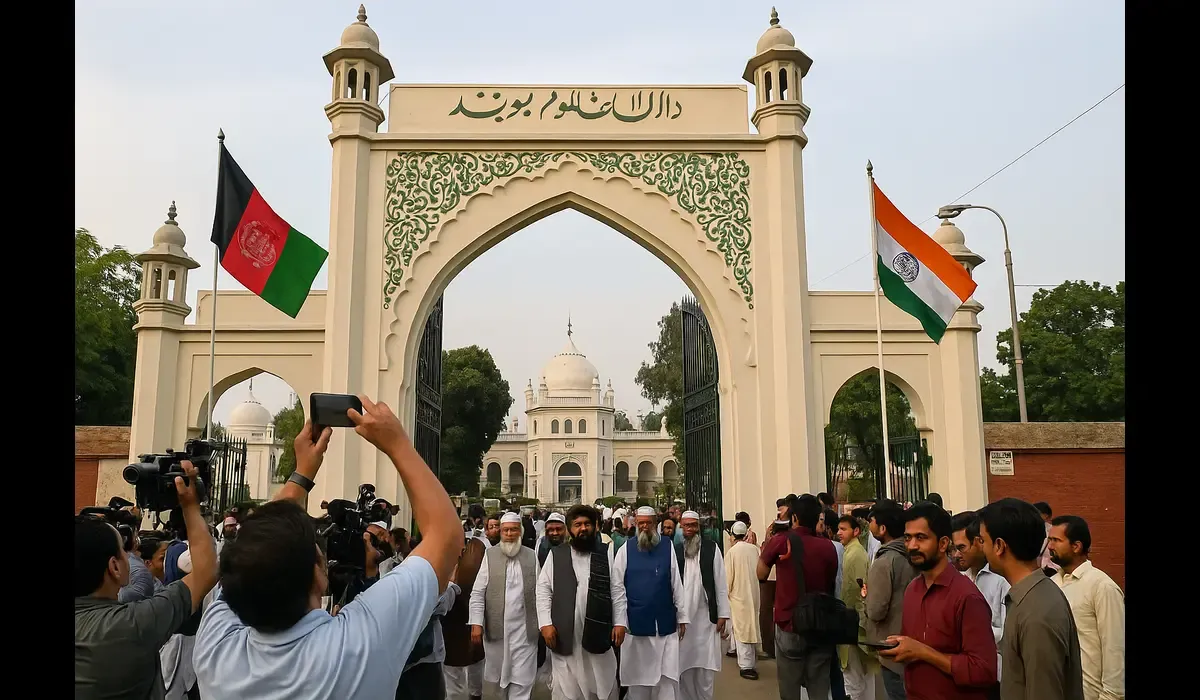
The recent Taliban message to India delivered during the high-profile visit of Afghanistan’s Foreign Minister Amir Khan Muttaqi to Darul Uloom Deoband in Uttar Pradesh has stirred major diplomatic and public attention.
This visit, the first of its kind since the Taliban’s return to power in 2021, carried both symbolic and strategic importance for India’s foreign relations with Afghanistan.
Analysts say this Taliban message to India was carefully crafted to project moderation, seek legitimacy, and rebuild communication channels that had weakened in the past four years.
Latest Post
What the Visit Represented
The visit by Taliban Foreign Minister Amir Khan Muttaqi to Deoband wasn’t just a courtesy call. Deoband — one of India’s oldest Islamic seminaries — holds immense religious and ideological significance across the Muslim world.
By choosing Deoband, the Taliban message to India was clear: Afghanistan’s current rulers aim to show cultural and theological affinity while seeking dialogue with South Asia’s largest democracy.
The meeting also reflected a soft-power move, symbolizing that religious diplomacy could serve as a bridge where political relations remain uncertain.

$500 PayPal Gift Card
Some users qualify for a $500 PayPal gift card. You can check if you qualify.
1. A Call for Religious and Cultural Understanding
The first and most evident Taliban message to India centered around mutual respect for religious scholarship. Muttaqi’s visit to Deoband emphasized Afghanistan’s appreciation for India’s long-standing Islamic academic tradition.
He was quoted as saying that educational institutions like Deoband represent “shared faith and wisdom,” hinting that the Taliban values intellectual exchange over political confrontation.
This approach contrasts the rigid image the group held in the past, signaling a desire to evolve diplomatically.
Experts interpret this as a positive signal, suggesting that the Taliban wants to strengthen people-to-people ties through cultural and theological dialogue.
2. A Strategic Bid for Diplomatic Recognition
The Taliban message to India also carried a deeper geopolitical layer. Despite India’s cautious stance since 2021, Afghanistan under the Taliban has repeatedly sought formal recognition from regional powers.
Muttaqi’s comments during the visit hinted that the Taliban sees India as an “important regional power” that can play a constructive role in Afghanistan’s development.
Through this visit, the Taliban likely aimed to soften India’s position, open limited diplomatic engagement, and discuss humanitarian support, which India has continued through the delivery of medical aid and food supplies.
3. A Cautious Reminder of Regional Balance
Another crucial Taliban message to India involved signaling neutrality in the region’s complex power dynamics.
Afghanistan’s current government has maintained strategic relations with Pakistan, China, and Iran. Yet, the Deoband visit seemed to reassure New Delhi that the Taliban seeks balanced diplomacy.
Afghanistan’s new foreign policy statements often highlight their intention to avoid being used as a base for anti-India activities — a concern deeply rooted in India’s national security agenda.
This reassurance — if backed by credible action — could serve as a positive diplomatic gesture toward rebuilding limited trust between the two nations.
4. A Subtle Push for Economic Cooperation
During the Deoband visit, Muttaqi subtly emphasized Afghanistan’s need for trade and reconstruction support.
His remarks implied that India’s investment, particularly in health, education, and infrastructure, remains vital for Afghan stability.
This portion of the Taliban message to India signaled readiness for pragmatic engagement — focusing on shared economic and humanitarian interests rather than ideological divides.
While India has not yet formally recognized the Taliban government, it continues to maintain a technical mission in Kabul to oversee aid distribution — an indicator that both sides are keeping communication channels open.
5. A Symbolic Gesture of Moderation
Finally, the Taliban message to India attempted to project a moderate and globally acceptable image.
The decision to visit a peaceful educational institution, engage respectfully with Indian scholars, and avoid political statements reflects a deliberate shift from hardline rhetoric to diplomatic subtlety.
Observers note that this move could be aimed at improving the Taliban’s international image, positioning Afghanistan as a responsible state actor rather than an isolated regime.
However, the impact of this message will depend on future policy decisions — particularly regarding women’s rights, education, and minority protections inside Afghanistan.
Why This Message Matters
The Taliban message to India goes beyond symbolic diplomacy. It holds regional implications that could influence future stability and cooperation in South Asia.
- Religious diplomacy is emerging as a key component of the Taliban’s outreach strategy.
- India’s engagement with Afghanistan could help ensure that extremist elements do not find fertile ground in the region.
- Cultural connection through institutions like Deoband could soften decades-old distrust.
However, Indian authorities are likely to respond with measured caution, balancing engagement with national security concerns.
Expert Analysis
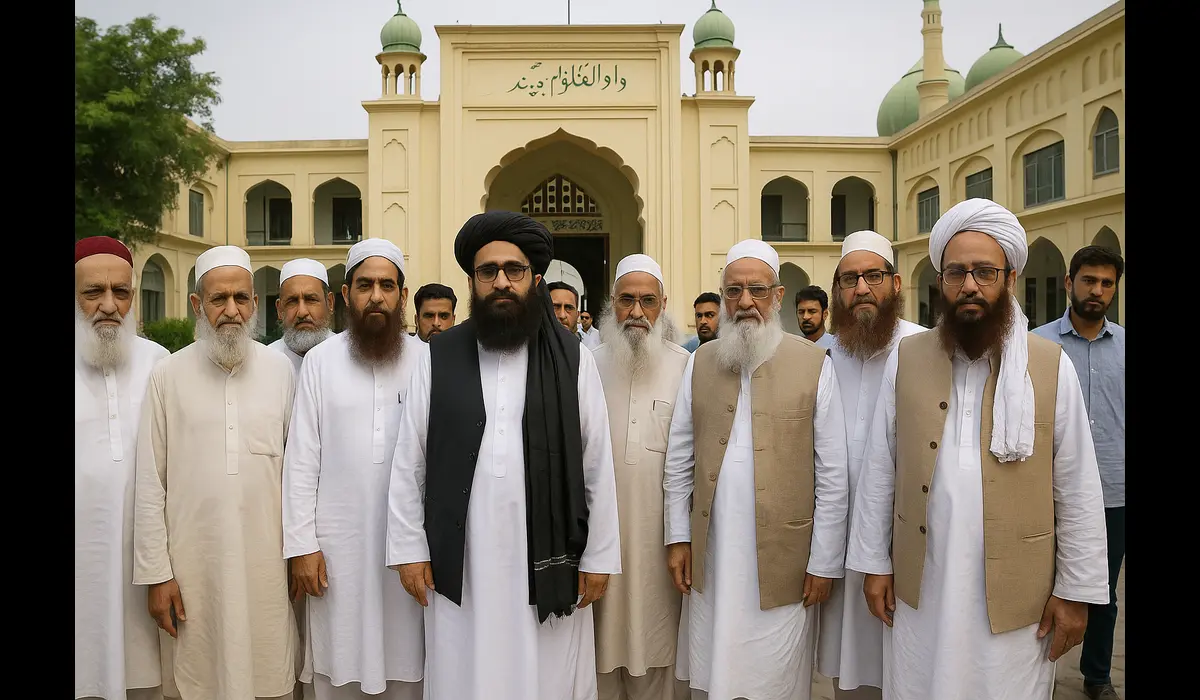
International relations experts believe that the Taliban message to India reflects a calculated move rather than an emotional one.
It was a gesture aimed at reshaping narratives — from confrontation to cooperation — without making binding commitments.
Former diplomats and South Asia analysts point out that India holds significant soft-power influence in Afghanistan through education, medical aid, and infrastructure.
Thus, engaging India on moral and cultural grounds could help the Taliban secure legitimacy both at home and abroad.
What Readers Should Understand
- The Taliban message to India is primarily symbolic but strategically timed.
- It signals Afghanistan’s intent to balance regional power equations.
- India is expected to remain cautious, prioritizing security and humanitarian engagement.
- The visit may open pathways for limited future cooperation.

$750 Amazon Gift Card
A $750 Amazon gift card may be available to select users. Checking eligibility is quick. You can check if you’re one of them.
FAQs
Q1. What was the purpose of the Taliban Foreign Minister’s visit to Deoband?
The visit aimed to convey a Taliban message to India, highlighting cultural respect and a desire for regional dialogue.
Q2. Did India respond to the Taliban’s message?
India has not issued an official statement, maintaining a neutral stance while continuing humanitarian engagement in Afghanistan.
Q3. Why was Deoband chosen for the visit?
Deoband holds deep theological ties to Afghanistan and symbolizes religious scholarship that the Taliban respects.
Q4. Is this visit a sign of India recognizing the Taliban?
No. The visit doesn’t imply recognition but represents a diplomatic and cultural outreach effort.
Key Takeaways
- The Taliban message to India underscores efforts to rebuild regional trust.
- Deoband visit marks a soft-power shift in Taliban diplomacy.
- India is likely to observe and engage cautiously.
- Cultural and educational dialogue could shape future India-Afghanistan relations.
Conclusion
The Taliban message to India during the Deoband visit was a blend of symbolism, diplomacy, and strategic signaling.
By reaching out through cultural channels rather than political rhetoric, the Taliban has attempted to open a new chapter in regional communication.
Whether this message leads to meaningful cooperation or remains symbolic will depend on mutual trust and future actions