Surprising Metal Composition of 3I/ATLAS — A Cosmic Mystery That’s Rewriting Astronomy
Surprising metal composition of 3I/ATLAS has stunned astronomers, revealing elements rarely seen in interstellar visitors. This report breaks down the discovery, why it challenges existing models, and how it could reshape our understanding of cosmic origins.

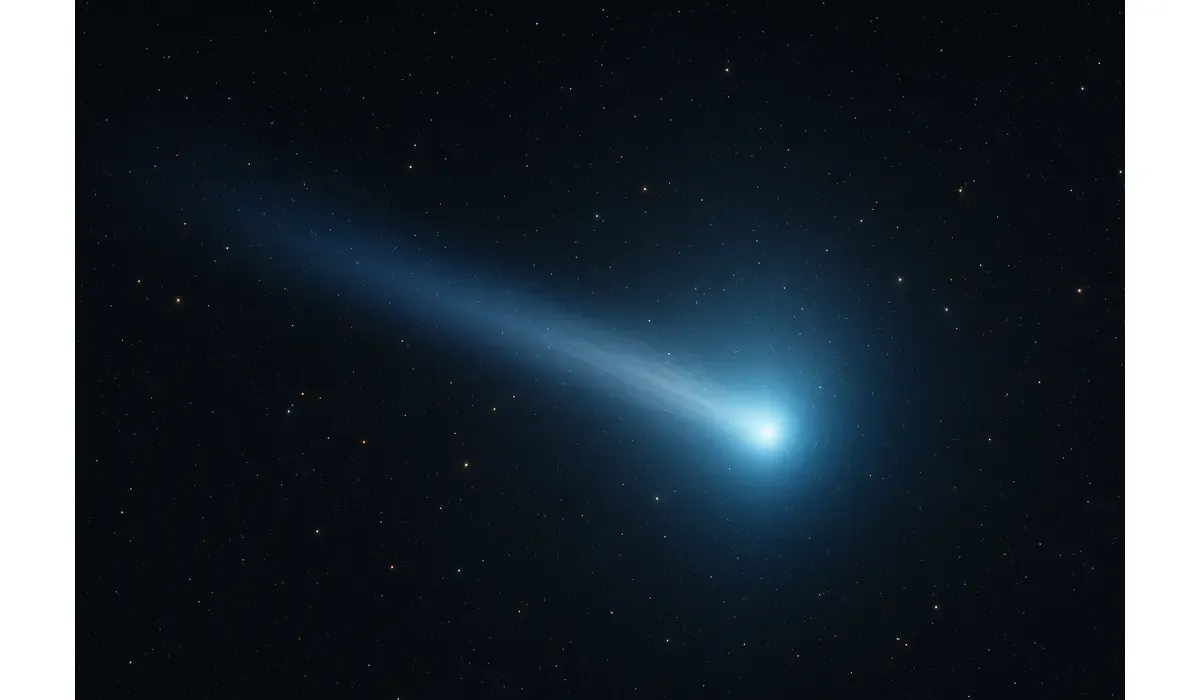
When astronomers first detected the surprising metal composition of 3I/ATLAS, they didn’t believe their data. The comet — a rare visitor from beyond our Solar System — wasn’t just chemically unique. It broke one of the most consistent cosmic rules: it contains nickel but almost no iron.
This discovery, confirmed by multiple observatories in 2025, could reshape what scientists thought they knew about how stars and planetary systems form.
- 3I/ATLAS is an interstellar comet with high nickel and missing iron — a rare and unexplained trait.
- Experts believe it formed in a chemically extreme environment outside our Solar System.
- The discovery challenges traditional models of comet formation and star-system chemistry.
What Exactly Is 3I/ATLAS?
3I/ATLAS — officially the third confirmed interstellar comet — was discovered in 2025 streaking across the outer Solar System. “3I” marks its status as the third object to originate from beyond our stellar neighborhood (after ‘Oumuamua and Borisov).
What makes this object special isn’t just its origin — it’s what it’s made of. Scientists studying its composition noticed something that defied both logic and laboratory experience: the comet’s coma (outer gas cloud) was filled with nickel emissions but lacked detectable iron.
In simple terms, it’s as if someone melted a car engine and left only the nickel behind.

$750 Cash App Gift Card
Not everyone qualifies for this $750 Cash App gift card. Checking only takes a moment. You can check if you’re eligible.
How Scientists Discovered the Metal Mystery
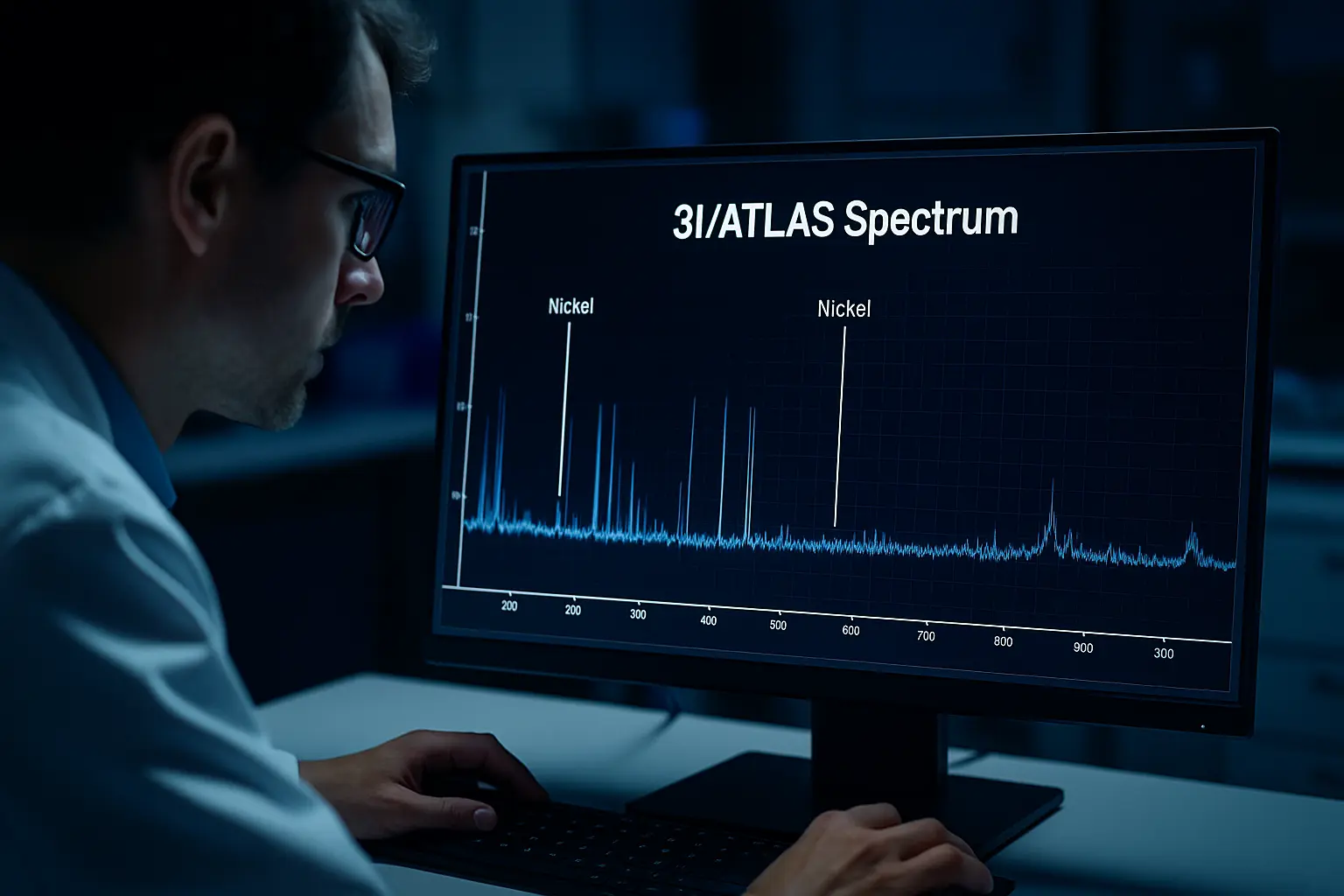
Using deep-space spectrographs, researchers studied the light signature of gases released as the comet warmed near the Sun. Normally, comets show both iron (Fe) and nickel (Ni) lines — both are stable metals found in meteorites and cosmic dust.
But 3I/ATLAS was different. Only nickel appeared. Iron was gone.
This shocked scientists. Nickel and iron typically travel together in cosmic materials since they form under similar temperatures in protoplanetary disks. Finding one without the other is like discovering coffee without caffeine — possible, but deeply suspicious.
“It’s one of the strangest metal signatures we’ve ever seen,” said Dr. Lena Carver, planetary materials expert at the Institute of Cosmic Chemistry.
“The missing iron could mean 3I/ATLAS was born in an environment our Solar System never experienced — maybe near a dying star or a cold molecular cloud.”
The Science Behind the Surprise
Let’s break down why the metal composition of 3I/ATLAS has become such a cosmic riddle.
1. The Nickel Overload
Nickel isn’t rare in the universe — but such pure nickel dominance is. Normally, iron makes up a greater proportion of metallic dust. 3I/ATLAS breaks that pattern, suggesting it formed in a region with uneven cooling or unique chemistry.
2. The Vanishing Iron
There’s no clear explanation for the missing iron. One theory proposes that the iron particles were oxidized early in the comet’s life and locked into compounds that no longer sublimate (evaporate) as gas.
3. A Signature from Another Star System
Because 3I/ATLAS isn’t native to our Solar System, its composition acts like a fingerprint of another world’s chemistry. That makes it a natural probe of how alien planetary systems form metals differently from ours.
“We’re essentially studying a chemical fossil from another star,” explained Dr. Ryo Nakamura, astrophysicist at Kyoto Space Institute.
“3I/ATLAS may have originated around a low-metal star, where iron condensed out differently, or never formed in the first place.”
Why the Discovery Matters
The surprising metal composition of 3I/ATLAS is more than just a scientific oddity — it challenges long-standing cosmic models.
1. It Rewrites Our Understanding of Star Formation
Until now, scientists believed all star systems follow similar chemical rules when forming heavy elements. The nickel-heavy signature of 3I/ATLAS suggests otherwise — proving that planetary chemistry can vary wildly across the galaxy.
2. It Reveals the Diversity of the Cosmos
Every interstellar object we’ve found so far — from ‘Oumuamua’s weird cigar shape to Borisov’s dust halo — has defied expectations. But 3I/ATLAS’s metallic mix tells us something even deeper: the raw materials of planets and life can differ more than we imagined.
3. It May Change How We Search for Life
If comets like 3I/ATLAS can form in such exotic conditions, scientists must rethink where — and how — to look for habitable environments elsewhere in the universe.
“This comet reminds us that the galaxy isn’t just diverse — it’s chemically unpredictable,” said Dr. Sara Velasco, astrochemist and co-author of the study.
“Each interstellar visitor gives us a new rulebook for understanding how matter evolves in deep space.”
Theories About 3I/ATLAS’s Origin
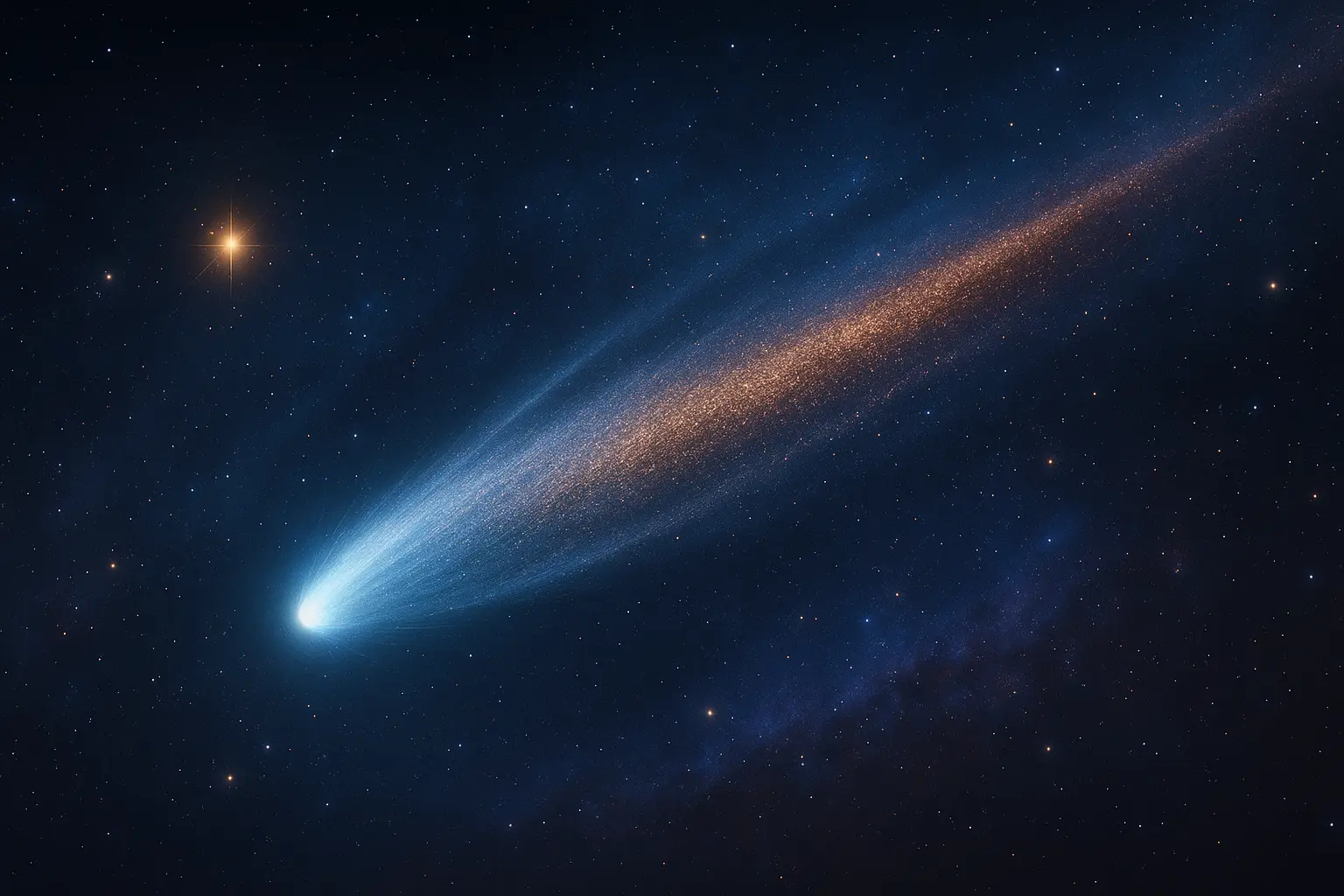
Scientists are split on how this nickel-rich comet formed. Three main hypotheses have emerged:
- The “Star Factory” Theory – 3I/ATLAS could have formed near a young star’s debris disk, where heat separated nickel and iron grains during condensation.
- The “Dead Star” Theory – It may be debris ejected from the outer layers of an ancient dying star (a white dwarf or supernova remnant).
- The “Cold Birth” Theory – The comet could have formed in an extremely cold interstellar cloud, where iron solidified early and nickel remained volatile.
Each theory points to a different kind of environment — meaning 3I/ATLAS could be the first physical evidence of a type of stellar nursery never observed before.
Expert Insight: Why This Discovery Is Revolutionary
Astrophysicist Dr. Neil Ortega, who has studied cosmic dust for 20 years, puts it simply:
“If confirmed, 3I/ATLAS is the first time we’ve seen a natural object that doesn’t follow the iron-nickel ratio common across billions of cosmic bodies. It’s like finding a snowflake that fell upward — nature doesn’t usually work that way.”
His statement reflects the excitement spreading through the astronomy community. 3I/ATLAS isn’t just another comet — it’s a challenge to every textbook explanation of metal formation.
What Readers Should Know
If you’re following astronomy news or interstellar discoveries, here’s what to take away:
- 3I/ATLAS is real and radically different. It’s a verified interstellar object with a metallic signature unseen before.
- The discovery is just the beginning. New instruments like the James Webb Space Telescope (JWST) are preparing follow-up observations to confirm the chemical ratios.
- It shows how science evolves. Each discovery redefines the boundaries of what we know about space — and what might be possible elsewhere.

$500 Walmart Gift Card
A $500 Walmart gift card may be available to select users. Checking eligibility is quick. You can check if you’re one of them.
FAQs
Q1: What makes 3I/ATLAS unique?
Its surprising metal composition — rich in nickel but lacking iron — sets it apart from any known comet.
Q2: Where did 3I/ATLAS come from?
It likely originated outside our Solar System, possibly from a cold or chemically rare star-forming region.
Q3: Does it mean alien technology or artificial origin?
No. There’s no evidence 3I/ATLAS is artificial. The composition is strange, but naturally explainable through exotic cosmic processes.
Q4: Why is this discovery so important?
It shows that not all planetary systems form with the same chemistry, expanding our understanding of interstellar diversity.
Key Takeaways
- The surprising metal composition of 3I/ATLAS reveals a nickel-rich, iron-poor interstellar comet unlike anything in our Solar System.
- Experts believe it may have formed in an alien star system with unique temperature and chemical conditions.
- The discovery opens new frontiers in planetary science, hinting that the galaxy’s diversity runs deeper than we thought.
Conclusion
The surprising metal composition of 3I/ATLAS is not just a cosmic curiosity — it’s a reminder that the universe still hides secrets beyond our imagination. Each interstellar visitor carries clues from worlds we may never see, and 3I/ATLAS just delivered one of the most puzzling yet.