Supreme Court’s Stray Dog Ruling 2025: Will This Finally Solve India’s Street Crisis?
Supreme Court’s stray dog ruling 2025 raises hopes of finally addressing India’s growing street crisis. This analysis explains the directives, expected impact, and the challenges that could shape how effectively the plan works.


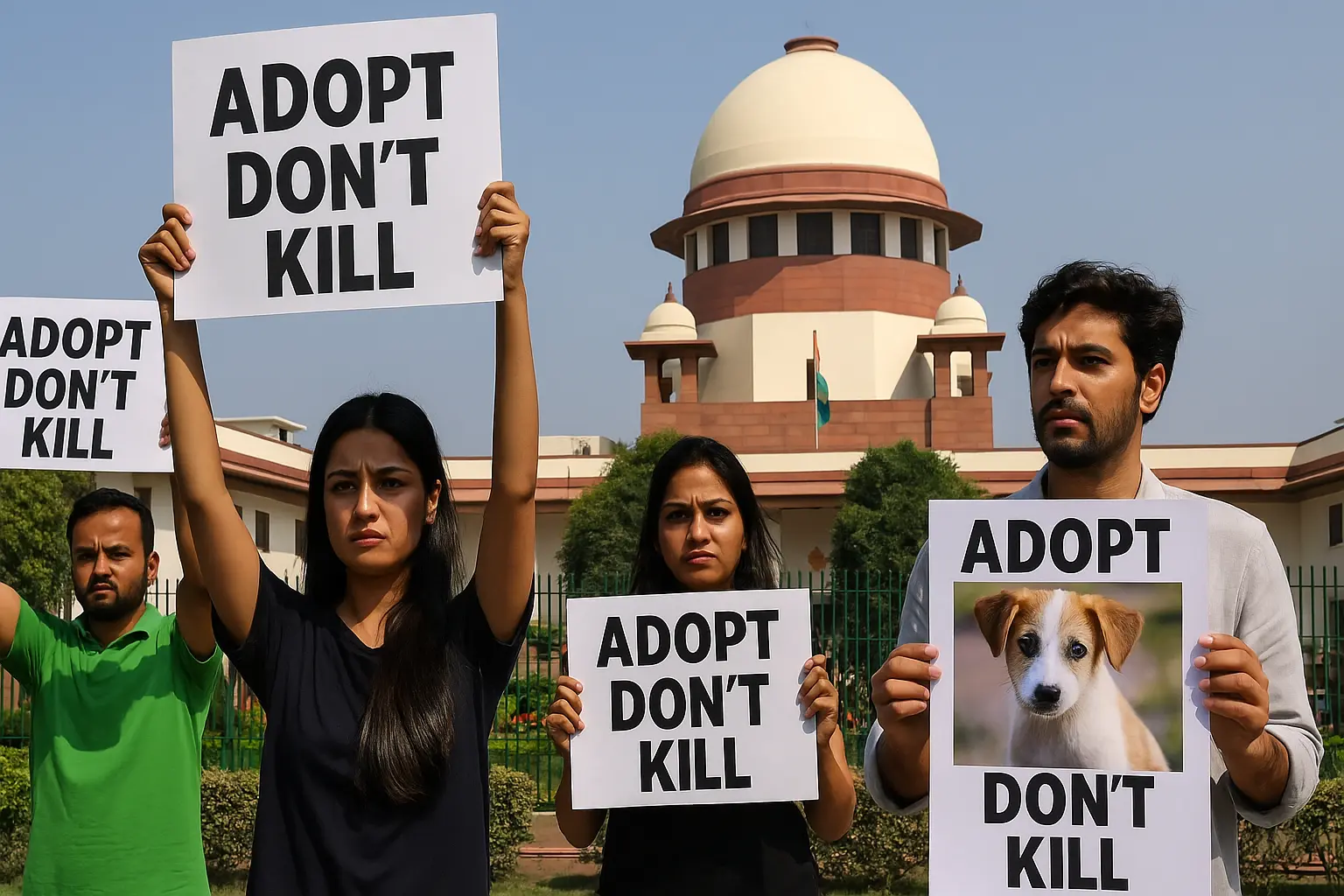
The Supreme Court action on stray dog population control has ignited one of the most heated national debates in 2025. For years, India’s cities have struggled with rising dog-bite incidents, street safety fears, and conflicting views between animal rights and civic order.
In its new directive, the apex court stepped in — not just with legal orders but a wake-up call for every urban local body.
- The Supreme Court’s 2025 ruling aims to overhaul stray dog management in India.
- It directs municipalities to build shelters, enforce sterilisation, and restrict street feeding.
- The judgment balances public safety and animal welfare after months of civic tension.
The Background: Why the Court Intervened
India is estimated to have over 50 million stray dogs. Major cities like Delhi, Mumbai, and Bengaluru report tens of thousands of bite cases annually. Hospitals and municipal records reveal the crisis isn’t just about fear — it’s about failing systems.
The court intervened after multiple public interest litigations sought a national solution. The judges observed that unregulated feeding, poor waste disposal, and low sterilisation rates had turned stray management into a public-health emergency.

$500 Walmart Gift Card
Not everyone qualifies for this $500 Walmart gift card. Checking only takes a moment. You can check if you’re eligible.
What the Supreme Court Ordered
In August 2025, the Supreme Court issued a comprehensive directive targeting both urban safety and animal welfare.

Key Highlights of the Order:
- Mandatory Registration: Every municipality must maintain updated stray dog databases.
- Sterilise-Vaccinate-Release Policy (SVR): All healthy dogs must be sterilised and vaccinated, then released back to designated zones.
- Feeding Zone Regulation: Feeding stray dogs on public roads is prohibited; local bodies must create safe, designated feeding areas.
- Shelter Homes: New, hygienic, and state-monitored shelters must be built in metro areas within 12 months.
- Public Safety Priority: Aggressive or rabid dogs to be quarantined and treated separately.
The judgment emphasises balance — humane care for community dogs, without compromising public safety.
Why It Matters: The Human and Social Impact
1. Public Safety at Stake
In 2025 alone, India has recorded an alarming rise in dog-bite cases — especially in urban neighbourhoods and school zones. For many citizens, the ruling signals long-awaited relief and accountability.
2. Urban Policy Transformation
The court’s action compels municipalities to treat stray management as part of city planning, not charity. Budgets, waste management, and civic infrastructure will now be aligned with animal control programs.
3. Ethical Dilemma
Animal welfare groups view the ruling as a mixed victory — humane sterilisation continues, but relocation limits natural habitat rights. The decision, however, avoids mass culling and retains compassion at its core.
Comparing the Models: How India Stacks Up
| Country | Approach | Key Focus | Outcome |
|---|---|---|---|
| India (2025) | Sterilise-Vaccinate-Release | Humane & Regulatory | Implementation under way |
| Thailand | Community Dog Management | Vaccination First | Rabies reduced 80% |
| Brazil | Shelter & Adoption Model | Public Safety | High cost, limited capacity |
| Sri Lanka | Street Sterilisation Drives | Humane Welfare | Successful in small cities |
India’s hybrid policy now attempts to blend humane care with structured enforcement — a middle path between chaos and cruelty.
Expert Opinions: Balancing Law and Life
Dr. Nandini Prabhu, Animal Welfare Board of India advisor:
“The Supreme Court’s judgment isn’t anti-animal — it’s pro-safety. For the first time, it recognises the citizen’s right to walk safely while ensuring dogs are not harmed.”
Justice (Retd.) Anil Mehra, former Delhi High Court judge:
“This ruling bridges a legal vacuum. Without enforcement, even the best Animal Birth Control laws were toothless. Now, municipalities are answerable.”
Civic Planner Ritesh Sinha adds:
“The cost implications are significant, but urban India needed this reset. Cities cannot function with unregulated animal populations.”
Practical Takeaways for Citizens
- Follow Local Guidelines: Feed community dogs only in designated areas.
- Report Aggression or Illness: Use municipal helplines or animal welfare boards.
- Support Sterilisation Drives: Volunteer, donate, or spread awareness in your locality.
- Practice Responsible Pet Ownership: Abandonment fuels the stray crisis — adoption is commitment.

$750 Amazon Gift Card
Some users qualify for a $750 Amazon gift card. You can check if you qualify.
FAQs
Q1. What does the Supreme Court’s stray dog ruling cover?
It covers sterilisation, vaccination, feeding zones, and safety measures under municipal supervision.
Q2. Are stray dogs being removed or killed?
No. The court strictly prohibits culling and mandates humane sterilisation and care.
Q3. Who will implement these rules?
Municipal corporations and state animal welfare boards are responsible for execution under Supreme Court oversight.
Q4. What if local authorities fail to comply?
They can face contempt action or administrative penalties as per the new directive.
Key Takeaways
- The Supreme Court action on stray dog population control sets a legal and ethical precedent.
- It prioritises human safety, structured feeding, and humane treatment.
- Implementation success will depend on transparency, funding, and citizen cooperation.
- This could become a model policy for urban coexistence across India.
Conclusion
The Supreme Court action on stray dog population control may be India’s turning point in balancing compassion with control. The verdict isn’t just a legal reform — it’s a test of civic responsibility.
The coming months will reveal whether India’s cities can turn this landmark ruling into lasting change.