Everything About Starlink Satellites: Numbers, Cost, Lifespan & Service Timeline
Starlink uses thousands of low Earth orbit satellites to deliver internet without ground cables. This article explains how many satellites are in orbit today, how long they last, what they cost to build and launch, and how the Starlink service has expanded over time.


Starlink refers to a large constellation of satellites built and launched by SpaceX to deliver broadband internet directly from space. Unlike traditional satellite internet that relies on a few high-orbit satellites, Starlink uses thousands of small satellites in low Earth orbit (LEO) — typically around 480–550 km above Earth’s surface — to create a dense mesh of coverage. The system sends signals between user terminals on the ground and satellites overhead, allowing internet access even in remote areas.
What Is the Significance of This
Today’s internet usage — from video calls and cloud apps to gaming and remote work — demands fast, low-latency connections. Traditional geostationary satellites orbit far from Earth (about 35,786 km) and suffer from high delays. Starlink’s LEO placement dramatically reduces that delay and increases responsiveness.
Starlink does not replace terrestrial fiber where it already exists, but it extends connectivity to places that lack effective broadband options.
Key Points with Real, Measured Data
How many Starlink satellites are in orbit right now?
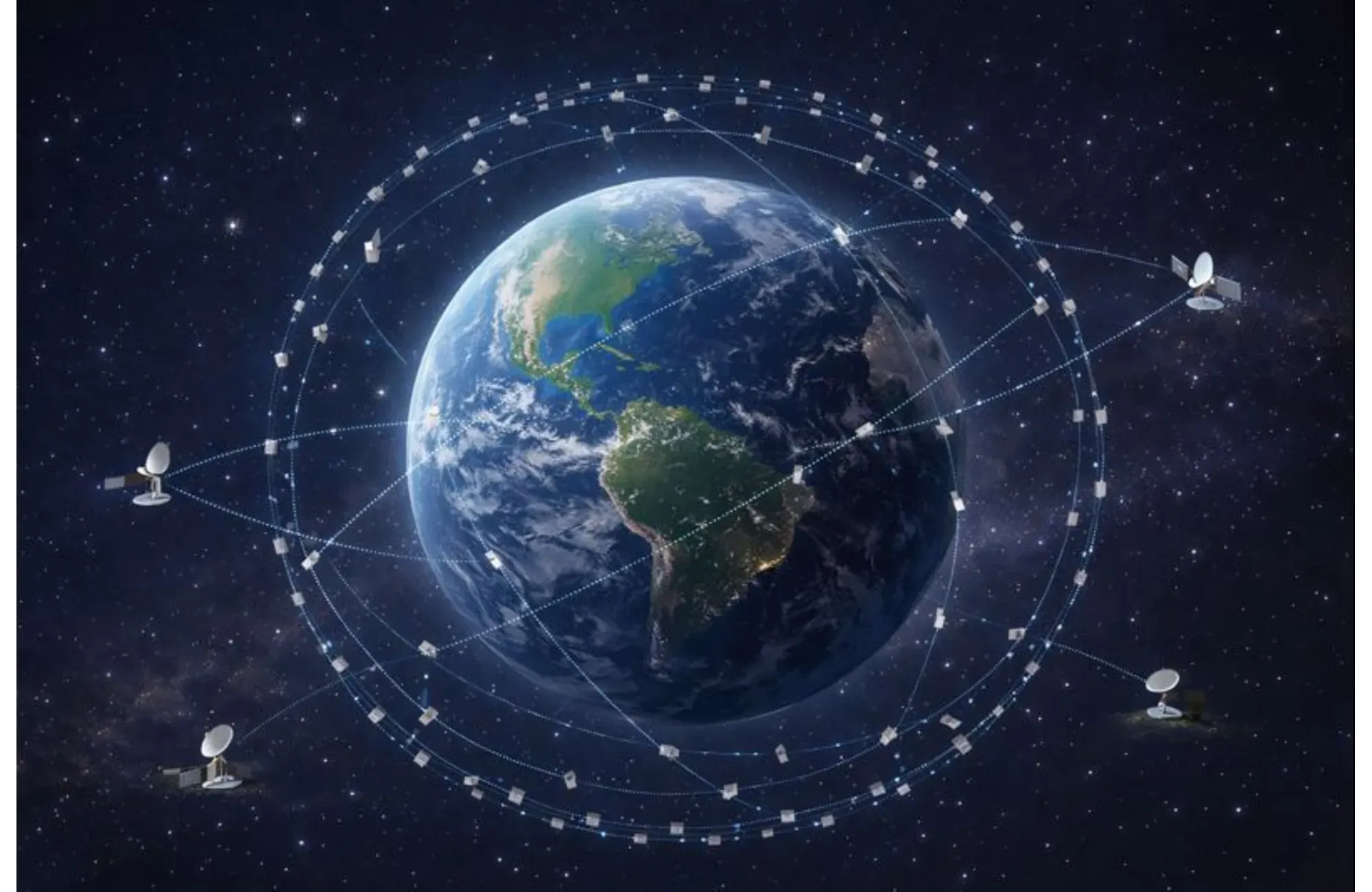
Tracking data from independent space observers and launch records show:
- More than 10,830 Starlink satellites have been launched to orbit as of early 2026.
- Of these, about 9,423 remain in orbit, with about 9,347 actively operating.
- Earlier independent estimates also place operational satellites near 9,357, confirming a similar scale as of late 2025.
These numbers change regularly as new satellites are launched and older ones are deorbited.
Clear takeaway: Starlink is the largest active satellite constellation in history, with over 9,000 functioning satellites in orbit.
How often can I see Starlink satellites?
Key details regarding visibility:
- Best Time: Immediately following a launch, the satellites are tightly packed in a low orbit, appearing as a bright, moving string.
- Frequency: With frequent launches, opportunities to see the "train" appear every few weeks, though they fade quickly as they move to higher, less visible operational orbits.
- Tracking: Websites like
findstarlink.comorjamesdarpinian.comcan predict specific passes over your location. - Individual Satellites: Once dispersed, individual satellites are much dimmer and harder to spot without advanced tracking.
Once they disperse into their assigned orbital shells, individual satellites become fainter and harder to spot.
How long do Starlink satellites last?
Most Starlink satellites are designed with a service life of about 5–7 years in orbit. They are equipped with onboard propulsion to reach the correct orbital altitude and can adjust position over time. At the end of life or upon failure, satellites are deliberately deorbited to burn up safely in the atmosphere, reducing debris risk.
Clear takeaway: Starlink satellites are not permanent — they are expected to operate for multiple years and then be replaced.
How much does one Starlink satellite cost?
There is no single officially published price from SpaceX, but multiple credible disclosures and analyses allow a tight, realistic cost range.
Manufacturing cost (per satellite)
- Estimated build cost: USD 250,000–300,000 per satellite
- Source basis:
- Statements by Elon Musk describing Starlink satellites as mass-produced, automotive-style hardware
- Industry analysts covering SpaceX manufacturing economics
- Comparison with other LEO constellation programs using similar satellite mass
Starlink satellites are intentionally small, standardized, and rapidly produced, unlike traditional multi-million-dollar satellites.
Launch cost (per satellite)
- A Falcon 9 launch costs roughly USD 60–67 million
- Each launch typically carries ~50–60 Starlink satellites
- Launch cost per satellite: about USD 1.0–1.3 million
Because SpaceX uses reusable rockets, this cost is far lower than commercial launch pricing.
Total deployed cost (build + launch)
| Cost component | Approx. cost per satellite |
|---|---|
| Manufacturing | $250k–$300k |
| Launch | $1.0M–$1.3M |
| Total deployed cost | ~$1.25M–$1.6M |
What does the Starlink service timeline look like?
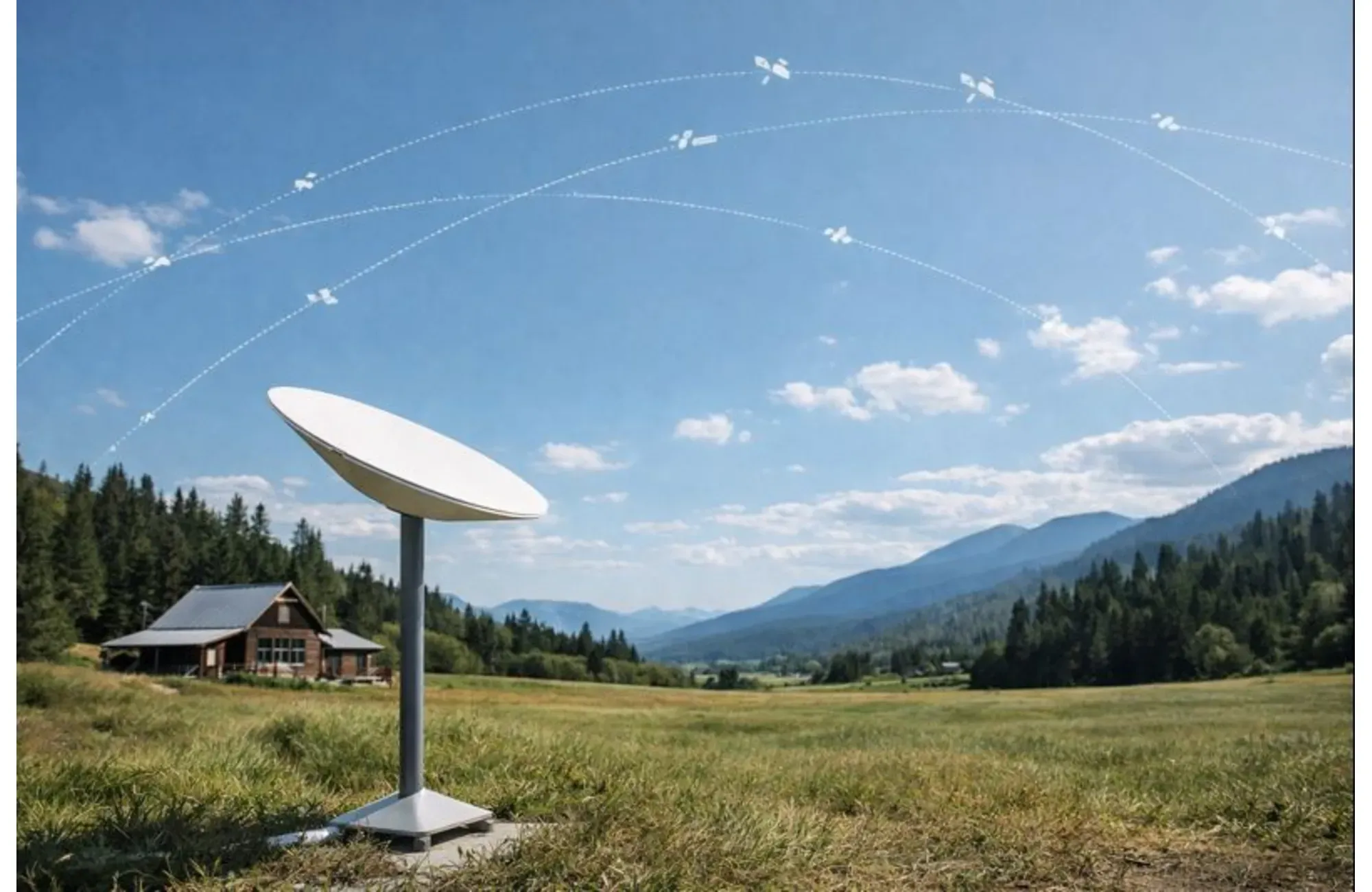
The Starlink service timeline consists of past development milestones, current global service availability, and future plans focused on next-generation satellites and direct-to-cell service. Past Timeline & Current Status
- 2015: The Starlink concept was publicly revealed by Elon Musk.
- 2018: The first two test satellites, Tintin A and B, were launched in February.
- 2019: The first batch of 60 operational satellites were launched in May, beginning the process of building the constellation.
- 2020: A wider public beta testing phase, called "Better Than Nothing Beta," was launched in October.
- 2021: Commercial service began, and by mid-year, the constellation had grown to over 1,500 satellites, enabling the public beta in regions like the U.S., Canada, and the U.K.
- 2024:
- Starlink successfully tested text messaging using its new Direct-to-Cell capability with T-Mobile's network in January.
- The Direct-to-Cell texting service became generally available in 2024.
- The company has grown to over 6 million active customers globally as of July 2025.
- 2025: SpaceX launched its 10,000th Starlink satellite, marking a major milestone in constellation size.
- 2026 and beyond: Ongoing launches continue to replace aging satellites and expand coverage, including lowering some to safer orbits to reduce collision risk.
Clear takeaway: Starlink’s rollout is multi-year and iterative, with periodic large launches adding hundreds of satellites at a time.
Comparisons / Alternatives
| System | Orbit | Typical Latency | Key Limitation |
|---|---|---|---|
| Fiber broadband | Ground | ~ <10 ms | Limited to infrastructure locations |
| Mobile 5G | Ground | ~20–50 ms | Tower coverage dependent |
| GEO satellite internet | ~35,786 km | 500–700 ms | High latency |
| Starlink (LEO) | ~480–550 km | ~20–40 ms | Weather and density impacts |
This shows why LEO satellites like Starlink deliver faster internet responses than older satellite internet.
Real-World Examples
Rural Connectivity:
Starlink enables broadband in remote farms, small towns, or mountainous regions where fiber never arrived.
Disaster Response:
After infrastructure damage ( e.g., storms), Starlink terminals provide temporary connectivity when cell towers are down.
These examples demonstrate Starlink’s practical value beyond theoretical numbers.
Quick Understanding Summary
Starlink is a constellation of low Earth orbit satellites operated by SpaceX to provide broadband internet. Over 9,400 satellites are currently in orbit, part of a larger fleet launched since 2019, with each expected to operate roughly 5–7 years before being replaced. While not a substitute for fiber in urban areas, it extends connectivity where traditional networks cannot reach.
 Deepak Singh
FAQs
How many Starlink satellites are in space right now?
About 9,400 in orbit, with slightly fewer actively working.
Can I see Starlink satellites tonight?
Yes, if lighting and orbit conditions are right — usually after sunset or before sunrise.
Do Starlink satellites stay in orbit forever?
No — they are designed to deorbit after 5–7 years.
Is Starlink better than fiber?
Starlink has lower latency than traditional satellites but is not cheaper or faster than fiber where fiber exists.
How much does a Starlink satellite cost?
The estimated manufacturing cost per satellite has decreased significantly over time. Older models cost less than $500,000, while newer, more advanced V2 satellites are estimated to cost between $1 million and $1.2 million per unit.
Conclusion
Starlink satellites represent a fundamentally different way to deliver internet access — by orbiting close to Earth in large numbers, reducing latency and opening connectivity where ground infrastructure cannot reach. Real data shows the system now includes thousands of active satellites, each with a finite lifespan and significant production and launch cost.