Avoid These Warning Signs of Employment Scams for Remote Workers
Discover the essential warning signs of employment scams for remote workers and how to spot them early. This concise, research-driven teaser highlights red flags, common tactics, and the safeguards every job seeker needs now.


The warning signs of employment scams for remote workers are evolving as cybercriminals exploit the global remote work boom. In 2025, fake recruiters use video interviews, offer letters, and even deepfake HR calls to trick professionals. Identifying these early warning signs can protect your data, finances, and reputation.
Latest Post
Definition: What Are Employment Scams?
Employment scams are fraudulent schemes where scammers pose as legitimate employers or recruiters to steal money or personal information. For remote workers, these scams often appear through job portals, messaging apps, or social media — blending realism with deception.

$750 Cash App Gift Card
Some users qualify for a $750 Cash App gift card. You can check if you qualify.
Latest Trends in Remote Job Fraud (2025)
In 2025, scammers have refined their approach using AI, automation, and behavioral psychology. Key patterns include:
- Fake Interview Portals: Imitating platforms like Zoom or Teams to harvest credentials.
- Deepfake Recruiter Calls: AI-generated videos of supposed HR executives offering positions.
- Advance Fee Requests: Demanding payment for “equipment,” “software,” or “training kits.”
- Document Verification Scams: Requests for Social Security numbers, passports, or banking details before hiring confirmation.
- Fake Onboarding Websites: Fully cloned career pages that gather sensitive data.
These modern tactics make even tech-savvy workers vulnerable.
7 Warning Signs of Employment Scams for Remote Workers
1. Upfront Payment Requests
Legitimate employers never ask for money to start work. If the recruiter demands training or software fees, it’s a red flag. Genuine firms handle onboarding expenses internally.
2. Unrealistic Salary Offers
If a remote job promises double industry pay for minimal work, it’s likely a scam. Fraudsters exploit financial need and urgency by dangling “too good to be true” salaries.
3. Poor Communication or No Interviews
Scammers often skip detailed interviews or conduct only brief text chats. Professional hiring involves structured discussions, skills assessments, and clear HR correspondence.
4. Generic or Suspicious Email Domains
A legitimate recruiter’s email comes from a company domain (e.g., @company.com). Be cautious of Gmail, Outlook, or ProtonMail addresses used for official offers.
5. Vague Job Descriptions and Pressure Tactics
Scammers avoid specifics. They use vague job titles (“Data Entry Agent,” “Task Assistant”) and pressure you to “accept quickly.” Real employers encourage due diligence, not urgency.
6. Requests for Confidential Data
No genuine company asks for your bank account, Social Security number, or ID copy before you’re officially onboarded. Sharing such details early enables identity theft.
7. No Online Presence or Reviews
Before accepting any offer, verify the company’s website, LinkedIn profile, and employee reviews. A lack of verifiable presence or mismatched contact details is a major warning sign.
Why These Scams Matter in 2025
Remote work’s convenience also brings exposure. As global hiring normalizes, criminals exploit anonymity and virtual processes to:
- Steal identities for credit fraud.
- Collect data for resale on dark web forums.
- Transfer stolen funds via victims’ bank accounts (money muling).
- Damage corporate brands through impersonation attacks.
The warning signs of employment scams for remote workers remind professionals to balance opportunity with vigilance.
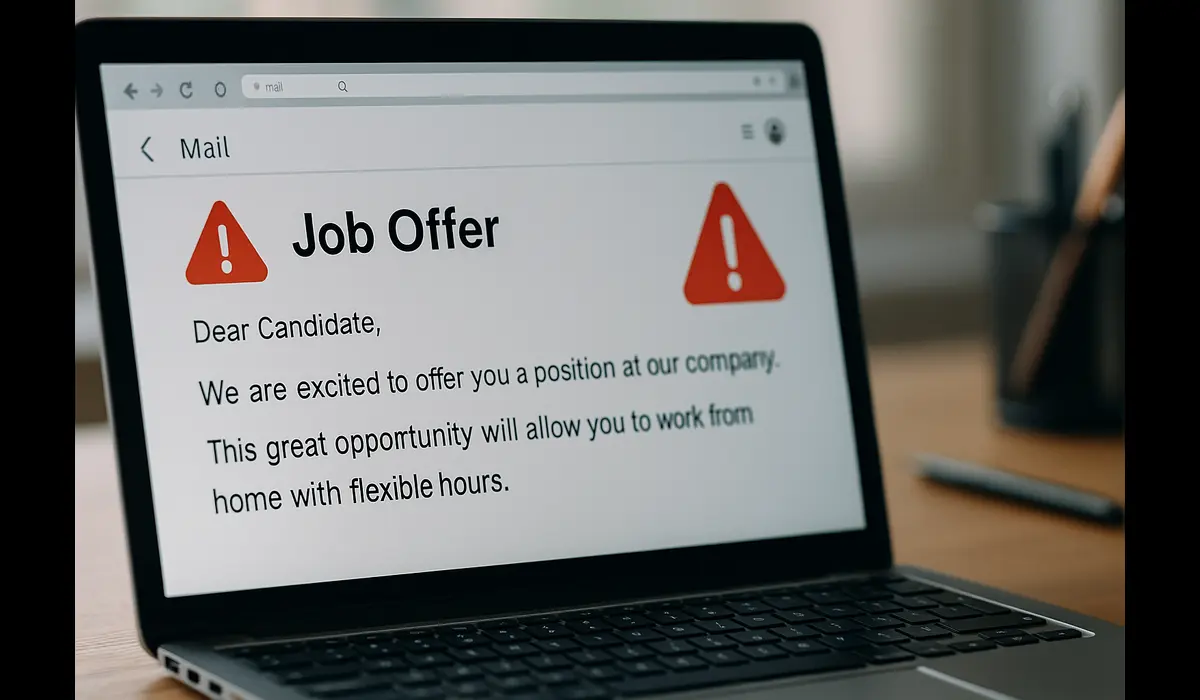
Expert Insight
Cyber experts note that more than $480 million was lost in job-related fraud in the U.S. during 2024. The number is projected to rise another 35% in 2025 due to remote-first employment. Experts emphasize that trust must always be verified — particularly when communication is digital-only.
Practical Takeaways: Protect Yourself
- Research Employers Thoroughly
Verify company registration, domain, and LinkedIn staff. Call the official HR number to confirm openings. - Use Verified Job Platforms Only
Apply through trusted platforms such as Indeed, LinkedIn, or Glassdoor — avoid unsolicited Telegram or WhatsApp job messages. - Secure Your Data
Never email sensitive documents without written confirmation of authenticity. Use watermarking when sharing identification. - Report Suspicious Offers
Report job scams to the FTC, Better Business Bureau (BBB), or Cybercrime.gov portals to prevent others from falling prey.

$500 PayPal Gift Card
Some users qualify for a $500 PayPal gift card. You can check if you qualify.
FAQs : warning signs of employment scams for remote workers
Q1: What are the top warning signs of employment scams for remote workers?
Requests for upfront payments, fake emails, and missing company verification are major indicators of fraud.
Q2: How do scammers impersonate employers?
They clone legitimate company websites, forge offer letters, and use AI voice or video tools for interviews.
Q3: Are all remote job postings risky?
No. Verified listings on reputable career portals remain safe if users perform background checks.
Q4: Can victims recover losses?
Immediate bank reporting and FTC complaints can sometimes stop fund transfers, but prevention is far more effective.
Key Takeaways : warning signs of employment scams for remote workers
- The warning signs of employment scams for remote workers are becoming more advanced with AI and automation.
- Always verify job offers, communication channels, and recruiter identities.
- Never pay for a job or share personal data prematurely.
- Awareness and verification remain your strongest defense against modern job fraud.
Conclusion : warning signs of employment scams for remote workers
In 2025, the warning signs of employment scams for remote workers are more subtle yet more dangerous. Cybercriminals now exploit realistic job formats, remote flexibility, and social engineering to manipulate trust. Remote professionals must stay alert, question everything, and prioritize verification over convenience.