Samsung and Google XR Headset Collaboration: A New Reality Begins
This deep dive into the Samsung and Google XR headset collaboration reveals how their combined hardware and AI ecosystems could reshape mixed reality, offering a first look at what this next-generation partnership means for users in 2025.

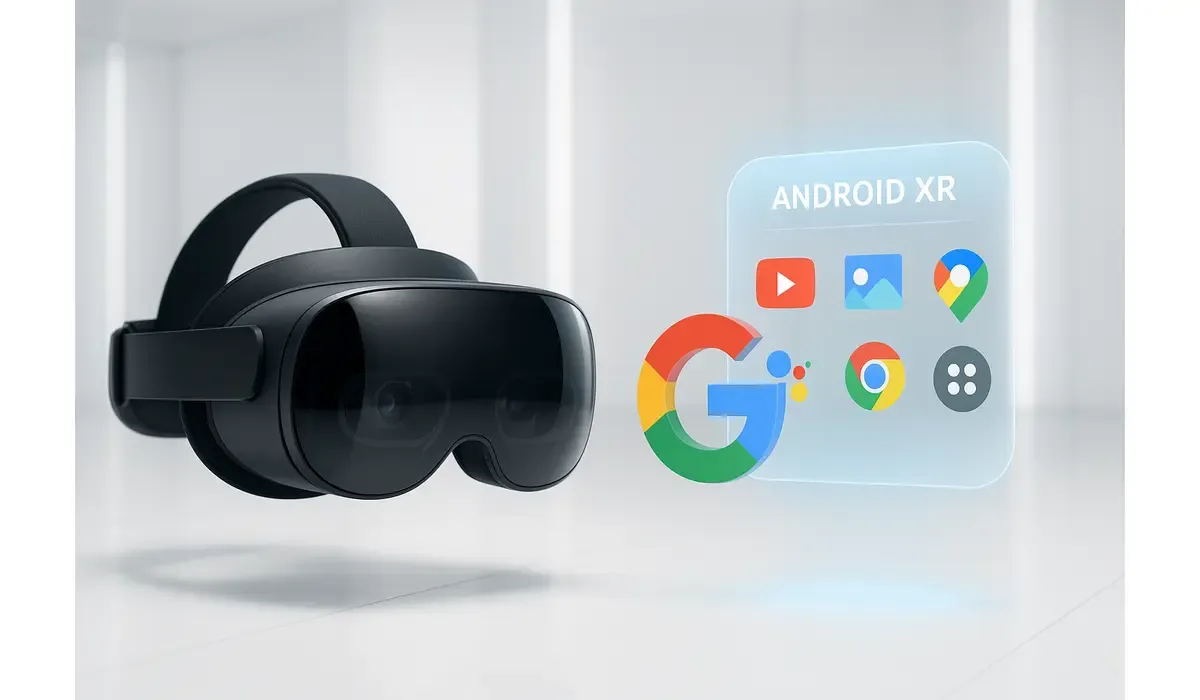
The Samsung and Google XR headset collaboration is the talk of the tech world in 2025. This partnership could reshape how we interact with digital spaces by merging Samsung’s hardware expertise with Google’s advanced Android XR software.
In essence, it’s not just a device—it’s an ecosystem being built to make mixed reality mainstream.
- Samsung builds the Galaxy XR hardware; Google powers it with Android XR.
- The headset could compete directly with Apple’s Vision Pro.
- Launch expected in late 2025.
What Is the Samsung–Google XR Collaboration?
The collaboration between Samsung and Google is a strategic alliance to create a Galaxy XR headset that runs on Google’s newly developed Android XR platform.
This move represents the fusion of Samsung’s world-class display and device design with Google’s software and AI-driven spatial computing.
Together, they’re aiming to make XR (Extended Reality)—which blends virtual, augmented, and mixed realities—accessible and integrated into everyday life.

$750 Cash App Gift Card
Not everyone qualifies for this $750 Cash App gift card. Checking only takes a moment. You can check if you’re eligible.
Latest Updates and Developments
According to reports from Android Authority and SamMobile, Samsung’s XR headset—code-named Project Moohan—is set for release in Q4 2025.
Google confirmed at Google I/O 2025 that it has co-developed the Android XR operating system with Samsung and Qualcomm to support an open XR ecosystem.
Key updates:
- The Galaxy XR headset is powered by Qualcomm’s Snapdragon XR2+ Gen 2 chipset.
- Google’s Gemini AI assistant will provide real-time contextual interactions in XR environments.
- Developers will have access to the Android XR SDK, allowing seamless app transitions from smartphones to XR devices.
- Expected price range: $1,999–$2,199 USD (significantly below Apple Vision Pro).
This makes the partnership not just competitive—but potentially industry-shifting.
Core Features and Technology Breakdown
1. Hardware Excellence by Samsung
Samsung’s deep expertise in display technology is evident here. The Galaxy XR headset reportedly features:
- Dual micro-OLED displays with ~4K resolution per eye.
- 120 Hz refresh rate for ultra-smooth visuals.
- Ergonomic lightweight frame with external battery pack for comfort.
- Advanced eye-tracking and hand-gesture sensors.
2. Software Power by Google
Google’s Android XR platform provides:
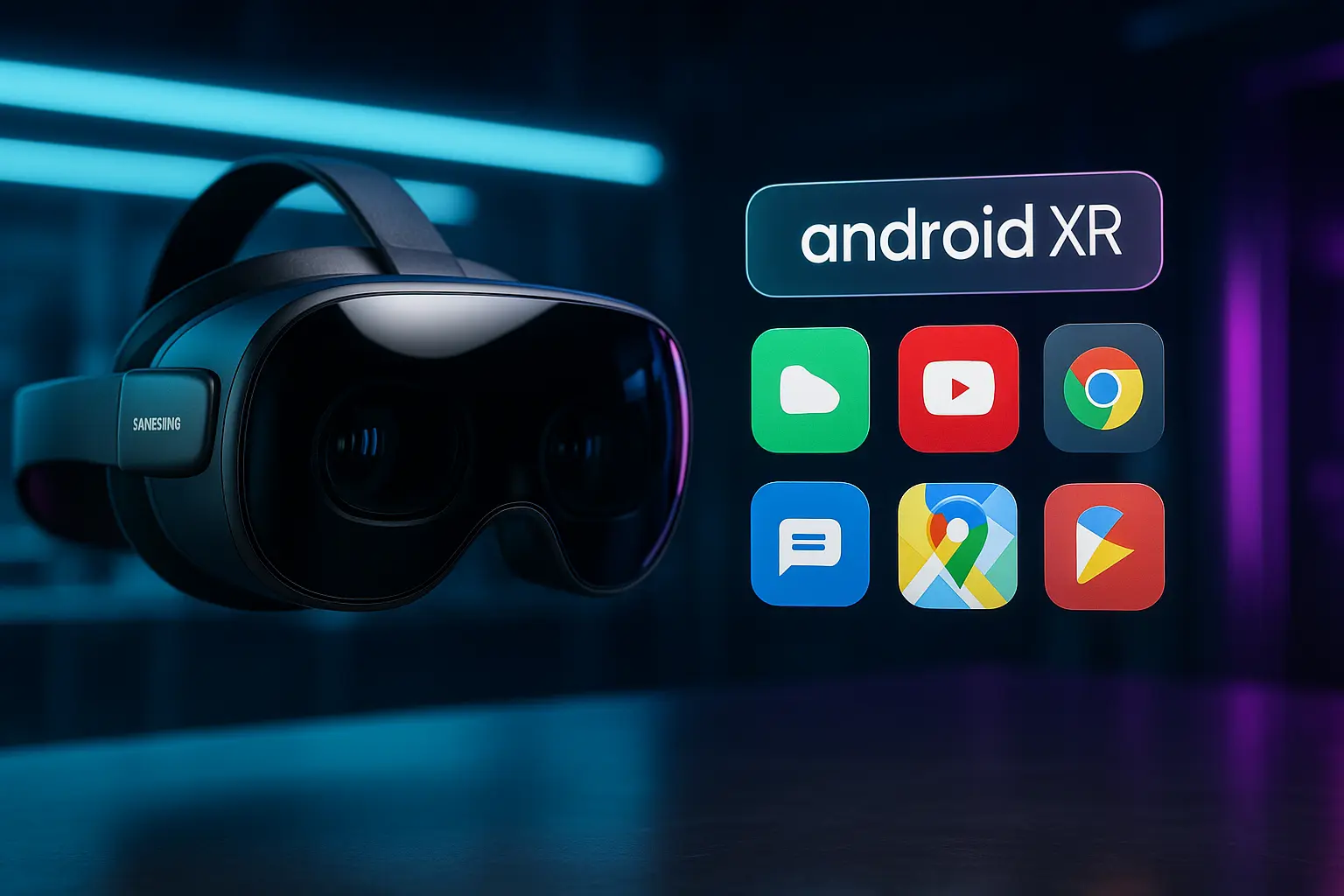
- A new multi-window spatial interface, blending 2D and 3D app views.
- Integrated Google Maps XR, YouTube Immersive, and Chrome 3D browsing.
- Gemini AI support for virtual productivity, navigation, and real-time translation.
- Full compatibility with the Android ecosystem—users can mirror their phones and access Play Store apps in XR format.
3. The Qualcomm Connection
The collaboration extends to Qualcomm, ensuring optimized performance for XR through Snapdragon XR2+ Gen 2, enabling high-fidelity rendering with minimal latency.
Why This Collaboration Matters
This alliance is more than a product launch—it’s a signal of how major tech ecosystems are converging.
For years, XR was fragmented between VR (Meta), AR (Microsoft), and MR (Apple). But Samsung and Google’s collaboration could create a unified, open-source-friendly XR standard under Android.
For consumers:
- Access to familiar apps and interfaces.
- Cross-device connectivity (Android phones, tablets, smartwatches).
- Affordable entry compared to Apple Vision Pro.
For developers:
- A massive Android XR market opens up.
- Easier XR app development using existing Android frameworks.
For the industry:
- A challenge to Apple’s closed ecosystem.
- Catalyst for competition and innovation across XR hardware and AI integration.
Comparative Snapshot
| Feature | Samsung + Google Galaxy XR | Apple Vision Pro | Meta Quest Pro |
|---|---|---|---|
| OS | Android XR | visionOS | Meta OS |
| Price (est.) | $1,999 | $3,499 | $999 |
| AI Integration | Gemini AI | Siri + Vision | Meta AI |
| Display | 4K per eye (micro-OLED) | 3.6K per eye | LCD |
| Ecosystem | Android + Google Services | Apple Ecosystem | Meta Ecosystem |
Expert Insights
Industry experts at The Verge note that “Google’s entry into spatial computing with Samsung signals its most serious XR push yet.”
Meanwhile, TechRadar predicts the Galaxy XR “will democratize premium mixed reality, much like Android did for smartphones.”
Even independent XR developers are optimistic:
“Android XR could become the Windows of mixed reality—open, adaptable, and everywhere.”
—XR developer forum, 2025
Practical Takeaways
- Wait for the official launch: The Galaxy XR headset is expected late in 2025—ideal time to see real-world performance.
- If you’re an Android user: Expect smooth connectivity between your devices and the headset.
- Developers: Begin exploring Android XR SDK—Google’s official XR development toolkit.
- Tech investors: Watch this alliance; it may define the next computing frontier after mobile.

$500 Walmart Gift Card
Not everyone qualifies for this $500 Walmart gift card. Checking only takes a moment. You can check if you’re eligible.
FAQs
Q1: What is the Samsung and Google XR headset collaboration?
It’s a partnership to develop a Galaxy XR headset powered by Google’s Android XR platform, combining Samsung’s hardware with Google’s AI and software.
Q2: When is the Galaxy XR headset launching?
The headset is expected to launch globally in Q4 2025, starting with the U.S. and South Korea markets.
Q3: How is it different from Apple Vision Pro?
Unlike Vision Pro’s closed ecosystem, the Samsung-Google device runs Android XR—an open, AI-driven, multi-device system.
Q4: Will existing Android apps work in XR?
Yes. Most Android apps can be adapted or run in XR space through the Android XR interface.
Key Takeaways
- The Samsung and Google XR headset collaboration represents the first open XR ecosystem driven by Android.
- It merges Samsung’s advanced displays and design with Google’s software, AI, and app ecosystem.
- The result could redefine how users work, play, and connect through immersive digital experiences.
Conclusion
The Samsung and Google XR headset collaboration is more than a partnership—it’s the birth of a new era in computing. By aligning hardware precision with software intelligence, the two tech giants are setting the stage for a more connected, immersive future.