5 Disturbing Realities of Reporting Child Sexual Abuse in India and What Needs to Change
Uncover the disturbing realities of reporting child sexual abuse in India and the systemic gaps that often silence victims. This evidence-based guide highlights urgent challenges—and the critical reforms needed to protect children more effectively.

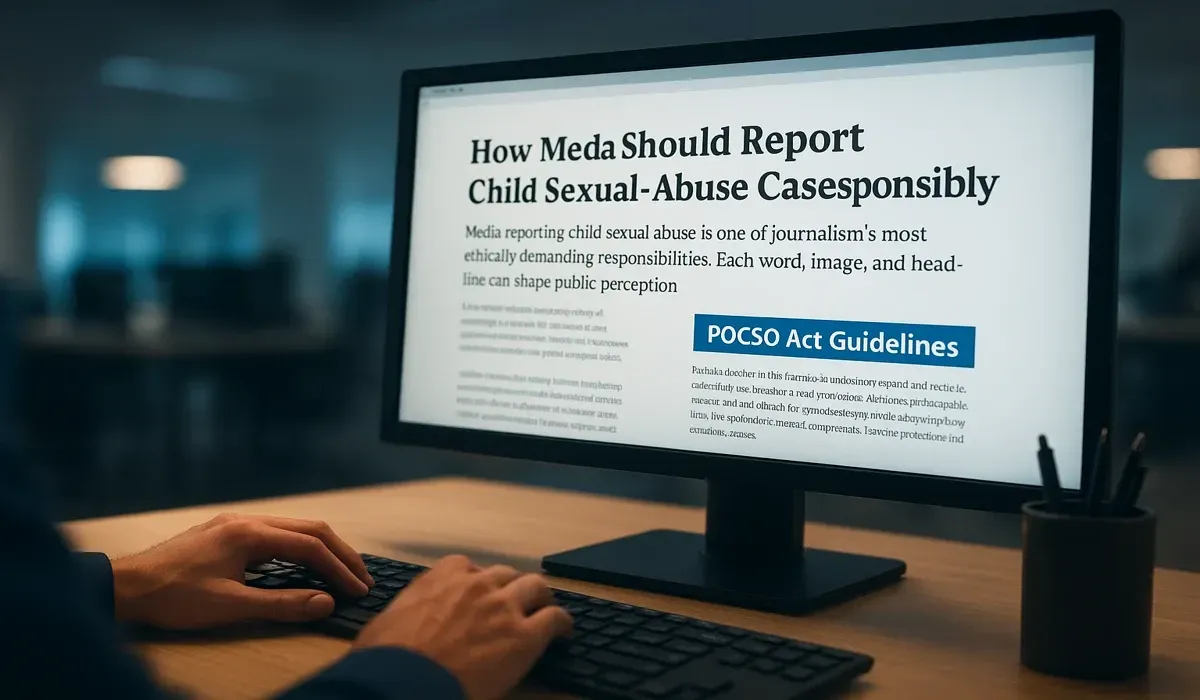
Media reporting child sexual abuse is one of journalism’s most ethically demanding responsibilities. Each word, image, and headline can shape public perception and impact survivors’ dignity. In India, strict legal frameworks such as the POCSO Act and media-ethics codes outline how these cases should be handled, yet missteps still occur across print, digital, and television platforms.
This guide explains responsible approaches, legal safeguards, and professional standards for journalists and publishers.
Understanding the Legal Framework
The Protection of Children from Sexual Offences (POCSO) Act, 2012 is India’s primary law protecting minors from sexual crimes. It mandates anonymity for victims and severe penalties for revealing identities.
Key provisions include:
- Section 23 of the POCSO Act: prohibits publication or broadcast of any material that may reveal the child’s identity.
- Juvenile Justice (Care and Protection of Children) Act, 2015: reinforces confidentiality and ethical handling of minors’ data.
- IPC Section 228A: criminalizes disclosure of victims’ identities in sexual-offense cases.
Understanding these statutes is essential before any media organization publishes related stories.

$500 PayPal Gift Card$500 PayPal Gift Card
Some users qualify for a $500 PayPal gift card. You can check if you qualify.
What Responsible Coverage Means
Responsible journalism balances the public’s right to know with the victim’s right to privacy. Ethical coverage means:
- Reporting verified facts without sensationalism.
- Using neutral language that avoids victim-blaming or graphic details.
- Maintaining the survivor’s complete anonymity—no hints through family names, school, or location.
- Ensuring headlines and visuals respect human dignity.
For digital publishers, the same standards apply to SEO snippets, image captions, and meta data—all must protect the victim’s privacy.
Why Ethical reporting child sexual abuse Matters
Ethical media reporting shapes how society perceives sexual violence. Irresponsible coverage can:
- Trigger trauma for survivors and families.
- Obstruct police investigation or judicial processes.
- Encourage social stigma against victims.
- Spread misinformation or create moral panic.
Conversely, responsible coverage educates audiences, supports justice, and upholds press credibility.
Best Practices for Media Reporting Child Sexual Abuse
1. Verify Information Through Official Channels
Always confirm details with law enforcement press notes or court records. Never rely solely on social media leaks or anonymous sources.
2. Remove Identifying Clues
Avoid references that can indirectly identify the victim—neighborhood, relatives, or school.
3. Avoid Sensational or Emotional Headlines
Use factual and neutral language. Example: “Minor rescued under POCSO Act” is acceptable; “Horrific assault on teen” is not.
4. Consult Legal and Editorial Experts
Have legal vetting before publication. Editors should cross-check compliance with the POCSO Act and Press Council of India (PCI) guidelines.
5. Provide Context, Not Details
Focus on systemic issues—law enforcement, child protection programs, judicial response—instead of explicit descriptions.
Press Council of India (PCI) Guidelines
The PCI Code of Ethics provides detailed standards for media reporting child sexual abuse:
- Never sensationalize crime.
- Maintain highest confidentiality.
- Emphasize rehabilitation and preventive education.
- Verify information through authorized agencies.
Violations can lead to formal censure and legal penalties.
Expert Opinions
Media-ethics experts emphasize that sensitivity must extend beyond print text.
“Each tweet, thumbnail, and push notification is a publication in itself,” says Dr. Nisha Kumar, a journalism professor at Delhi University.
“Digital editors must review every asset for ethical compliance just as carefully as the main article.”
Legal analysts also advise that compliance with POCSO and IPC 228A protects publishers not only ethically but legally.
Role of Editors and Digital Marketers
Editors play a gatekeeping role. In the era of AI-generated news and algorithmic headlines, responsibility expands to include metadata, schema tags, and Discover snippets.
Digital marketers and SEO professionals must ensure:
- Focus keywords and slugs are ethical and accurate.
- Thumbnails, previews, and structured data don’t expose sensitive content.
- Automated tools follow newsroom ethical policies.
International Standards
Global journalism codes mirror India’s framework:
- UNICEF’s Child-Friendly Media Guidelines encourage “do-no-harm” principles.
- Society of Professional Journalists (SPJ) urges minimization of harm and accuracy first.
- BBC and Reuters maintain editorial restrictions on graphic details and child identification.
Adopting these standards ensures alignment with both domestic and global media ethics.
Practical Takeaways : reporting child sexual abuse
- Always cite POCSO and PCI guidelines when publishing stories about minors.
- Remove metadata or images that might reveal identities.
- Replace explicit terms with legal terminology (“sexual offense”, “assault under POCSO”).
- Educate newsrooms regularly on ethical and legal obligations.

$750 Cash App Gift Card$750 Cash App Gift Card
Some users qualify for a $750 Cash App gift card. You can check if you qualify.
FAQs about reporting child sexual abuse
Q1. What are the key laws guiding media reporting child sexual abuse in India?
The POCSO Act (2012), IPC Section 228A, and Juvenile Justice Act (2015) form the legal foundation ensuring victims’ anonymity.
Q2. Can media mention the victim’s school or neighborhood?
No. Even indirect identification violates the POCSO Act and PCI Code of Ethics.
Q3. How can journalists balance sensitivity with public interest?
By focusing on systemic issues—legal reforms, police response, and prevention—rather than personal or emotional elements.
Q4. What penalties apply for identity disclosure?
Violations may lead to imprisonment under IPC 228A and Section 23 of POCSO, along with PCI disciplinary action.
Key Takeaways
- Media reporting child sexual abuse must protect privacy above all.
- Legal awareness, editorial training, and ethical SEO are mandatory.
- Compliance builds trust with readers and authorities.
Conclusion
Ethical media reporting child sexual abuse is not just a legal requirement—it’s a moral obligation. Responsible storytelling honors the survivor’s dignity while informing the public truthfully. As digital platforms evolve, maintaining ethical integrity remains journalism’s strongest foundation.