Rahul Gandhi Alleges ECI-BJP Collusion: What His Statement Reveals
Rahul Gandhi alleges ECI-BJP collusion in a statement that raises pointed questions about transparency and election conduct. This analysis breaks down his claim, the context behind it, and why the remark has intensified the national debate.

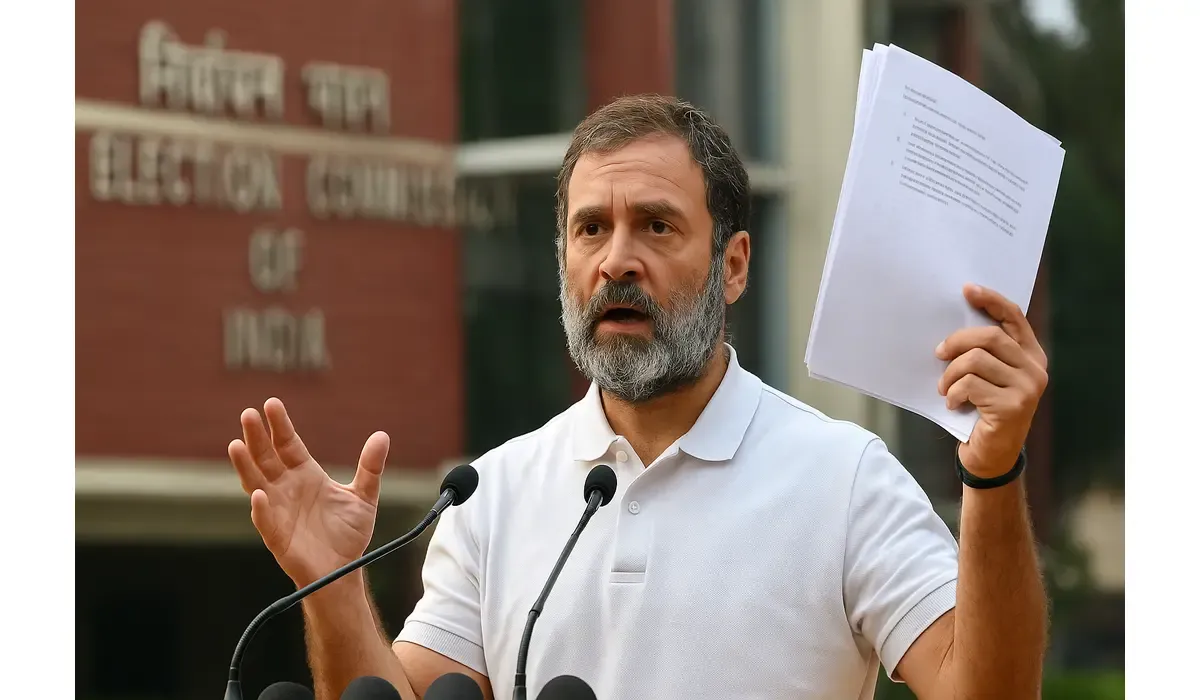
The political atmosphere in India intensified after Rahul Gandhi alleges ECI-BJP collusion during a public address that sent shockwaves through political circles. The Congress leader claimed that the Election Commission of India (ECI) has been working “in silent coordination” with the ruling Bharatiya Janata Party (BJP) to manipulate voter rolls and influence upcoming state elections.
His remarks have sparked a nationwide debate on transparency, institutional independence, and the credibility of India’s democratic systems.
Context: What Is the ECI-BJP Collusion Allegation?
In his latest press briefing, Rahul Gandhi alleged that the Election Commission of India failed to act impartially and accused it of being “hand-in-glove” with the BJP. According to him, several voter roll discrepancies, including the removal of legitimate voters and duplication of fake names, point to a “coordinated manipulation.”
He referred to this alleged nexus as “Vote Chori 2.0” — a phrase he said symbolizes the subversion of electoral integrity under the guise of administrative corrections.

$500 Walmart Gift Card
Not everyone qualifies for this $500 Walmart gift card. Checking only takes a moment. You can check if you’re eligible.
The Main Allegations at a Glance
Rahul Gandhi’s statement included four core claims:
- Deleted Voter Lists in Opposition Strongholds
- He alleged that thousands of verified names were removed from constituencies known to favor the Congress party.
- Fake Entries in Key BJP Constituencies
- Gandhi claimed that certain regions showed “unrealistic increases” in voter registration, suggesting manipulation to favor the ruling party.
- ECI Inaction on Reported Complaints
- Despite formal reports from the Congress and other regional parties, Gandhi alleged that the Election Commission had “deliberately delayed” addressing these concerns.
- Social Media Suppression
- The Congress leader also accused the BJP of leveraging its IT network to suppress discussions questioning the election process.
Rahul Gandhi’s Exact Words
In his speech, Rahul Gandhi said:
“This is not an election, this is an operation. The Election Commission has become a silent partner in the BJP’s campaign machinery. Our democracy deserves transparency, not coordination between the umpire and the player.”
His remarks drew applause from supporters and criticism from the BJP, which dismissed the accusations as “baseless political drama.”
Political Reactions Across the Spectrum
- Congress: Senior leaders backed Gandhi’s claims, calling for a judicial inquiry into alleged voter list tampering.
- BJP: The ruling party strongly denied any collusion, labeling the statements as “a desperate attempt to justify electoral losses.”
- Regional Parties: Leaders from the AAP, TMC, and DMK demanded that the ECI respond publicly to the charges to restore faith in electoral fairness.
The Election Commission has not issued an official statement, but insiders reportedly called the allegations “politically motivated and factually incorrect.”
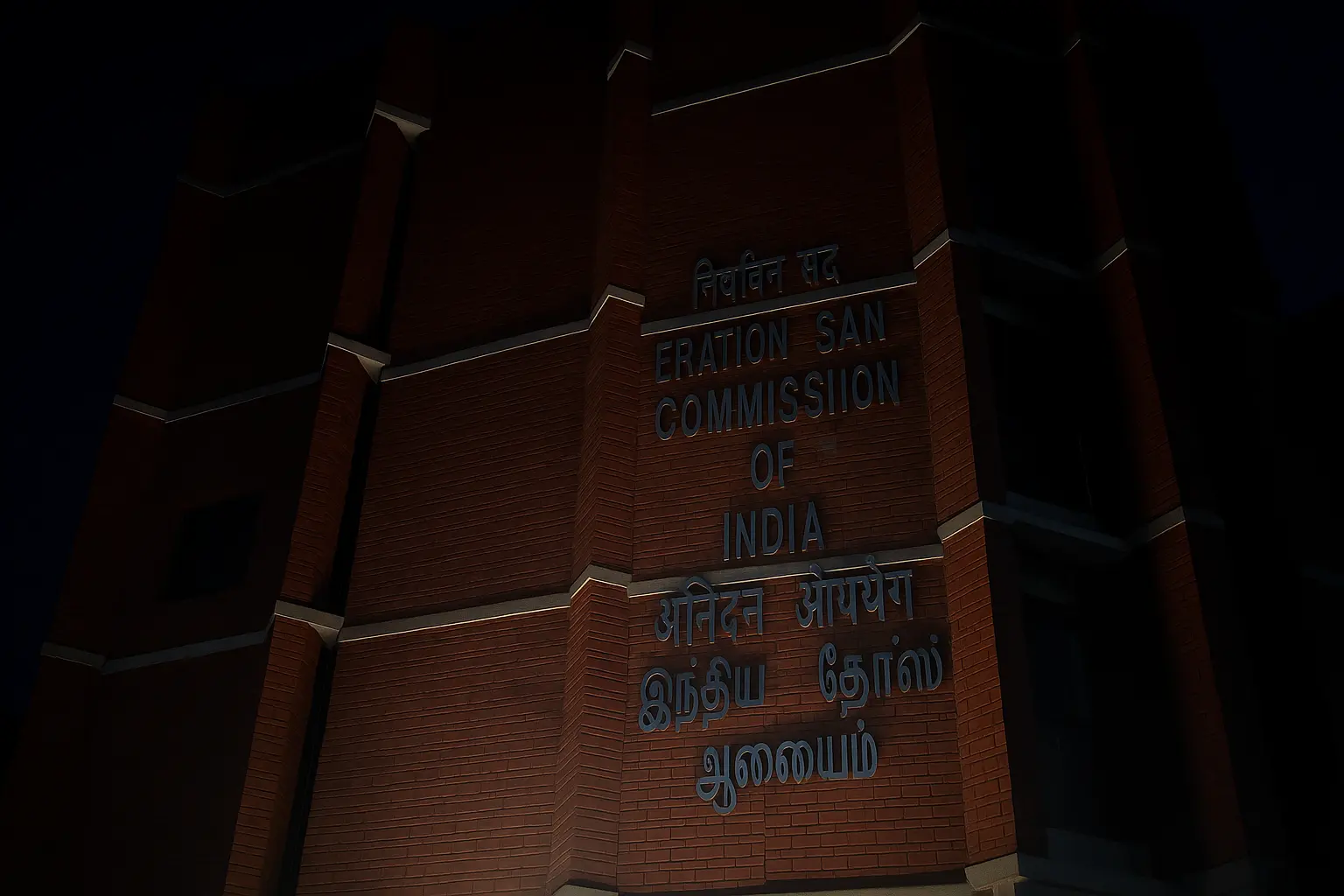
Why This Controversy Matters
The controversy over whether Rahul Gandhi alleges ECI-BJP collusion could impact the credibility of the world’s largest democracy ahead of crucial 2025 state polls and the 2026 general election build-up.
1. Institutional Credibility
Any perception of partiality in the Election Commission could weaken voter trust — a cornerstone of India’s democratic legitimacy.
2. Voter Confidence
Even unverified allegations can create skepticism among citizens, potentially lowering voter turnout or fostering polarization.
3. Political Optics
For the Congress party, the statement serves as both an accusation and a strategy — signaling its renewed aggression against what it views as institutional bias.
Expert Opinions: What Analysts Are Saying
Dr. Kavita Sharma, Political Science Professor at Delhi University:
“Rahul Gandhi’s allegations come at a time when public faith in institutions is under scrutiny. Even if unproven, such claims create significant political ripples and can redefine how citizens perceive electoral fairness.”
Arvind Nair, Senior Election Analyst:
“There is growing pressure on the Election Commission to enhance transparency. If the ECI does not address these claims, even neutral voters may start questioning its independence.”
Meera Joshi, Constitutional Law Expert:
“Legally, these claims can only be substantiated through an independent probe. But politically, the statement has already achieved its goal — it has reignited the debate about accountability in democratic governance.”
The Timeline of Events
- Early October 2025: Opposition parties report voter deletions in key constituencies.
- Mid-October 2025: ECI issues general clarification citing “technical revisions.”
- November 2025: Rahul Gandhi makes his public allegation of ECI-BJP collusion.
- Expected: Congress to file an official complaint seeking judicial intervention.
The Bigger Picture: Is Electoral Reform Needed?
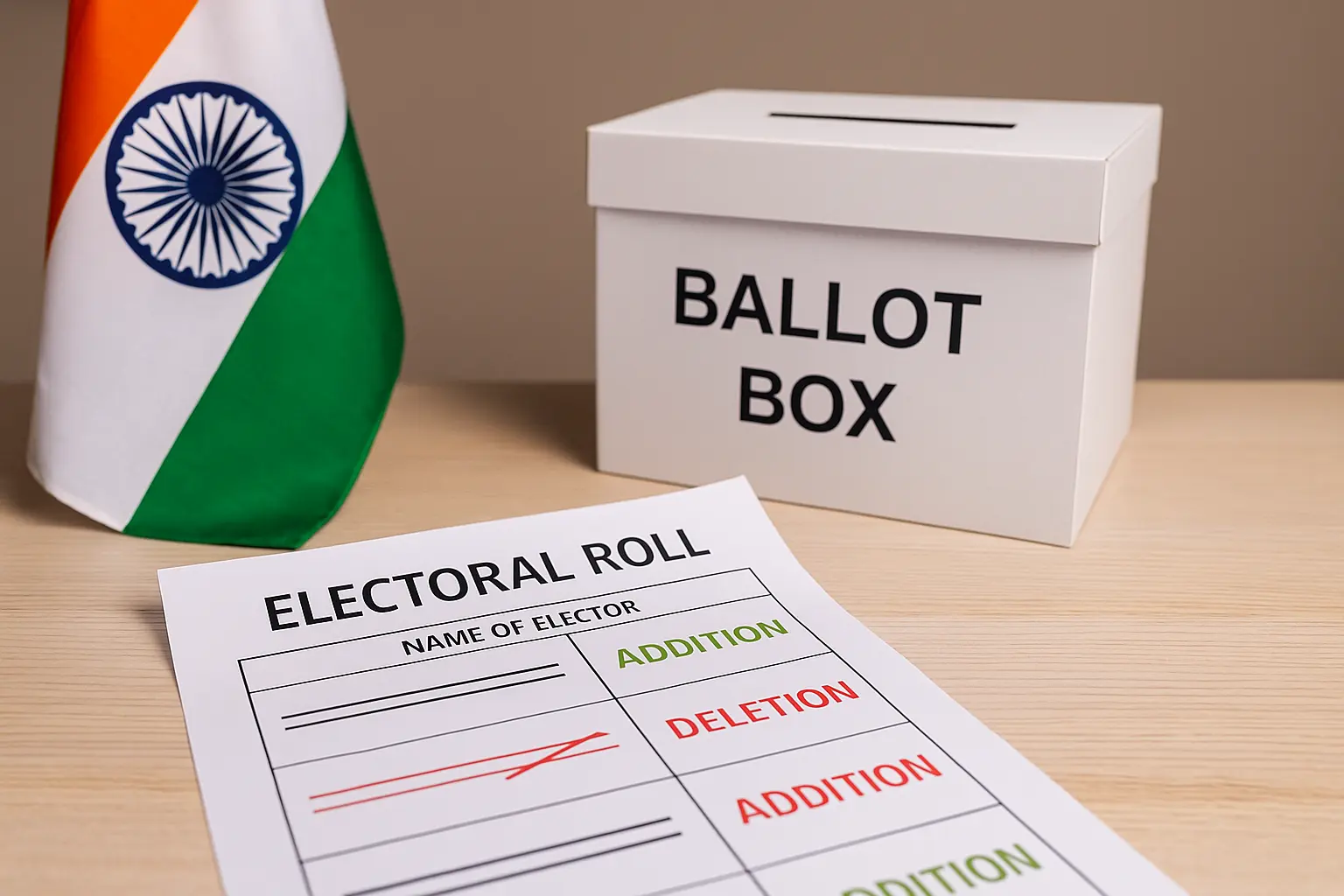
This isn’t the first time questions have been raised about election integrity in India. Political analysts argue that recurring disputes highlight the urgent need for:
- Independent Electoral Audits: Third-party verification of voter rolls.
- Digital Transparency: Publicly accessible real-time data on additions/deletions from electoral lists.
- Stronger Oversight Laws: Clearly defined limits on government influence over constitutional bodies.
Public Response and Social Media Trends
The hashtag #VoteChori2025 and #ECICollusion dominated social media platforms within hours of Gandhi’s statement. While Congress supporters rallied behind him, several neutral users called for an independent investigation rather than political mudslinging.
Satirical memes, political commentary, and civil society reactions show that Gandhi’s remarks have struck a nerve beyond traditional party lines.
What Should Citizens Take Away
- Stay Informed: Understanding how the Election Commission functions is vital to assessing claims of bias.
- Verify Your Vote: Regularly check your name on the electoral roll to prevent deletion issues.
- Engage, Don’t Dismiss: Whether or not one agrees with Gandhi, the call for institutional accountability deserves public attention.
- Demand Transparency: Democratic health depends on open data and responsive governance.

$750 Cash App Gift Card
Some users qualify for a $750 Cash App gift card. You can check if you qualify.
FAQs
Q1. What did Rahul Gandhi allege against the ECI and BJP?
He accused the Election Commission of working in silent collusion with the BJP to manipulate voter rolls and suppress opposition votes.
Q2. Has the ECI responded?
As of now, there has been no formal response from the Election Commission regarding these allegations.
Q3. What evidence has Congress presented?
Rahul Gandhi claimed to have documented proof of voter deletions and duplications, which will be shared with the court and media.
Q4. Could this affect upcoming elections?
Potentially yes, as the controversy may shape public trust and campaign narratives leading into the 2025 elections.
Key Takeaways
- Rahul Gandhi alleges ECI-BJP collusion to manipulate electoral lists and influence upcoming elections.
- The claim highlights ongoing concerns about institutional transparency in India.
- Political analysts stress the need for structural reform in election oversight.
- The controversy reflects deeper questions about trust in India’s democratic framework.
Conclusion
The debate sparked after Rahul Gandhi alleges ECI-BJP collusion underscores the fragile balance between politics and public institutions in India.
While proof is yet to surface, the very existence of such allegations indicates a growing demand for electoral accountability.
How the Election Commission and the ruling party respond in the coming weeks could determine not just the credibility of one election — but the faith of an entire democracy.