Pakistan IMF Loan Agreement 2025 Details: 7 Powerful Reforms That Could Save the Economy
Explore key Pakistan IMF loan agreement 2025 details and the seven powerful reforms that could reshape the country’s economic future. This concise, research-driven teaser breaks down the measures, impact, and stakes behind the crucial deal.

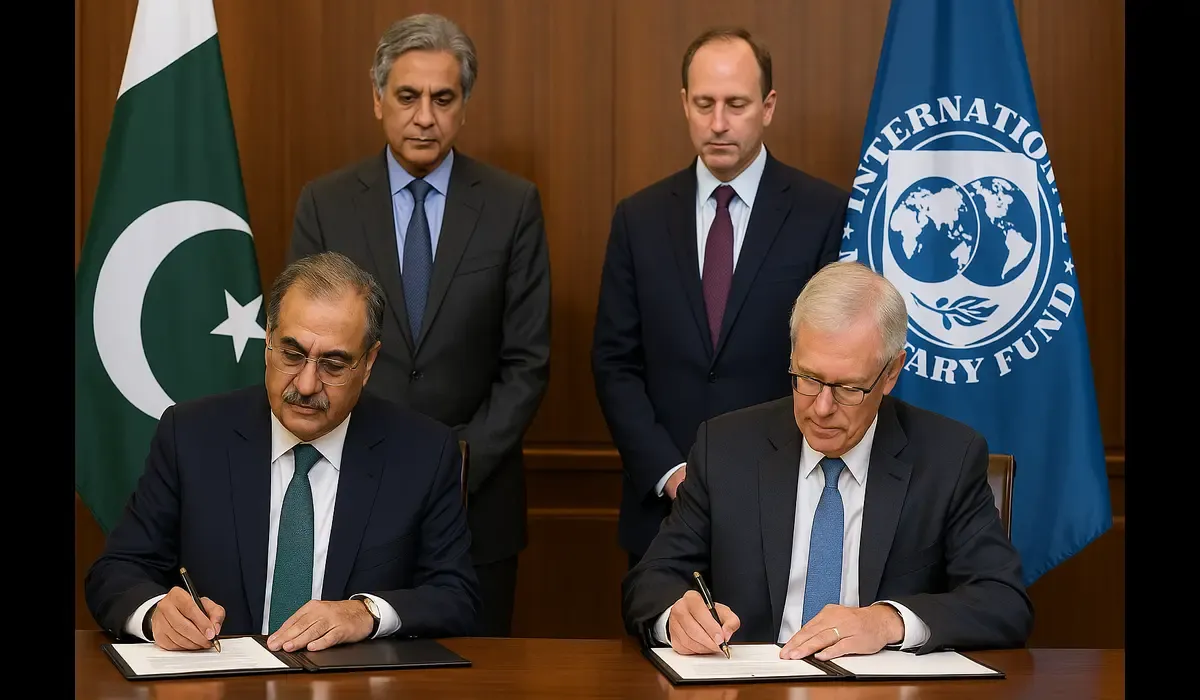
Pakistan IMF loan agreement 2025 details mark a defining moment in the country’s economic recovery journey. The agreement aims to stabilize foreign reserves, ensure fiscal discipline, and rebuild investor confidence after years of economic volatility.
- Pakistan to receive $1.2 billion under IMF’s EFF and RSF programs
- Strict structural reforms required for continued disbursements
- Focus on fiscal balance, taxation, and climate resilience
Latest Post
Quick Context
The Pakistan IMF loan agreement 2025 details refer to the financial arrangement between Pakistan and the International Monetary Fund under the Extended Fund Facility (EFF) and Resilience and Sustainability Facility (RSF). The agreement provides access to funds in exchange for fiscal reforms and macroeconomic stability measures.

$500 Walmart Gift Card$500 Walmart Gift Card
Not everyone qualifies for this $500 Walmart gift card. Checking only takes a moment. You can check if you’re eligible.
Latest Update: $1.2 Billion Tranche Approved
In October 2025, the IMF and Pakistan reached a staff-level agreement unlocking $1.2 billion in financing, pending formal board approval. Of this amount, $1.0 billion comes from the EFF, while $0.2 billion is under the RSF, focusing on climate-related projects.
This marks the third disbursement under Pakistan’s $7 billion IMF program, bringing total disbursements to approximately $3.3 billion. The new funding is expected to provide immediate relief to Pakistan’s foreign exchange reserves and stabilize the rupee.
Key Facts
Program Structure
The Pakistan IMF loan agreement 2025 details outline a dual structure:
- Extended Fund Facility (EFF): A 37-month program aimed at macroeconomic stabilization, tax reform, and monetary discipline.
- Resilience and Sustainability Facility (RSF): A 28-month facility supporting climate resilience, disaster recovery, and sustainable infrastructure.
The total estimated allocation stands near $7 billion, covering both stabilization and sustainability components.
Disbursement Timeline
- First Tranche (2024): $1.1 billion released for fiscal stabilization.
- Second Tranche (May 2025): $1 billion disbursed after policy compliance review.
- Third Tranche (October 2025): $1.2 billion pending board approval, focused on reform continuity and climate action.
Future tranches will depend on quarterly compliance reviews and reform progress.
Conditional Reforms
The IMF emphasized fiscal discipline and structural change. The Pakistan IMF loan agreement 2025 details include the following mandatory conditions:
- Maintain primary budget surplus through expenditure controls.
- Broaden tax base by integrating informal sectors and revising GST structure.
- Reduce circular debt in the energy sector and ensure cost-reflective tariffs.
- Limit monetary financing and strengthen central bank autonomy.
- Implement climate resilience policies, particularly in flood management and water infrastructure.
Why It Matters
1. Stabilizing a Fragile Economy
The IMF program is critical to Pakistan’s financial survival. With reserves covering less than two months of imports before the deal, the Pakistan IMF loan agreement 2025 details provide crucial liquidity to stabilize the exchange rate and meet debt obligations.
2. Investor Confidence
Securing IMF backing signals creditworthiness to international markets. Pakistan plans to issue sovereign bonds post-approval, targeting global investors who value IMF oversight as a risk-reduction mechanism.
3. Policy Discipline and Governance
The agreement pushes the government to pursue sustainable fiscal policies, end subsidies that drain the budget, and improve governance of public enterprises.
4. Risks and Public Concerns
Critics argue that IMF-mandated austerity may increase inflation and social pressure. However, the government insists reforms will lay a foundation for long-term growth.
Comparative Context
| Year | IMF Program Type | Amount (USD Billion) | Key Focus |
|---|---|---|---|
| 2019 | Extended Fund Facility | 6.0 | Fiscal reforms & stability |
| 2022 | Stand-by Arrangement | 3.0 | Emergency liquidity |
| 2025 | EFF + RSF | 7.0 | Fiscal & climate resilience |
Unlike earlier programs, the Pakistan IMF loan agreement 2025 details combine fiscal discipline with climate-linked financing, marking a policy shift toward sustainable economic management.
Expert Opinions
Economists view the Pakistan IMF loan agreement 2025 details as a necessary but challenging measure.
- Financial analysts highlight that IMF support boosts external credibility, essential for debt refinancing.
- Policy experts caution that compliance will require political stability and consensus.
- Climate specialists commend inclusion of RSF funding for flood recovery and green investment.
A senior economist from Karachi University stated, “The IMF’s dual-track approach blends fiscal stabilization with resilience building — a model that can reshape Pakistan’s development path if properly implemented.”
Practical Takeaways
- Track Implementation:
Follow government policy announcements on taxation, energy pricing, and subsidy reform. These are key performance benchmarks under the IMF program. - Monitor Market Indicators:
Keep an eye on the rupee-dollar exchange rate, stock market trends, and inflation rates following disbursement. - Understand Fiscal Trade-Offs:
Short-term tightening may slow consumption, but the long-term benefit lies in restoring macroeconomic confidence. - Watch Climate Investments:
RSF funds will support projects in flood prevention and renewable energy, offering new opportunities for domestic and foreign investors.

$500 PayPal Gift Card$500 PayPal Gift Card
Some users qualify for a $500 PayPal gift card. You can check if you qualify.
FAQs
Q1. What is the total value of the Pakistan IMF loan agreement 2025?
The total value is approximately $7 billion, including both EFF and RSF components.
Q2. What are the main conditions of the program?
Fiscal discipline, tax reform, reduction of energy subsidies, and climate resilience policies are key conditions.
Q3. How much will Pakistan receive immediately?
Upon IMF board approval, Pakistan will receive $1.2 billion as the next tranche
Q4. Why is the RSF important for Pakistan?
The RSF funds climate adaptation, flood control, and disaster resilience, reducing economic vulnerability.
Q5. Will this program end Pakistan’s economic crisis?
It provides stability but not a cure-all. Sustainable recovery depends on consistent reform implementation.
Key Takeaways
- Pakistan IMF loan agreement 2025 details highlight a $1.2 billion tranche for fiscal and climate reforms.
- The deal strengthens reserves, supports market confidence, and enforces structural changes.
- Successful execution could mark Pakistan’s return to sustainable economic management.
- Delays or political resistance could endanger further disbursements.
Conclusion
The Pakistan IMF loan agreement 2025 details reflect both urgency and opportunity. While the deal offers crucial financial relief, it also binds Pakistan to rigorous reforms that demand political unity and governance discipline. If managed effectively, it could shift Pakistan toward fiscal sustainability and global credibility.