Nara Lokesh Vision for India’s Quantum
Explore how Nara Lokesh Vision for India’s Quantum outlines a strategic roadmap for national leadership in next-generation computing. This concise analysis highlights the initiatives, impact areas, and future potential driving India’s quantum leap forward.

Introduction
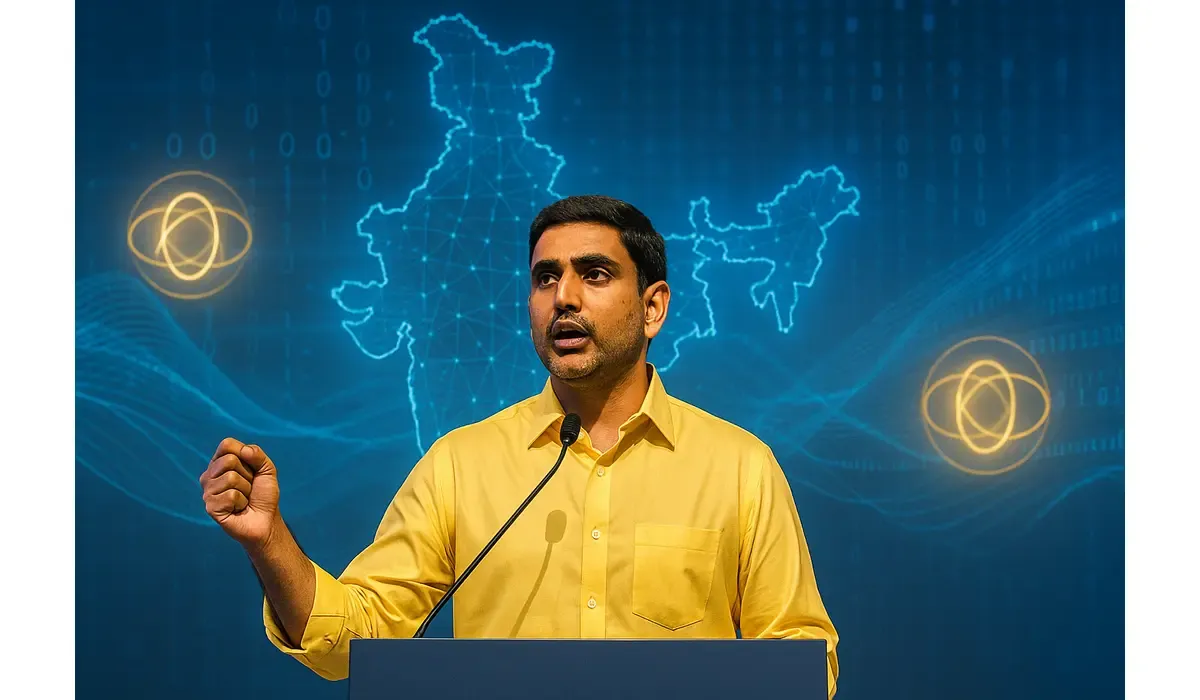
Nara Lokesh vision for India’s quantum computing ecosystem is already drawing attention across the tech and policy spheres. As the IT minister of Andhra Pradesh, he has publicly committed Andhra Pradesh to becoming a hub for quantum innovation.
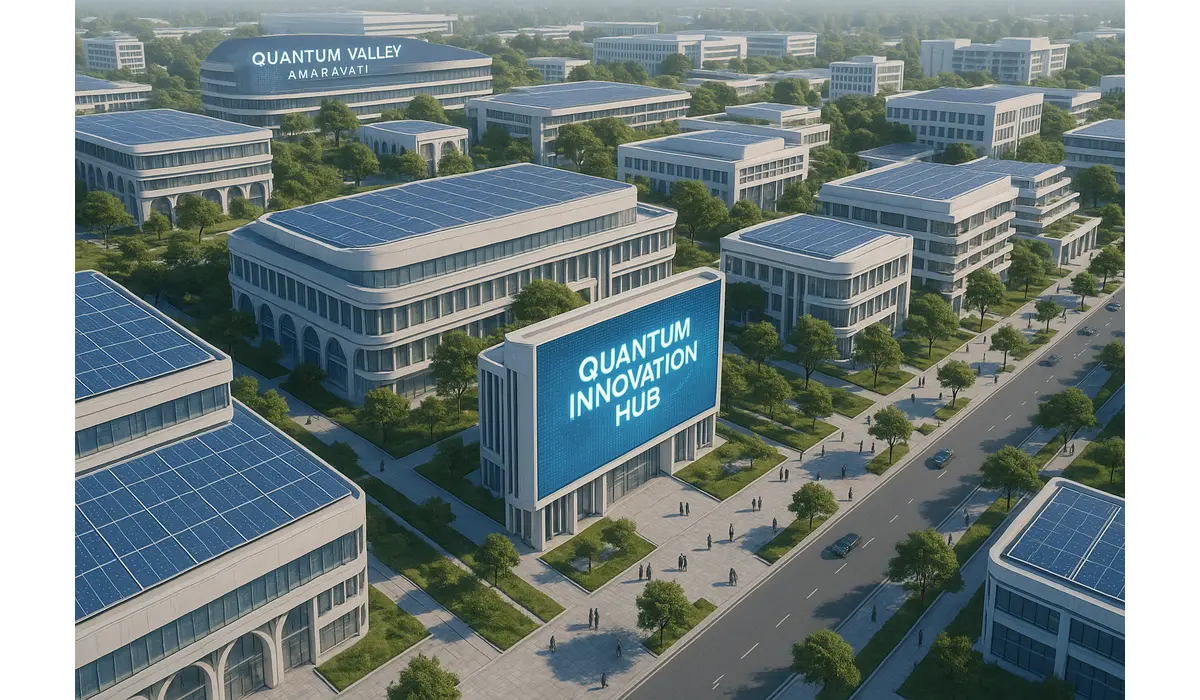
His proposals signal a bold push toward building Quantum Valley in Amaravati, deploying qubit infrastructure, and aligning with India’s National Quantum Mission.
What Is Lokesh’s Quantum Vision?
Nara Lokesh’s quantum vision represents a strategic ambition: to position Andhra Pradesh at the forefront of India’s quantum computing ecosystem by leveraging state policy, infrastructure, and research collaboration. He aims to create a vibrant ecosystem where quantum hardware, software, startups, and talent converge.
Latest Updates: Key Announcements & Milestones
- Andhra Pradesh plans to build South Asia’s first Quantum Valley in Amaravati. Lokesh has claimed that a 158-qubit quantum computer will arrive by January. Moneycontrol
- The state has allocated 50 acres in Amaravati for the Quantum Valley and partnered with IBM, TCS, and L&T for infrastructure. The Times of India+1
- At workshops like the Amaravati Quantum Valley Workshop 2025, Lokesh has emphasized innovation, industry-academia synergy, and funding alignment. LinkedIn+1
- The state aligns its vision with India’s National Quantum Mission (NQM), the central government’s ₹6,000+ crore program targeting quantum capabilities. Wikipedia
These moves showcase that Lokesh is not merely projecting ambition but acting to seed an actual quantum infrastructure.
Core Features & Pillars of His Vision
Lokesh’s quantum vision hinges on several interlocking pillars:
1. Infrastructure & Quantum Valley
Locking in land, labs, and partnerships is central. The 50-acre allocation in Amaravati, combined with tie-ups with IBM, TCS, and L&T, forms the backbone.
He envisions dedicated quantum computing centers, cryogenic systems, control electronics, testbeds, and possibly qubit fabrication lines.
2. Hardware Ambition (158 Qubit Computer)
He has publicly pledged that India’s first 158-qubit quantum computer will be hosted in Andhra Pradesh.
This is ambitious: very few global institutions currently operate quantum devices at that scale with maturity.
3. Research, Academia & Talent Pipeline
Lokesh expects universities and research institutes to align curricula with quantum sciences — physics, quantum algorithms, error correction, materials, and hardware-software interface.
He has also supported workshops such as Quantum Valley Workshop 2025 to bring in scientists, startups, and students.
4. Industry Collaboration & Private Partnerships
His plan involves partnerships with corporates like IBM and TCS not only for infrastructure but for applied projects, incubation of startups, and deployment in sectors like agriculture, logistics, climate, and health.
5. Policy & Funding Alignment
Lokesh intends to tap central quantum mission funding, allocate state resources, and create attractive incentives (grants, tax breaks) to catalyze ecosystem growth.
Why It Matters for India & Stakeholders
Strategic Technological Leap
Quantum computing is viewed globally as a frontier tech with the potential to upend cryptography, optimization, simulation, material science, and more. States that move early may gain technological sovereignty and leadership.
Regional Tech Hub Competitiveness
Lokesh’s vision could pivot Andhra Pradesh from being a regional tech player to a national powerhouse. This elevates its profile among global talent, investors, and policy circles.
Complement to National Quantum Mission
India’s National Quantum Mission (NQM) is already in motion, pushing quantum computing, sensing, communication, and more. Lokesh’s state-level push complements and localizes this mission.
Economic & Human Capital Impact
A functioning quantum ecosystem can catalyze startups, high-skilled jobs, and spin-off industries (cryogenics, photonics, chip design). Education institutions in Andhra Pradesh would receive impetus to upskill.
Challenges & Critiques: What Could Stall the Vision?
- Technical complexity & maturity: Scaling from lab prototypes to reliable, error-corrected quantum computers is extremely hard.
- Capital intensity: Quantum hardware requires substantial investment (cryogenics, low-noise electronics, vacuum systems).
- Talent shortage: India has limited experienced quantum scientists and engineers. Attracting global talent will be critical.
- Coordination across levels: State, central, academic, and private entities must align. Missteps in coordination or funding delays could derail momentum.
- Managing expectations: Promising a 158-qubit system by January is ambitious; any delay or overpromise could generate backlash.
Practical Steps: What Stakeholders Should Do
- For central & state governments: Create clear funding roadmaps, accountable milestones, and monitor implementation rigorously.
- For universities & research institutes: Update curricula, initiate quantum labs, and seek international partnerships.
- For startups & industry: Explore niche quantum applications (simulation, optimization) and begin small pilot projects in sectors like logistics, pharma, agritech.
- For investors: Evaluate early-stage quantum tech startups in Andhra Pradesh as opportunities—both hardware and quantum software.
- For students & professionals: Begin specialization in quantum information science, quantum programming frameworks, experimental physics, and materials.
FAQs
Q: What is the “Nara Lokesh vision for India’s quantum computing ecosystem”?
It refers to Lokesh’s strategic plan to build Andhra Pradesh as a quantum hub — Quantum Valley in Amaravati, hosting a 158-qubit computer, fostering industry, startups, and aligning with the National Quantum Mission.
Q: When will the 158-qubit quantum computer arrive?
Lokesh has projected it by January (2026) in Amaravati as part of the state’s quantum initiative.
Q: How does this vision tie into the National Quantum Mission?
Lokesh’s efforts localize and execute the central mission’s goals in a concrete geography, potentially making Andhra Pradesh a flagship quantum ecosystem aligned with NQM.
Q: What is the “Quantum Valley” in this vision?
The term refers to a dedicated zone in Amaravati designed as a quantum tech park with infrastructure, labs, startups, and research centers at scale.
Conclusion
Nara Lokesh’s vision for India’s quantum computing ecosystem is ambitious, provocative, and strategically timed. By proposing a 158-qubit computer, allocating land, then combining policy, funding, and partnerships, he sets a bold trajectory for Andhra Pradesh in the quantum age. If executed diligently, this effort could place Andhra Pradesh—and by extension India—in the front ranks of global quantum innovation.