Mahindra Bolero vs Bolero Neo — The Truth About Mileage and Power Mahindra Doesn’t Tell You
Mahindra Bolero vs Bolero Neo mileage and power differences reveal performance gaps that aren’t always obvious in brochures. This analysis breaks down real-world efficiency, engine behavior, and which SUV delivers stronger value for everyday driving.


The Mahindra Bolero vs Bolero Neo debate has quietly become one of India’s most-searched SUV comparisons in 2025. Both carry Mahindra’s badge of rugged reliability—but which one truly delivers better mileage and performance where it matters: the real world?
The answer isn’t as simple as claimed fuel-economy figures or horsepower charts. This is a story of two SUVs built for very different drivers—and how one might surprise you with its real-life road behavior
- Bolero Neo’s claimed mileage is higher, but both deliver almost identical real-world efficiency.
- Neo wins in outright performance and refinement.
- The original Bolero remains unbeatable for durability and rural reliability.
What Defines the Mahindra Bolero vs Bolero Neo Rivalry?
For over two decades, the Mahindra Bolero has been the go-to vehicle for India’s semi-urban and rural markets. It’s simple, tough, and trusted by everyone from government fleets to small business owners.
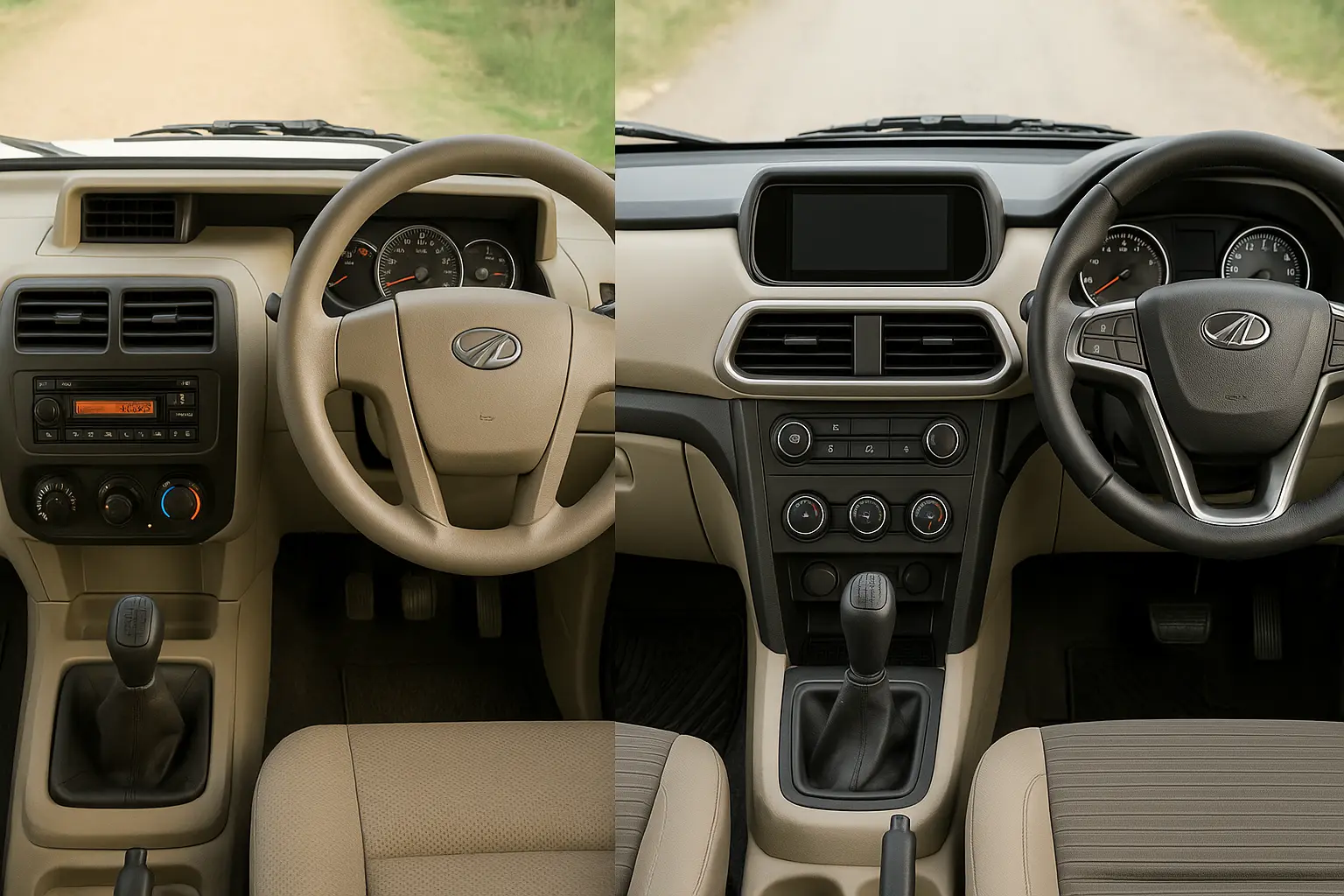
The Bolero Neo, on the other hand, represents a generational shift—a more polished, urban-friendly SUV derived from the TUV300 platform but fine-tuned for everyday practicality. It offers modern styling, improved power, and a smoother cabin experience.
Yet, behind those cosmetic changes, the mechanical soul remains unmistakably Mahindra.

$750 Cash App Gift Card
Not everyone qualifies for this $750 Cash App gift card. Checking only takes a moment. You can check if you’re eligible.
Engine, Power, and Mileage Breakdown
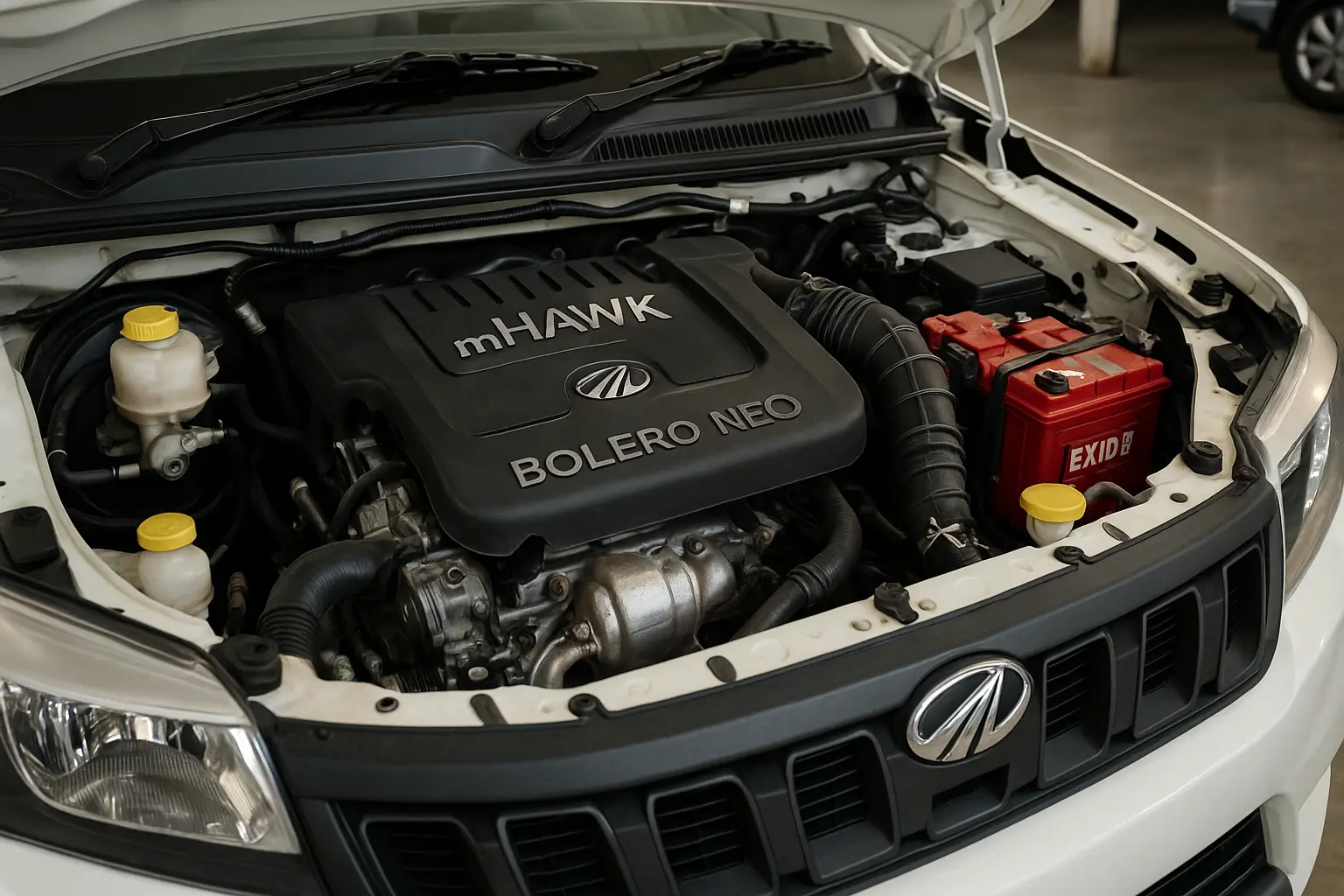
Let’s get specific. Both SUVs use Mahindra’s 1.5-litre mHawk diesel engine, but their tuning makes all the difference.
| Specification | Mahindra Bolero | Mahindra Bolero Neo |
|---|---|---|
| Engine | 1.5 L mHawk75 Diesel | 1.5 L mHawk100 Diesel |
| Power | 75 bhp @ 3600 rpm | 100 bhp @ 3750 rpm |
| Torque | 210 Nm @ 1600–2200 rpm | 260 Nm @ 1750–2250 rpm |
| Transmission | 5-Speed Manual | 5-Speed Manual |
| Claimed Mileage | 16 km/l | 17.29 km/l |
| Real-World Mileage | 14–15.5 km/l | 14–16 km/l |
Verdict:
- Bolero Neo’s engine delivers noticeably stronger mid-range torque and acceleration, especially when overtaking or climbing hills.
- In real driving, both SUVs average around 15 km/l, proving that claimed numbers don’t always reflect the day-to-day experience.
The Real-World Performance Difference
1. City Driving
In city traffic, the Bolero Neo feels more refined. Its higher torque output means fewer gear changes and smoother throttle response. The Bolero’s heavier clutch and slower gearing remind you it’s a workhorse, not a commuter crossover.
2. Highway Cruising
The Bolero’s boxy design and shorter gearing limit high-speed confidence. The Neo, though still body-on-frame, handles expressways better with improved suspension geometry.
3. Rural Roads & Off-Road Capability
This is where the Bolero reclaims its crown. Its older-school suspension and simpler mechanicals soak up punishment without complaint. The Neo is capable, but its extra electronics and weight sometimes work against it on loose terrain.
Ride Comfort and Handling
- Bolero: Designed for durability, not finesse. The suspension is firm but unyielding; excellent for load-bearing, less ideal for passengers on long trips.
- Bolero Neo: Softer suspension tuning, better cabin insulation, and improved ergonomics give it a car-like feel.
In short, the Neo feels newer and smoother, while the Bolero feels indestructible.
Ownership Costs and Fuel Economy
Despite different tuning, both SUVs are similarly frugal. Diesel efficiency depends heavily on load, terrain, and driving style. Long-term owners report the Bolero’s maintenance costs to be marginally lower, as its parts are widely available and less complex.
If your driving includes frequent stop-go traffic, the Neo’s engine efficiency at low RPMs could save small amounts of fuel monthly—but not enough to change ownership economics dramatically.
Why This Comparison Matters
The Indian SUV landscape has changed dramatically. Buyers now expect comfort and technology without compromising ruggedness. The Mahindra Bolero vs Bolero Neo comparison isn’t just about two models—it reflects Mahindra’s dual strategy: one SUV for tradition, another for transition.
- The Bolero continues to dominate in tier-2 and tier-3 towns because of its simplicity, service reach, and reliability.
- The Neo appeals to younger buyers who want a balance between old-school toughness and modern usability.
Understanding how these two balance performance and fuel efficiency helps new buyers make a smarter, future-proof purchase.
Key Differences Summarized
- Mileage Gap Is Negligible: Despite a 1 km/l difference on paper, both average around 15 km/l in mixed conditions.
- Power Edge to Neo: +25 bhp and +50 Nm torque make it livelier and more comfortable under load.
- Bolero Still Simpler: Fewer electronics, proven reliability, lower repair costs.
- Neo Feels Modern: Better NVH, styling, and comfort.
Practical Advice Before You Buy
- Test Both in Real Conditions – Try a full-load test drive on mixed terrain. That’s where you’ll feel the performance contrast most clearly.
- Consider Where You’ll Drive – For city-to-highway flexibility, Neo wins. For dusty, remote, or hilly terrain, Bolero’s toughness is legendary.
- Budget Long-Term, Not Just Purchase Price – Bolero’s parts availability reduces downtime; Neo’s tech features add comfort but slightly higher upkeep.
- Think Resale and Fleet Appeal – Bolero’s reputation keeps demand strong in second-hand markets.

$500 Walmart Gift Card
Not everyone qualifies for this $500 Walmart gift card. Checking only takes a moment. You can check if you’re eligible.
FAQs
1. What is the actual mileage of Mahindra Bolero vs Bolero Neo?
Both SUVs return around 14–16 km/l in real-world conditions despite ARAI figures claiming a slight edge for the Neo.
2. Which SUV performs better with a full load?
The Bolero Neo performs better under heavy load, thanks to its extra torque and smoother gearing.
3. Does the Bolero Neo’s higher power affect fuel economy?
Not significantly. Efficiency remains almost identical when driven sensibly.
4. Is the Bolero Neo worth the higher price?
If you want modern comfort, yes. If rugged dependability is your goal, the classic Bolero remains unbeatable.
Key Takeaways
- The Mahindra Bolero vs Bolero Neo showdown proves that evolution doesn’t always mean higher mileage—but it does bring refinement.
- Real-world efficiency is nearly identical, but Neo’s stronger torque makes driving easier.
- Bolero remains the more “fix-it-anywhere” SUV; Neo offers a more balanced, family-friendly experience.
- The right choice depends on where you drive more than how much you drive.
Conclusion
When it comes to Mahindra Bolero vs Bolero Neo, your decision isn’t about a few kilometres per litre—it’s about lifestyle. The Bolero is the old-school warrior that refuses to quit; the Neo is the modern soldier built for evolving roads.
If you want toughness above all, go with the Bolero.
If you want comfort and confidence without losing Mahindra DNA, choose the Neo.