Latest Online Job Scam Trends Shake Confidence in U.S. Hiring 2025
Discover how the latest online job scam trends shake confidence in U.S. hiring in 2025. This concise, research-driven teaser highlights emerging fraud tactics, vulnerable job sectors, and the red flags every applicant must watch.


Latest online job scam trends in the United States 2025 are evolving rapidly, targeting hopeful job seekers with sophisticated fraud. Scammers are now using AI, gamified tasks, and deepfake impersonations to trick victims more convincingly than ever.
Latest Post
What Are Online Job Scams?
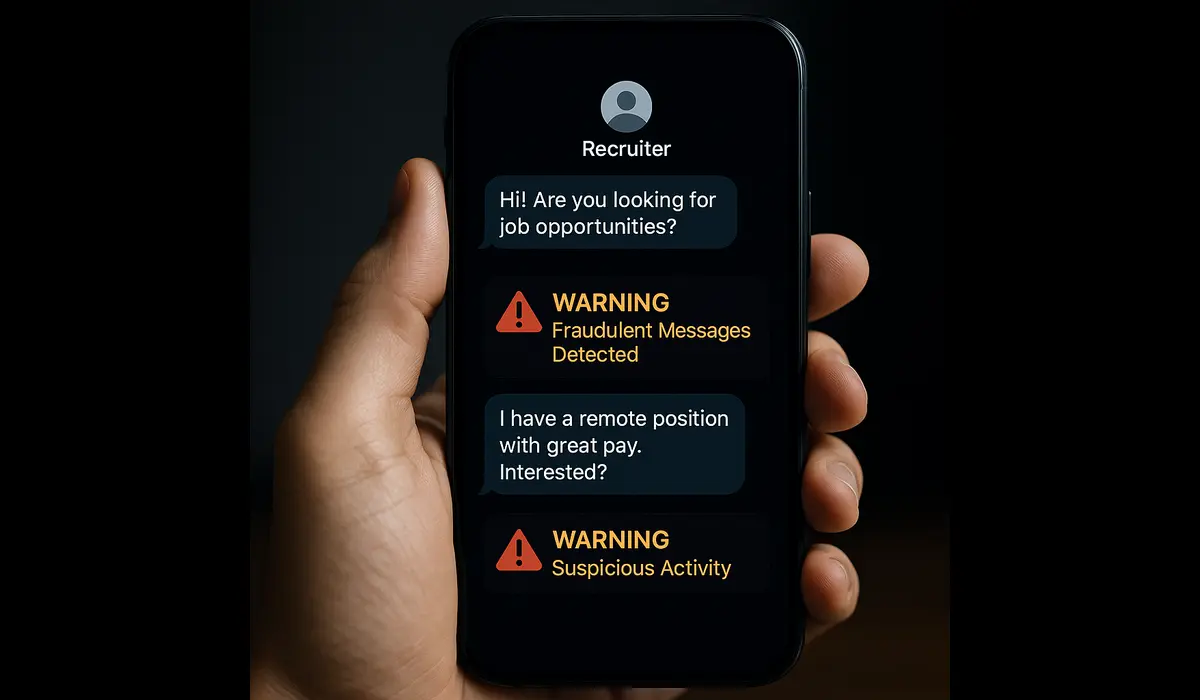
Online job scams are fraudulent schemes in which scammers pose as employers or recruiters to extract money, personal data, or identity from job seekers. These scams exploit trust and desperation in the digital hiring landscape.

$500 Walmart Gift Card
Some users qualify for a $500 Walmart gift card. You can check if you qualify.
Emerging Trends in 2025
In 2025, several new scam patterns have gained traction across the U.S. job market:
- Task / Gamified Scams Escalate: Nearly 40 % of job scam reports come from “task scams,” where victims complete trivial tasks (liking posts, rating products) to earn credits, then are asked to pay or invest to unlock payouts.
- Fake Check & Equipment Payment Frauds: Scammers send “checks” to victims for equipment or training, ask them to forward funds, and later the checks bounce.
- Deepfake Recruiter Trials: Using AI voice or image mimicry, scammers impersonate HR managers of real companies to carry out convincing interviews.
- Impersonation & Business Spoofing: Fraudsters clone legitimate company identities to post fake job openings or send realistic emails.
- Reshipping & Refund Scams: Victims are sent goods and asked to forward them elsewhere; the original seller disappears or reports the items stolen.
These trends reflect an escalation from simple email scams to multi-step, high-tech fraud.
Key Patterns & Tactics
1. Gamified Payment Traps
Scammers lure victims with small payments at first to build trust. Then, they require victims to pay or invest to access higher-level tasks or withdraw earnings.
2. Check & Payment Forwarding Tricks
Victims receive checks for “job reimbursement,” then asked to send parts of the funds elsewhere. When the check clears incorrectly, the victim is left liable for the funds.
3. Deepfake & Voice Impersonation
With AI tools, scammers can now mimic corporate voices, interviews, or identity, making fake job offers sound legitimate.
4. Spoofed Company Identities
Fraudsters replicate corporate logos, websites, email domains, and HR details to craft believable job offers.
5. Reshipping & Logistics Scams
Scammers ship goods to victims under the guise of a job, ask them to forward to other locations, then vanish — victim bears loss or legal risk.
6. Credential Harvesting & Identity Theft
Application processes ask for Social Security numbers, bank account data, or driver’s license information under fraudulent pretenses, later used for identity fraud.
Why Online Job Scam Matters
- Financial Loss & Debt: Many victims lose thousands of dollars via bounced checks or forced payments.
- Identity Theft Risk: Shared personal info leads to accounts being compromised, credit damage, or misuse of identity.
- Eroded Trust: Scams deter legitimate hiring platforms by reducing confidence in remote recruitment.
- Emotional Toll: Victims often feel embarrassed, violated, or disillusioned with job search processes.
As the digital job market expands, fraudsters gain more targets and tools.
Comparisons
| Scam Type | Key Feature | Distinguishing Warning Sign |
|---|---|---|
| Task / Gamified | Micro-tasks with promise of unlocking access | Asking for upfront payment after initial tasks |
| Fake Check | Equipment or training checks | Request to forward excess funds elsewhere |
| Deepfake Interview | Voice or video mimicry | Slight voice glitches, mismatch in domain, or reluctance for in-person meetings |
| Spoof Identity | Cloned company branding | Domain mismatch, lack of verifiable HR contacts |
| Reshipping Job | Goods forwarded through your address | No real employer address, ambiguous logistics |
Expert Insights & Evidence
According to reports, job scams now account for rising losses across the U.S. The FTC notes scammers often pretend to hire you but actually want your money or personal data. Legitimate recruiters rarely ask for banking or SSN details before formal hiring processes.
In 2024, task scams alone were responsible for over $220 million in fraudulent claims. Meanwhile, text-based job scams caused reported losses of $470 million, rising fivefold from 2020 levels. All these confirm that latest online job scam trends in the United States 2025 are increasingly lucrative for criminals, and harder to detect.
What Readers Should Do
- Avoid any “pay to work” offers
If a job requires you to pay upfront for materials or training, refuse. Real jobs don’t require fees. - Verify employer credentials
Look up the company independently (not via links from the recruiter), check official HR contacts, and confirm domain authenticity. - Use safer payment and interview methods
Decline checks until confirmed; limit data shared until after formal hiring; insist on video calls or in-person checks. - Report and document scams
Save communication transcripts, report to FTC or state consumer agencies, and warn peers in your network.

$750 Amazon Gift Card
Not everyone qualifies for this $750 Amazon gift card. Checking only takes a moment. You can check if you’re eligible.
FAQs
Q1: What makes the latest online job scam trends in the United States 2025 more dangerous?
They combine AI, task gamification, deepfakes, and credential theft, making scams harder to spot and more convincing.
Q2: Are remote job offers more likely to be scams?
Yes — remote jobs attract fraud due to lack of face-to-face verification and broader applicant pools.
Q3: Can we recover money lost to these scams?
Recovery is difficult; victims should contact banks, authorities, and credit bureaus quickly.
Q4: How do I spot a legit recruiter vs a scammer?
Legitimate recruiters use company domains (not Gmail), avoid asking for payment early, and provide verifiable references or official HR contact paths.
Key Takeaways : Online Job Scam
- Latest online job scam trends in the United States 2025 include gamified tasks, deepfake interviews, spoofed identities, and check fraud.
- Scammers now weave tech and social engineering to become more convincing.
- Job seekers must adopt verification, caution, and reporting strategies.
- Awareness and vigilance remain the best defense in a shifting scam landscape.
Conclusion : Online Job Scam
The latest online job scam trends in the United States 2025 reflect an alarming escalation in sophistication, combining AI, social engineering, and financial deception. As scammers invent new traps, job seekers must stay alert, verify everything, and resist requests for money or sensitive data.