Can the India-US 10-Year Defence Pact Redefine Global Power?
Can the India-US 10-year defence pact redefine global power is the question driving strategic debate worldwide. This analysis explores the pact’s core terms, its geopolitical impact, and why both nations see it as a pivotal shift.

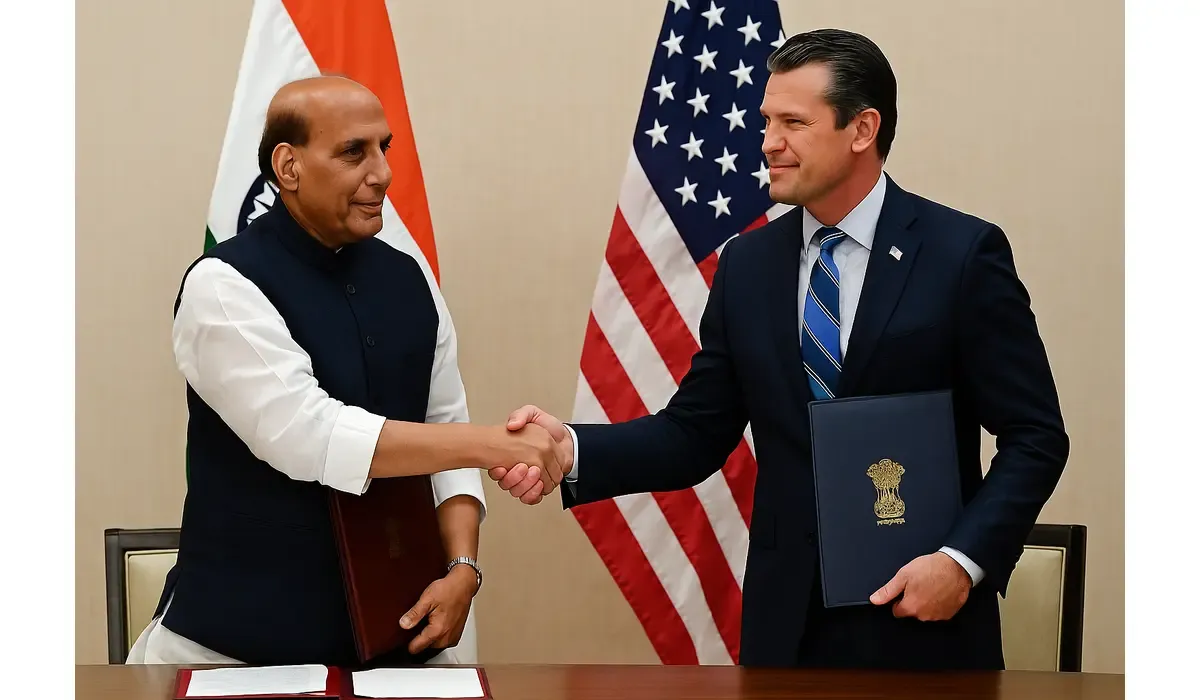
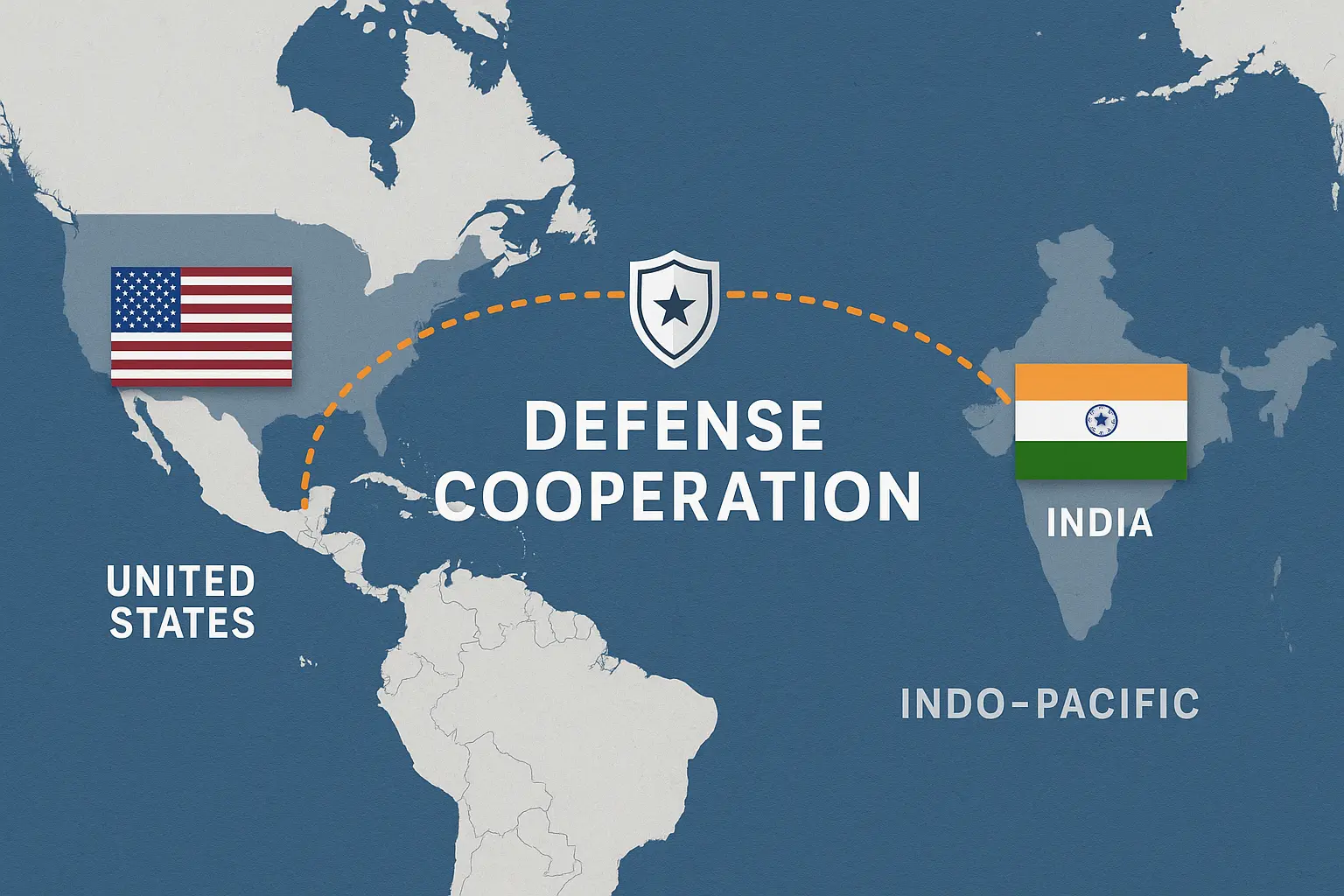
The India, US finalise 10-year defence pact marks one of the most consequential military agreements of the decade. In a rare show of strategic depth, both nations have committed to a decade-long roadmap that could reshape regional and global defence alliances.
- India and the US sign a 10-year comprehensive defence cooperation pact spanning technology, intelligence, and industrial collaboration.
- The agreement follows a high-profile meeting between Rajnath Singh and Pete Hegseth, signalling long-term partnership goals.
- Experts believe this could redefine Indo-Pacific stability and reshape how nations respond to China’s growing influence.
What Is the India-US 10-Year Defence Pact?
The India, US finalise 10-year defence pact refers to a long-term strategic agreement covering cooperation across land, air, sea, cyber, and space domains. Unlike earlier short-term defence frameworks, this deal provides a decadal vision — from joint exercises and weapons co-development to defence manufacturing and intelligence sharing.
At its core, the pact is about institutionalising trust between the world’s largest democracy and its most advanced military power. It aims to convert occasional cooperation into structured defence synergy.

$500 Walmart Gift Card
Not everyone qualifies for this $500 Walmart gift card. Checking only takes a moment. You can check if you’re eligible.
Latest Update: Inside the Hegseth–Rajnath Meeting
During a pivotal meeting in Kuala Lumpur, India’s Defence Minister Rajnath Singh and US Secretary of Defense Pete Hegseth jointly finalised the 10-year framework.
The discussions reportedly focused on four pillars:
- Technology Transfer: Co-development of next-gen drones, jet engines, and AI-based defence tools.
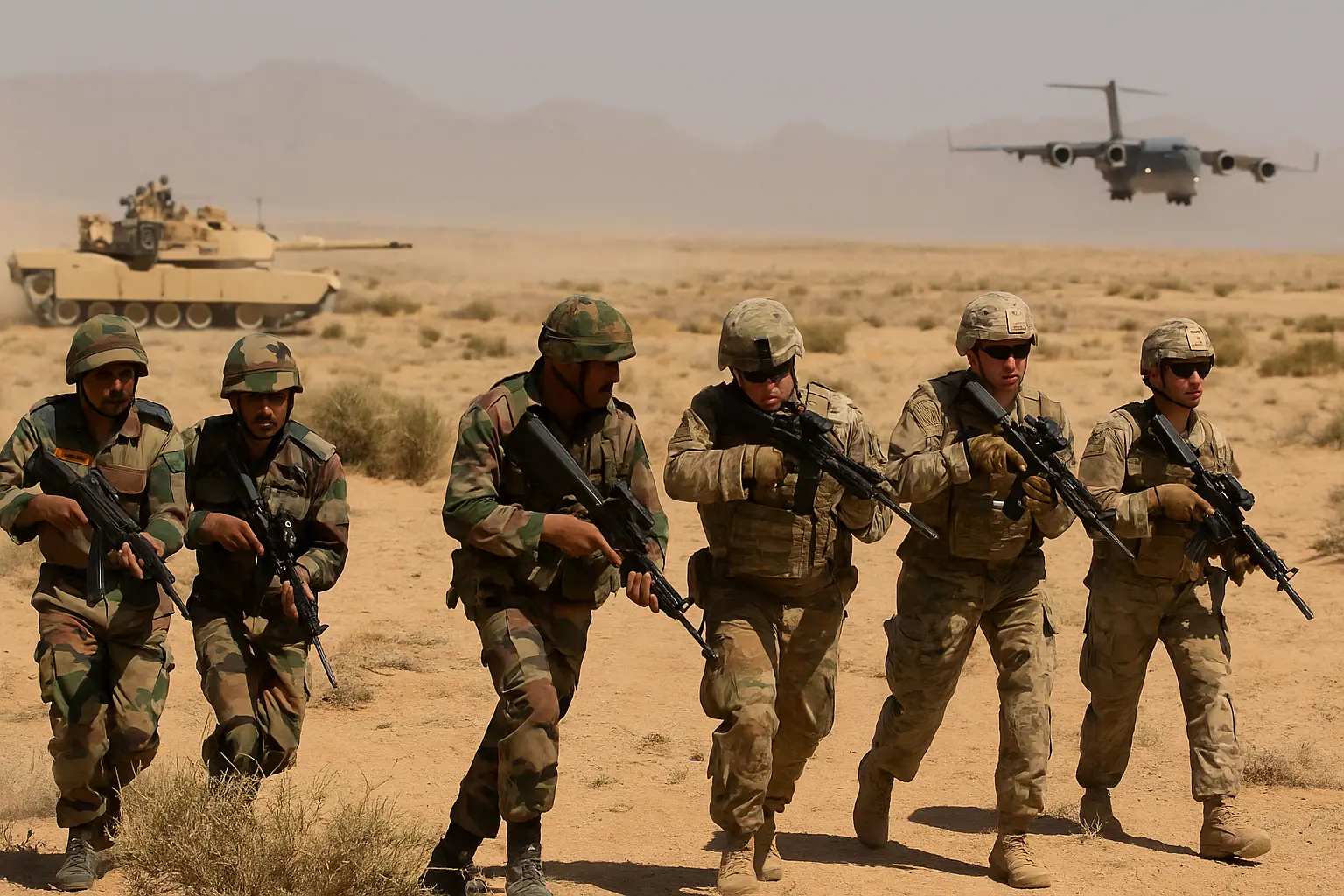
- Operational Readiness: Enhanced joint military exercises and real-time data sharing in Indo-Pacific waters.
- Industrial Partnership: Collaboration between Indian and American defence firms for local production.
- Cyber and Space Security: Protecting strategic digital assets and expanding space-based intelligence cooperation.
The agreement replaces the previous 2015 pact and extends the horizon to 2035 — effectively locking in a decade of military coordination.
Key Details: What the Pact Includes
1. Strategic Domains
The pact spans all five key warfare domains — land, air, sea, space, and cyber — with explicit emphasis on joint deterrence operations and information exchange.
2. Defence Industrial Cooperation
- Promotes joint manufacturing of high-end systems such as fighter jet engines and autonomous surveillance drones.
- Encourages “Make in India for the World” production under shared licensing agreements.
- Establishes defence innovation hubs connecting Indian startups with American R&D.
3. Technology Sharing
- Access to advanced American technologies through an upgraded Defence Technology and Trade Initiative (DTTI).
- Streamlined export controls for dual-use technologies.
4. Training and Interoperability
- Increased joint military exercises such as Yudh Abhyas and Malabar.
- Shared command post training for improved interoperability in conflict zones.
5. Security and Information Exchange
- Real-time intelligence sharing to strengthen border awareness.
- Expanded maritime domain awareness in the Indian Ocean and South China Sea.
Why This Pact Matters
The India, US finalise 10-year defence pact is not just about arms or exercises — it’s about shaping the global balance of power.
For India, the pact enhances its defence self-reliance, especially as regional tensions rise along its northern and maritime borders. For the US, it secures a strategic partner in Asia capable of counterbalancing China’s assertiveness.
In the broader context, this agreement signals a shift in global defence architecture, where bilateral pacts are replacing traditional alliances. It’s also a step towards a multipolar world — one where cooperation is driven by shared security goals rather than ideology.
Expert Opinion: What Analysts Are Saying
Dr. Arvind Menon, Senior Fellow, Centre for Strategic Policy Studies:
“This pact is India’s most important defence milestone since the 2008 Indo-US nuclear deal. It gives India leverage in defence tech, global positioning, and strategic influence. The decade-long framework is designed for continuity — even beyond political transitions.”
Brigadier (Retd.) S.K. Bhalla, Military Analyst:
“The beauty of this pact lies in its longevity. Unlike earlier MoUs, it’s designed for actual implementation. If the deliverables — especially in technology sharing — materialise, it could make India a true defence manufacturing hub.”
Dr. Rachel Stewart, US-based geopolitical researcher:
“From Washington’s perspective, India is the hinge of the Indo-Pacific. This pact isn’t just about mutual defence — it’s about shaping 21st-century security norms.”
Experts agree the real test lies in execution. Both nations must ensure bureaucratic and political willpower sustains cooperation beyond symbolism.
Impact on India and the World
1. For India
- Strengthens indigenous defence manufacturing and skill development.
- Enhances deterrence capability against regional threats.
- Creates new job opportunities in aerospace and defence industries.
2. For the United States
- Secures a reliable strategic ally in Asia.
- Expands its defence supply chain resilience outside China.
- Strengthens its Indo-Pacific strategy without direct conflict.
3. For the Indo-Pacific Region
- Balances military power against China’s growing naval presence.
- Encourages smaller nations to align with democratic defence partnerships.
4. For Global Power Politics
- Marks the emergence of India as a security pillar rather than a mere partner.
- Redefines multilateral engagement across the UN, QUAD, and ASEAN forums.
Practical Takeaways for Readers
- Stay informed: This pact will influence global trade, security, and technology trends.
- Career opportunities: Engineers, analysts, and R&D specialists in India may see new roles in the defence sector.
- Policy watchers: Expect more India-US joint projects and public-private ventures over the next decade.
- Citizens: The long-term security impact may foster safer borders and enhanced defence preparedness.

$750 Amazon Gift Card
A $750 Amazon gift card may be available to select users. Checking eligibility is quick. You can check if you’re one of them.
FAQs
Q1: What is the duration of the new India-US defence pact?
The agreement spans 10 years, from 2025 to 2035.
Q2: What are its main goals?
It aims to deepen military cooperation, promote technology sharing, and strengthen Indo-Pacific security.
Q3: How is this pact different from earlier agreements?
This one includes a 10-year roadmap with concrete deliverables, making it more comprehensive and strategic than earlier short-term frameworks.
Q4: Will this affect India’s relations with other nations?
Yes, it reinforces India’s global standing but will require careful diplomacy to maintain balance with Russia and China.
Key Takeaways
- The India, US finalise 10-year defence pact is a strategic leap toward long-term global security collaboration.
- It focuses on advanced technology, joint operations, and industrial self-reliance.
- Experts predict it will reshape Indo-Pacific defence architecture and redefine India’s strategic influence.
Conclusion
The signing of the India, US finalise 10-year defence pact is more than a diplomatic handshake — it’s a generational shift in how two major democracies view global security. Over the next decade, this agreement could redefine alliances, empower local defence ecosystems, and change the very structure of international power.