Did Trump Really End India-Pakistan Hostilities “Through Trade”?
Did Trump really end India-Pakistan hostilities “through trade,” or is the story more complex? This analysis breaks down claims, diplomatic timelines, and economic realities to reveal what truly shaped the India-Pakistan dynamic.

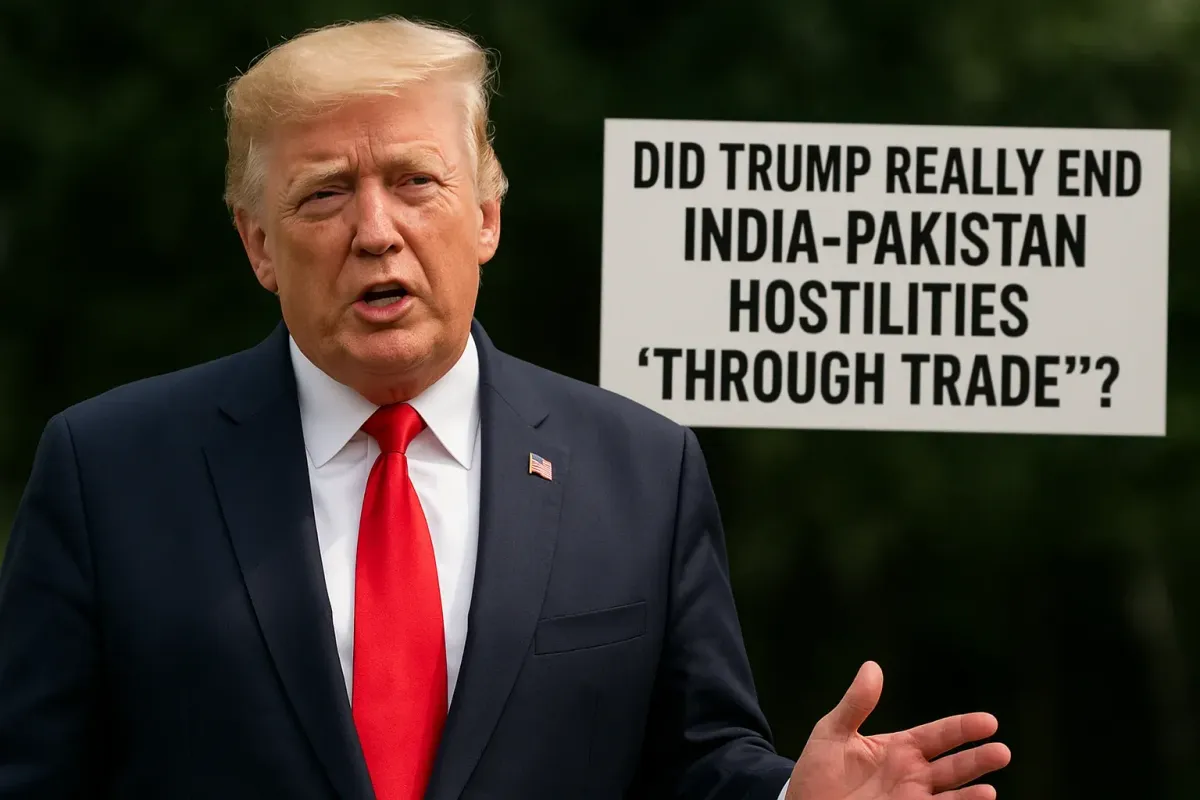
“Sometimes peace doesn’t come from power—it comes from profit.”That’s what former U.S. President Donald Trump seemed to suggest when he recently claimed he helped end India-Pakistan hostilities through trade deals. The bold statement has drawn global attention, sparking curiosity and debate. But what’s the real story behind this unexpected diplomatic twist? Welcome to TopWebStory, where we dive into stories that shape global conversations.
What Did Trump Actually Say?
In a recent interview, Donald Trump claimed that tensions between India-Pakistan—two nuclear-armed neighbors with a long history of conflict—subsided during his presidency because of U.S. efforts in international trade. His assertion: peace through profit, not politics. While the comment might sound surprising, it brings up an interesting question—can global trade influence geopolitical peace?
Understanding the India-Pakistan Conflict
India-Pakistan have shared a tense relationship since gaining independence in 1947. The core issues? Territorial disputes, especially over Kashmir, and multiple wars that followed. Tensions often escalate into military standoffs, cyber warfare, and diplomatic freezes. So, where does Donald Trump fit in?
The Role of the U.S. in India-Pakistan Relations
The United States has long played the role of a cautious observer, often urging both countries to maintain peace. However, during Trump’s administration, a shift occurred. Instead of traditional diplomacy, Trump focused heavily on trade agreements, especially with India. But did that really reduce tensions?
Trump’s Trade Strategy with India
Under Trump, the U.S. ramped up its economic focus on India. While there were disagreements—especially around tariffs and market access—both countries showed a willingness to collaborate economically. The message was clear: business first. This strategic pivot might have kept India focused on growth rather than geopolitical disputes.
Did Pakistan Benefit from This Approach?
Not directly. But Pakistan saw increasing U.S. pressure, especially with aid cuts and demands for transparency around counterterrorism efforts. These economic levers may have indirectly encouraged Pakistan to de-escalate some of its aggressive postures. Trade wasn’t between Pakistan and the U.S.—but economic pressure was.
Experts Weigh In: Coincidence or Cause?
Most political analysts believe Trump’s trade deals didn’t directly resolve conflicts, but they may have played a role in preventing escalation. While trade can reduce the incentive for war by encouraging mutual growth, diplomacy and military restraint remain key.
Comparing Trade vs. Traditional Diplomacy
| Factor | Trade-Based Strategy | Diplomacy-Based Strategy |
|---|---|---|
| Focus | Economic cooperation | Political negotiation |
| Impact | Slow but sustainable | Immediate but volatile |
| Risk | Economic imbalance | Political backlash |
Trump’s approach leaned toward economic pragmatism, not ideological intervention.
The Power of Trade in Global Peacebuilding
There’s historical evidence that countries that trade together, war less. Known as the “Capitalist Peace Theory,” it suggests that shared economic interests can reduce the likelihood of conflict. Trump may have unintentionally tapped into this theory.
India-Pakistan Ties Today: Where Do They Stand?
Post-Trump, relations between India-Pakistan remain tense but relatively non-violent. There have been no major wars, and backchannel talks continue. Whether trade had a long-lasting impact is still up for debate.
What This Means for Global Politics
Trump’s claim, whether exaggerated or misunderstood, raises a key point—global trade isn’t just about goods; it’s about peace. Economic stability can act as a quiet, powerful peacemaker in regions of tension.
TopWebStory’s Take: Was It Peace “Through Trade”?
While Trump may not have single-handedly ended hostilities, his administration’s focus on economic alliances with India possibly decreased volatility in South Asia. It’s a reminder that sometimes, growth becomes the glue that holds peace together
Trump Trade Diplomacy – Frequently Asked Questions
Q1: Did Donald Trump directly negotiate peace between India-Pakistan?
No. Trump didn’t negotiate a formal peace deal, but his trade-first strategy with India may have contributed to regional stability.
Q2: How does trade help reduce conflict?
Countries economically tied together have more to lose in wars, reducing incentives for armed conflict.
Q3: Did Trump have any formal trade agreements with Pakistan?
Not significantly. In fact, U.S.-Pakistan relations faced cuts in military and financial aid during his tenure.
Q4: Are India and Pakistan currently at peace?
While not officially peaceful, both nations are not engaged in active conflict and maintain a tense ceasefire in most areas.
Q5: Is “peace through trade” a proven theory?
Yes, it aligns with the “Capitalist Peace Theory,” which suggests that economic interdependence lowers the chance of war.
Final Thoughts: Trade, Talks, and Trump
Trump’s claim that he helped end India-Pakistan tensions through trade may be part truth, part trademark bravado. But it opens up a deeper conversation: how can economic cooperation replace conflict? In a world constantly balancing diplomacy and deterrence, maybe profit can indeed become the path to peace.