How to Understand the Pros and Cons of Electric Vehicles
Electric vehicles replace fuel engines with battery-powered motors, offering benefits like high efficiency and lower local emissions, along with limits such as charging time, infrastructure dependence, and battery aging. This article explains how these trade-offs work in real-world use.

The Real question behind this
Many people hear that electric vehicles are the future, but the picture often feels incomplete.
Some messages highlight only benefits, while others focus only on limitations.
The real question is how electric vehicles actually perform in everyday use.
Understanding both sides helps set realistic expectations.
What this means
Electric vehicles are cars powered primarily by electric motors using energy stored in batteries, rather than internal combustion engines that burn fuel.
Their strengths and weaknesses come from this basic design choice. Batteries, electric motors, charging systems, power grids, and driving patterns all interact to shape the experience. The “pros and cons” are not fixed traits but outcomes of how these parts work together in real conditions.
This section stands alone as a definition: electric vehicles replace fuel-based engines with battery-powered systems, changing how energy is stored, delivered, and replenished.

$750 Amazon Gift Card
A $750 Amazon gift card may be available to select users. Checking eligibility is quick. You can check if you’re one of them.
Why this matters today
Transportation is changing due to concerns about emissions, fuel costs, and energy security. Electric vehicles matter now because they reduce tailpipe emissions and shift energy use away from direct fuel burning.
At the same time, they do not solve every transportation challenge. Battery production, charging access, electricity sources, and upfront costs remain important limitations. What changes over time are battery technology and infrastructure. What stays stable is the need to balance convenience, cost, and environmental impact.
Understanding both benefits and limits prevents unrealistic expectations.
How this works in practice
Energy efficiency and operation
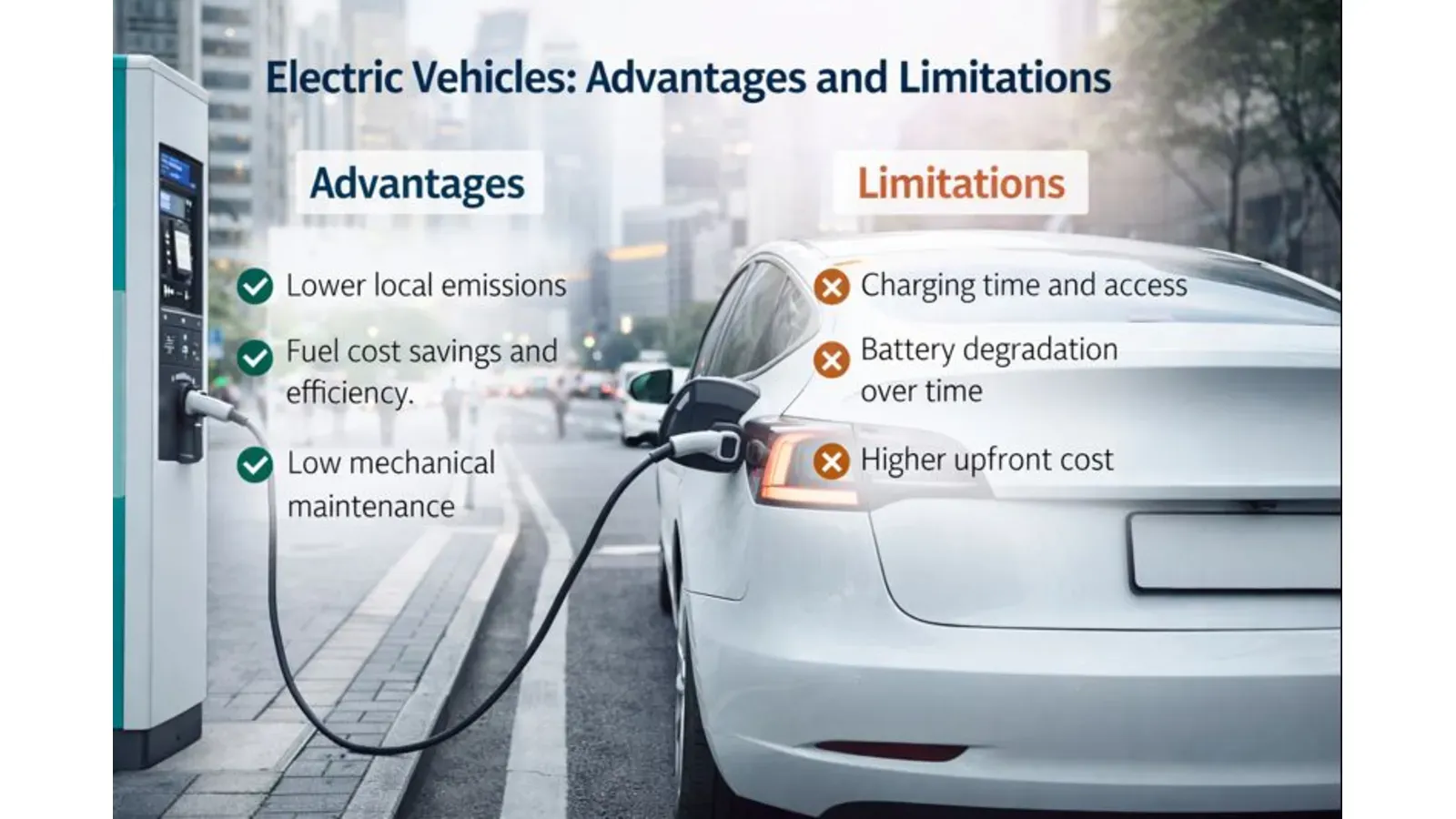
Electric motors convert energy to movement more efficiently than fuel engines. This results in smoother acceleration and lower energy loss during driving.
Charging and Energy Supply
Instead of refueling quickly, electric vehicles recharge batteries over time. This makes daily home charging convenient for some users, while long-distance travel depends on charging availability.
Maintenance and Wear
With fewer moving parts, electric vehicles often experience less mechanical wear. However, batteries degrade gradually and can be expensive to replace.
Constraints and trade-offs
Electric vehicles trade fuel flexibility for charging dependence. They reduce local emissions but shift environmental impact to electricity generation and battery manufacturing.
Key takeaway: The benefits and drawbacks arise from how energy is stored and delivered, not from marketing claims.
Real-world scenarios or examples
A city commuter who charges at home may experience low running costs and quiet operation. For this user, electric vehicles feel highly practical.
A rural driver without nearby charging stations may find long trips less convenient. In this case, the same vehicle feels limiting rather than freeing.
These differences explain why experiences with electric vehicles vary widely.
Quick Understanding Summary
Electric vehicles use batteries and electric motors instead of fuel engines, which brings benefits like high efficiency, lower local emissions, and reduced mechanical complexity. Their limitations include charging time, infrastructure dependence, battery degradation, and higher upfront costs. Whether electric vehicles feel practical depends on driving patterns, charging access, and energy sources rather than simple good-or-bad judgments.
Common mistakes to avoid
A common mistake is assuming electric vehicles are automatically zero-impact, ignoring battery production and electricity sources. Another is expecting them to behave exactly like fuel-powered cars in refueling speed and range. Evaluating them without considering local infrastructure often leads to disappointment.
Comparisons / Alternatives
| Aspect | Electric Vehicles | Fuel Vehicles | Hybrid Vehicles |
|---|---|---|---|
| Energy source | Electricity stored in batteries | Petrol or diesel | Fuel with electric assistance |
| Local emissions | None while driving | Present | Reduced |
| Refueling or charging | Slower, infrastructure-dependent | Fast, widely available | Flexible |
| Maintenance pattern | Fewer routine services | Regular mechanical servicing | Mixed complexity |
This comparison reflects real-world trade-offs rather than performance rankings.
Future trends and predictions
Battery technology is gradually improving in energy density, durability, and charging speed. Charging networks are expanding in urban and highway corridors, reducing range anxiety in some regions.
However, electric vehicles are unlikely to eliminate all transport challenges. Energy supply, grid capacity, and material sourcing will remain central concerns. The future points toward broader adoption, but not universal suitability for every use case.
User real review / expert perspective
Many long-term electric vehicle owners report smooth driving and low daily running costs but highlight charging access as the main limitation.
Advantages of Electric Cars:-
— Concerned Citizen (@BGatesIsaPyscho) April 27, 2024
- You have to take regular breaks to charge it whilst driving
- Efficiency in Winter drops dramatically
- Much more expensive
- Beholden to the State/Electric providers in order to charge
- They look awful
They spontaneously combust. pic.twitter.com/ui5WPUH2Ni
Energy agencies and transport research bodies consistently note that electric vehicles reduce urban air pollution while shifting environmental impact upstream to power generation and battery supply chains. This reinforces the idea that benefits and limits coexist rather than cancel each other out.

$750 Cash App Gift Card
Some users qualify for a $750 Cash App gift card. You can check if you qualify.
FAQs
Do electric vehicles pollute less than fuel cars?
They produce no tailpipe emissions, but overall impact depends on how electricity is generated.
Are electric vehicles cheaper to maintain?
Often yes for routine maintenance, though battery replacement can be costly.
Do electric vehicles work for long-distance travel?
They can, but charging access and planning matter more than with fuel vehicles.
Will battery performance drop over time?
Yes, batteries degrade gradually, reducing range over many years.
Conclusion
Electric vehicles offer clear advantages and real limitations rooted in how they use energy. Understanding these trade-offs helps people judge where electric vehicles fit—and where they may not.