7 Alarming Reasons Why the Bird Flu Outbreak in Germany Is Worse Than Expected
Discover why the bird flu outbreak in Germany is worse than expected, with alarming factors driving faster spread and higher risk. This concise, research-backed analysis highlights key developments, emerging concerns, and what officials are monitoring closely.


How severe is the bird flu outbreak in Germany? The question reverberates across the poultry industry and wildlife preservation networks as Germany reports multiple farm outbreaks and thousands of dead wild birds. The scale and speed present a worrying picture for both agriculture and ecology.
- More than 500,000 poultry have been culled so far in Germany.
- Nearly 2,000 migrating cranes have died, and outbreaks have hit 30 poultry farms.
- Experts caution this may signal an early and intense wave of H5N1 avian influenza.
Quick Context
This bird flu outbreak in Germany refers to the rapidly spreading avian influenzainfection affecting both domestic poultry and wild bird populations across multiple German states in autumn 2025.

$750 Amazon Gift Card$750 Amazon Gift Card
Not everyone qualifies for this $750 Amazon gift card. Checking only takes a moment. You can check if you’re eligible.
Latest Update
- Germany has recorded over 30 confirmed outbreaks in poultry farms between early September and now.
- More than 500,000 domestic birds—chickens, ducks, turkeys and geese—have been culled as a preventive measure.
- In Linum (near Berlin) alone, nearly 2,000 migrating cranes have died from the virus.
- The national animal-health authority, Friedrich Loeffler Institute (FLI), calls the “situation very dynamic.”
- The current outbreak is compared to the 2021 wave, one of the worst in German history.
Key Facts
- Affected species: Commercial poultry and wild migratory birds (cranes, geese, ducks).
- Geographic spread: Seven German federal states reported outbreaks from September-October 2025.
- Farm size and scope: Some large broiler farms with tens of thousands of birds were affected.
- Wild bird impact: The mortality in cranes and other wild species is unusually high, indicating aggressive spread.
- Risk to humans: According to FLI, the infection risk to humans remains low, but surveillance is heightened.
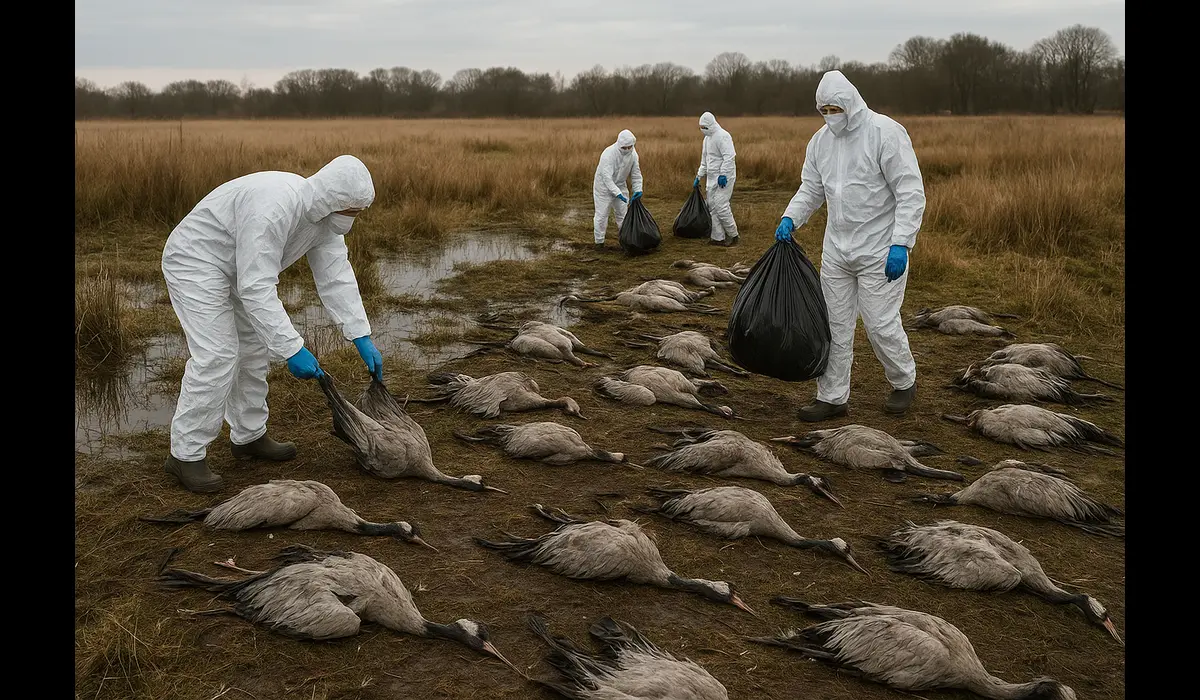
Why bird flu outbreak in GermanyMatters
This bird flu outbreak in Germany is significant for several reasons. First, the sheer numbers—hundreds of thousands of culled birds—mean major economic losses for the German poultry industry. Second, the high deaths among wild birds signal a larger ecological threat, possibly affecting migratory bird routes and biodiversity. Finally, though human risk is low, the virus’s high pathogenicity and its rapid spread mean authorities cannot afford to be complacent.
For consumers, the outbreak may translate into higher poultry and egg prices. For farmers, enhanced biosecurity measures and possible housing order mandates are imminent. And for wildlife lovers and ecologists, this event raises alarms about species losses and habitat disruption.
Comparison
| Period | Outbreak Severity | Notes |
|---|---|---|
| 2021 Germany wave | Over 2 million birds culled | One of the worst years on record in Germany |
| 2025 current outbreak | 500 000+ birds culled (so far) | Early season, more wild-bird deaths than usual |
| Typical yearly baseline | Few – dozen outbreaks | This year’s pace is well above norm |
These comparisons highlight that while the 2025 outbreak hasn’t yet exceeded 2021 totals, the pace and wild-bird impact show an unusually early and intense event.
Expert Opinion
Dr Norbert Schneeweiss, wildlife virologist, remarked: “The crane deaths in Linum are unprecedented for this route; this strain is hitting species we rarely saw before.” The FLI’s own risk assessment underscores the event is “very dynamic” and calls for intensifying surveillance and preventive measures.
Practical Takeaways : bird flu outbreak in Germany
- Check local poultry-farm news if you reside in or near farming regions; restrictive measures like housing orders may affect supply.
- Consumers should be aware of potential price rises in eggs or poultry and consider alternatives if needed.
- Wildlife watchers should avoid areas with known bird flu deaths and report dead birds to authorities.
- Farmers and hobby-poultry keepers must strengthen biosecurity: limit wild-bird access, disinfect regularly, and report sick/dead birds immediately.

$500 Walmart Gift Card$500 Walmart Gift Card
Some users qualify for a $500 Walmart gift card. You can check if you qualify.
FAQs about bird flu outbreak in Germany
Q1: How severe is the bird flu outbreak in Germany?
The outbreak is significant: over 500,000 poultry culled and thousands of wild birds dying. It represents one of the most serious autumn waves in years in Germany.
Q2: Which birds and areas are most affected?
Commercial poultry farms and wild migratory birds—especially cranes—in northern and northeastern Germany (e.g., Linum, Brandenburg) are heavily affected.
Q3: Is there a risk to humans?
While the virus is highly pathogenic in birds, the current risk to humans remains low. However, authorities remain vigilant.
Q4: Will this outbreak cause food shortages?
Potentially. Disruptions in poultry supply could lead to higher prices of eggs and meat, but food-chain collapse is unlikely given current data.
Key Takeaways
- The question how severe is the bird flu outbreak in Germany points to a rapidly evolving crisis with large-scale poultry culls and extensive wild-bird mortality.
- The outbreak is well ahead of typical seasonal curves and shows early signs of escalation.
- Consumer, ecological and agricultural sectors all face consequences from this wave of avian influenza.
Conclusion
The current situation in Germany shows that how severe is the bird flu outbreak in Germany is more than a rhetorical question—it is a tangible crisis affecting agriculture, wildlife and consumer stability. With over half a million poultry culled and migratory-bird deaths mounting, vigilance and action are essential.