How Heavy Trucks Tariff 25% Shakes US Trucking and Raises Costs
The article explains how the heavy trucks tariff 25% is reshaping freight operations, driving up equipment costs, and pressuring carriers. A concise breakdown of its financial impact and what fleets must prepare for next.

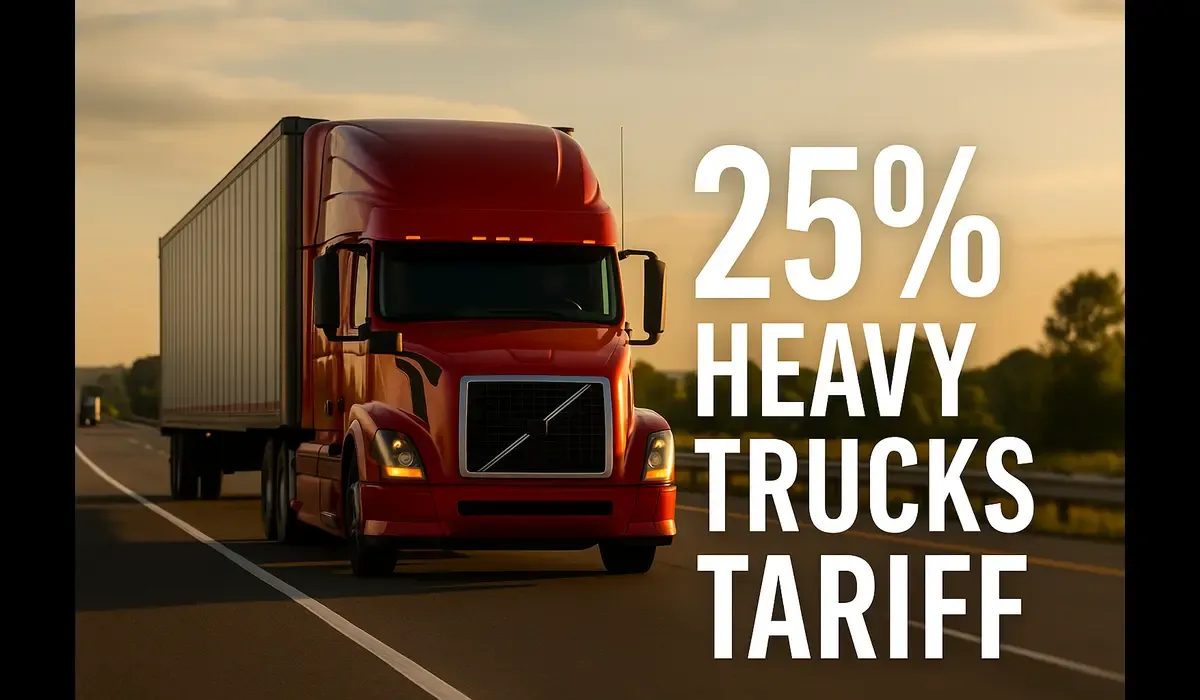
How heavy trucks tariff 25% affects US trucking industry in dramatic ways: rising equipment costs, supply chain disruptions, and pressure on smaller carriers. The 25 percent tariff, effective October 1, brings far-reaching consequences.
What Is This 25% Heavy Trucks Tariff? (Quick Context)
This new measure imposes a 25 percent duty on imported heavy-duty trucks entering the U.S., aiming to protect domestic manufacturers.
Timeline & Latest Announcement (Main News)
- On September 25, 2025, the U.S. administration announced the 25% tariff on heavy trucks, among other product tariffs. Politico+2Reuters+2
- The tariff is slated to take effect October 1, 2025. Reuters+2Trucking Dive+2
- Shares of major truck manufacturers like Daimler Truck and Traton fell after the announcement. Reuters
- Domestic truck firm Paccar saw stock gains, as markets viewed the tariff as protective for U.S. producers. Business Insider
Key Impacts on the US Trucking Industry
Increased Equipment Costs
A 25% tariff will likely push up the purchase cost of heavy trucks imported or assembled abroad. In some cases, this could raise truck price tags by tens of thousands of dollars.
When combined with the existing 12% federal excise tax, overall costs for new Class 8 trucks could reach or exceed $238,000.
Supply Chain & Parts Disruption
Many heavy trucks and components are produced across borders, especially in Mexico. A tariff may disturb parts flows, forcing either cost absorbance or reshoring.
Smaller suppliers may be especially vulnerable, as they rely on imported inputs.
Competitive Distortions
U.S.-made trucks gain relative advantage under the tariff. Importers or firms with foreign production will lose pricing flexibility.
But that advantage may be limited if domestic supply can’t scale to meet demand quickly.
Freight Volume & Rate Pressure
Higher capital costs for fleets may lead to slowed expansion or reduced vehicle orders. This could compress margins or shift freight volumes.
Rate hikes might follow, causing ripple effects for shippers and consumers.
Market Sentiment & Investment Risk
Stock market reaction shows sensitivity: some firms fall, some gain, depending on positioning.
Longer term, uncertainty may deter investment in trucking or related infrastructure.
Why It Matters (Industry & Economy)
- Small carriers feel strain: they typically operate on slimmer margins and have less bargaining power.
- Freight cost inflation: higher trucking costs translate into higher shipping prices, which can feed into consumer inflation.
- Domestic manufacturing push: the tariff aims to drive more truck production in the U.S., aligning with industrial policy goals.
- Trade tensions: the move could spark retaliation, complicate North American supply chains, or trigger legal disputes under trade agreements like USMCA.
Comparisons & Alternatives
Here’s how the 25% tariff compares to other trade tools or approaches:
| Strategy | Advantage | Risk / Drawback |
|---|---|---|
| High import tariff (25%) | Protects domestic makers | Raises costs for buyers; supply constraints |
| Regional exemptions (e.g. USMCA) | Maintains some flow | Complexity, disputes over rules |
| Quotas instead of tariffs | Caps imports without full duty | Creates scarcity, rents |
| Incentives for domestic builds | Encourages investment | Requires public funding, lag time |
If USMCA or similar clauses offer exemptions for compliant manufacturing, some imported trucks might escape full tariff.
Evidence & Expert Insight
- Trade and supply chain analysts warn the tariff may “depress freight volumes and increase equipment costs” for carriers.
- Researchers note North American integration of truck parts makes full insulation difficult.
- Analysts estimate Daimler could face losses of €700–800 million from the tariff shock.
These voices help ground speculation in concrete industry assessment.
What Trucking Professionals Should Do
- Lock in current pricing — consider ordering equipment before October 1 to avoid tariff load.
- Audit supply chains — identify imported parts or foreign dependencies that’ll be impacted.
- Explore domestic sourcing — shift procurement toward U.S. suppliers where feasible.
- Negotiate with OEMs — ask for concessions, warranties, or cost-sharing.
- Adjust budgeting & rates — model how increased capital expense can be passed or mitigated in freight rates.
FAQs
Q1. How heavy trucks tariff 25% affects US trucking industry in the short run?
In the short run, carriers face higher acquisition costs, budget strain, and possible supply bottlenecks in parts.
Q2. Will the tariff apply to USMCA-compliant trucks or Mexico-made trucks?
Details remain murky; some sources say USMCA-compliant trucks may still be exempt from the full tariff.
Q3. Could freight rates rise because of this tariff?
Yes — to absorb higher capital costs and protect margins, many carriers are likely to increase trucking rates.
Q4. How long will this tariff stay in effect?
That depends on political, legal, and trade negotiations. No firm end date has been set.
Key Takeaways
- “How heavy trucks tariff 25% affects US trucking industry” isn’t just theory — it will increase costs and disrupt operations.
- Small carriers and parts suppliers are especially exposed.
- Strategic moves now—ordering early, auditing supply chains—can help soften the impact.
- Domestic manufacturing may gain a boost, but only if U.S. capacity responds swiftly.
Conclusion
This 25 percent heavy trucks tariff marks a turning point. It forces the U.S. trucking industry to rethink procurement, sourcing, and pricing. As carriers adjust, the full ripple effects will define freight’s future. How heavy trucks tariff 25% affects US trucking industry is already unfolding — and savvy operators will adapt early.