What AI Is Really Doing to Jobs—and Why It Feels Confusing
This article explains how artificial intelligence is changing jobs by reshaping tasks, skills, and everyday workflows, helping readers understand how work is evolving in real-world settings.

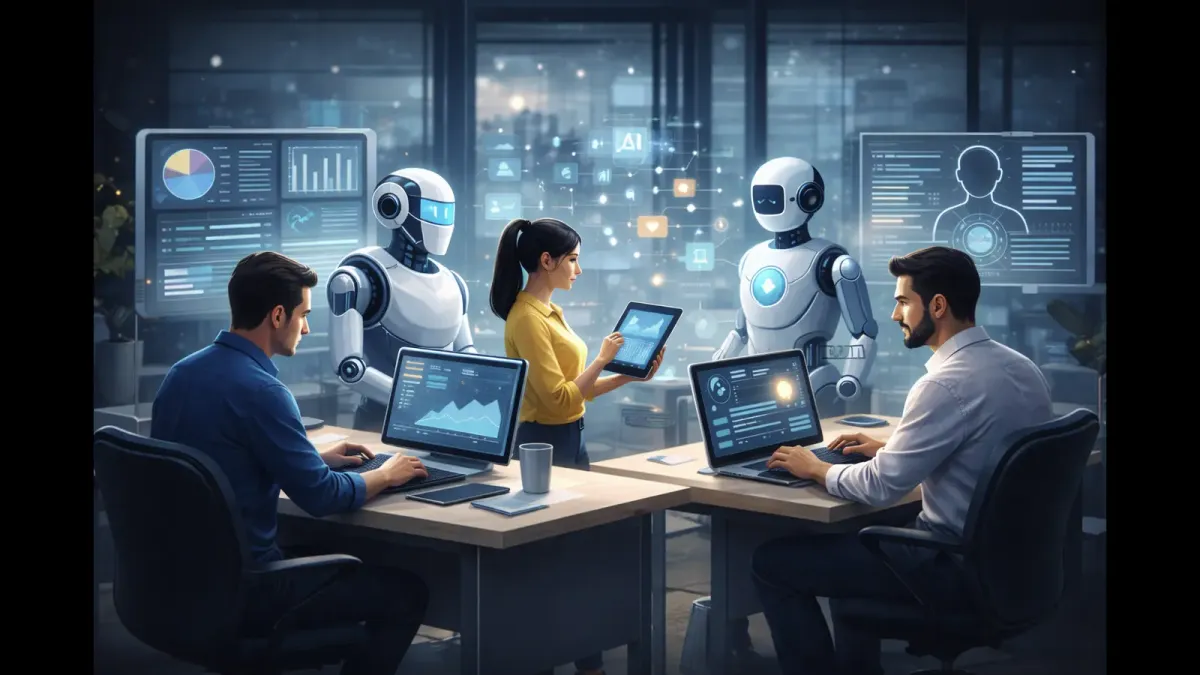
How AI Is Changing Jobs and What to Learn Now
Many people sense that work is changing, but it is not always clear how or why. Some hear that AI will replace jobs, while others hear it will create new ones. These ideas feel confusing because both can be true at the same time. What most people want to understand is not the headlines, but what is actually changing underneath—and what that means for everyday work.
This article explains how AI is reshaping jobs, what parts of work are affected first, and what kinds of understanding matter now. It is written to clarify the system, not to give career advice or predictions.

$500 Walmart Gift Card$500 Walmart Gift Card
Some users qualify for a $500 Walmart gift card. You can check if you qualify.
What This Means
When people say “AI is changing jobs,” they usually mean that computer systems are becoming better at handling certain kinds of tasks. AI is not a single machine that replaces a role. It is a set of tools that can recognize patterns, process language, analyze data, and make suggestions at scale.
Jobs are made up of tasks, not just titles. AI affects jobs by taking over specific tasks within them, especially tasks that follow clear rules or repeat often. Other parts of the same job may stay human-led or even become more important.
Why This Matters Today
AI has existed for decades, but recent systems can work with language, images, and decisions in ways that feel closer to human work. This makes AI useful in offices, hospitals, classrooms, and creative fields, not just factories or labs.
What has not changed is that work still depends on context, judgment, responsibility, and trust. AI does not understand goals or values on its own. It works within limits set by people and organizations. This means AI reshapes work rather than fully replacing it, and the pace of change depends on cost, risk, and oversight.
How This Works in Practice
In many workplaces, AI first appears as a background system. It might sort emails, flag unusual activity, summarize documents, or suggest next steps. These tools reduce time spent on routine processing but still rely on humans to decide what matters.
As AI handles more of the predictable work, human roles often shift toward coordination, interpretation, and decision-making. This does not mean jobs become easier. It means the balance of skills changes. Understanding how systems behave, where they fail, and how to guide them becomes part of the job itself.
A key constraint is reliability. AI systems can be fast and consistent, but they can also be confidently wrong. This is why many roles now include checking, correcting, or framing AI output rather than accepting it directly.
 Pradeep Singh Verma
Real-World Scenarios or Examples
Consider an office role that once involved writing reports from raw data. AI tools can now draft summaries quickly. The human role shifts toward deciding which data matters, whether the summary makes sense, and how it should be used.
In customer support, AI may answer common questions instantly. Human agents handle unusual cases, emotional situations, or decisions that require flexibility. The job still exists, but the daily work looks different from before.
Confusion often comes from comparing job titles instead of task changes. When people understand that AI affects parts of jobs, not whole identities, the change becomes easier to see clearly.
Quick Understanding Summary
AI is changing jobs by taking over specific tasks, especially routine and pattern-based work, rather than replacing entire roles. This shifts human work toward judgment, context, and oversight. The impact varies by job, industry, and risk level. Understanding how tasks change helps explain why some roles evolve while others stay mostly the same.
Common Mistakes to Avoid
One common mistake is assuming AI replaces jobs all at once. In reality, adoption is gradual and uneven. Another is treating AI output as fully reliable, when it often needs human checking. People also confuse learning tools with learning skills; knowing how a system works matters more than memorizing features.

$750 Amazon Gift Card$750 Amazon Gift Card
Not everyone qualifies for this $750 Amazon gift card. Checking only takes a moment. You can check if you’re eligible.
FAQs
Will AI replace most jobs?
AI is more likely to change tasks within jobs than eliminate most roles entirely.
Are only tech jobs affected by AI?
No. AI affects healthcare, education, business, creative work, and many other fields.
Does AI reduce the need for human skills?
It changes which skills matter, often increasing the value of judgment and context.
Is AI adoption the same in every workplace?
No. Cost, risk, regulation, and culture all affect how quickly AI is used.
Do workers need to become programmers?
Understanding systems is often more important than learning to code.
Conclusion
AI is reshaping work by changing how tasks are done, not by removing the need for people. The most important shift is understanding where human judgment fits alongside automated systems. Seeing jobs as systems of tasks makes these changes clearer and less confusing.