7 Powerful Truths About Adolescence: Why This Confusing Phase Is Not a Problem—but a Process
Adolescence is not a breakdown in behavior but a period of intense reconstruction. Understanding how the brain, body, and identity develop at different speeds explains why this phase feels confusing—and why that confusion matters.


How to Understand Adolescence Correctly
Adolescence often gets described as a “difficult phase,” but that label hides more than it explains. The confusion doesn’t come only from teenage behavior — it comes from the way adults try to interpret it using the wrong lens. What looks like rebellion, moodiness, or poor judgment is often a sign of deeper changes unfolding unevenly.
This stage of life creates tension because it sits between two worlds. Adolescents are no longer children, but they are not yet equipped with the stability of adulthood. Expectations rise faster than internal capacity, and that mismatch shapes almost everything people find frustrating about this period.
Understanding adolescence is less about fixing behavior and more about understanding what is actually changing beneath the surface — and why those changes rarely move in a straight line.

$750 Cash App Gift Card
A $750 Cash App gift card may be available to select users. Checking eligibility is quick. You can check if you’re one of them.
Why Adolescence Feels So Confusing
Adolescence feels confusing because growth does not happen all at once. Physical maturity, emotional regulation, social awareness, and decision-making develop on different timelines. From the outside, this uneven progress looks inconsistent and unpredictable.
Adults often assume that once someone looks grown, they should behave accordingly. But adolescence is defined precisely by the gap between appearance and internal readiness. A teenager may reason well in one situation and act impulsively in another, not because they are careless, but because the systems guiding judgment are still stabilizing.
This confusion is intensified by mixed signals. Adolescents are encouraged to be independent but are still tightly controlled. They are expected to take responsibility without being fully trusted. These contradictions make adolescence feel unstable — for both teenagers and the people around them.
 Shyamli Singh
What Adolescence Really Is
Adolescence is not simply an age range or a transitional label. It is a developmental process in which the body, brain, and sense of identity are being reorganized at the same time.
At its core, adolescence is about adaptation. The individual is learning how to function in a more complex social world while managing rapid biological change. Hormones reshape the body, neural pathways reorganize in the brain, and social awareness expands beyond the family unit.
What adolescence is often mistaken for is a personality shift or a moral decline. In reality, it is a construction phase. Old patterns no longer fit, but new ones are still forming. The instability is part of the process, not a failure of it.
Why Adolescence Feels Harder Today
While the biological foundations of adolescence remain stable, the environment surrounding it has changed significantly. Modern adolescents grow up under constant evaluation — academic pressure, social comparison, digital visibility, and long-term expectations appear earlier than before.
Social media adds a layer of public performance to identity development. Mistakes feel permanent. Comparison is continuous. Feedback arrives faster than reflection. These conditions amplify stress during a stage already marked by emotional sensitivity.
At the same time, adolescence is not “worse” than it used to be. Many core challenges remain the same. What has changed is the intensity and visibility of those challenges. The pressure is higher, but the developmental mechanisms underneath are largely unchanged.
Understanding this distinction prevents overreaction. Adolescence is not broken — it is being asked to operate under heavier loads.
 Shifali Singh
What’s Really Going On Inside the Adolescent Mind
This is where most misunderstandings begin.
Why the Body Changes Faster Than Emotions Can Keep Up
Physical development accelerates early in adolescence, often before emotional regulation has matured. This creates a disconnect between how adolescents are perceived and how they actually experience the world.
Strong emotional reactions are not signs of immaturity; they are signs of a system learning to manage new intensity. Until emotional regulation catches up, feelings may feel overwhelming even when the situation seems minor to others.
Takeaway: Emotional intensity during adolescence reflects growth, not weakness.
Why Adolescents Can Think Clearly One Moment and Act Impulsively the Next
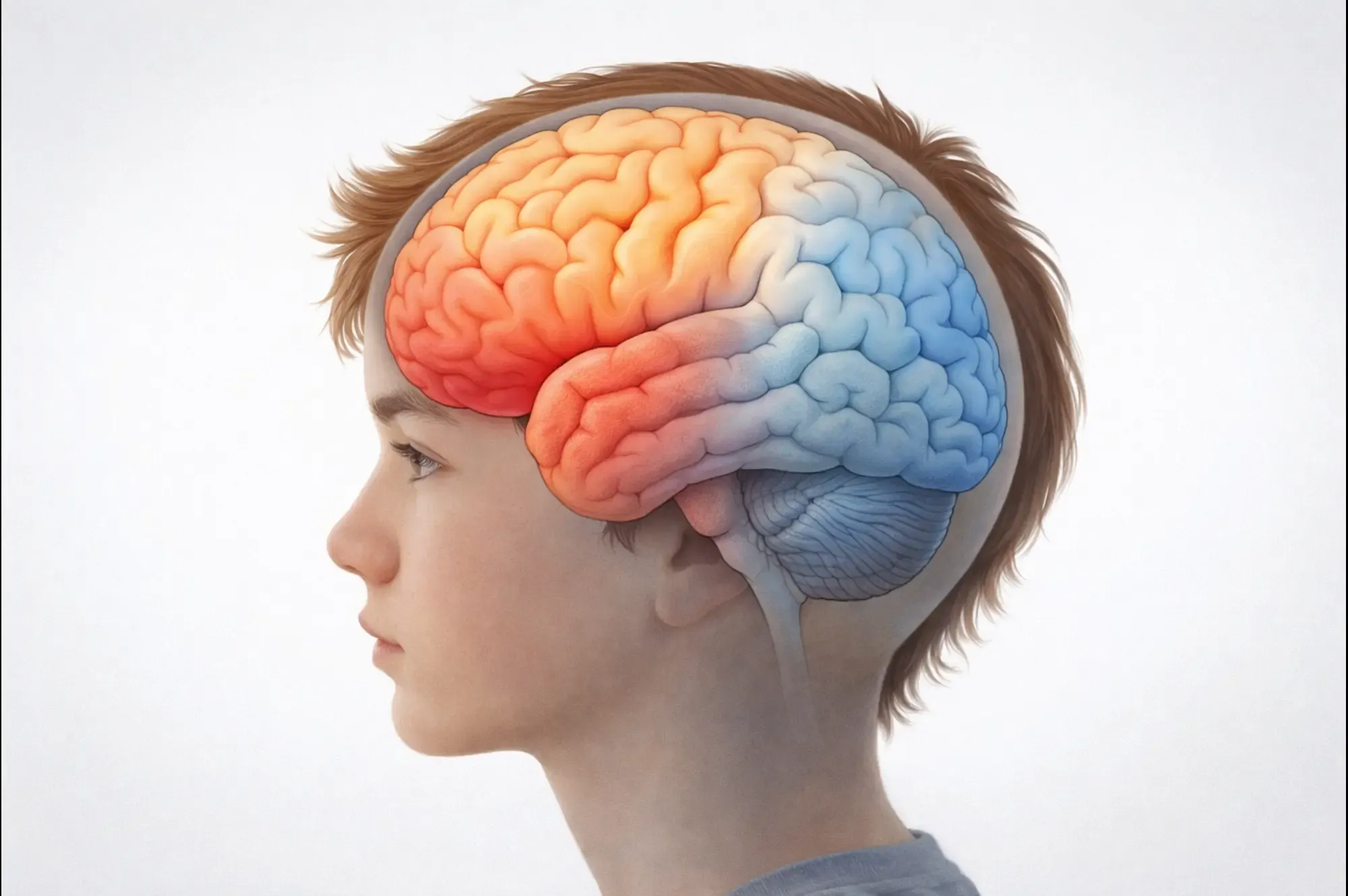
Cognitive abilities such as reasoning and logic develop earlier than the systems responsible for impulse control and long-term planning. This means adolescents can understand consequences but still struggle to prioritize them in the moment.
This uneven brain development explains why lectures about “knowing better” often fail. Knowledge is present, but access to it is inconsistent under stress, excitement, or peer influence.
Takeaway: Impulsivity is not ignorance; it is timing.
Why Adolescents Keep Testing Who They Are
Identity formation is one of the central tasks of adolescence. This process requires experimentation — with opinions, appearance, friendships, and values. What looks like instability is often exploration.
Trying on different identities helps adolescents understand what fits and what doesn’t. This testing can feel unsettling to adults, especially when it challenges family norms, but it is a necessary part of developing autonomy.
Takeaway: Identity shifts are not rejection; they are calibration.
Why Friends Suddenly Matter More Than Family
During adolescence, social orientation shifts outward. Peer relationships become a training ground for independence, conflict resolution, and belonging outside the family structure.
This does not mean family influence disappears. It becomes less visible. Adolescents may resist guidance while still relying on family as an emotional anchor.
Takeaway: Distance from family is often a sign of growth, not disconnection.
How These Changes Show Up in Everyday Life
In daily life, these internal changes surface as mixed signals. An adolescent may ask for independence one day and reassurance the next. They may argue passionately about fairness while overlooking consequences that feel distant.
Misunderstandings arise when behavior is judged without context. When adults interpret adolescent actions as deliberate defiance, responses often escalate conflict. When behavior is understood as developmental, communication tends to improve.
The difference lies not in control, but in interpretation.
Adolescence, in One Clear Picture
Adolescence is a developmental stage where physical growth, brain reorganization, and identity formation occur on different timelines. This mismatch creates emotional intensity, inconsistent judgment, and shifting social priorities. These patterns are normal within this phase, shaped by both biology and environment. Understanding adolescence requires recognizing it as a construction process rather than a behavioral problem.
Where Adolescents Are Commonly Misread
One common mistake is assuming that strong emotions mean weak coping skills. Another is expecting adult-level consistency too early. Adolescents are also often misread as uninterested when they are actually overwhelmed.
Applying adult logic to adolescent behavior ignores developmental context. When expectations exceed capacity, frustration grows on both sides.

$500 PayPal Gift Card
Not everyone qualifies for this $500 PayPal gift card. Checking only takes a moment. You can check if you’re eligible.
Questions People Quietly Ask About Adolescence
Is adolescence the same for everyone?
No. Timing, intensity, and expression vary widely, influenced by biology, environment, and support systems.
Does difficult behavior mean something is wrong?
Not necessarily. Many behaviors reflect normal developmental strain rather than pathology.
Can adolescents understand consequences?
Often yes, but applying that understanding consistently takes time.
Does this phase pass on its own?
Development continues naturally, but support and understanding shape outcomes.
Seeing Adolescence for What It Really Is
Adolescence is not a detour from development; it is a critical phase of construction. When behavior is viewed through the lens of growth rather than control, much of the frustration surrounding this stage begins to make sense. The challenge is not to eliminate instability, but to recognize what it is building toward.