Future Trends in Public Cloud Computing 2025
Explore the most important future trends in public cloud computing for 2025, with insights on AI-driven infrastructure, security advances, and scalability demands. This concise analysis highlights what organizations should prepare for next.


Introduction
Future trends in public cloud computing 2025 are pointing toward a more intelligent, sustainable, and distributed cloud ecosystem. The pace of change is accelerating, and organizations risk falling behind if they don’t anticipate what comes next.
- AI-native cloud services will reshape how workloads run.
- Edge computing and hybrid strategies will dominate infrastructure design.
- Sustainability and security will no longer be optional—they’ll be foundational.
What Is Public Cloud Computing?
Public cloud computing refers to services offered over the internet by third-party providers, delivering infrastructure (IaaS), platforms (PaaS), and software (SaaS) on demand. Users share resources in multi-tenant environments rather than running their own private data centers.
Key Future Trends in Public Cloud Computing 2025
AI-Native Cloud Services
In 2025, public clouds will increasingly embed AI/ML capabilities into core services. Rather than treating AI as an add-on, cloud platforms will natively support model training, inference, automated optimizations, and predictive scaling. This integration lets applications adapt resource allocation based on workload patterns, reducing manual tuning.
Providers are also rolling out AI-driven tools for security (anomaly detection), observability (intel dashboards), and cost control.
Edge + Cloud Continuum
The boundary between cloud and edge is blurring. A recent survey of edge-cloud architectures maps this edge-cloud continuum, where workloads move seamlessly between central data centers and edge nodes.
Public cloud providers will partner with telecom and IoT firms to deploy local nodes (in metro, campus, on-prem) that reduce latency and bandwidth usage. Critical real-time applications—autonomous vehicles, industrial control, AR/VR—will drive this trend.
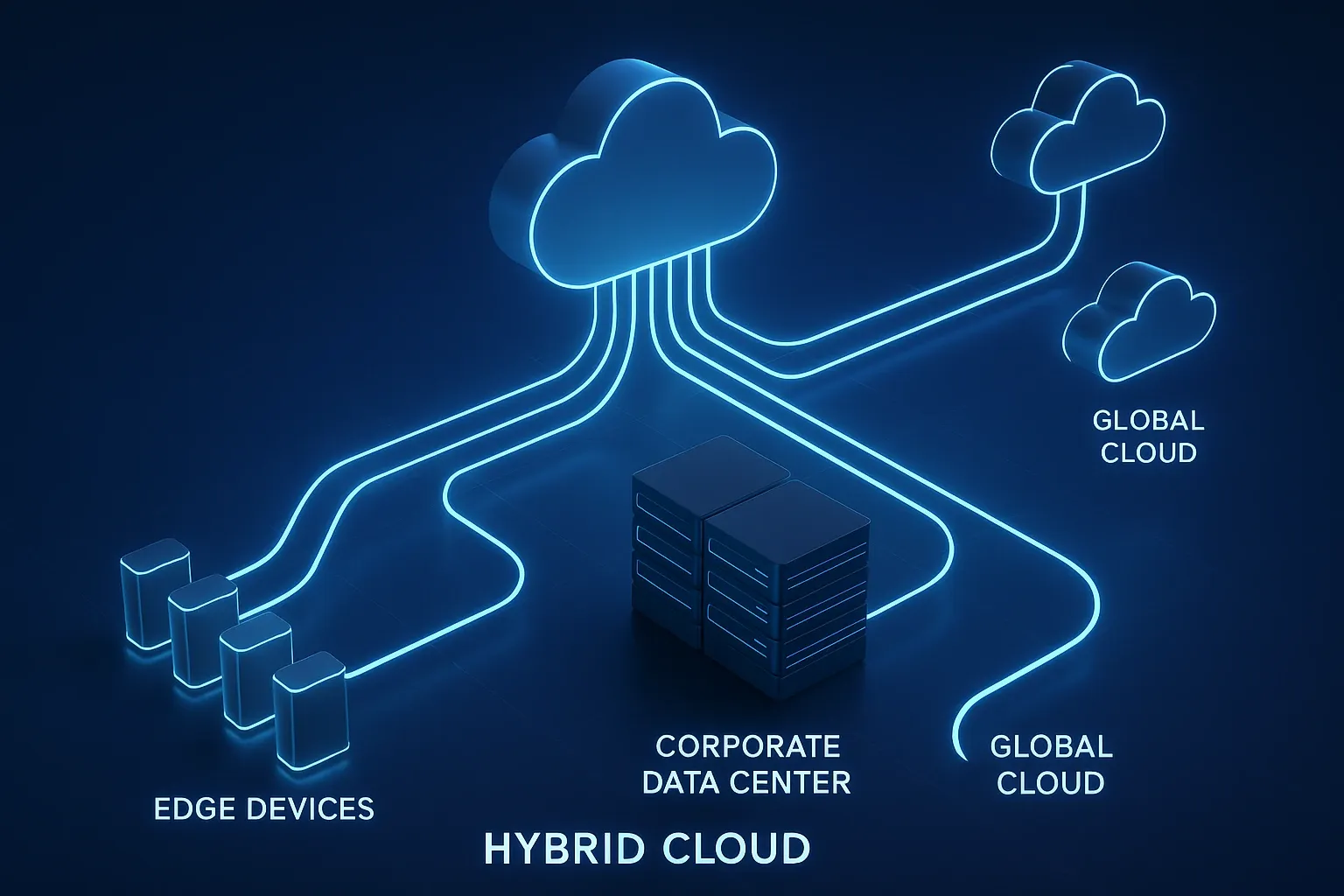
Hybrid & Multi-Cloud as Default
Putting all workloads in one public cloud is no longer the default. Organizations will adopt hybrid and multi-cloud strategies to avoid vendor lock-in, meet data residency laws, and optimize cost/performance across providers.
We’ll see growth in cloud governance tools, cross-cloud connectivity fabrics, and workload orchestration across environments.
Serverless, Low-Code & Developer Productivity
Serverless functions and event-driven architectures will extend beyond simple use cases. Expect more complex capabilities—stateful serverless, longer runtimes, containers under the hood.
Low-code/no-code platforms hosted in public cloud will empower non-developers to build business apps faster. This democratization of cloud app development will expand adoption beyond IT teams.
Sustainability & Energy Efficiency
Data centers already consume significant power; their environmental impact is under scrutiny. A study projects that by 2025, cloud data centers may use up to 20% of global electricity, contributing ~5.5% of global CO₂ emissions.
In response, providers will invest in:
- Renewable energy usage
- Dynamic power scaling and resource optimization
- Liquid cooling, new chip architectures, waste-heat reuse
- Carbon-aware workload scheduling
Cloud contracts themselves may start embedding sustainability SLAs.
Security, Privacy & Compliance
As regulation tightens, cloud platforms must evolve. Zero trust architectures, confidential computing, homomorphic encryption, and hardware-based security enclaves will gain traction.
Data sovereignty and residency rules in many nations will force clouds to localize or provide sovereign zones.
Cloud providers will also automate compliance — continuous audits, posture monitoring, and built-in privacy controls.
Quantum & Post-Quantum Readiness
While full-scale quantum cloud is in the future, public cloud providers will begin offering access to quantum simulators, hybrid quantum-classical workflows, and quantum-safe cryptography.
Observability, Autonomy & Self-Healing Clouds
To manage scale, cloud systems will become more autonomous. Self-healing, predictive fault detection, and automated remediation will reduce human intervention. Observability tools will unify metrics, traces, and logs across hybrid environments
Why These Trends Matter
These trends aren’t incremental—they are foundational shifts. Here’s why they matter to enterprises:
- Better agility and innovation: Embedding AI, serverless, edge capabilities means faster release cycles.
- Cost & efficiency gains: Smarter resource scheduling and workload placement minimize waste.
- Resilience & locality: Hybrid/edge setups ensure services run closer to users and degrade gracefully.
- Regulatory alignment: Privacy, data residency, and security capabilities will be deciding factors in cloud adoption.
- Sustainability as a competitive edge: Carbon-conscious customers and governance bodies will demand greener infrastructure.
How These Compare with Legacy Approaches
| Legacy Model | Limitations | Emerging Trend Advantage |
|---|---|---|
| Centralized monolithic cloud | Latency, bandwidth, single vendor risk | Hybrid + edge distribute load and reduce dependency |
| Manual scaling / infra ops | Human error, slow response | AI-driven auto scaling and self-healing |
| Heavy emphasis on CapEx | Upfront cost, resource underutilization | Pay-as-you-go, efficient resource use |
| Relying on perimeter security | Inadequate in distributed systems | Zero trust, encryption everywhere |
Evidence & Expert Views
- According to the Flexera 2025 State of the Cloud Report, containerization, AI, and hybrid cloud continue to shape infrastructure decisions. flexera.com
- Gartner forecasts global public cloud revenue at USD 723.4 billion in 2025, with all segments (IaaS, PaaS, SaaS) seeing double-digit growth. valantic
- Kforce identifies the top cloud trends for 2025: hybrid cloud, cloud-native modernization, edge compute, and serverless. Kforce
- An academic survey on edge-cloud continuum presents the architectural models and challenges of distributed computing spanning edge and central clouds. arXiv
These sources strengthen the credibility of the predicted trajectory.
Practical Takeaways: What You Should Do
- Start adopting hybrid architectures for critical workloads, rather than rushing full cloud migration.
- Evaluate cloud providers based on AI tooling, edge presence, security posture, and sustainability credentials.
- Build cloud-native applications—use containers, microservices, instrumentation from day one.
- Incorporate observability, autonomous remediation, and governance early.
- Track emerging offers of quantum and post-quantum services.
- Engage with cloud providers about their carbon and compliance SLAs as part of procurement.
FAQs
Q: What are “future trends in public cloud computing 2025”?
They refer to the emerging shifts in how public cloud services will operate, including AI integration, edge-cloud continuum, sustainability, hybrid strategies, enhanced security, and quantum readiness.
Q: Will public cloud replace private data centers entirely by 2025?
No. Hybrid cloud models will persist, especially for sensitive workloads and data compliance.
Q: How will sustainability influence public cloud?
Providers will optimize energy use, adopt green infrastructure, and offer carbon-aware service commitments.
Q: Is quantum computing already part of public cloud trends?
Yes—in nascent form: simulators, hybrid workflows, and early quantum-secure cryptographic features will roll out.
Conclusion
The future trends in public cloud computing 2025 signal a turning point: intelligence and efficiency will move from optional enhancements to essential foundations. Public clouds will evolve into AI-native, hybrid-distributed, self-healing, sustainable ecosystems. Organizations that adapt early—to edge integration, governance models, and new security paradigms—will lead the next wave of digital transformation