8 Dead in Delhi Blast: Shocking Explosion Near Red Fort Sparks Nationwide Alarm
The Delhi blast near Red Fort has left eight dead and the nation on high alert. This report breaks down verified details, eyewitness accounts, and early investigative findings to help readers understand what happened and why it matters.

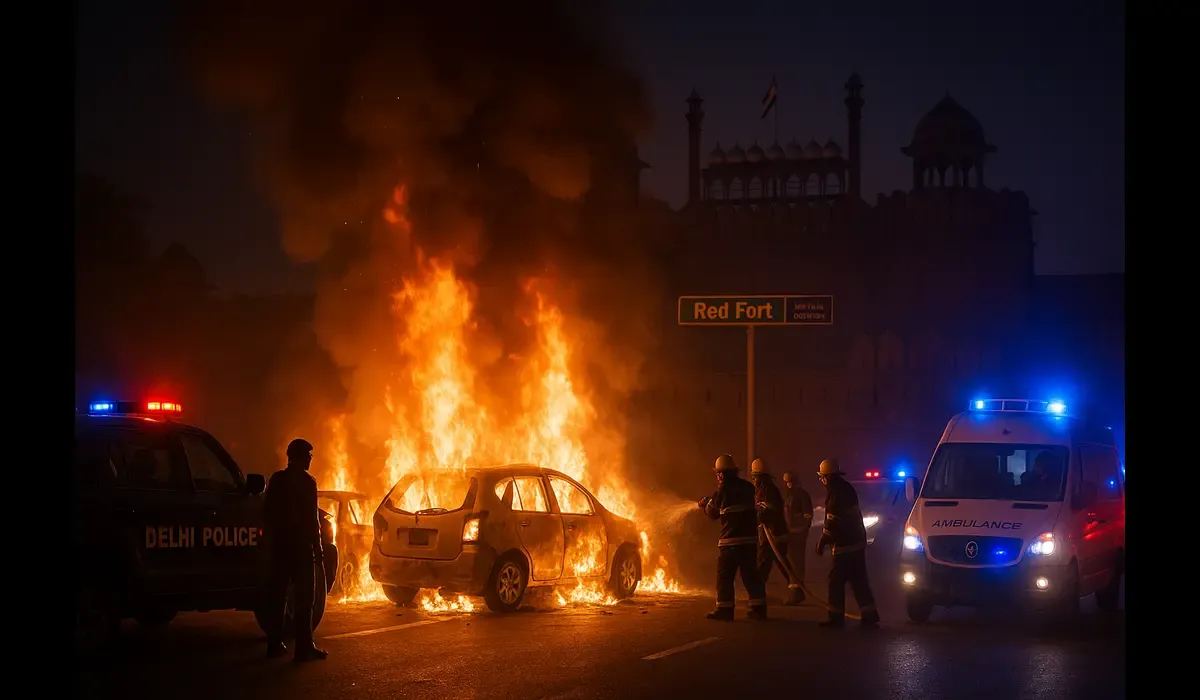
The Delhi blast near the Red Fort left eight people dead and over twenty injured on the evening of November 10, 2025. A slow-moving car waiting at a red light suddenly erupted into flames, triggering panic, chaos, and a massive emergency response across India’s capital.
- A slow-moving car exploded near the Red Fort Metro Station, killing eight people.
- Several vehicles caught fire, and dozens were injured.
- Delhi Police, forensic teams, and national agencies are investigating the cause.
Quick Context
The Delhi blast refers to the deadly explosion at a traffic signal near Gate 1 of the Red Fort Metro Station in Central Delhi. The incident took place during peak evening traffic, shocking commuters and raising serious safety concerns about urban security and vehicle inspection systems.
Latest Update: Explosion at Traffic Signal
At around 6:52 PM, a car moving slowly toward the Red Fort Metro signal came to a stop and suddenly exploded. Within seconds, flames engulfed nearby vehicles and a dense cloud of smoke covered the area. Witnesses described hearing “a deafening blast followed by screams and fire.”
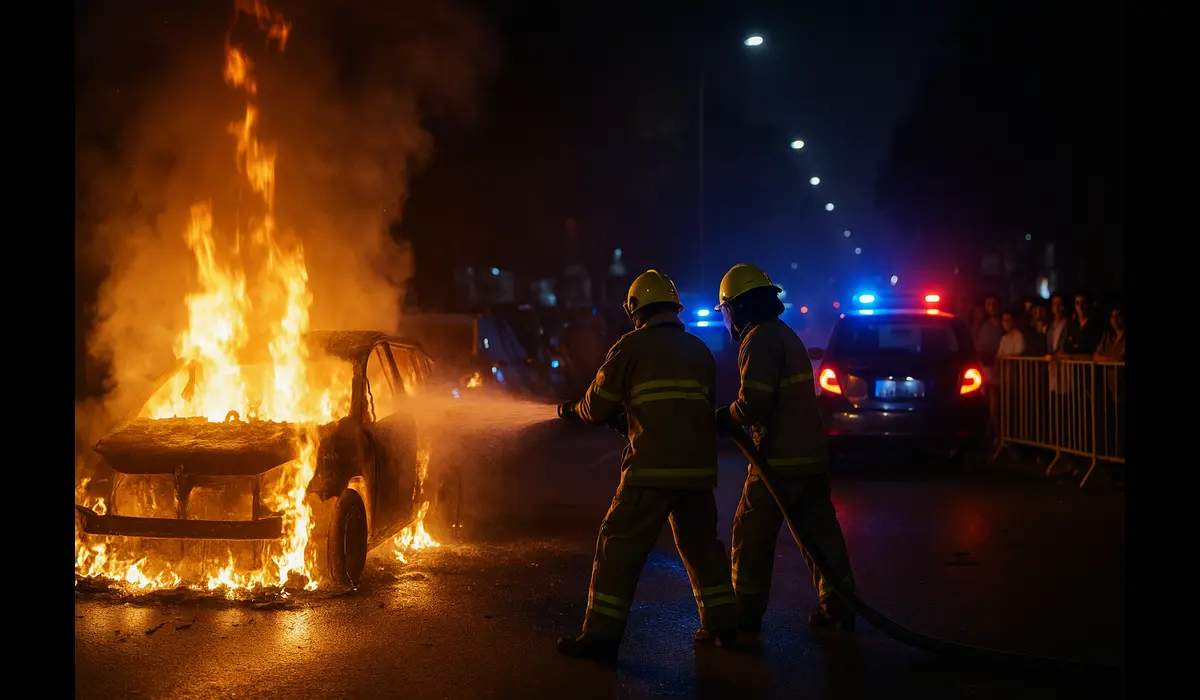
Emergency responders rushed to the site, and firefighters brought the blaze under control within 30 minutes. Eight people were confirmed dead on the scene, while more than twenty were taken to hospitals with burns and other injuries.
Police confirmed that the car had been traveling at a slow speed and was stationary at the red light when the explosion occurred. Authorities are reviewing CCTV footage and conducting forensic analysis to determine whether the cause was mechanical, fuel-related, or deliberate.
Key Facts About the Delhi Blast
- Location: Near Gate 1, Red Fort Metro Station, Delhi
- Time: Around 6:52 PM, November 10 2025
- Deaths: 8 confirmed
- Injuries: Over 20
- Vehicle Type: Compact sedan; believed to be privately owned
- Damage: At least 5 nearby vehicles caught fire; several shopfronts and signal lights were damaged
- Agencies Involved: Delhi Police, Fire Department, Forensic Science Laboratory (FSL), National Investigation Agency (NIA)
Officials confirmed that no explosive fragments like nails or wires were initially found at the scene, but fuel-related combustion or tampering remains under investigation.
Why the Delhi Blast Matters
The Delhi blast highlights a growing challenge for city safety in India — ensuring vehicle integrity and quick emergency coordination.
- Urban Security Risk: The explosion happened in one of Delhi’s busiest corridors, just meters away from a heritage monument. It underscores how ordinary vehicles can become potential threats in high-footfall zones.
- Public Safety Concern: Delhi’s population density makes quick evacuation difficult. The blast demonstrated how emergency speed and coordination can determine survival outcomes.
- Infrastructure Readiness: The incident calls for improved signal monitoring, surveillance, and random safety checks for vehicles, especially in tourist-heavy areas.
Expert Insights
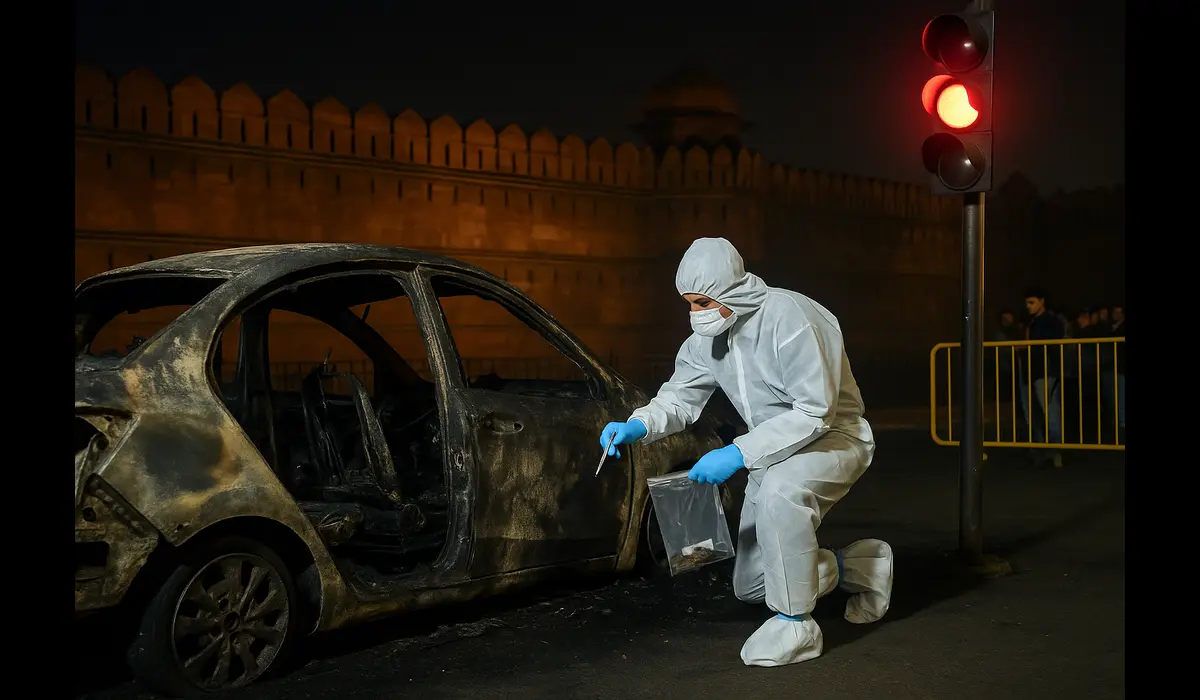
Experts believe the explosion was likely caused by a combination of fuel pressure and overheating, though investigations are not ruling out other possibilities. Forensic teams collected samples from the vehicle’s frame and fuel tank to test for chemical residues.
Security analysts emphasize that vehicle blasts, even accidental ones, can trigger widespread panic. “The psychological shock is often greater than the physical damage,” one safety consultant noted, adding that Delhi needs better vehicle maintenance standards and early-warning systems.
Practical Takeaways for Citizens
- Stay Alert: Be vigilant about any vehicle emitting smoke, smell, or heat at crowded intersections.
- Report Suspicious Behavior: Use emergency helplines (Police 112, Fire 101) if you notice unattended cars near public landmarks.
- Avoid Crowding Blast Sites: After any explosion, leave the area to allow rescue and forensic teams to work efficiently.
- Rely on Verified Updates: Follow official statements; misinformation can obstruct emergency operations.
FAQs
Q1. What caused the Delhi blast?
The cause is still under investigation. Preliminary findings suggest a possible internal car explosion due to a mechanical or fuel-system failure, though deliberate tampering has not been ruled out.
Q2. How many people died in the Delhi blast?
Eight people were confirmed dead and more than twenty were injured in the explosion near the Red Fort Metro Station.
Q3. Was there a terror link to the Delhi blast?
Authorities have not confirmed any terror connection. Forensic and CCTV results will clarify whether the explosion was accidental or intentional.
Q4. Which agencies are investigating the Delhi blast?
The Delhi Police, Fire Department, Forensic Science Laboratory (FSL), and National Investigation Agency (NIA) are jointly investigating the incident.
Key Takeaways
- The Delhi blast killed eight and injured over twenty near the Red Fort Metro Station.
- The vehicle was moving slowly at a red light before it exploded.
- Police, fire, and forensic teams are investigating; no confirmed terror link yet.
- The incident stresses the need for tighter safety checks and public vigilance.
Conclusion
The Delhi blast has left the nation stunned and the capital on high alert. With eight lives lost and many families shattered, this tragedy is a wake-up call for improving safety standards and rapid emergency responses in urban India. Authorities continue to probe the cause, but the message is clear — public vigilance saves lives.