7 Amazing Findings: How Chandrayaan-2 Observed Solar Storm Impact Changed Lunar Science
Discover amazing findings from how Chandrayaan-2 observed solar storm impact and changed lunar science. This concise, research-driven breakdown highlights breakthrough data, new surface insights, and what it means for future Moon missions.

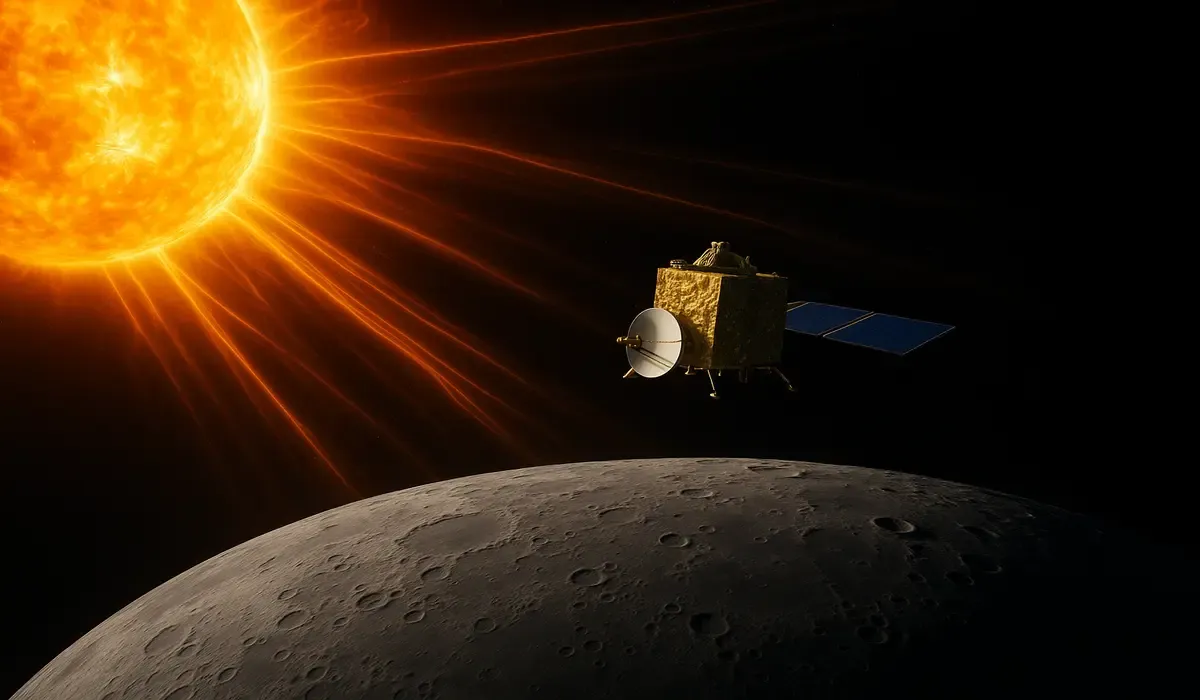
Chandrayaan-2 observed solar storm impact on the Moon’s atmosphere in unprecedented detail, offering new insight into how solar activity influences airless celestial bodies.
Recent findings by ISRO scientists show that during strong solar storms, the Moon’s thin exosphere undergoes significant changes, including shifts in ion density and surface charging.
- Chandrayaan-2 detected ion variations during solar storms.
- Findings reveal how solar radiation shapes the lunar environment.
- Insights could guide future Moon and Mars missions.
Quick Context
Launched by the Indian Space Research Organisation (ISRO) in July 2019, Chandrayaan-2 was India’s second lunar exploration mission. Its orbiter continues to study the Moon’s surface, atmosphere, and magnetic environment long after the Vikram lander’s hard landing.
Equipped with eight high-precision instruments, the orbiter remains operational in lunar orbit, collecting data that helps scientists understand space-weather interactions with the Moon.

$500 Walmart Gift Card$500 Walmart Gift Card
Some users qualify for a $500 Walmart gift card. You can check if you qualify.
Latest Post
Latest Discovery: Solar Storm Impact Observed
During a series of solar events between 2021 and 2022, Chandrayaan-2 observed solar storm impact directly on the lunar exosphere. Using its Chandra’s Atmospheric Composition Explorer-2 (CHACE-2) and Dual Frequency Radio Science Experiment (DFRS) instruments, the mission recorded elevated ion levels and increased surface electric fields.
Key Observations:
- Enhanced sodium and potassium emissions from the lunar surface.
- Temporary expansion of the Moon’s exosphere due to charged solar particles.
- Increased photoionization, altering the Moon’s local plasma density.
- Changes in electron flux detected during peak solar storm activity.
These phenomena were linked to coronal mass ejections (CMEs) — massive bursts of solar wind and magnetic fields from the Sun that occasionally reach Earth and the Moon.
How Solar Storms Affect the Moon
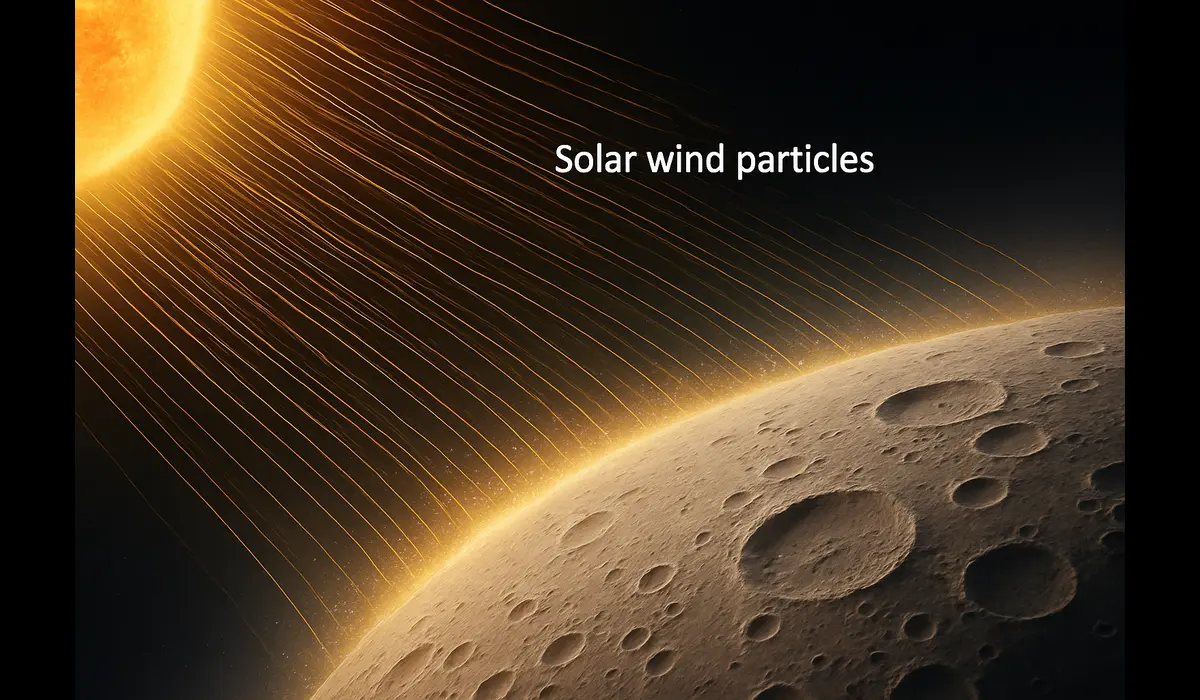
Unlike Earth, the Moon lacks a global magnetic field and a thick atmosphere to shield it from solar radiation. When a solar storm strikes:
- Charged particles directly hit the lunar surface.
- These particles release atoms from the regolith (a process called sputtering).
- The Moon’s exosphere temporarily thickens as these atoms are ionized.
- The surface gains or loses electric charge, impacting dust motion and equipment safety.
ISRO scientists noted that these interactions could influence future lunar habitats, satellite communications, and surface rover operations.
Why This Discovery Matters
The data from Chandrayaan-2 observed solar storm impact has major implications for both science and technology.
- Protecting Future Lunar Missions:
The findings help mission planners design shielding for instruments and rovers to withstand solar radiation. - Understanding Space Weather:
The Moon serves as a natural laboratory to study how solar storms affect airless bodies — key for future Mars and asteroid missions. - Global Scientific Contribution:
These results place India among leading nations contributing to lunar and heliophysical research, complementing NASA’s Artemis program and ESA’s Lunar Gateway initiatives. - Enhancing Planetary Protection:
Knowing how solar events interact with non-atmospheric bodies aids in predicting long-term space weather effects on exploration technology.
Expert Insights
According to ISRO’s Space Science Program Director, the variations detected during solar storms align with previous simulations but provide “first-hand observational evidence from a lunar orbiter.”
A senior planetary scientist from PRL (Physical Research Laboratory) added,
“Chandrayaan-2’s instruments captured the dynamic coupling between solar radiation and the Moon’s surface environment. These findings refine our models of exospheric behavior under extreme conditions.”
NASA’s comparative data from the Lunar Reconnaissance Orbiter further validates these results, showing a consistent increase in ion flux during intense solar events.
Practical Takeaways
For Researchers:
- Use Chandrayaan-2 datasets to model solar wind interactions with airless bodies.
- Compare with data from Artemis I and Solar Orbiter missions for broader context.
For Future Missions:
- Strengthen radiation shields for lunar surface assets.
- Plan lunar operations during low solar activity periods.
For Students and Space Enthusiasts:
- Understand how space weather affects planetary environments.
- Explore open ISRO data archives for educational use.

$750 Cash App Gift Card$750 Cash App Gift Card
Some users qualify for a $750 Cash App gift card. You can check if you qualify.
FAQs
1. What did Chandrayaan-2 observe during solar storms?
It detected changes in ion and neutral particle densities in the Moon’s exosphere, caused by charged solar particles impacting the surface.
2. How does a solar storm affect the Moon’s atmosphere?
Solar storms increase ionization and temporarily expand the exosphere, leading to fluctuations in the Moon’s electrical environment.
3. Why is this discovery important for space missions?
It helps design radiation-resistant spacecraft and improves understanding of space weather’s impact on exploration systems.
4. Did Chandrayaan-2 continue functioning after the lander crash?
Yes. The orbiter remains fully operational and continues transmitting scientific data.
Key Takeaways
- Chandrayaan-2 observed solar storm impact revealing changes in the Moon’s exosphere.
- Solar storms increase charged particle density and surface ionization.
- The discovery enhances safety planning for future lunar and interplanetary missions.
- ISRO’s data contributes globally to understanding space weather dynamics.
Conclusion
The observation that Chandrayaan-2 observed solar storm impact on the Moon’s atmosphere marks a major milestone for Indian space research. It not only deepens scientific understanding of solar–lunar interactions but also strengthens the foundation for safe and sustainable exploration beyond Earth.