Why Are Bangladeshi Migrant Workers in Malaysia Still Waiting for Their Wages?
Why are Bangladeshi migrant workers in Malaysia still waiting for their wages? This analysis uncovers the systemic delays, hidden exploitation, and policy gaps shaping their struggle—revealing what recent investigations mean for workers and regulators.

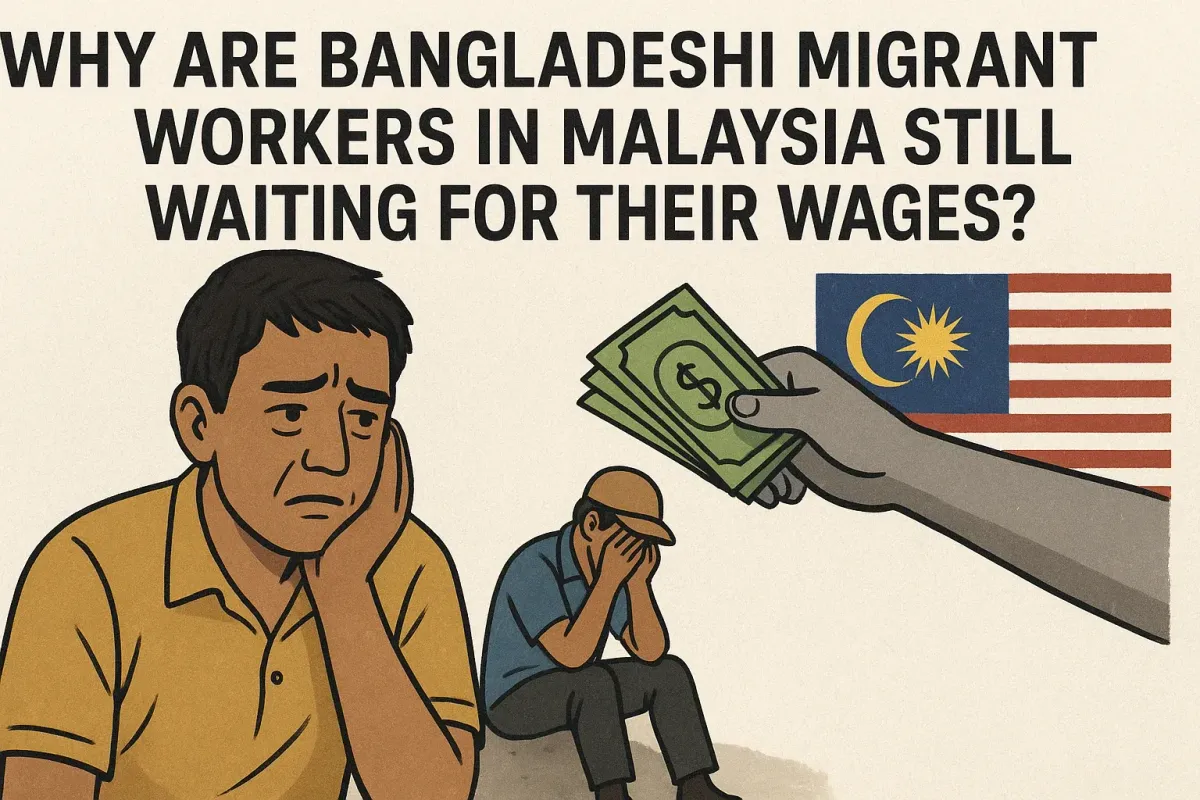
“We left our families and homes for a better life, but we were never paid for our hard work.” — A Bangladeshi Migrant Workers in Malaysia.
Thousands of Bangladeshi migrant workers in Malaysia are now speaking out. After working long hours under tough conditions for companies supplying goods to global brands, many are still waiting for wages they were promised. The situation has caught international attention, especially with links to Japanese companies.
But how did we get here? And why should people in the U.S., Europe, or anywhere else care?
Who Are Bangladeshi Migrant Workers in Malaysia?
Bangladeshi migrant workers in Malaysia are men and women who leave their homes in Bangladesh to find jobs in construction, manufacturing, and services in Malaysia. Their goal? Earn enough money to support their families back home. Often, they borrow heavily just to secure a job.
They are essential to Malaysia’s economy—but many feel they are treated unfairly.
The Reality: Unpaid Wages and Broken Promises
One of the most serious issues they face is unpaid wages for migrant workers. In recent years, hundreds of Bangladeshi workers have reported that their wages were delayed or not paid at all. They were also asked to work long hours without overtime pay or proper rest.
Some of these workers were employed by subcontractors for companies that supply goods to major Japanese firms. This connection has triggered concern over the responsibilities of multinational corporations in ensuring ethical practices across their supply chains.
Why Is This a Global Concern?
You might be wondering: why does this matter to me?
If you live in the U.S., Europe, or Japan, there’s a chance that the electronics, furniture, or garments you buy are produced by companies tied to this supply chain. When migrant labor rights in Malaysia are ignored, it impacts us all. It raises ethical questions about what we consume and how it’s made.
How Japanese Companies Are Involved
Investigations have revealed that several Japanese companies rely on Malaysian suppliers who have been accused of mistreating foreign workers. While these companies may not directly employ the workers, they benefit from their labor.
Human rights groups are urging these companies to take responsibility by auditing their suppliers and paying owed wages.
The Role of Recruitment Agents and Debt Traps
Before arriving in Malaysia, most workers pay large fees to recruitment agents in Bangladesh—sometimes up to $5,000. This leaves them in deep debt even before their first paycheck. And when their unpaid wages never arrive, they fall into a trap that’s hard to escape.
Government Action (or Lack of It)
Malaysia and Bangladesh both have laws protecting workers. But enforcement is weak. Legal complaints often go unanswered. Migrants fear losing their jobs—or being deported—if they speak out. This silence allows abuse to continue.
Voices From the Ground: Personal Stories
Mahmud, a 27-year-old worker from Dhaka, shared his story:
“I worked for over a year and didn’t get paid regularly. We shared rooms with ten people. When we asked about our wages, they threatened to send us back.”
Stories like Mahmud’s are not rare. They reflect a pattern of labor abuses in supply chains that needs urgent reform.
How Advocacy Groups Are Pushing for Change
Organizations like Migrant Justice Institute and Tenaganita are working to protect exploited Bangladeshi Migrant Workers in Malaysia. They are pushing for fair recruitment practices, direct contracts with employers, and wage protections.
What Can Consumers and Global Companies Do?
- Demand transparency: Ask brands about their suppliers.
- Support ethical products: Choose companies that value fair labor.
- Raise awareness: Share stories like these on social media.
- Hold companies accountable: Advocate for corporate responsibility.
The Path Forward: Reform and Accountability
The issue of Bangladeshi migrant workers in Malaysia and their unpaid wages is complex but solvable. It requires:
- Stronger labor laws.
- Corporate responsibility.
- Global consumer awareness.
- Ongoing pressure from advocacy groups.
Bangladeshi Migrant Workers in Malaysia – Frequently Asked Questions
Why do Bangladeshi workers go to Malaysia for jobs?
Bangladeshi Migrant Workers in Malaysiafor better wages and job opportunities compared to what they have at home.
Are Japanese companies directly hiring these workers?
No, but they often rely on suppliers who do. This indirect link still places responsibility on them.
What are the main issues faced by migrant workers in Malaysia?
Key problems include unpaid wages, poor housing, long work hours without overtime, and unsafe conditions.
What are the main issues faced by migrant workers in Malaysia?
Key problems include unpaid wages, poor housing, long work hours without overtime, and unsafe conditions.
Conclusion: Let’s Not Look Away
The story of Bangladeshi migrant workers in Malaysia isn’t just a labor issue. It’s a human story of struggle, dignity, and the hope for justice. As global citizens, we can choose to care—and act.
Let’s stand with those still waiting for what they’re owed.