Artemis 2: What This Mission Really Decides
Artemis 2 is more than a crewed lunar flyby. It’s a critical test of safety, readiness, and long-term confidence in human deep-space exploration.

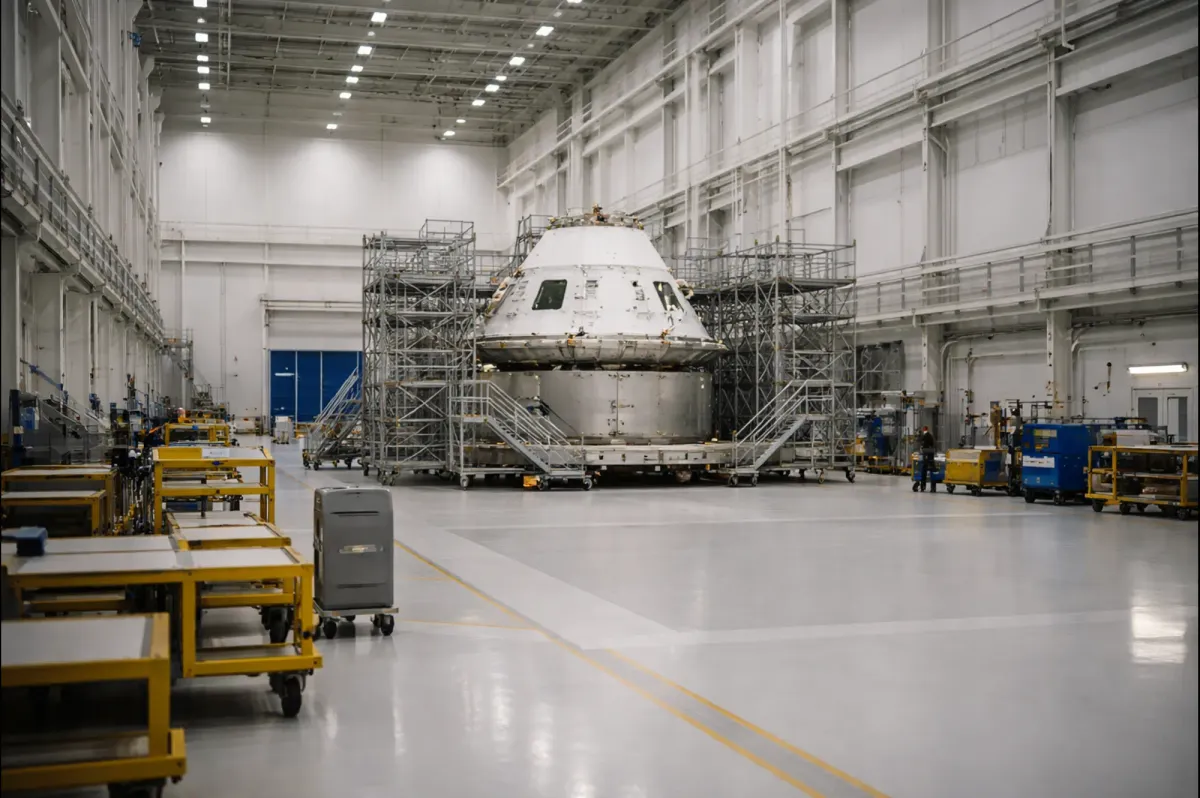
NASA’s Artemis 2 mission is not about spectacle.
It is about credibility, risk tolerance, and whether the United States can still carry humans safely beyond low Earth orbit.
After years of delays, cost overruns, and shifting timelines, Artemis 2 has become a quiet stress test for modern space exploration.
If this mission goes wrong—or underdelivers—the consequences reach far beyond one flight.
Why Artemis 2 Matters Right Now
Human spaceflight is at an inflection point.
Government-led programs are slower and more expensive than promised, while private companies are moving faster but with different priorities. At the same time, geopolitical competition, defense concerns, and long-term lunar ambitions are putting pressure on NASA to prove relevance.
Artemis 2 matters now because:
- It is the first crewed mission beyond Earth orbit since 1972
- It follows a long gap between ambition and execution
- It determines whether future Moon landings are realistic—or just aspirational
This is the mission where confidence is either rebuilt or quietly eroded.

$500 PayPal Gift Card
A $500 PayPal gift card may be available to select users. Checking eligibility is quick. You can check if you’re one of them.
What Artemis 2 Is Designed to Do (and What It Is Not)
Artemis 2 is often misunderstood, which leads to unrealistic expectations.
What the Mission Will Do
- Send a human crew aboard the Orion spacecraft
- Travel beyond low Earth orbit and perform a lunar flyby
- Test life-support systems, radiation exposure, navigation, and crew operations
- Validate launch, reentry, and recovery systems with humans onboard
What the Mission Will Not Do
- Land on the Moon
- Deploy surface experiments
- Deliver infrastructure or cargo
This is a systems validation mission, not an exploration showcase.
How to Evaluate Artemis 2 as a Decision Point
Judging Artemis 2 by excitement or visuals misses the point. These are the criteria that actually matter.
Crew Safety Is the Primary Measure
The mission’s success depends first on whether humans can safely operate in deep space again. Life-support reliability, radiation shielding, heat shield performance, and abort capability outweigh all other metrics.
A mission that appears “uneventful” is often a technical success.
Deep-Space Operations Are the Real Test
Low Earth orbit is forgiving. Beyond it, communication delays, limited rescue options, and environmental exposure increase risk sharply.
Artemis 2 evaluates whether:
- Crews can operate with autonomy
- Systems respond predictably under stress
- Navigation and guidance hold up far from Earth
These lessons cannot be simulated fully on the ground.
Integration Risk Matters More Than Hardware
No single component defines Artemis 2. The risk lies in how multiple systems interact:
- Launch vehicle
- Crew module
- Ground systems
- Recovery teams
Small failures at integration points are what derail long-term programs.
Schedule Discipline vs. Rushed Execution
Criticism of Artemis often focuses on delays. But for crewed deep-space flight, speed is a liability.
The real question is whether delays reduce risk—or simply mask unresolved problems. Artemis 2 will answer that.
Program Value Beyond One Mission
Artemis 2 must justify its cost by lowering uncertainty for later missions. If it does not materially improve readiness for Artemis 3 and beyond, its strategic value diminishes sharply.
 Deepak Singh
Who Is Most Affected by the Outcome
Different stakeholders will interpret Artemis 2 very differently.
For Government and Policy Makers
This mission influences:
- Future funding decisions
- Public trust in large-scale programs
- International leadership in space
A clean mission strengthens political support. A troubled one invites restructuring.
For Engineers and Scientists
Artemis 2 generates operational data that shapes:
- Spacecraft design
- Human factors research
- Deep-space mission planning for decades
Scientific value here is indirect—but foundational.
For Commercial Space Partners
NASA’s performance sets expectations for collaboration, timelines, and standards. Artemis 2 success helps stabilize long-term lunar plans involving private industry.
For the Public
Public perception affects talent pipelines, political backing, and national ambition. This mission will quietly influence whether space exploration feels credible again—or stuck.
Comparison Summary: Artemis 2 vs Expectations
Artemis 2 is often judged against Apollo—but that comparison is misleading.
Apollo prioritized speed and geopolitical signaling.
Artemis prioritizes safety, sustainability, and long-term presence.
The trade-off:
- Less immediate excitement
- More emphasis on risk reduction
- Slower progress, but potentially more durable outcomes
Those expecting spectacle will be disappointed. Those focused on continuity should pay attention.
Quick Buying Summary
Artemis 2 should be evaluated as a crew-safety and deep-space readiness mission, not a Moon landing attempt. Its success depends on system reliability, integration, and risk reduction rather than speed or visuals. Delays are acceptable if they meaningfully lower risk for future missions. The mission’s true value lies in whether it improves confidence in sustained human exploration beyond Earth orbit.
Common Misjudgments About Artemis 2
- Expecting a Moon landing or surface science
- Treating schedule delays as automatic failure
- Judging success by public excitement
- Comparing it directly to Apollo-era missions
- Ignoring its role in enabling later Artemis flights

$750 Amazon Gift Card
Some users qualify for a $1000 Walmart gift card. You can check if you qualify.
FAQs
Is Artemis 2 landing on the Moon?
No. It is a crewed lunar flyby mission.
Why send humans if no landing occurs?
Because human safety and deep-space operations must be validated first.
What happens if Artemis 2 is delayed again?
Later Artemis missions shift, but safety takes priority over timelines.
How is Artemis 2 different from Artemis 1?
Artemis 1 was uncrewed. Artemis 2 introduces human risk and operational complexity.
Does Artemis 2 affect Mars plans?
Yes. It informs human deep-space readiness well beyond the Moon.
Conclusion
Artemis 2 is not about reaching the Moon.
It is about proving that human deep-space flight is still viable in a modern, risk-conscious world.
Understanding that distinction is essential to judging the mission fairly—and realistically.