How to Avoid Bad Outputs from AI Writing Tools
Learn how to avoid bad outputs from AI writing tools with practical tips for improving accuracy, tone, and reliability. This concise guide helps users get higher-quality results every time.

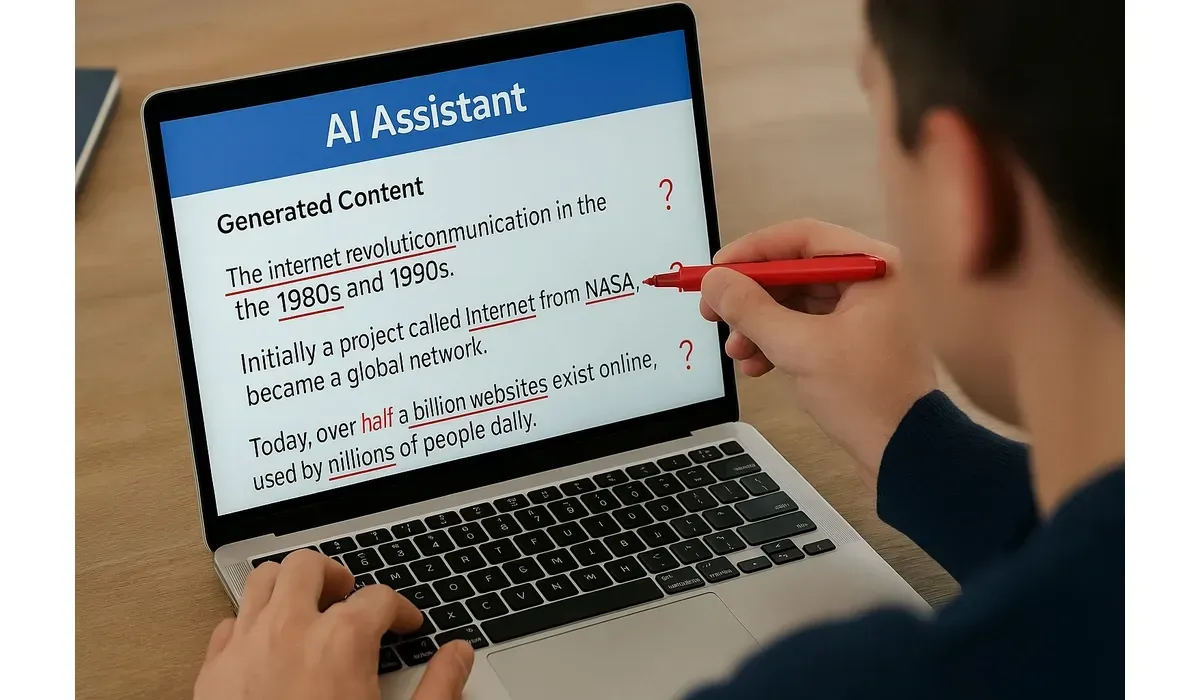
AI is everywhere—from blog posts to emails—but it doesn’t always get it right. Sometimes, AI writing tools produce clunky, repetitive, or even factually wrong content.
The good news? With the right approach, you can guide AI to give you better, clearer, and more useful outputs. Let’s break down how.

$500 Walmart Gift Card
Not everyone qualifies for this $500 Walmart gift card. Checking only takes a moment. You can check if you’re eligible.
Why Do AI Writing Tools Give Bad Outputs?
AI writing tools rely on large language models trained on huge amounts of data. While powerful, they sometimes:
– Misinterpret vague prompts
– Generate generic or repetitive text
– Include outdated or incorrect information
– Struggle with tone consistency
A 2024 Gartner report revealed that nearly 30% of companies using AI content tools flagged factual errors as their biggest concern.
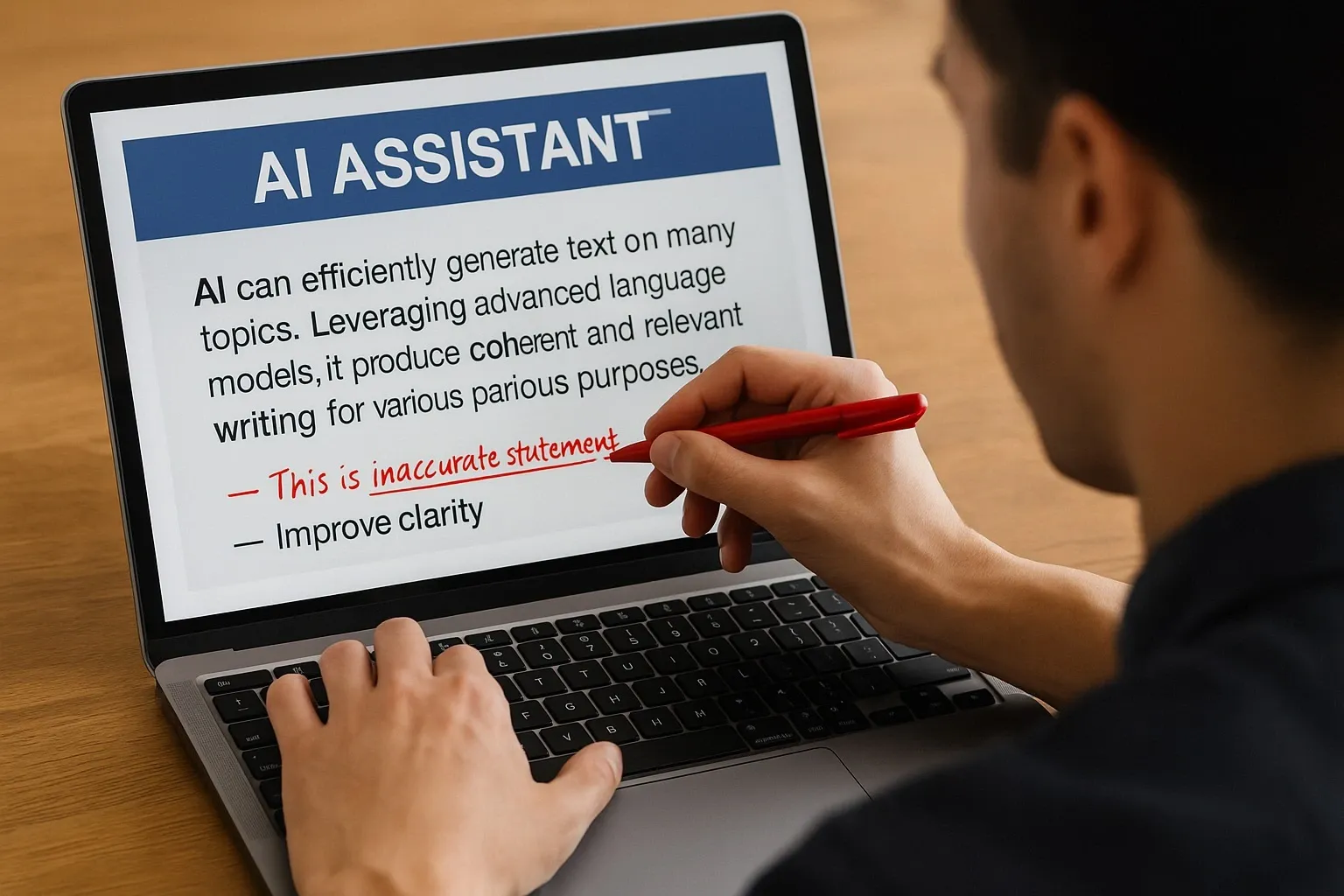
How to Avoid Bad Outputs from AI Writing Tools
Write Clear, Specific Prompts
The quality of your prompt = the quality of the output. Instead of asking, ‘Write about marketing,’ try ‘Write a 600-word blog post on email marketing trends for 2025, focusing on automation tools.’
Use AI for Drafts, Not Final Copies
Think of AI as a first draft generator. It gives you structure and speed, but human editing ensures accuracy, originality, and brand tone.
Always Fact-Check
AI tools don’t know real-time facts unless connected to the web. Double-check stats, dates, and references before publishing.
Edit for Style and Flow
Even if the content is correct, it might not sound like you. Run through the draft, refine tone, and add examples to personalize it.
Choose the Right Tool for the Job
Not all AI writing tools are built the same. Some are better at blogging, others at emails or social posts.
Top AI Writing Tools and Their Strengths
Jasper AI
How it works: Jasper specializes in marketing copy and long-form blogs with strong tone control.
Pros:
- Great for ads and blogs
- Templates for different content types
- Strong tone customization
Cons:
- Expensive compared to rivals
- Needs clear input for best results
Free vs Paid: No free plan; starts at $49/month.
Copy.ai
How it works: Best for short-form content like product descriptions, captions, and ads.
Pros:
- Quick outputs
- Easy to use
- Affordable
Cons:
- Weak for long-form blogs
- Can feel repetitive
Free vs Paid: Free plan available; Pro is $49/month.
Writesonic
How it works: Balances long and short-form writing with SEO integrations.
Pros:
- Built-in SEO features
- Supports multiple languages
- Affordable tiers
Cons:
- Mid-level accuracy on complex topics
- Needs editing for polish
Free vs Paid: Free version available; Pro starts at $19/month.
ChatGPT (OpenAI)
How it works: A flexible, general-purpose tool for blogs, emails, brainstorming, and explanations.
Pros:
- Versatile
- Great for ideation and research drafts
- Customizable tone
Cons:
- May include outdated info (without web access)
- Requires detailed prompts
Free vs Paid: Free tier (GPT-3.5); Plus plan with GPT-4 for $20/month.
Best Practices to Get the Most from AI Writing Tools
1. Be specific with prompts.
2. Use AI for speed, humans for accuracy.
3. Double-check every fact or stat.
4. Adjust tone to match your brand.
5. Test multiple tools to find your best fit.
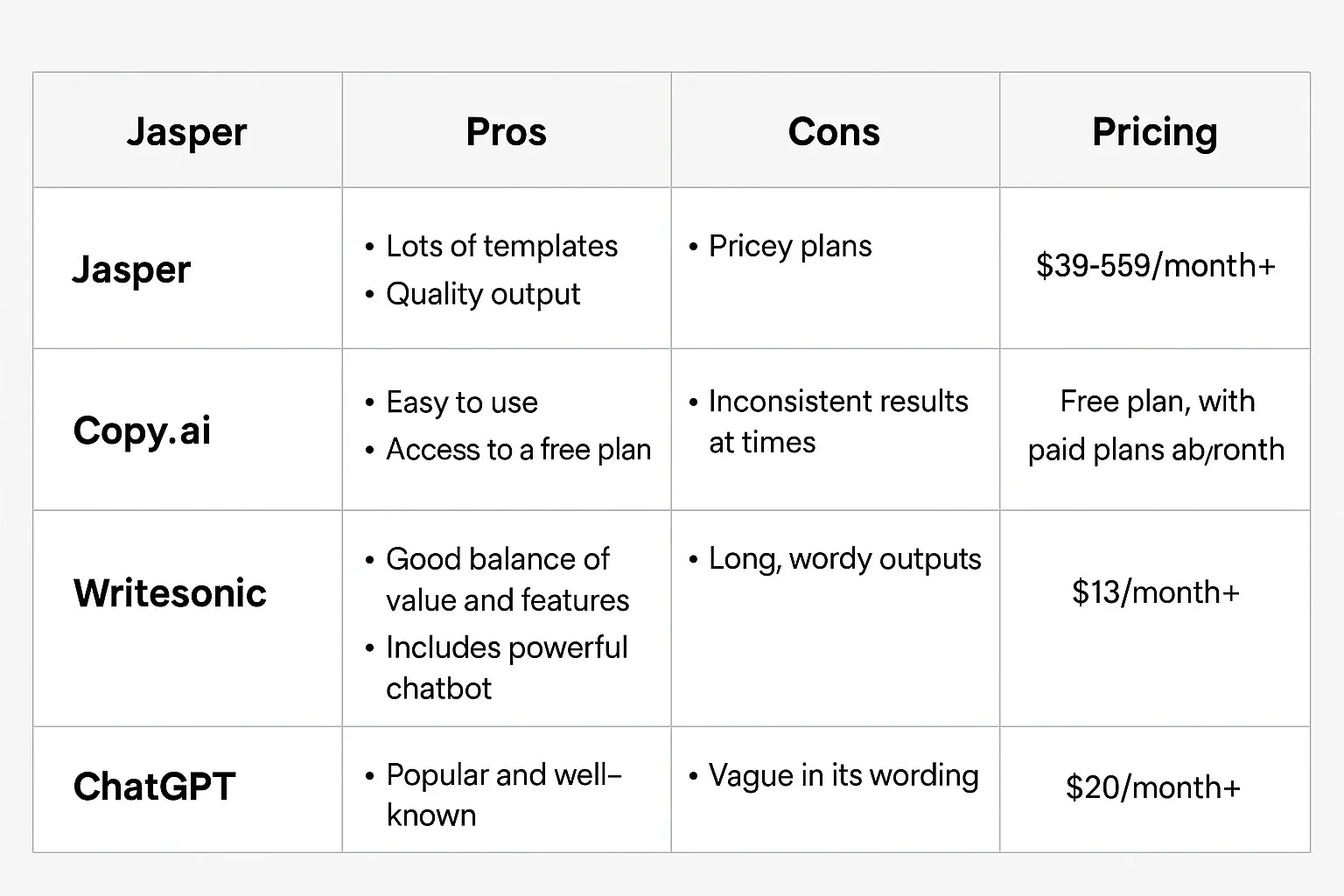
Mini Comparison: Best for Each Use Case
– Best for Marketing Copy: Jasper
– Best for Quick Short Posts: Copy.ai
– Best Budget-Friendly SEO Option: Writesonic
– Best All-Around Flexibility: ChatGPT

$750 Amazon Gift Card
Some users qualify for a $1000 Walmart gift card. You can check if you qualify.
FAQs: AI Writing Tools
Q: Why do AI writing tools sometimes give wrong information?
A: Because they rely on training data, not real-time updates, unless web-connected.
Q: How do I avoid repetitive outputs?
A: Provide specific prompts, set tone, and edit heavily.
Q: Can AI writing tools replace human writers?
A: Not entirely. They’re best for drafts—humans ensure accuracy, creativity, and brand voice.
Q: Are free AI writing tools reliable?
A: Yes, but most free versions have limits on accuracy, customization, or word count.
Bottom Line
AI writing tools can supercharge productivity—but only if you use them wisely. By writing clear prompts, fact-checking, and editing for style, you’ll avoid weak outputs and publish content that’s both accurate and engaging. If you treat AI as a smart assistant, not a replacement, you’ll get the best results every time.