AI Ethics Tools: How to Audit Generated Content
Explore AI ethics tools that help audit generated content for bias, accuracy, and compliance. This concise guide shows teams how to evaluate outputs responsibly and strengthen quality control.

AI-generated content is everywhere—from marketing copy to product reviews. But not all outputs are reliable. Some include bias, inaccuracies, or even misinformation.
That’s where AI ethics tools come in. They help businesses audit AI-generated text, ensuring fairness, accuracy, and transparency. Here’s how they work and which ones to trust in 2025.
Why Use AI Ethics Tools?
Auditing AI content is critical because automated systems can reflect—or even amplify—bias.
AI ethics tools help by:
– Detecting biased or discriminatory language
– Checking factual accuracy
– Ensuring transparency in outputs
– Meeting compliance and governance standards
According to an IBM 2024 study, 74% of business leaders worry about AI bias affecting customer trust. Tools that audit AI outputs reduce that risk.
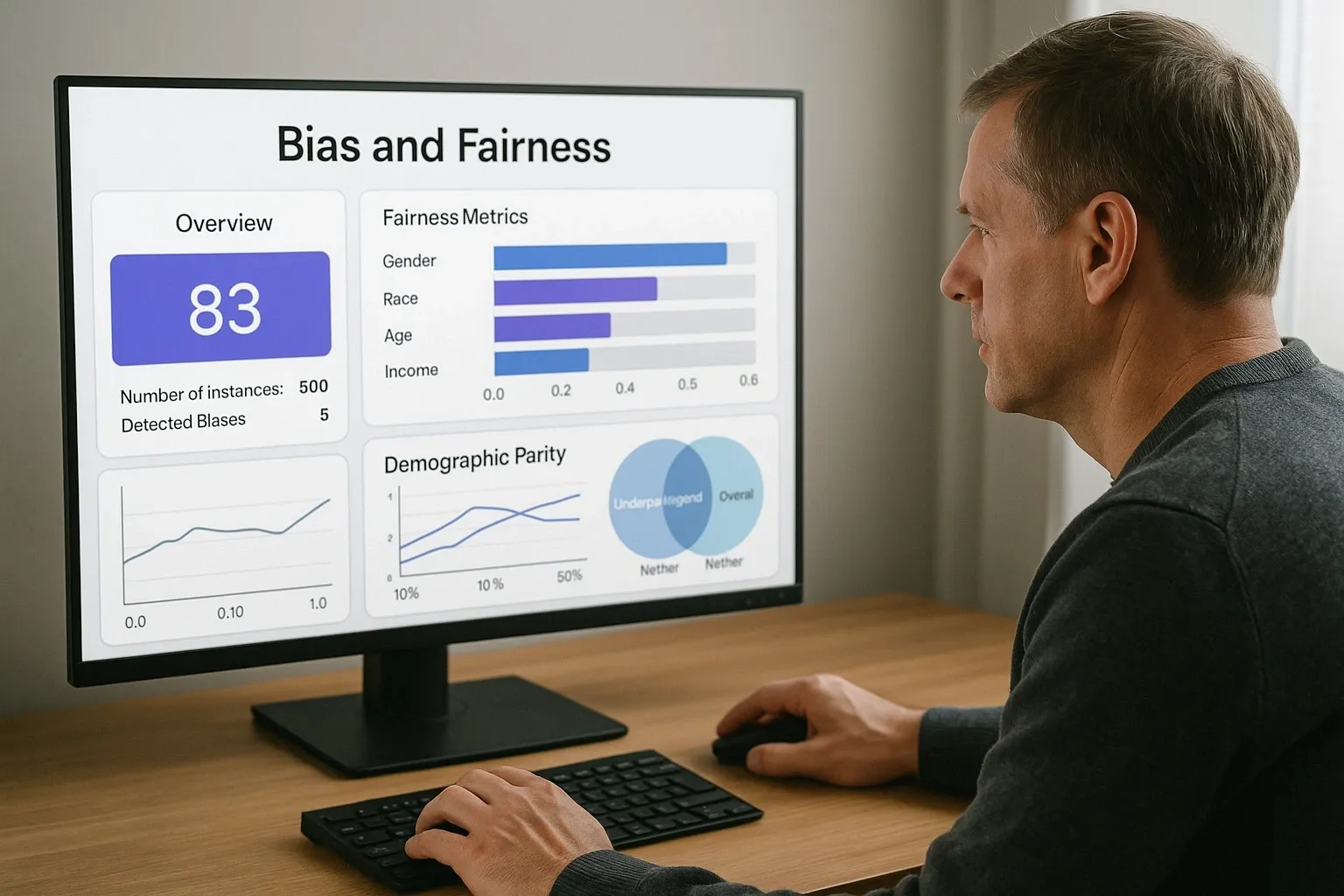
Best AI Ethics Tools to Audit Generated Content
Pymetrics Audit AI
How it works: Audit AI analyzes large datasets and generated content to detect hidden bias.
Pros:
- Built by data scientists focused on fairness
- Highlights risk areas clearly
- Widely used in HR and compliance
Cons:
- Not beginner-friendly
- Enterprise pricing only
- Pricing: Custom enterprise contracts.
AI Fairness 360 (IBM)
How it works: Open-source toolkit from IBM that checks for bias in AI models and generated text.
Pros:
- Free and open-source
- Supports multiple fairness metrics
- Strong community support
Cons:
- Requires technical expertise
- No polished UI
- Pricing: Free.
C2PA
How it works: Provides tools to verify content authenticity, ensuring generated text or images are traceable.
Pros:
- Transparency-focused
- Backed by Adobe, Microsoft, and BBC
- Helps fight misinformation
Cons:
- Still gaining adoption
- Works best with visual + text media
- Pricing: Free standards and open protocols.
Parity AI
How it works: Focuses on responsible AI deployment by auditing datasets, models, and outputs.
Pros:
- Designed for enterprises
- Easy-to-understand reports
- Good for compliance-heavy industries
Cons:
- Expensive for small teams
- Less flexible for custom workflows
- Pricing: Custom pricing.
Fairly AI
How it works: Provides AI compliance and auditing solutions with dashboards for bias, fairness, and ethical risks.
Pros:
- Real-time auditing
- Clear dashboards for managers
- Strong governance features
Cons:
Pricing: Enterprise pricing available on request.
Paid tool only
Some features require training
Benefits of Using AI Ethics Tools
1. Reduce Bias: Detect and mitigate discriminatory patterns.
2. Build Trust: Transparent content improves customer confidence.
3. Ensure Compliance: Meet governance and legal standards.
4. Improve Accuracy: Identify factual errors in outputs.
5. Support Ethical Branding: Show customers you prioritize responsible AI.
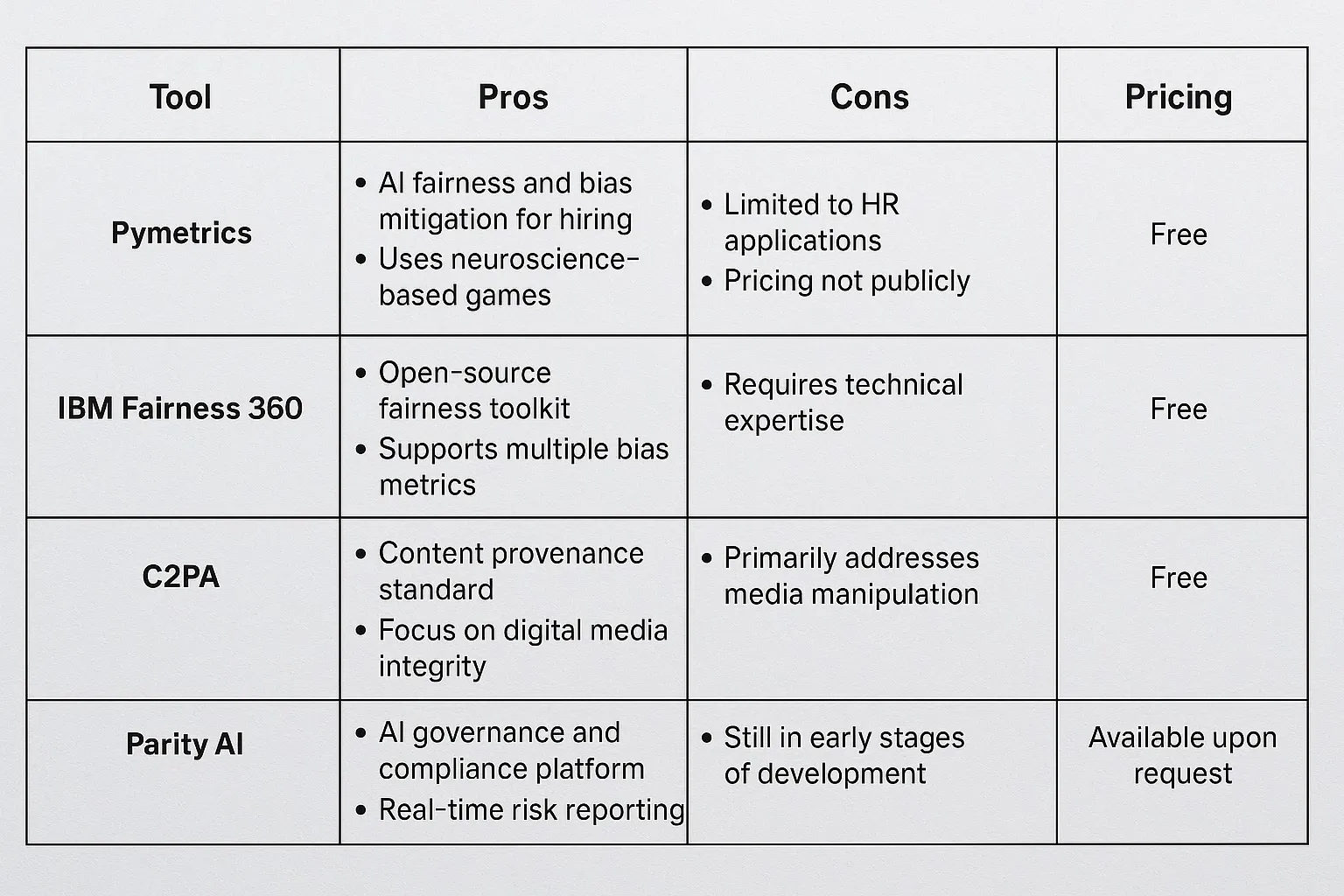
Mini Comparison: Best for Each Use Case
– Best Open-Source Option: IBM AI Fairness 360
– Best for HR and Hiring: Pymetrics Audit AI
– Best for Content Authenticity: C2PA
– Best for Compliance: Parity AI
– Best for Real-Time Auditing: Fairly AI
FAQs: AI Ethics Tools
Q: What are AI ethics tools?
A: They are platforms that audit AI-generated content to ensure fairness, transparency, and compliance with regulations.
Q: Can small businesses use AI ethics tools?
A: Yes. Free tools like IBM AI Fairness 360 are accessible, while enterprise tools offer more advanced governance.
Q: Do AI ethics tools fix bias automatically?
A: No. They detect issues and provide recommendations. Human oversight is still needed.
Q: Are AI ethics audits mandatory?
A: Not yet in all regions, but laws in the EU and U.S. are pushing toward stricter AI governance.
Bottom Line
As AI-generated content scales, so does the risk of bias and misinformation. AI ethics tools give businesses a way to audit, monitor, and correct these risks before they damage trust.
If you’re deploying AI-generated content in 2025, auditing with these tools isn’t just smart—it’s essential.