AI Tools That Help You Research Competitors Fast
Explore AI tools that help you research competitors fast by analyzing trends, content, and strategy insights in minutes. This concise guide supports smarter, data-driven decision-making for teams.


Want to know what your competitors are doing—without spending weeks digging through reports? That’s where AI competitor research tools shine.
These platforms use artificial intelligence to gather, analyze, and summarize market insights in minutes, giving you the edge to move faster and smarter.
What Is AI Competitor Research?
AI competitor research is the process of using AI-powered tools to collect and interpret data about rival businesses.
Instead of manually scanning websites, news, and reports, AI can:
– Monitor competitors’ pricing and marketing strategies
– Track ad campaigns and keyword usage
– Summarize market reports into quick insights
According to Gartner, 65% of marketing leaders plan to boost AI investment for competitive intelligence by 2025.
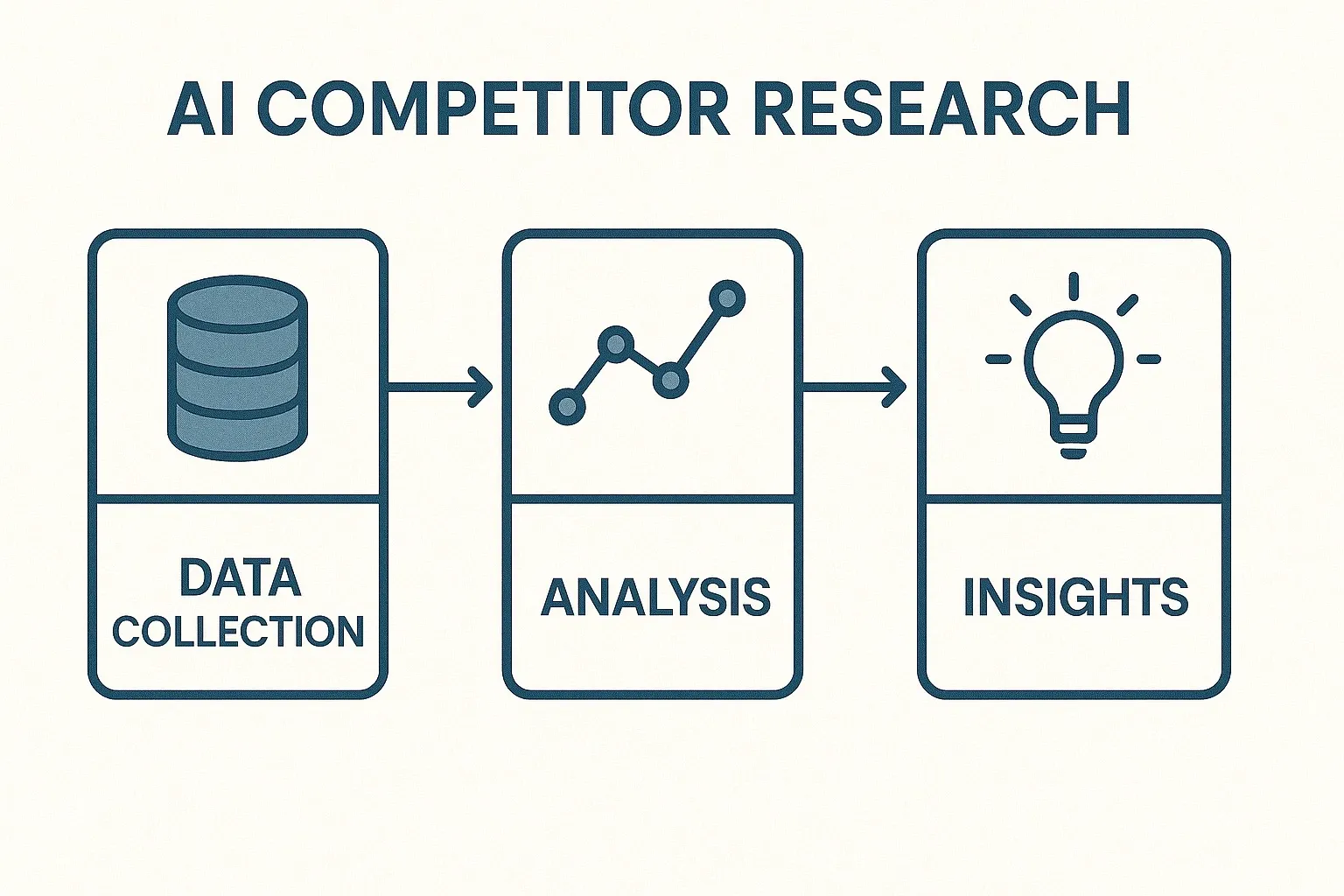
Best AI Tools for Competitor Research
SimilarWeb
How it works: SimilarWeb uses AI to analyze website traffic, audience demographics, and traffic sources.
Best AI Tools for Competitor Research
SimilarWeb
How it works: SimilarWeb uses AI to analyze website traffic, audience demographics, and traffic sources.
Pros:
- Detailed traffic breakdowns
- Competitor benchmarks
- Good for digital marketing insights
Cons:
- Expensive for small businesses
- Data sometimes lags behind real-time
Free vs Paid: Free version shows basic metrics. Pro plan starts around $167/month.
Crayon
How it works: Crayon is an AI-powered competitive intelligence tool that tracks competitors’ digital footprints—from website updates to marketing campaigns.
Pros:
- Strong at real-time alerts
- Custom dashboards
- Covers wide range of channels
Cons:
- More suited for large enterprises
- Pricing not transparent
Free vs Paid: No free version; enterprise pricing available upon request.
SEMrush
How it works: SEMrush uses AI to analyze SEO, paid ads, and content strategies of competitors.
Pros:
- Excellent keyword and backlink analysis
- Ad tracking across platforms
- Strong content insights
Cons:
- Can feel overwhelming for beginners
- Some features locked behind higher tiers
Free vs Paid: Free limited version; Pro plan starts at $129/month.
Kompyte
How it works: Kompyte automates competitor monitoring by tracking pricing, product launches, and customer reviews.
Pros:
- Automates tedious research
- Great for product teams
- Real-time competitive alerts
Cons:
- Limited free resources
- Tailored more for B2B companies
Free vs Paid: No free plan; custom pricing based on company size.
Owler
How it works: Owler provides company profiles, funding news, and competitor comparisons powered by AI.
Pros:
- Simple and user-friendly
- Alerts for funding and acquisitions
- Affordable for small businesses
Cons:
- Less detail on digital marketing
- Data sometimes lacks depth
Free vs Paid: Free plan available; Pro starts at $99/year.
Step-by-Step: How to Use AI Competitor Research
1. Pick your goal (SEO, ads, product, market entry).
2. Choose an AI tool aligned with that goal.
3. Collect competitor data (traffic, ads, customer reviews).
4. Analyze AI-generated insights (weaknesses, opportunities).
5. Apply findings to your strategy quickly.
Example: Using SEMrush, you can spot a competitor’s high-ranking keywords and target gaps in your own content plan.
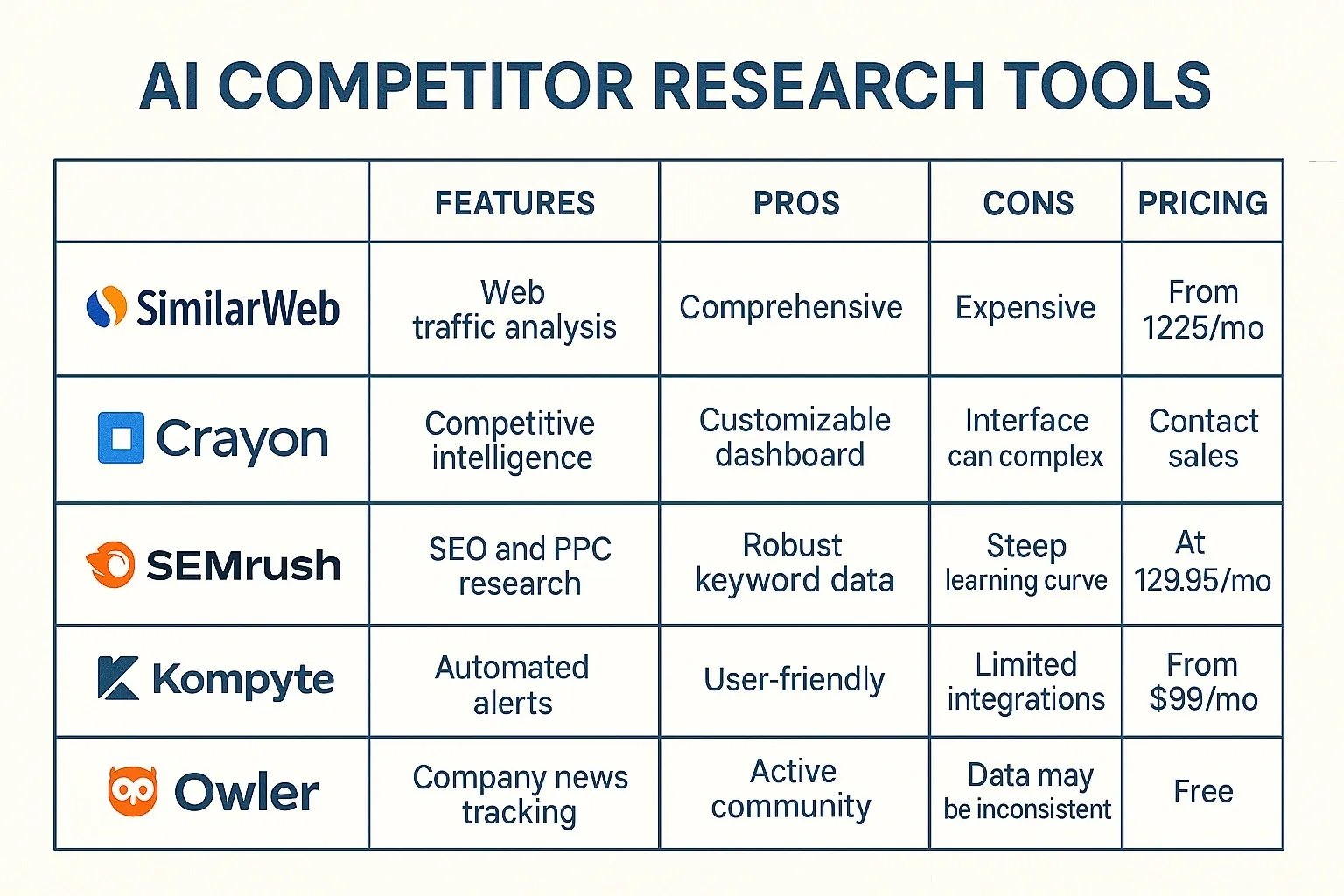
Mini Comparison: Best for Each Need
– Best for Website Traffic: SimilarWeb
– Best for Real-Time Alerts: Crayon
– Best for SEO & Ads: SEMrush
– Best for Product Teams: Kompyte
– Best Budget-Friendly: Owler
FAQs: AI Competitor Research
Q: What is the best AI competitor research tool for small businesses?
A: Owler is cost-effective, while SimilarWeb free offers basic traffic insights.
Q: Can AI competitor research tools track ads?
A: Yes. Tools like SEMrush and Crayon track competitor ad campaigns across multiple platforms.
Q: Are AI competitor research tools accurate?
A: They provide reliable benchmarks but may not always reflect real-time changes. Cross-checking data is recommended.
Q: Do I need multiple tools?
A: Often yes—SEO tools like SEMrush plus traffic tools like SimilarWeb give a more complete picture.
Bottom Line
AI competitor research saves weeks of manual work, giving businesses a faster way to spot opportunities and threats.
Whether you’re a startup on a budget or a large enterprise needing deep insights, there’s an AI tool that fits your needs.
The real power lies in using these insights quickly—before your competitors do.