AI and Self-Driving Cars in USA: Will India Catch Up?
This analysis of AI and self-driving cars in USA explores how America’s rapid advances compare with India’s evolving ecosystem—revealing the technological, regulatory, and infrastructure gaps that will shape who leads the autonomous future.

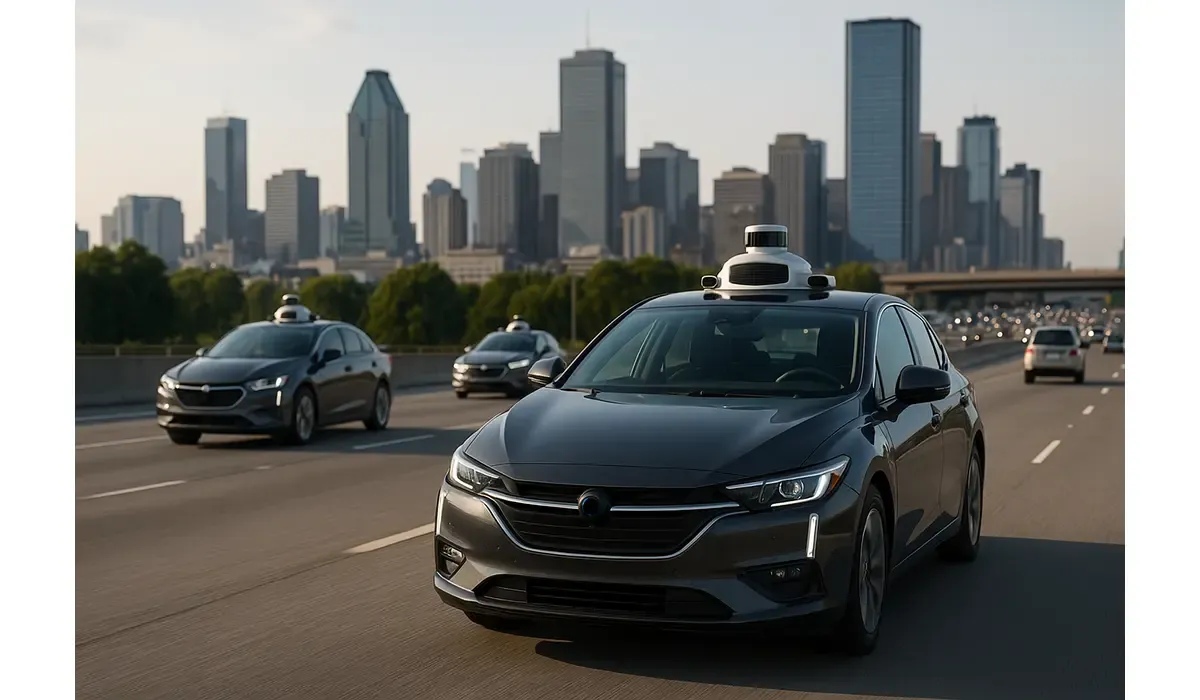
The AI and self-driving cars in USA have already transformed highways into testbeds of the future. From San Francisco to Phoenix, autonomous vehicles glide across roads with near-human intelligence. But as the U.S. races ahead, an inevitable question emerges — can India catch up?
The answer is layered, shaped by technology, regulation, infrastructure, and readiness. This article dives deep into the journey of AI-powered vehicles, comparing the rapid American progress with India’s potential and challenges.
Key Takeaways
- The U.S. leads global innovation in autonomous driving through AI-first companies like Waymo and Tesla.
- India is experimenting with driver-assist systems but lacks the infrastructure and policy support for full autonomy.
- A hybrid future — combining AI assistance with human drivers — is India’s most realistic short-term path.

$750 Cash App Gift Card
Not everyone qualifies for this $750 Cash App gift card. Checking only takes a moment. You can check if you’re eligible.
What Is AI and How Does It Power Self-Driving Cars?
Artificial Intelligence (AI) enables machines to learn, perceive, and make decisions — abilities once exclusive to humans. In self-driving cars, AI serves as the brain that continuously processes inputs from cameras, radars, and LiDAR sensors.
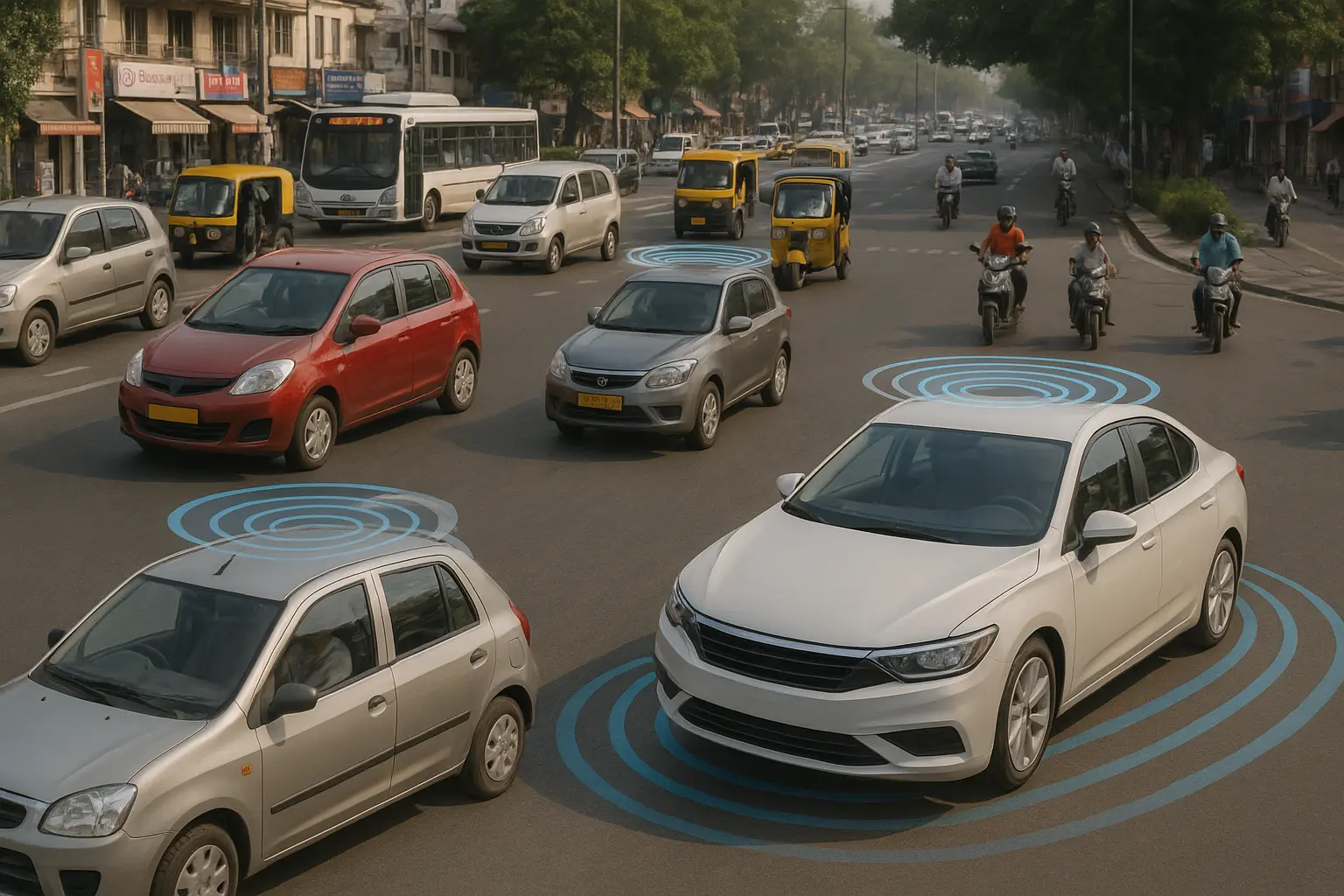
The AI Ecosystem Inside a Car
- Perception Layer: Detects lanes, pedestrians, and vehicles.
- Prediction Layer: Anticipates the movement of surrounding objects.
- Planning Layer: Decides when to brake, accelerate, or change lanes.
- Control Layer: Executes driving commands precisely.
In the U.S., tech giants and startups have integrated AI with machine learning (ML) models trained on billions of miles of data. This depth of data gives the American ecosystem a crucial head start.
Why It Matters: The Global Race for Autonomy
AI-driven mobility is not just a futuristic dream — it’s a trillion-dollar industry reshaping economies and safety standards.
Economic Potential
The autonomous vehicle (AV) market is projected to exceed $900 billion by 2035, with the U.S. commanding over 30 %. This growth links directly to advances in AI chips, edge computing, and smart city integration.
Social Impact
- Fewer Accidents: 94 % of road crashes result from human error — AI can dramatically reduce this.
- Inclusivity: Self-driving taxis can aid seniors and disabled commuters.
- Energy Efficiency: AI optimizes routes, reducing idle time and emissions.
For India, where traffic congestion costs billions annually, AI-based mobility could transform urban living — if adopted smartly.
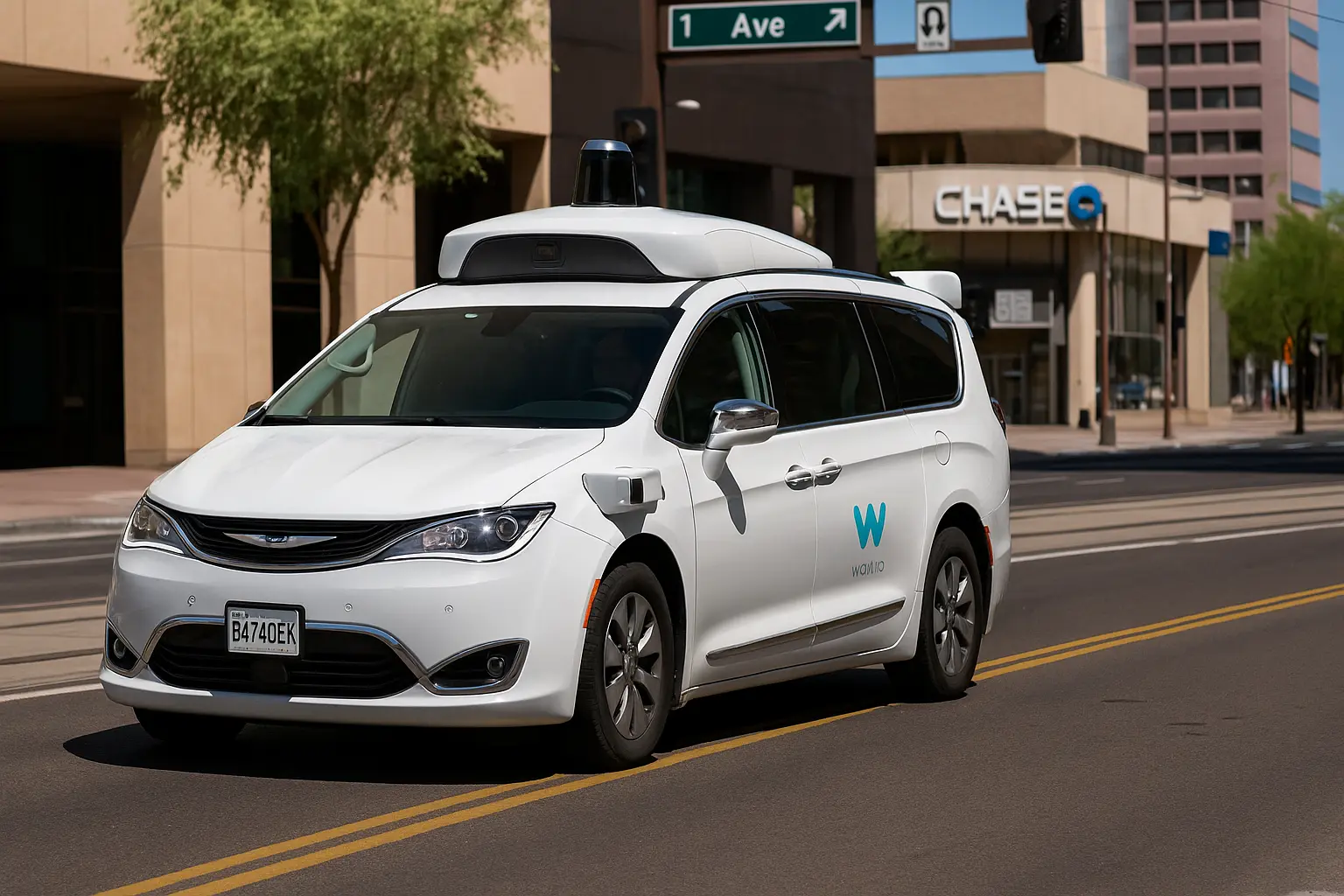
How the USA Became the Epicenter of AI-Driven Mobility
1. Innovation Infrastructure
U.S. companies like Waymo (Alphabet), Cruise (GM), Tesla, and Aurora have spent years refining AI algorithms using vast simulation data. The country’s access to high-precision maps and dedicated test zones accelerates progress.
2. Supportive Policy Environment
American states such as California, Arizona, and Texas allow extensive AV testing. Federal frameworks emphasize safety evaluation, not prohibition — encouraging innovation within clear boundaries.
3. Capital & Collaboration
Billions in venture funding and strategic alliances with automakers, chipmakers (NVIDIA, Intel Mobileye), and cloud providers (AWS, Google Cloud) have fueled large-scale experiments.
4. Public Readiness
Consumer trust is growing. Over 60 % of Americans believe driverless cars will become mainstream within two decades, according to a 2025 Pew Survey.
Can India Catch Up with AI and Self-Driving Cars in USA?
This question captures the core debate. While the United States refines fully autonomous vehicles (Levels 4–5), India remains focused on driver-assist technologies (Levels 1–2).
1. The Infrastructure Gap
India’s road design, lane discipline, and unpredictable traffic patterns pose immense challenges to current AI models trained in structured environments.
2. Cost and Localization
Advanced sensors like LiDAR and radar remain costly. Local startups such as Minus Zero AI and Flux Auto are developing camera-only vision systems optimized for Indian roads, but progress is gradual.
3. Regulation and Liability
India lacks a clear autonomous vehicle policy. Questions around accident liability, insurance, and ethical decision-making remain unresolved.
4. Data and Connectivity
AI requires high-quality, annotated driving data. While India’s 5G rollout offers promise, real-time connectivity across rural highways is still inconsistent.
5. Cultural Factor
Driving behavior in India is human-adaptive and context-driven — a challenge for algorithms designed for rule-based environments.
The Hybrid Path: India’s Practical Route to Autonomy
Instead of a leap to full driverless systems, India may evolve through AI-assisted mobility:
1. Advanced Driver-Assistance Systems (ADAS)
Features like lane departure warning, adaptive cruise control, and emergency braking are already available in vehicles by Tata, Mahindra, and Hyundai.
2. Smart Infrastructure Integration
Smart traffic lights, AI-enabled cameras, and real-time monitoring can prepare cities for semi-autonomous mobility.
3. Shared Autonomous Fleets
AI can power driver-supervised delivery robots, e-rickshaws, or shuttle pods in gated zones or smart campuses — an achievable middle path.
4. Policy Sandboxes
The Indian government could create controlled testing zones — similar to California’s AV testing permits — to accelerate innovation without nationwide risk.
What Will It Take for India to Compete?
1. Investment in AI R&D
India’s AI Mission 2025 aims to boost national AI innovation. However, AV-specific research must be prioritized — from sensor fusion to ethical AI decision frameworks.
2. Public-Private Partnerships
Collaboration between academia (IITs, IIITs), startups, and automakers is essential. Shared data frameworks can lower entry barriers.
3. Localization of Hardware
Domestic manufacturing of sensors, chips, and cameras can reduce dependency on imports.
4. Skill Development
Engineers trained in robotics, ML, and automotive systems will drive the next phase. Upskilling programs by NASSCOM and Skill India are positive steps.
5. Legal and Ethical Readiness
AI’s decision-making in life-and-death situations raises moral concerns. India must codify liability and privacy frameworks early.
Common Myths About AI and Self-Driving Cars
| Myth | Reality |
|---|---|
| AI cars never make mistakes. | They reduce, not eliminate, risk; edge cases still challenge AI. |
| Self-driving tech is only for luxury cars. | AI features are scaling to mid-range vehicles rapidly. |
| India’s roads make autonomy impossible. | Difficult, but not impossible; localized AI models can adapt. |
| Jobs will vanish. | AI shifts roles — from drivers to fleet supervisors and data analysts. |
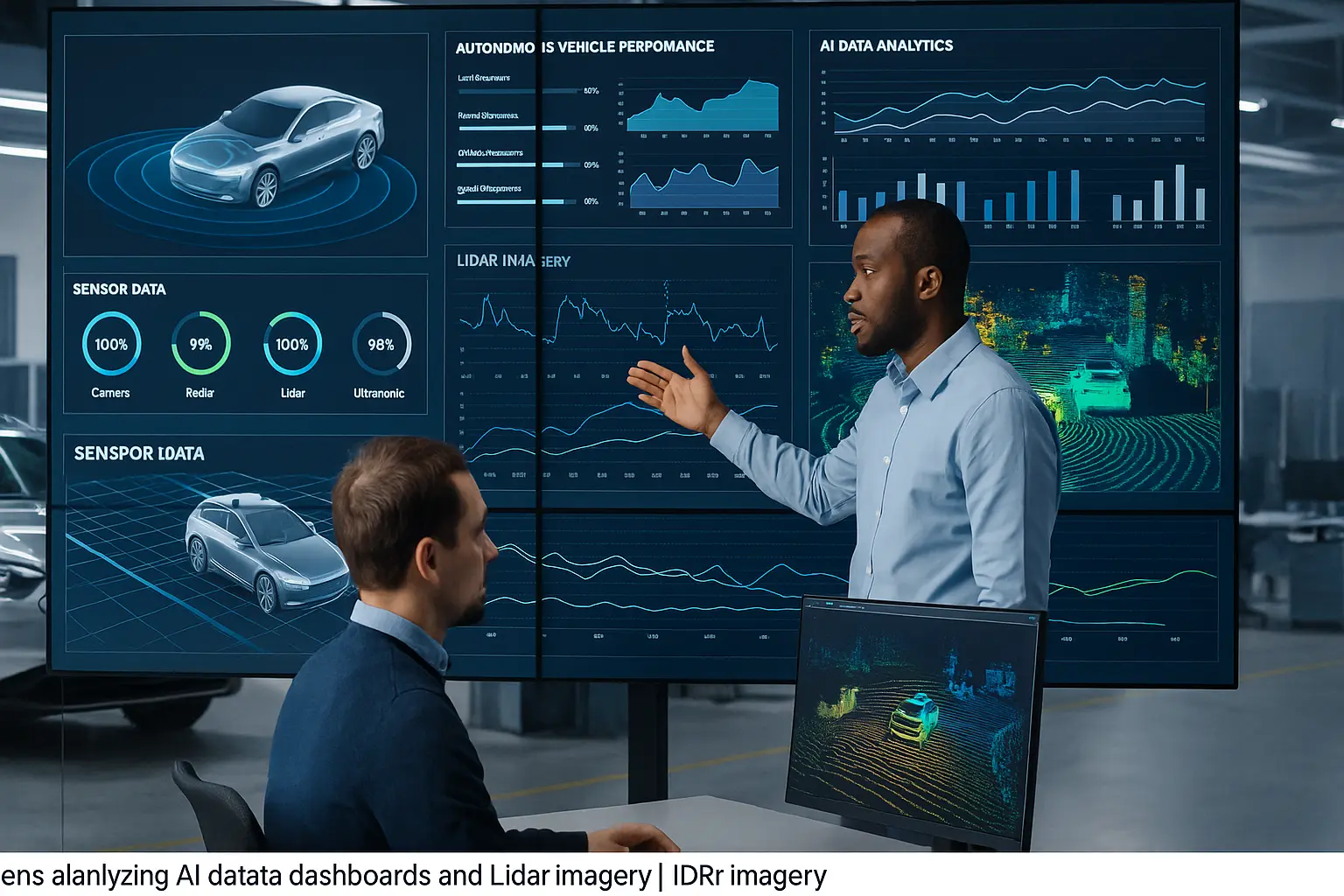
Expert Views & Case Studies
Waymo’s U.S. Success
Waymo’s robotaxi service in Phoenix surpassed one million driverless rides by 2025, demonstrating real-world safety.
Tesla’s Incremental Autonomy
Tesla’s “Full Self-Driving Beta” relies on vision-based neural networks. Its iterative learning model is influencing Indian researchers exploring cost-effective camera-only solutions.
Indian Innovation Stories
- Minus Zero (Bengaluru): Building AI that mimics human reflexes for chaotic traffic.
- Flux Auto: Retrofits trucks with autonomous kits for controlled highway environments.
- Swaayatt Robotics: Developing perception algorithms for unstructured roads.
Experts agree India’s pathway will differ — prioritizing assisted intelligence before full autonomy.
How AI Is Transforming Driving Beyond Autonomy
Even before full driverless cars arrive, AI is reshaping global mobility:
- Predictive Maintenance: Sensors forecast vehicle failures.
- Smart Insurance: AI adjusts premiums based on driving behavior.
- Fleet Optimization: Logistics firms cut idle miles through route learning.
- Eco-Driving: AI balances performance with fuel efficiency.
These innovations bridge today’s reality with tomorrow’s autonomy.

$750 Amazon Gift Card
A $750 Amazon gift card may be available to select users. Checking eligibility is quick. You can check if you’re one of them.
FAQs
Q1. How advanced are AI and self-driving cars in USA?
The U.S. leads globally, with companies like Waymo, Tesla, and Cruise running pilot fleets in several states. Level-4 autonomy (no human intervention) is already operational in limited zones.
Q2. Can India develop autonomous vehicles without U.S.-level infrastructure?
Yes, through localized AI and hybrid systems combining automation with human oversight, particularly in controlled environments like logistics hubs or campuses.
Q3. When will fully autonomous cars hit Indian roads?
Experts predict beyond 2035, once regulations, mapping, and connectivity improve.
Q4. What’s the main challenge India faces compared to the USA?
Data quality and inconsistent road discipline — AI models trained abroad struggle to adapt to India’s complex traffic behavior.
Q5. Are AI-driven vehicles safe?
Statistically, they can be safer than human drivers, but until systems reach near-zero failure tolerance, human supervision remains vital.
Key Takeaways
- The AI and self-driving cars in USA ecosystem demonstrates what’s achievable with data, infrastructure, and policy synergy.
- India’s route will be distinct — focusing on AI-assisted driving before full autonomy.
- Investments in AI R&D, local manufacturing, and data infrastructure are essential.
- Regulation and ethics must evolve alongside technology.
- The future of Indian mobility lies in collaboration, not competition — leveraging AI for safer, smarter roads.
Conclusion
The AI and self-driving cars in USA story is a masterclass in vision meeting velocity. India, though late to the race, holds a different kind of potential — one rooted in adaptation, affordability, and contextual AI.
If the nation blends innovation with realism, its next decade could witness a mobility revolution led not by imitation but by reinvention.