The Gentle Power of A Knight of the Seven Kingdoms After the Fire of House of the Dragon

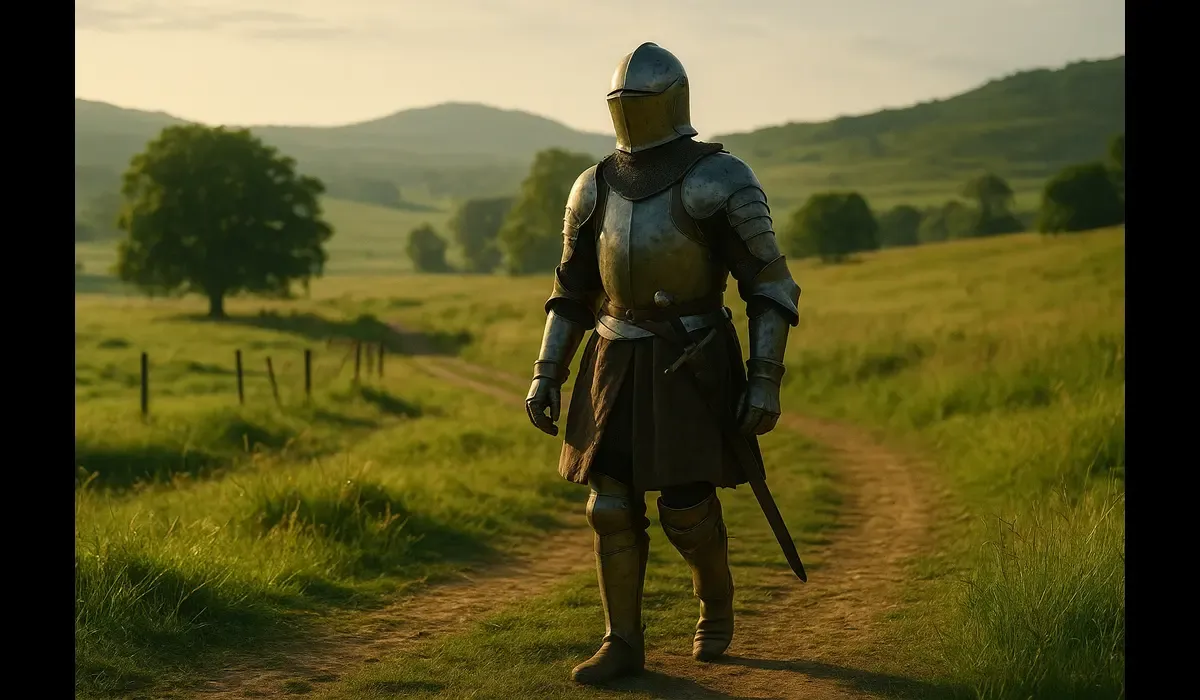
A Knight of the Seven Kingdoms is HBO’s latest chapter in the evolving world of Westeros, following the massive success of Game of Thrones and House of the Dragon. The series returns to George R.R. Martin’s universe, offering a grounded, character-driven story that stands in sharp contrast to the fiery, high-stakes drama of its predecessor. Where House of the Dragon thrived on political tension and dragon-fueled warfare, A Knight of the Seven Kingdoms focuses on honor, humanity, and the fragile morality of a simpler age.
Both series share DNA in their Targaryen lineage, but they differ in scale, scope, and storytelling intent. This contrast not only defines their individual artistic merit but also reveals HBO’s broader strategy in extending the Westeros saga beyond the Iron Throne.
- A Knight of the Seven Kingdoms emphasizes humility, personal growth, and moral integrity over political spectacle.
- House of the Dragon remains a monumental tale of power, conflict, and dynastic downfall.
- Both coexist within the same timeline of Westeros but deliver entirely different experiences.
- The evolution from dragons to knighthood marks a thematic shift from fire to flesh — from power to principle.
A Knight of the Seven Kingdoms: Foundation and Vision
A Knight of the Seven Kingdoms originates from George R.R. Martin’s novellas known as The Tales of Dunk and Egg. Set nearly a century before Game of Thrones, the story chronicles the adventures of Ser Duncan the Tall (Dunk) and his young squire, Aegon “Egg” Targaryen, long before the fall of House Targaryen. The series represents a narrative bridge between the dragon-fueled chaos of House of the Dragon and the political disintegration seen in Game of Thrones.
Unlike its predecessors, A Knight of the Seven Kingdoms avoids sprawling political subplots. Instead, it focuses on the relationship between Dunk and Egg — a wandering knight and his royal companion disguised as a commoner. Through their travels across Westeros, the story highlights the complexities of chivalry, loyalty, and justice in an age where honor often yields to corruption.
HBO’s adaptation embraces a smaller scale, focusing on local stories, intimate dialogues, and human-centered storytelling. The production team has intentionally reduced CGI and spectacle, opting instead for realism and emotional authenticity. This strategic choice aligns with evolving viewer preferences for grounded fantasy that emphasizes character over chaos.
House of the Dragon: The Grand Spectacle
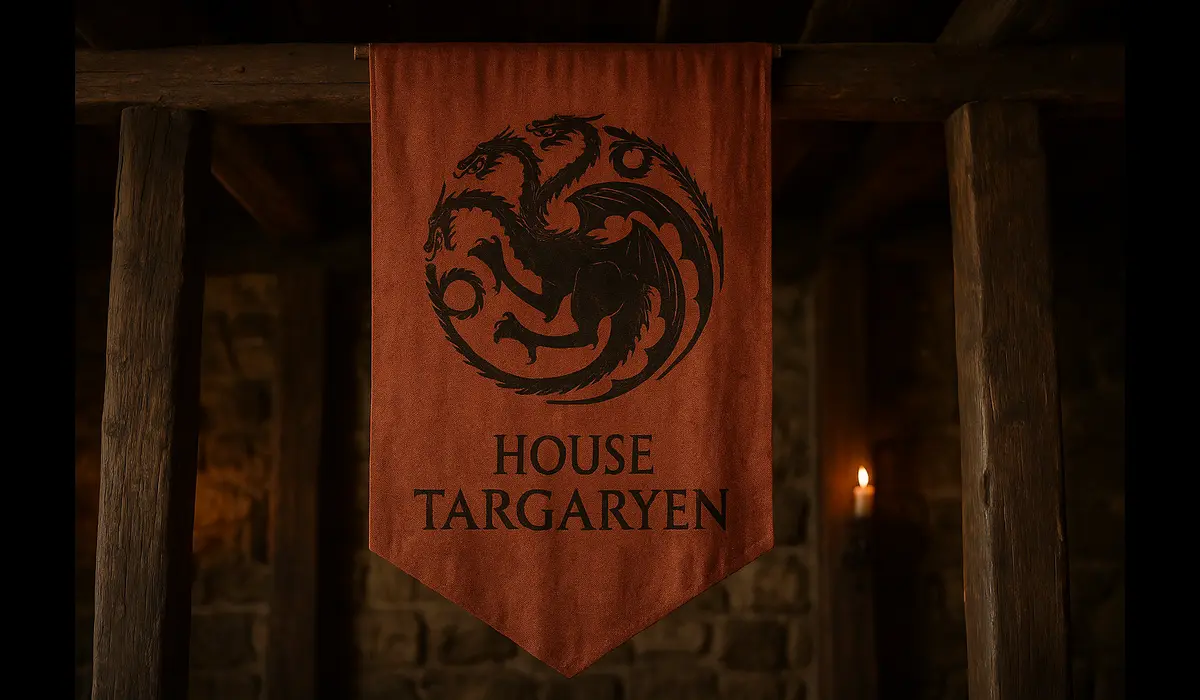
House of the Dragon, set nearly 200 years before Game of Thrones, portrays the peak and decline of Targaryen dominance. Centered on the infamous Dance of the Dragons — a civil war that tore House Targaryen apart — the series captures the intensity of ambition, betrayal, and bloodline obsession.
Its visual tone is marked by grandeur — castles in flames, dragons soaring above burning kingdoms, and moral decay hidden beneath crowns. It serves as both a spectacle of destruction and a mirror reflecting humanity’s endless hunger for power.
While A Knight of the Seven Kingdoms thrives on humility, House of the Dragon operates through arrogance, legacy, and downfall. Together, they form an emotional continuum of the same world — one that evolves from conquest to introspection.
Narrative Scope and Thematic Differences
The contrast between the two series defines their narrative identity.
| Aspect | A Knight of the Seven Kingdoms | House of the Dragon |
|---|---|---|
| Timeline | ~90 years before Game of Thrones | ~200 years before Game of Thrones |
| Tone | Grounded, humane, introspective | Epic, political, violent |
| Focus | Personal journey, moral dilemmas | Dynastic war, power struggles |
| Scale | Local and contained | Expansive and global |
| Fantasy Elements | Minimal magic, no dragons | Dragons, prophecies, sorcery |
| Themes | Honor, loyalty, virtue | Power, greed, legacy |
| Visual Style | Naturalistic | High fantasy grandeur |
| Target Audience | Character-driven drama enthusiasts | Fans of spectacle and political thrillers |
This duality enriches the Westeros universe. A Knight of the Seven Kingdoms provides balance — a pause between wars and crowns — showing that even in silence, the realm breathes.
Tone and Aesthetic Construction
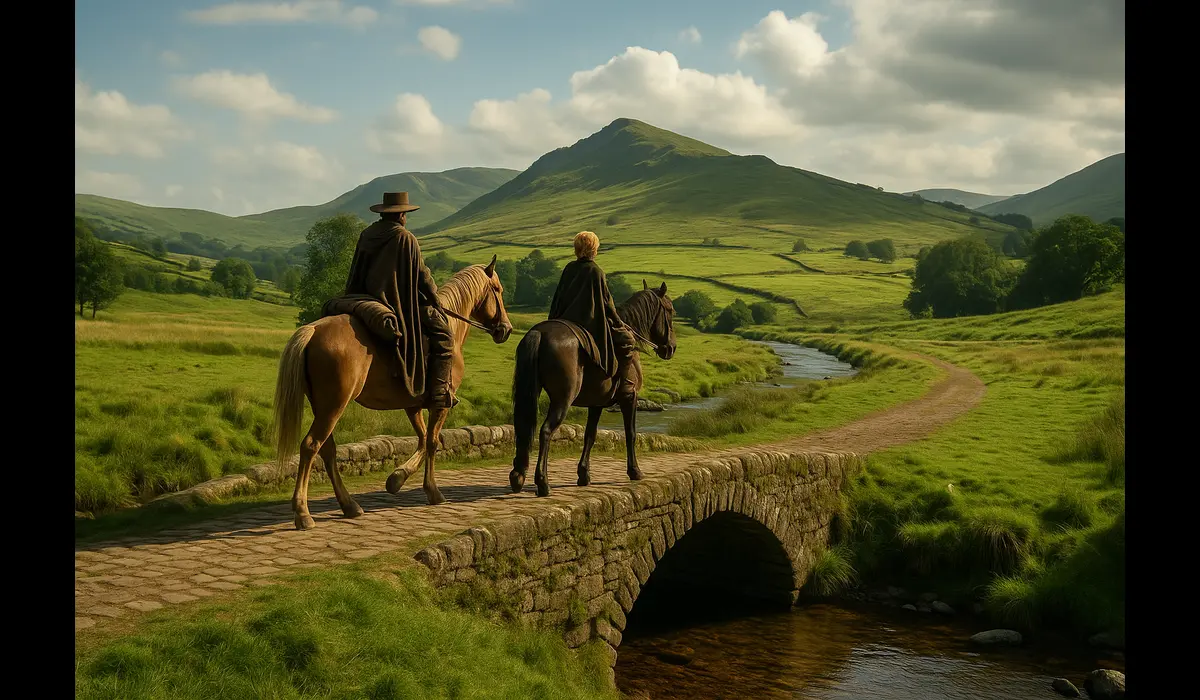
A Knight of the Seven Kingdoms employs a modest color palette dominated by earth tones, village life, and rustic landscapes. Cinematography captures the realism of travel, weathered armor, and countryside hardship. The aesthetic serves to ground viewers in the everyday lives of Westerosi citizens — farmers, innkeepers, hedge knights — individuals rarely spotlighted in the previous series.
House of the Dragon, in contrast, dazzles with the opulence of royal halls, dragon lairs, and citadel chambers. Its visuals amplify ambition and corruption. Every frame reflects excess — gold, crimson, and fire, symbols of the decaying Targaryen empire.
The deliberate artistic divergence underlines HBO’s dual strategy: spectacle for mass audiences, sincerity for loyalists who crave the lore beyond dragons.
Character Focus and Emotional Arc
In A Knight of the Seven Kingdoms, Ser Duncan the Tall personifies the virtue of knighthood — flawed yet noble, strong yet empathetic. His journey from a hedge knight to a figure of moral strength parallels the spiritual growth of the realm itself. Aegon, his squire, offers a counterbalance — royal by blood, naive in judgment, but destined for greatness as Aegon V Targaryen.
Their dynamic presents a story of mentorship, innocence, and unspoken destiny. Unlike the manipulation and betrayal of House of the Dragon, this series relies on the subtle emotional interplay between teacher and pupil.
House of the Dragon’s characters — Rhaenyra, Daemon, Alicent — embody political archetypes. Their emotions are shaped by ambition, betrayal, and vengeance. Every decision is transactional; every gesture a move in a power game.
Where A Knight of the Seven Kingdoms humanizes the realm, House of the Dragon dramatizes it.
Cultural and Historical Continuity
The world of Westeros functions as a historical continuum. Each series contributes to its evolving mythology:
- House of the Dragon showcases the decline of dragons and the beginning of Targaryen vulnerability.
- A Knight of the Seven Kingdoms reflects the aftermath of that decline — a kingdom adjusting to life without magic or divine power.
- Game of Thrones completes the arc by revealing the ultimate collapse of moral order.
This timeline illustrates how power, once concentrated in dragons, gradually returns to men — flawed, ambitious, and mortal. A Knight of the Seven Kingdoms therefore becomes essential to understanding the moral rehabilitation of Westeros, serving as both bridge and balm between two chaotic eras.
Production Strategy and Storytelling Structure
A Knight of the Seven Kingdoms is built on six tightly written episodes per season. Each episode follows a complete narrative arc, emphasizing internal growth over external conflict. This design ensures accessibility, making it possible for both casual viewers and lore followers to engage equally.
House of the Dragon functions as a serialized political chronicle — sprawling arcs, generational storytelling, and episodic intensity. The contrast between limited-series focus and multi-season grandeur defines HBO’s dual-genre mastery.
From a production standpoint:
- Budget: AKotSK operates at a fraction of HotD’s cost.
- Set Design: Realistic medieval locales replace CGI-heavy sequences.
- Tone: Dialogue-driven, morally grounded, slower-paced.
This shift also aligns with sustainable franchise economics — smaller shows, higher narrative quality, reduced visual fatigue.
Moral Philosophy and Thematic Depth
At its core, A Knight of the Seven Kingdoms redefines heroism. It asks — through action, not dialogue — what it means to be noble in a corrupt world. Dunk’s humility and Egg’s curiosity form a moral compass that points toward decency over dominance.
House of the Dragon, however, is driven by legacy — the curse of inheritance. Its world is devoid of innocence, replaced by ambition that devours itself.
Together, the two narratives reveal the dual nature of power: one that destroys through might and another that redeems through morality.
Viewer Appeal and Audience Segmentation
A Knight of the Seven Kingdoms appeals to those seeking character intimacy, human emotion, and ethical depth. It invites reflection rather than shock. The absence of dragons is intentional — it forces attention on dialogue, gesture, and decision.
House of the Dragon, in contrast, caters to viewers drawn to cinematic intensity — dragons, fire, and political betrayal. The two shows complement each other, forming a balanced franchise ecosystem that satisfies both thrill-seekers and purists.
Cinematic Craft and Directorial Vision
Under the creative leadership of Ira Parker and George R.R. Martin, A Knight of the Seven Kingdoms adopts a grounded visual approach. Every frame is rooted in realism: unpolished armor, unglamorous faces, and authentic medieval grit. The production team aims to recreate Westeros as a living, breathing society rather than a mythical empire.
House of the Dragon, under Ryan Condal and Miguel Sapochnik, thrives on controlled chaos. Its framing emphasizes power hierarchies, architectural symmetry, and dragon symbolism. The show remains a visual thesis on human excess.
The contrast between these two directorial philosophies ensures diversity in the franchise’s visual language.
Audience Reception and Franchise Evolution
While House of the Dragon captured critical acclaim for its performances and world-building, some viewers noted fatigue from its heavy tone. A Knight of the Seven Kingdoms, by comparison, represents a tonal reset — a renewal of emotional clarity within the same universe.
This shift signals HBO’s strategic understanding: longevity lies not in repetition, but reinvention. By alternating scale and intimacy, the network preserves both spectacle and sincerity.
The franchise thus matures — not by chasing dragons, but by chasing meaning.
Future Potential and Spin-off Expansion
The success of A Knight of the Seven Kingdoms could pave the way for multiple anthology-style seasons, each adapting one of Martin’s Dunk and Egg stories. The smaller scope allows for consistent production cycles, character continuity, and high narrative precision.
This model could redefine fantasy television economics, proving that storytelling quality outweighs special effects. It also reaffirms HBO’s mastery in universe-building — where every show, whether grand or humble, feeds the same mythic bloodstream.
Key Takeaways
- A Knight of the Seven Kingdoms emphasizes moral storytelling, human growth, and realism over spectacle.
- The show bridges the thematic gap between House of the Dragon and Game of Thrones.
- Its limited scale and smaller budget allow sharper writing and sustainable production.
- The absence of dragons re-centers the audience’s focus on values, character, and consequence.
- House of the Dragon remains the franchise’s epic anchor, while A Knight of the Seven Kingdoms serves as its emotional heart.
- Together, they sustain the legacy of Westeros across tone, time, and theme.
- A Knight of the Seven Kingdoms proves that in a world once ruled by dragons, the truest power lies in honor.
FAQs
1. What is A Knight of the Seven Kingdoms about?
A Knight of the Seven Kingdoms follows Ser Duncan the Tall, a humble hedge knight, and his young squire Egg, who is secretly a Targaryen prince. Set nearly 90 years before Game of Thrones, the series explores chivalry, loyalty, and humanity in a Westeros recovering from the chaos of dragon wars.
2. How is A Knight of the Seven Kingdoms connected to House of the Dragon?
A Knight of the Seven Kingdoms takes place after the events of House of the Dragon. It continues the Targaryen legacy but shifts from political warfare to personal honor and moral choices, showing the aftermath of the once-mighty dragon dynasty.
3. Who are the main characters in A Knight of the Seven Kingdoms?
The series centers on Ser Duncan the Tall and his squire, Egg (Aegon Targaryen). Together, they represent contrasting worlds — nobility and common life — reflecting themes of integrity, humility, and hidden destiny within the Seven Kingdoms.
4. When will A Knight of the Seven Kingdoms release?
A Knight of the Seven Kingdoms is expected to release in 2026 on HBO and Max. The series will premiere as a six-episode season, focusing on The Hedge Knight, the first story in George R.R. Martin’s Dunk and Egg novellas.
Conclusion
A Knight of the Seven Kingdoms vs House of the Dragon represents not competition but evolution. The first reflects conscience, the second ambition. The former is quiet and humble, the latter loud and monumental. Each complements the other, ensuring that Westeros remains vast not only in geography but in storytelling soul.
As HBO continues to expand this mythology, A Knight of the Seven Kingdoms stands as the next great chapter — a return to simplicity, morality, and humanity in a world long defined by chaos and fire