9 Upcoming SpaceX Starship Tests That Could Make or Break Elon Musk’s Vision
Discover nine upcoming SpaceX Starship tests that could make or break Elon Musk’s vision for interplanetary travel. This concise, research-driven teaser highlights the breakthroughs, risks, and mission milestones engineers are watching closely.

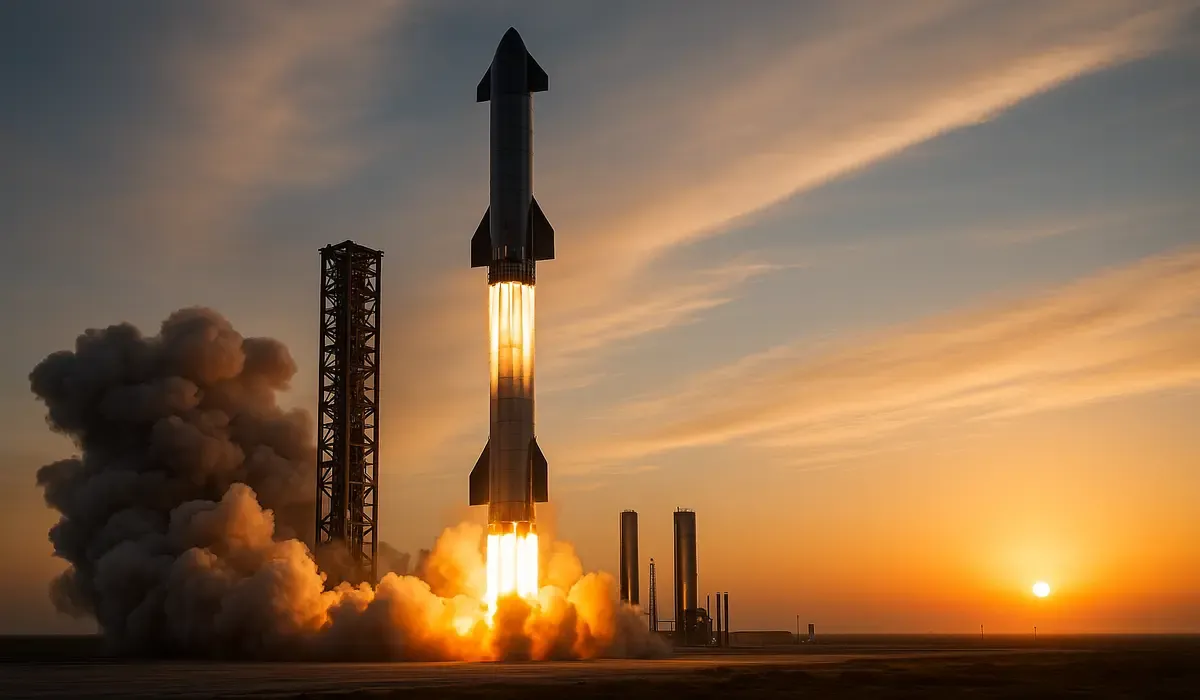
SpaceX Starship represents the next great leap in space transportation — a fully reusable rocket designed for missions to Earth orbit, the Moon, and Mars. As SpaceX prepares for a new series of test flights and operational launches, anticipation builds over the future missions planned for SpaceX Starship.
- Starship’s next phase focuses on lunar cargo and Mars demo missions.
- Reusability and refueling are central to its long-term success.
- 2026 could mark the first interplanetary launch attempt.
Latest Post
What Is SpaceX Starship?
SpaceX Starship is a two-stage, fully reusable launch system consisting of the Starship upper vehicle and the Super Heavy booster. It’s designed to carry over 150 metric tons to orbit, enabling missions that were previously cost-prohibitive.
The Super Heavy booster provides initial lift-off thrust, while Starship — the upper stage — handles orbital insertion and long-distance travel. Both stages are built for recovery and reuse, reducing launch costs and turnaround time.

$500 PayPal Gift Card$500 PayPal Gift Card
Some users qualify for a $500 PayPal gift card. You can check if you qualify.
Latest Development Update
As of late 2025, SpaceX Starship has completed multiple high-altitude and orbital test flights. Each mission refined critical systems like heat shielding, booster return, and stage separation.
The next major flight, Starship Flight 11, will validate enhanced engine performance and attempt the most precise reentry yet. SpaceX plans to start transitioning from prototype testing to early operational missions within the next year.
Future Missions of SpaceX Starship
1. Mars Demonstration Missions
The primary long-term goal of SpaceX Starship is interplanetary transport. The company plans to send uncrewed Starships to Mars in 2026 to test atmospheric entry, surface landing, and cargo delivery systems.
These early flights will carry basic payloads such as power units and life-support equipment prototypes. Their purpose is to gather real data on Martian surface operations and prepare for future crewed missions.
Key objectives include:
- Testing orbital refueling and long-duration flight endurance.
- Demonstrating Mars entry, descent, and landing.
- Delivering initial cargo for future human missions.
2. NASA Lunar Cargo and Artemis Support
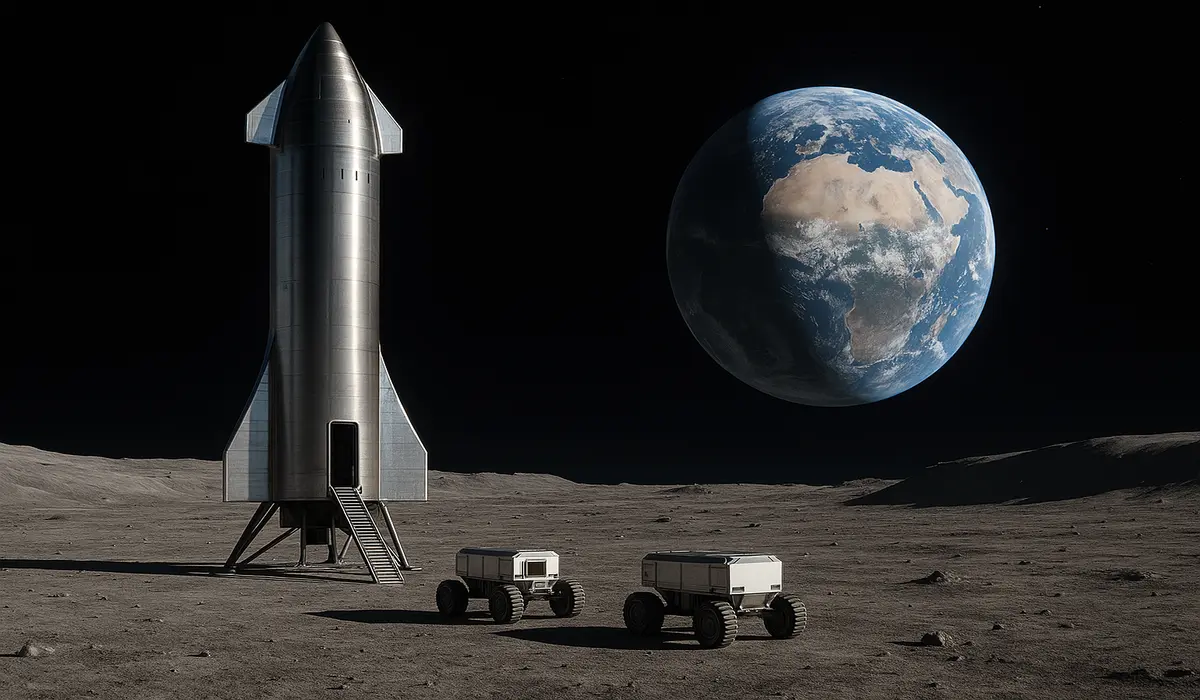
SpaceX has been selected by NASA to use SpaceX Starship as a lunar lander under the Artemis program. The vehicle will deliver heavy cargo, lunar rovers, and possibly modules for surface infrastructure.
In these missions, Starship will first reach Earth orbit, undergo refueling, and then proceed to lunar orbit before descending to the surface. This will mark Starship’s first operational deep-space mission beyond Earth’s orbit.
Expected milestones:
- Cargo delivery and lunar surface experiments.
- Testing precision landing technology.
- Validation of life-support systems for future crewed missions.
3. Satellite Deployment & Commercial Launches
A major near-term use for SpaceX Starship is mass satellite deployment, particularly for the Starlink network and commercial clients. Its large payload bay allows hundreds of satellites to be launched simultaneously.
This shift will make Starship the most cost-efficient heavy-lift vehicle available, capable of deploying large constellations for communication and defense applications.
Projected benefits:
- Reduced cost per kilogram for orbit delivery.
- High-frequency launch cadence due to reusability.
- Support for mega-constellations and scientific payloads.
4. On-Orbit Refueling and Long-Duration Testing
Before interplanetary missions, SpaceX Starship will demonstrate orbital refueling — one of its most complex and essential capabilities. Refueling will involve transferring cryogenic methane and oxygen between two Starships in low Earth orbit.
Once perfected, this system will enable missions to Mars, the Moon, and even outer planets without massive single-launch fuel loads. It also expands mission flexibility for crewed exploration and large-scale satellite deployment.
5. Crewed Mars Mission and Colonization Goals
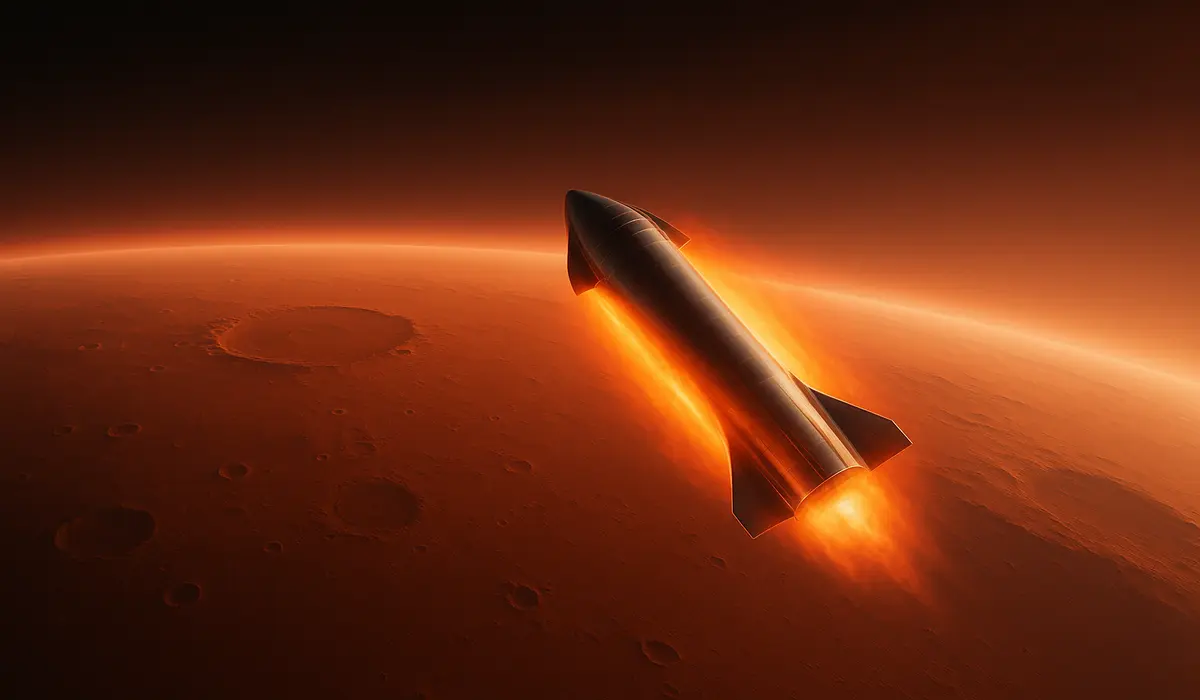
Elon Musk has stated that the ultimate purpose of SpaceX Starship is to build a self-sustaining city on Mars. While this remains a long-term goal, human flights could begin in the early 2030s, depending on test results and safety milestones.
Expected phases:
- Uncrewed cargo and infrastructure setup (2026–2030).
- First human transport missions (early 2030s).
- Permanent base development and colonization planning.
These missions will require multiple Starships to deliver habitats, power sources, and supplies.
Why It Matters
The SpaceX Starship program holds transformative potential for both space exploration and Earth’s economy.
- Lower Costs, Higher Access: Its reusability can reduce launch costs by more than 90%, enabling more nations and private companies to participate in space exploration.
- Human Expansion Beyond Earth: With Starship’s payload capacity, missions to Mars or lunar settlements become technically achievable.
- Commercial and Strategic Advantage: The same technology can be used for satellite deployment, defense systems, and asteroid missions.
- Sustainability in Space: Reusable rockets mean fewer spent stages left in orbit or falling back to Earth.
Comparison: SpaceX Starship vs Other Heavy-Lift Rockets
| Rocket System | Payload to LEO | Reusability | Cost Efficiency | Stage Return |
|---|---|---|---|---|
| SpaceX Starship | 150+ tons | Full | High | Both stages |
| NASA SLS | 95 tons | None | Low | Disposable |
| Blue Origin New Glenn | 45 tons | Partial | Moderate | First stage only |
| Falcon Heavy | 64 tons | Partial | High | Booster reuse only |
Starship clearly leads in capacity and cost efficiency due to its fully reusable design and rapid reflight capability.
Expert Perspective
Aerospace analysts note that SpaceX Starship could redefine space infrastructure. By combining payload scale and reuse, it may lower costs for space stations, telescopes, or even deep-space mining operations.
Industry experts also suggest that its success will influence future national space programs, encouraging faster innovation and international collaboration.
Practical Takeaways
- Track Starship Flight 11: It will set the foundation for orbital refueling and reusable heat shield testing.
- Watch Artemis Updates: Starship’s lunar missions will be pivotal for NASA’s long-term Moon strategy.
- Expect Rapid Development: SpaceX is iterating hardware faster than traditional aerospace timelines.
- Follow Commercial Launches: Large-scale Starlink and private payloads will demonstrate Starship’s real-world use.

$750 Cash App Gift Card$750 Cash App Gift Card
Some users qualify for a $750 Cash App gift card. You can check if you qualify.
FAQs
Q1. What is the main goal of SpaceX Starship?
To develop a fully reusable spacecraft capable of transporting humans and cargo to Mars, the Moon, and beyond.
Q2. When will SpaceX Starship go to Mars?
Uncrewed demonstration missions are expected around 2026, with human flights planned for the 2030s.
Q3. How big is the SpaceX Starship rocket?
Combined height of the Starship and Super Heavy booster is about 120 meters, making it the tallest and most powerful rocket ever built.
Q4. Will SpaceX Starship be reusable?
Yes. Both the booster and the upper stage are designed for full recovery and rapid reuse.
Key Takeaways
- SpaceX Starship is central to future lunar and Mars exploration.
- Orbital refueling and full reuse will revolutionize launch economics.
- Next missions in 2026 will mark the beginning of real interplanetary testing.
Conclusion
The future missions of SpaceX Starship define the next frontier of space travel — from Earth orbit to the Moon and ultimately to Mars. Each milestone brings humanity closer to becoming a multiplanetary species. As SpaceX moves toward operational readiness, the world watches the dawn of a new era in exploration.